Blog · Storage
How to Rehydrate Dried Herbs: When You Need To, and the Better Ways to Wake Them Up
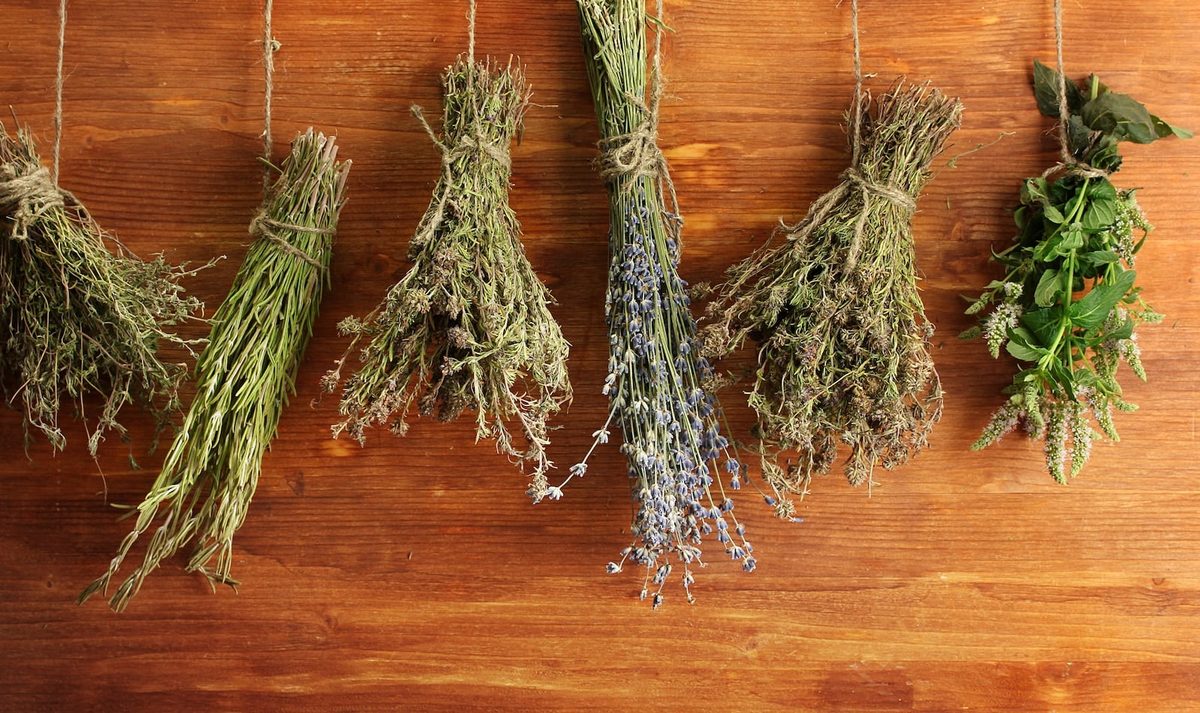
Most of the time you don’t need to rehydrate dried herbs as a separate step. They take up moisture from the dish they are cooked in, and that is how they release their flavor.12 The cases where it helps to do something first are quick-cooked dishes and foods that are not cooked at all, and the better tool there is usually fat or time, not a bowl of water.
Quick answer
| You’re making | What to do |
|---|---|
| Soup, stew, braise or simmered sauce | Add the dried herbs straight to the pot. Hardy dried herbs do best with more than 20 minutes of cooking and plenty of liquid.3 |
| A quick sauté or pan sauce | Bloom the herbs in the hot oil or butter before the liquid goes in.4 |
| Dressing, dip, marinade or herb butter | Mix the herbs in well ahead of serving so they have time to soften and flavor the food.1 |
| A garnish | Use fresh herbs. ATK says dried herbs used as a garnish can add an unpleasant texture.5 |
| A recipe that says to soak them | Do it in a liquid the recipe uses, and keep the liquid (see below).2 |
Why dried herbs need moisture
America’s Test Kitchen (ATK) explains that moisture hydrates a dried herb’s cells and makes them porous, which is part of why dried herbs do best in dishes with liquid.3 Rehydration will not turn a dried herb back into a fresh one. In ATK’s tests of fresh against dried herbs in 24 recipes, tasters preferred fresh in all but one application, and they described dried herbs as “dusty” and “stale.”3 ATK attributes part of that to oxidation during drying.3
Simmered dishes: add them to the pot
This is where dried herbs earn their place. ATK found that dried oregano, rosemary, sage and thyme fared reasonably well in dishes cooked more than 20 minutes with a good amount of liquid,3 and a second ATK guide lists bay leaf, thyme, oregano, rosemary, marjoram and sage as working fine in moist dishes cooked at least 20 minutes, such as chili or poultry stuffing.6
The delicate herbs are another matter. ATK says basil, cilantro and other delicate herbs are much weaker in flavor once dried,5 so no amount of simmering will make a jar of dried basil taste like fresh. See dried basil vs fresh.
When to add them. Sources give different advice:
| Source | Advice for dried herbs |
|---|---|
| Colorado State University Extension1 | Add near the beginning of cooking, to give the herbs time to rehydrate. |
| America’s Test Kitchen5 | Add them at the same point you would add fresh herbs. |
| University of Delaware Extension7 | In long-simmered dishes, add herbs during the last 45 minutes. |
| Spices Inc. (a spice merchant)2 | Add dried herbs at least 20 minutes before cooking is complete; delicate herbs at the end. |
No source we found tested these timings against each other. For a pot that cooks for hours, Delaware’s last-45-minutes rule is the cautious choice (our judgment).
Quick dishes: bloom them in fat
For a dish that cooks only a few minutes, heating dried herbs briefly in oil or butter is the most useful step, and it is the one with a measurement behind it. ATK steeped thyme in oil and in water at 200 degrees for 20 minutes and had both tested: the oil held 10 times as much thymol as the water.4 ATK says the main flavor compounds in many spices and in herbs such as thyme, rosemary, lavender, sage, savory and bay are largely fat-soluble.4 Its test page does not say whether the thyme was fresh or dried.
How (method, not a measured recipe): warm the oil or butter over medium heat, add the crumbled herbs, stir for a short time until fragrant, then add the liquid or other ingredients. Watch closely; we found no source that gives a time for blooming dried herbs specifically.
Uncooked foods: give them time
Dried herbs in a dressing, dip, marinade or compound butter have nothing hot to wake them up. Colorado State’s advice is that herbs in uncooked foods such as salad dressings, dips and fruit mixes need time to blend flavors, so add them as far ahead of serving as you can.1 Mixing them into the oil, vinegar or other liquid first, before the thicker ingredients, follows the same logic (our judgment).
Soaking in water: what one merchant says
Some recipes call for soaking dried herbs in warm water and draining them. Spices Inc., a spice merchant, advises against it: herbs have thin walls and rehydrate quickly in whatever moisture is in a dish, and soaking them in hot water pulls their volatile oils into the water, which then goes down the drain.2 We found no extension service or test kitchen that recommends a soak time for culinary herbs. If a recipe insists, soak in a small amount of a liquid the recipe already uses (stock, wine, lemon juice or vinegar) and add the liquid along with the herbs. That is our suggestion, following the merchant’s reasoning, not a tested method.
Crush them first
Whatever the method, crushing helps. Delaware suggests crushing dried herbs first to release some of their oils,7 and Spices Inc. recommends rubbing them between your hands as they go in.2
Safety: dried herbs in oil
Covering dried herbs with oil, for a dipping oil or a flavored oil, is not just a rehydration question. Oregon State University Extension says homemade mixtures of dried herbs in oil must be refrigerated and used within 4 days or frozen,8 because low-acid foods stored in oil create an oxygen-free environment in which Clostridium botulinum can grow.8 Colorado State gives the same 4-day refrigeration limit for homemade herb-infused oils.1 These limits are about storing the mixture; the guidance does not address oil heated with herbs and used right away in cooking.
How much dried to use in place of fresh
Rehydrating does not change how much dried herb you need, and published conversions disagree:
| Source | Dried for fresh |
|---|---|
| LSU AgCenter9 | 1 teaspoon crumbled dried for 1 tablespoon finely cut fresh |
| America’s Test Kitchen, tested3 | 1 part dried to 3 parts fresh came closest |
| America’s Test Kitchen, “Using Dried Herbs”6 | Half the amount called for in the recipe |
The first two are the same proportion (a tablespoon is 3 teaspoons). The third is a different figure from the same publisher. Method starting point: use one third as much dried as fresh, then taste and add more. For herb-by-herb detail, see dried herbs vs fresh.
Not yet measured
- How long dried herbs take to rehydrate fully in a simmering liquid, for any herb.
- Whether a water soak loses measurably more flavor than adding herbs directly, outside one merchant’s explanation.
- A tested blooming time for dried herbs (ATK’s blooming test used a 20-minute steep at 200 degrees).
- Whether soaking in wine or vinegar changes a dried herb’s flavor differently from water.
Related
- Dried herbs vs fresh
- Dried basil vs fresh
- Fresh sage vs dried sage
- Dried tarragon vs fresh tarragon
- Fresh oregano vs dried
- Fresh thyme vs dried
- Dried rosemary vs fresh
- How to dry sage
- How to dry tarragon
- Oregano, thyme, bay leaves and basil
Footnotes
-
Herbs: Preserving and Using, Fact Sheet 9.335, Colorado State University Extension. ccfruitandnuts.ucanr.edu · Reference work ↩ ↩2 ↩3 ↩4 ↩5
-
Spice Cabinet 101: Getting the Most Out of Your Dried Herbs, Spices Inc. spicesinc.com · Merchant ↩ ↩2 ↩3 ↩4 ↩5
-
Science: Substituting Dried Herbs for Fresh, America’s Test Kitchen. americastestkitchen.com · Publication ↩ ↩2 ↩3 ↩4 ↩5 ↩6
-
Blooming in Oil for Flavor, America’s Test Kitchen. americastestkitchen.com · Publication ↩ ↩2 ↩3
-
When You Should Actually Use Dried Herbs, America’s Test Kitchen. americastestkitchen.com · Publication ↩ ↩2 ↩3
-
Using Dried Herbs, America’s Test Kitchen. americastestkitchen.com · Publication ↩ ↩2
-
Using Herbs and Spices, University of Delaware Cooperative Extension. udel.edu · Reference work ↩ ↩2
-
Herbs and vegetables in oil, SP 50-701, Oregon State University Extension Service. extension.oregonstate.edu · Reference work ↩ ↩2
-
Flavorful Herbs, LSU AgCenter. lsuagcenter.com · Reference work ↩