Spice Substitutes · Substitutes
Dill Substitutes for Dill Weed and Dill Seed
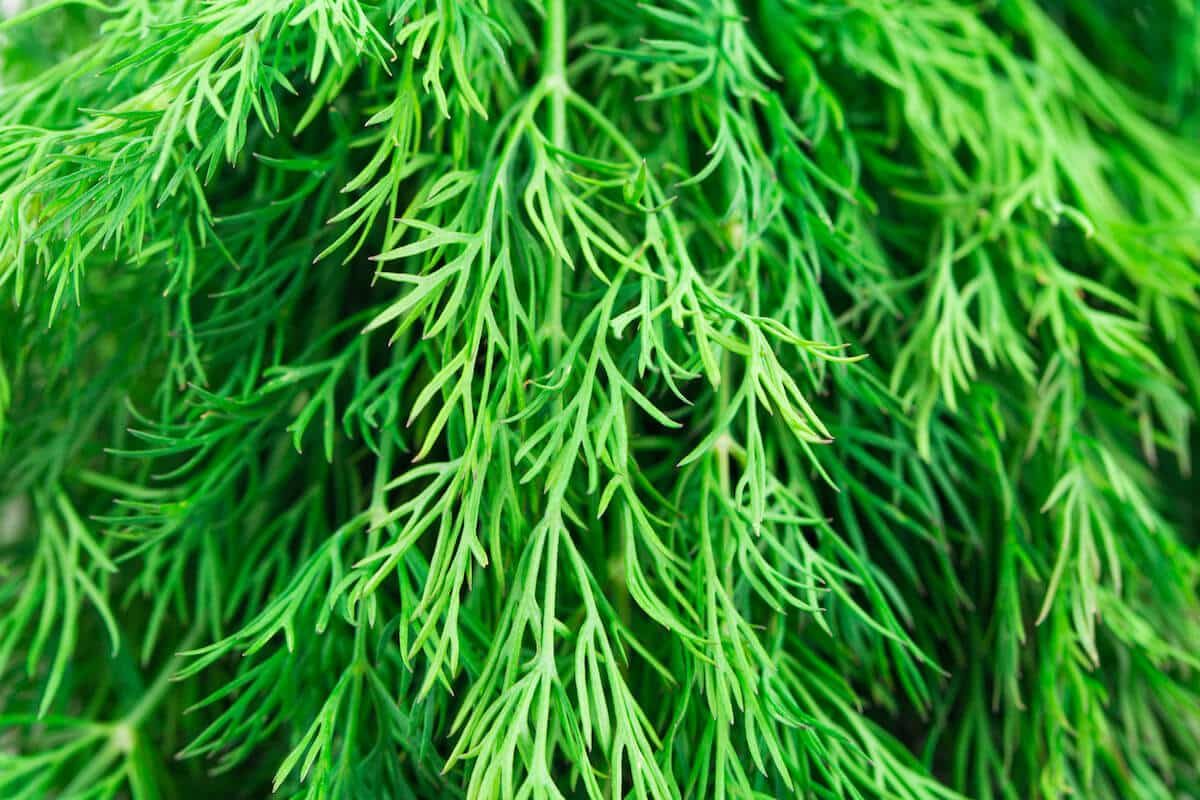
Dill, Anethum graveolens, is sold in two forms that taste different: the feathery leaf (dill weed) and the dried fruit (dill seed). Britannica describes dill’s flavor as warm and slightly sharp, somewhat reminiscent of caraway.1 The difference between leaf and seed is chemical. PROSEA gives the chief components of dill herb oil as phellandrene (about 35 percent) and dill ether (about 25 percent), while the fruit oil is led by limonene (up to 70 percent) and carvone (up to 60 percent).2 So the right substitute depends first on which form your recipe means, and then on what the dill is doing.
Quick answer
| What dill is doing | Best substitute | Starting amount, per 1 part dill | Treatment |
|---|---|---|---|
| Fresh leaf as a finishing herb (sauces, salads, fish, potatoes) | Fresh tarragon | 1 part | Attributed |
| Same, where the feathery look matters | Fennel fronds | 1 part | Method |
| Recipe wants fresh, you have dried dill (or the reverse) | Dried dill | 1 tsp dried per 1 Tbsp fresh | Computed |
| Dried dill in a rub, dip or dressing | Dried tarragon | 1 part | Attributed |
| Fresh dill heads in pickles | Dill seed | 1 1/2 tsp seed per 1 1/2 heads (per pint jar) | Attributed |
| Dill seed in bread, pickles, cabbage or potatoes | Caraway seed | 1/2 part, then taste | Method |
How the ratios on this page are labeled
Every ratio carries one of four labels.
- Computed: based on a measurable physical relationship, with the source named.
- Attributed: a named source publishes this ratio. We quote it as theirs.
- Disputed: named sources give different answers to the same swap. We show each one and do not average them.
- Method: we found no published ratio. We give a direction and a cautious starting point, and say so.
A Couple Cooks, the food blog behind the tarragon ratios below, opens its guide by warning that dill is hard to replace.3 None of the herb-for-herb figures here is a measurement of flavor strength.
If fresh dill is a finishing herb
This is dill weed’s main job. Britannica lists soups, salads, sauces, fish, sandwich fillings and pickles among its uses.1 It is a delicate herb: LSU AgCenter lists dill leaves among the herbs to add at the end of cooking, because prolonged heat costs flavor and aroma.4
1. Fresh tarragon
PROSEA describes tarragon as having a sweet, anise-like scent and a peculiar bittersweet flavor.5 That anise note comes largely from estragole, which the European Commission’s Scientific Committee on Food puts at 60 to 75 percent of tarragon oil.6 Dill leaf oil has a different makeup,2 so tarragon does not copy dill. It shares a fresh, slightly anise-tinged impression and does the same job at the end of cooking. A Couple Cooks says tarragon has a similar licorice or anise finish but is much stronger.3
Tarragon does not tolerate long cooking any better than dill. America’s Test Kitchen lists both among the delicate herbs whose flavor compounds tend to be more volatile.7 Add it at the end, as you would dill.
Ratio (Attributed): A Couple Cooks says to use equal amounts of fresh tarragon in place of fresh dill.3 Because the same source calls tarragon much stronger, a cautious cook may start with half and add more after tasting; that is our suggestion, not theirs.
2. Fennel fronds
A Couple Cooks names fresh fennel fronds the next best substitute for fresh dill, noting that they look just like it and have a subtle licorice flavor on the finish, though the match is not exact.3 The University of Illinois Extension says fennel has an anise or licorice flavor and suggests adding a few fronds to a salad.8 PROSEA attributes fennel’s anise fragrance and sweet taste to anethole.9 Fronds are the substitute to reach for when dill’s look matters, as on a fish platter or in a salad.
Ratio (Method): A Couple Cooks gives no amount. Start with the same amount as the dill and taste.
If you have the other form of dill
The best dill substitute is usually dill in another form.
Ratio (Computed): A Couple Cooks gives 1 tablespoon of fresh dill to 1 teaspoon of dried.3 That matches the general extension rule: LSU AgCenter and Penn State Extension both give 1 tablespoon of fresh herbs as equal to 1 teaspoon of dried.410 America’s Test Kitchen tested the same proportion and found that 1 part dried herb to 3 parts fresh came closest to producing flavors of equal strength.7 ATK adds a caution that applies to dill: its tasters preferred fresh herbs to dried in all but one application.7 In our judgment, dried dill works best in dips, dressings and rubs rather than as a fresh garnish.
Dried tarragon for dried dill
Ratio (Attributed): A Couple Cooks says equal amounts of dried tarragon can replace dried dill.3 The University of Illinois Extension warns that tarragon’s flavor is quickly lost when the leaves are dried,11 so check that your jar still smells of anise.
If dill is flavoring pickles
PROSEA says dill’s flower heads and ripe fruits are used to flavor pickled cucumbers, onions and vinegar.2 That makes heads and seed the natural swap for each other.
Ratio (Attributed): In the National Center for Home Food Preservation’s tested recipe for quick fresh-pack dill pickles, each pint jar gets either 1 1/2 heads of fresh dill or 1 1/2 teaspoons of dill seed.12
The NCHFP also says to use only recipes with tested proportions and not to alter the vinegar, food or water proportions.13 That warning names those three; it does not address herb swaps, so if you change the dill, keep everything else exactly as written.
If dill seed is the ingredient
Dill seed goes into breads, pickles, cabbage dishes and potato salads, where its carvone note matters. That list is common practice.
1. Caraway seed
Caraway is the closest chemical match. Britannica gives d-carvone and d-limonene as the principal components of caraway oil,14 the same two compounds that lead dill fruit oil.2 Britannica also describes dill’s flavor as reminiscent of caraway.1 Expect a more anise-tinged result: Britannica describes caraway’s aroma as reminiscent of anise.14
Ratio (Method): We found no published ratio. Start with half the dill seed amount and taste, adding more if the dish needs it.
2. Not dill weed
Dill weed does not stand in for dill seed, or the other way round, because their oils are led by different compounds.2 See dill seed vs. dill weed.
What isn’t known
- No published measurement compares the flavor strength of dill with tarragon, fennel fronds or caraway. The Attributed herb-for-herb ratio is a food writer’s rule of thumb.
- No published ratio was found for caraway in place of dill seed, or for fennel fronds in place of dill weed.
- Thyme, rosemary and basil are sometimes listed as dill substitutes. No source reviewed here recommends them, and none shares dill’s main compounds.
Related
- Dill, cooking with dill and how to store dill
- Fresh dill vs. dried dill and dill seed vs. dill weed
- Tarragon vs. dill, fennel vs. dill and tarragon
- Bronze fennel, fennel seed and caraway seeds
- Pickling spice and too much dill
Footnotes
-
Dill, Encyclopaedia Britannica. britannica.com · Reference work ↩ ↩2 ↩3
-
Nguyen Thi Tâm, C.C. de Guzman and P.C.M. Jansen, Anethum graveolens, Plant Resources of South-East Asia (PROSEA). uses.plantnet-project.org · Reference work ↩ ↩2 ↩3 ↩4 ↩5
-
Sonja Overhiser, Best Dill Substitute, A Couple Cooks. acouplecooks.com · Publication ↩ ↩2 ↩3 ↩4 ↩5 ↩6
-
Flavorful Herbs, LSU AgCenter. lsuagcenter.com · Reference work ↩ ↩2
-
C.C. de Guzman and R.A. Reglos, Artemisia dracunculus, Plant Resources of South-East Asia (PROSEA). uses.plantnet-project.org · Reference work ↩
-
Opinion of the Scientific Committee on Food on Estragole, European Commission, 2001. food.ec.europa.eu · Regulator ↩
-
Science: Substituting Dried Herbs for Fresh, America’s Test Kitchen. americastestkitchen.com · Publication ↩ ↩2 ↩3
-
Fennel, University of Illinois Extension. extension.illinois.edu · Reference work ↩
-
Purwaningsih, Harmida and M. Brink, Foeniculum vulgare, Plant Resources of South-East Asia (PROSEA). uses.plantnet-project.org · Reference work ↩
-
Preserving Herbs by Drying, Penn State Extension. extension.psu.edu · Reference work ↩
-
Tarragon: French, University of Illinois Extension. extension.illinois.edu · Reference work ↩
-
Quick Fresh-Pack Dill Pickles, National Center for Home Food Preservation. nchfp.uga.edu · Reference work ↩
-
General Information on Pickling, National Center for Home Food Preservation. nchfp.uga.edu · Reference work ↩
-
Caraway, Encyclopaedia Britannica. britannica.com · Reference work ↩ ↩2