Spice Fixes · Fix
Too Much Dill? How to Fix It, Including Pickles
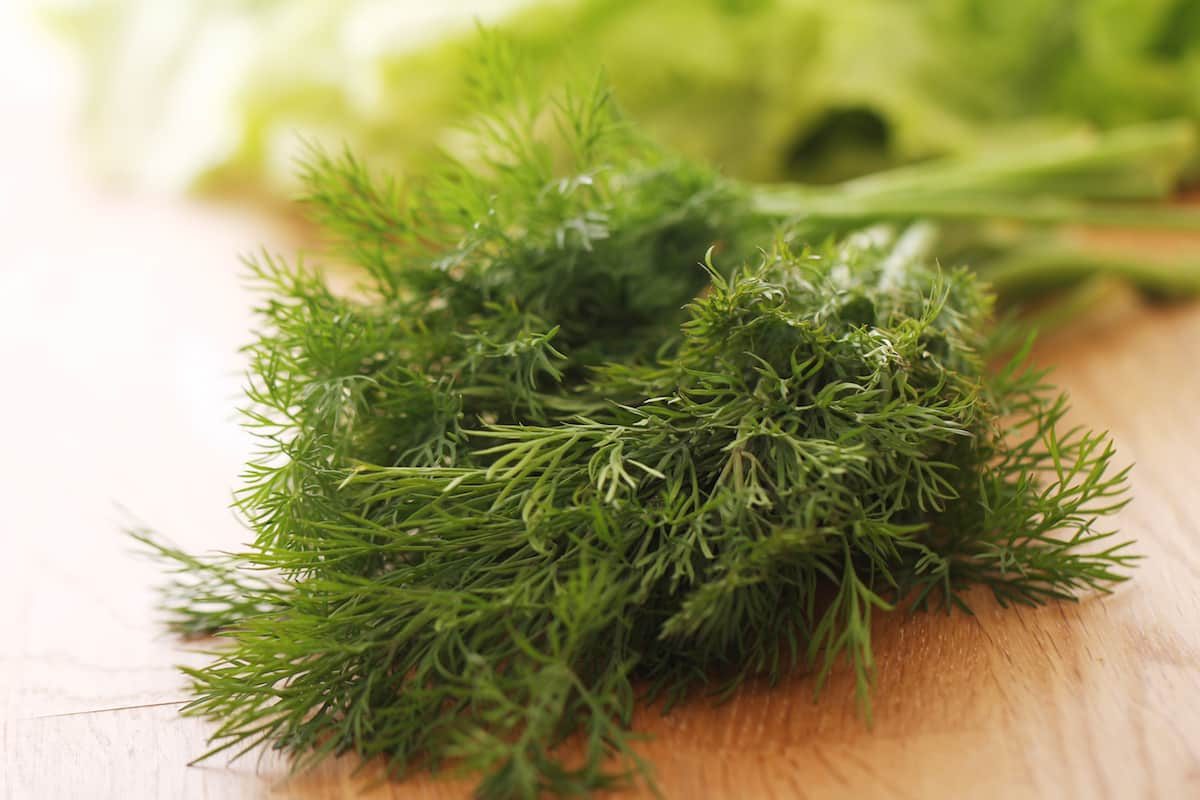
Too much dill turns a background note into the whole dish: a potato salad, tzatziki or fish sauce that tastes mostly of dill, sometimes with a bitter edge. Fresh dill is easier to fix than many seasonings because whole sprigs can come out and the leaves lose aroma with heat. Pickles are the exception, and they need a different answer.
Quick answer
| What’s wrong | Fastest fix | If that’s not enough |
|---|---|---|
| Sprigs or fronds still whole | Pull them out | Dilute |
| Creamy dish (potato salad, tzatziki, dill sauce) | Add more of the base: potatoes, yogurt, sour cream, mayonnaise | A splash of vinegar or lemon to rebalance |
| Soup, stew or sauce | Add more of everything except dill | Simmer a few minutes more |
| Bitter edge | A pinch of salt | A little sugar where it fits |
| Pickles already jarred | Eat them as they are, or chop into a milder dish | Use less dill in the next tested batch |
What makes dill overpowering
The leafy herb (“dill weed”) and the seed taste different because their oils differ. In the PROSEA plant reference, the chief components of dill herb oil are phellandrene (about 35 percent) and 3,9-epoxy-p-menth-1-ene, often called dill ether (about 25 percent), while dill seed oil is dominated by limonene and carvone.1 The same reference describes dill as having a pleasant aroma but a slightly bitter and pungent taste.1 So an overdose of fresh dill tends to read as a strong grassy, herbal aroma with some bitterness behind it. If your recipe used dill seed, the flavor problem is a different one; see dill seed vs. dill weed.
Caught early: pull it out
Whole stems and fronds are easy to lift out of a soup, a pot of potatoes or a poaching liquid with tongs. Finely chopped dill stirred into a dressing won’t come back out, so go to dilution.
Sheer volume: too much dill for the dish
Dilute. Add more of every ingredient except dill. In a stew or sauce, that means more of the liquid and main ingredients. If you can’t add to the pot without changing the dish, Tasting Table suggests (for garlic) making a second batch without the overdosed ingredient and combining the two.2 The arithmetic is the same for dill. How far this gets you depends on how much you overdid it and whether you have enough of the other ingredients to double or triple the recipe.
For creamy, uncooked dishes, add more of the base. Extra boiled potatoes in a potato salad, more yogurt and cucumber in tzatziki, more sour cream or mayonnaise in a dip. Cooked potato stirred into the salad is real dilution, which is different from the claim that a potato pulls flavor out of a dish (see below).
Rebalance with acid. A little extra vinegar in a potato salad, or lemon in a yogurt sauce, adds a sharp note that competes with dill. Treat this as a balancing technique. We found no source showing that acid masks or breaks down dill’s aroma compounds.
Cooking it out
LSU AgCenter lists dill leaves among the delicate herbs best added a minute or two before the end of cooking, because prolonged heat causes flavor and aroma losses.3 That supports simmering a soup or sauce a few minutes more to soften an overdose of fresh dill. We found no test of how long that takes, and the rest of the dish keeps cooking too. Dill seed is sturdier: LSU AgCenter puts it with oregano, rosemary and thyme as something that can go in during the last 20 minutes,3 so extra cooking will do less for a seed overdose.
Bitter edge
In controlled taste tests with pure solutions, sweet tastes and sodium salts suppressed bitterness, and citric acid was the weakest suppressor.4 That is a laboratory finding, not a test on dill, but it suggests a pinch of salt (or a little sugar in a dish that can take it) will do more for bitterness than more vinegar.
Pickles: a different problem
If you overdid the dill in a batch of pickles that is already brined and jarred, there is no safe quick fix to recommend. The National Center for Home Food Preservation says not to alter vinegar, food or water proportions in a pickling recipe and to use only recipes with tested proportions.5 Soaking pickles in water and making a new brine is an untested change to a tested recipe, so in our judgment it isn’t worth the risk for anything stored at room temperature. Eat the pickles as they are, chop them into tartar sauce, potato salad or egg salad where other ingredients dilute them, and use less dill in the next batch of the same tested recipe.
Fixes that don’t hold up
A potato to absorb the dill. The raw-potato trick comes from oversalted soup, and even there a Tasting Table writer calls the potato “more of an aid than a final answer.”6 We found no test of a potato absorbing dill or any other herb. Potato chunks left in a soup add bland bulk, which helps as dilution; fishing them out before serving undoes most of that.
Leaving it overnight. It’s sometimes said that an over-dilled dish mellows in the refrigerator overnight. We found no source that tests this either way, so we can’t recommend counting on it.
Preventing it next time
Add fresh dill late. Stir it in during the last minute or two of cooking, or scatter it over just before serving, as LSU AgCenter advises for delicate herbs.3 Late dill is easier to taste and adjust.
Convert carefully between fresh and dried. LSU AgCenter’s rule of thumb is one teaspoon of crumbled dried herb for one tablespoon of fresh.3 More in fresh dill vs. dried dill.
Start small with dried. LSU AgCenter’s general advice is to begin with 1/4 teaspoon of most ground spices or ground dried herbs and adjust.3 No source we found gives a dill-specific starting amount.
Related
Footnotes
-
Anethum graveolens (PROSEA), Nguyen Thi Tâm, C.C. de Guzman & P.C.M. Jansen, PlantUse. uses.plantnet-project.org · Reference work ↩ ↩2
-
Simple Ways To Tone Down The Pungency Of Garlic, Harmony Colangelo, Tasting Table, 2023. tastingtable.com · Publication ↩
-
Flavorful Herbs, LSU AgCenter. lsuagcenter.com · Reference work ↩ ↩2 ↩3 ↩4 ↩5
-
Green BG et al., Taste Mixture Interactions: Suppression, Additivity, and the Predominance of Sweetness, Physiology & Behavior, 2010. pmc.ncbi.nlm.nih.gov · Peer-reviewed ↩
-
General Information on Pickling, National Center for Home Food Preservation. nchfp.uga.edu · Reference work ↩
-
How To Fix An Oversalted Soup, Alison Spiegel, Tasting Table, 2016. tastingtable.com · Publication ↩