Cooking · Storage
How to Store Lavender: Drying, Dried Buds, Fresh Stems and Freezing
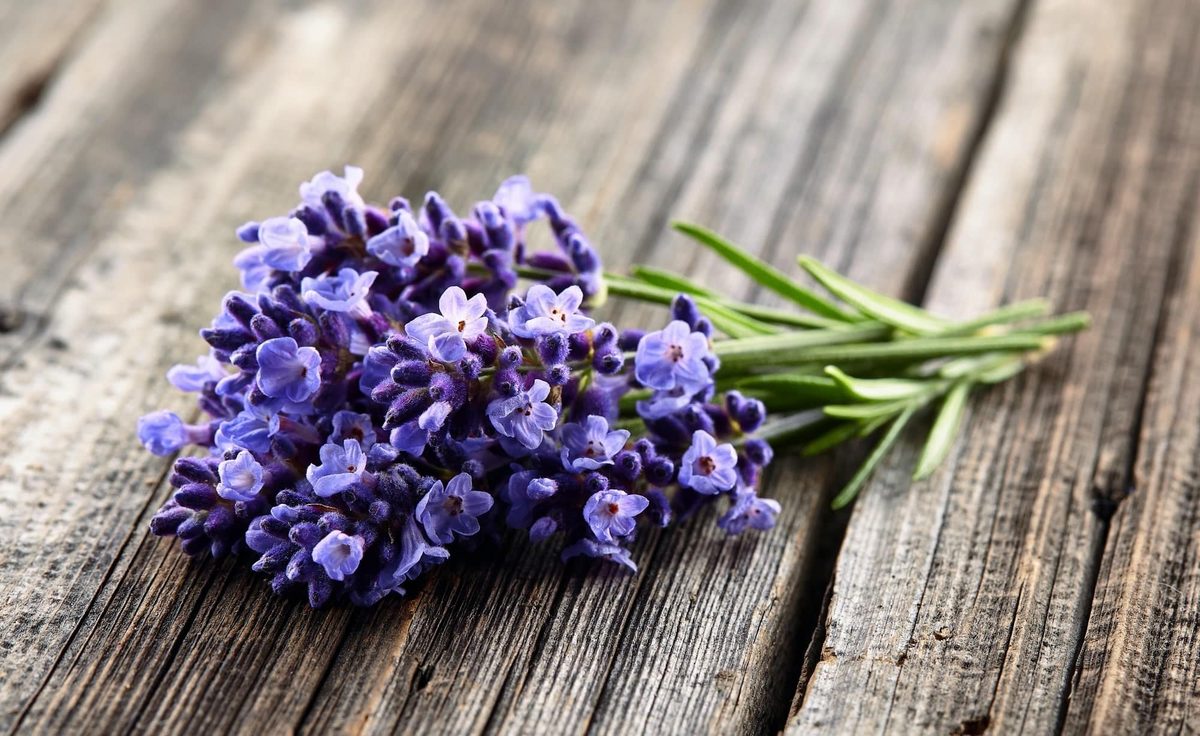
Culinary lavender is a flower crop, and the usual way to keep it is dried: growers bundle the stems, hang them to dry and store the buds for use through the rest of the year.1 What follows is what named sources say about drying and storing it. Two things are missing from the record: we found no shelf-life figure measured on dried lavender, and no source that covers keeping fresh lavender stems or freezing them. Where this page leans on general herb guidance, it says so.
At a glance
| Question | Short answer |
|---|---|
| Best way to keep it | Dry it, then store the buds.1 |
| When to cut for drying | The Herb Society of America’s practice: when 25% to 50% of the individual flowers on a spike are open.1 |
| How to dry | Small bundles hung in a dry, airy room, out of the sun.23 Gentle warmth may keep more oil: see the 2020 study below.4 |
| Container | Airtight, kept somewhere cool, dry and dark.2 |
| Whole or crumbled? | Whole. Penn State says whole herbs hold their oils longer.3 |
| How long dried | 1 year to 1 to 3 years for dried herbs in general, depending on the source. None measured lavender. |
| Fresh stems | No lavender-specific guidance found. For fresh herbs in general, the Government of Canada says up to five days in the crisper.5 |
| Lavender in oil | Refrigerate and use within 4 days, or freeze.6 |
When to cut lavender for storage
The Herb Society of America picks and bundles its culinary lavender when 25% to 50% of the corollas (the individual flowers) are open.1 General herb guidance from the National Center for Home Food Preservation (NCHFP) and Penn State is to harvest most herbs for drying just before the flowers first open.23 That advice is written for leafy herbs, where the leaves are what you keep. With lavender the flower is the crop, so the Herb Society’s practice is the more relevant one.
A widely repeated claim says lavender buds have the most flavor while they are still tightly closed. We found no measurement comparing flavor or oil content at different bud stages, so we cannot confirm it.
On time of day, the two extension sources differ slightly. Penn State says herbs carry more essential oil when picked on a sunny morning after the dew has dried.3 NCHFP says early morning, after the dew has evaporated, to limit wilting.2
For cooking, the Herb Society names Lavandula angustifolia, true lavender, as the most pleasant species to use.1 More on species and flavor is on the lavender profile.
Drying lavender
Hanging bundles. NCHFP’s method for sturdy herbs is to tie them into small bundles and hang them to air-dry.2 The Herb Society hangs its lavender bundles upside down.1 Penn State asks for a dry spot with good air circulation, away from the sink, stove or dishwasher.3 Keep bunches small: NCHFP warns that large amounts will mold.2 NCHFP also says drying indoors usually gives better color and flavor than drying outdoors.2
Dust. Both extension services suggest covering the herbs with a paper bag with holes punched or torn in it, which keeps dust off while letting air through.32
Gentle warmth. The one lavender-specific drying study we found compared two methods on L. angustifolia flowers grown in Poland in 2016 and 2017. Flowers were dried either in a drying oven with moving air at 35°C (95°F) or naturally in a shaded room at 20 to 22°C (68 to 72°F) for five days.4 The oven-dried flowers held much more essential oil:
| Year and plot | Oven-dried, 35°C | Shaded room, 20 to 22°C |
|---|---|---|
| 2016, irrigated | 3.86 | 2.20 |
| 2016, not irrigated | 3.70 | 1.73 |
| 2017, irrigated | 3.83 | 2.11 |
| 2017, not irrigated | 3.66 | 1.11 |
Essential oil per 100 g of dried flowers.4
Read the study with care. The paper is not consistent with itself: the abstract gives the oven temperature as 30°C and calls the oil content “twice higher”, while the methods say 35°C and the discussion says 53% higher. The table labels its units mg per 100 g and the text says ml.4 It is one study at one site over two seasons. It does not test the hot oven or dehydrator settings used for other herbs.
Dehydrator. NCHFP’s general herb setting is 95°F to 115°F, up to 125°F in humid areas, for 1 to 4 hours.2 Penn State gives 95°F to 110°F.3 Neither names lavender. The low end of both ranges, 95°F, is the same temperature as the study’s drying oven.
Oven. Penn State does not recommend oven drying for herbs, saying even the lowest setting destroys much of the flavor.3
When it is done. NCHFP: herbs are dry when they crumble and the stems break when bent.2 The Herb Society then sifts its dried buds through mesh screens to remove dust and plant debris.1
For a step-by-step walk-through, see how to dry lavender.
Storing dried lavender
Put the dried buds in airtight containers and keep them somewhere cool, dry and dark.2 Penn State adds that airtight, vapor-proof containers stop dried herbs from picking up moisture from the air.3 University of California Cooperative Extension lists air, light, moisture and heat as the things that speed flavor and color loss in dried herbs and spices.7
Keep the buds whole until you use them. Penn State says whole herbs are preferred because they hold their oils and keep their flavor longer.3 A common claim says handling dried lavender makes it release its oils; we found no source that tests it, but keeping buds whole and handling them only when you use them is consistent with Penn State’s advice.
If you keep dried herbs in the refrigerator or freezer, bring the container out and let it warm before opening: Penn State notes that condensation can form when a cold container meets a warm kitchen, and the herbs can absorb that moisture.3 Whether glass keeps lavender better than other airtight containers has not been tested that we could find; containers for spices covers what is known in general.
How long dried lavender lasts
No one has published a shelf life measured on dried lavender that we could find. These are the named figures for dried herbs in general:
| Source | What it covers | Figure |
|---|---|---|
| UC Cooperative Extension, 20027 | Ground spices and dried herbs, home storage | 1 year |
| America’s Test Kitchen8 | Ground spices and dried herbs, home storage | 1 year |
| Penn State Extension9 | Most dried herbs | about 1 year |
| McCormick10 | Leafy herbs and most seasoning blends; a spice company’s own guidance | 1 to 3 years |
These are quality windows, not safety dates: McCormick defines shelf life as how long spices stay most aromatic.10 To check yours, crumble a little between your fingers and smell it, as America’s Test Kitchen suggests.8 If it still smells strong, it is probably still potent.7
Fresh lavender stems
We found no named source on keeping fresh lavender stems. Common tips, such as standing the stems in a jar of water in the fridge or wrapping them in damp paper towels, are untested for lavender as far as we can tell.
The only general figure for home storage of fresh herbs comes from the Government of Canada: store them unwashed, trim the stalk ends, put them in a resealable plastic bag and keep them in the crisper for up to five days.5 That advice does not name lavender.
Freezing lavender
No source we found tested freezing lavender, and Penn State’s list of herbs that freeze well does not include it.11 Penn State’s general method for herbs is to half-fill an ice cube tray with water, add about a tablespoon of herbs to each section, and top the cubes up with water the next day.11 It warns that frozen herbs turn limp when thawed and generally do not make attractive garnishes.11
Lavender in oil
Herbs kept in oil can cause botulism. Oregon State University Extension explains that herbs are low-acid foods that can carry Clostridium botulinum, and that oil creates an oxygen-free environment.6 Its rule for homemade herbs in oil is to refrigerate and use within 4 days, or freeze for longer storage.6 Penn State gives 2 to 4 days in the refrigerator for oils made with fresh herbs.12 For oils made with dried herbs, the two disagree:
| Source | Dried herbs in oil |
|---|---|
| Oregon State University Extension6 | Must be refrigerated and used within 4 days, or frozen |
| Penn State Extension12 | Refrigerate for up to three months |
We have not picked between them. The Oregon State rule is the more cautious of the two.
Dried vs fresh in recipes
The Herb Society says dried lavender buds are three times as concentrated as fresh flowers, and that lavender is best used in moderation.1 See cooking with lavender and lavender substitutes.
Not yet measured
- A shelf life for dried lavender, measured on lavender.
- How fresh lavender stems keep in the refrigerator, in water or in towels.
- Whether lavender freezes well.
- Flavor or oil content by bud stage at harvest.
- Glass against other airtight containers for dried lavender.
Related
- Lavender
- How to dry lavender
- Cooking with lavender
- Lavender substitutes
- Rosemary vs lavender
- Dried herbs vs fresh
- Do spices go bad?
- How to store rosemary
Footnotes
-
Paola Legarre, “Lavender in the Kitchen: Flavor Profiles Across Species and Cultivars”, The Herb Society of America Blog, 2025. blog.herbsociety.org · Publication ↩ ↩2 ↩3 ↩4 ↩5 ↩6 ↩7 ↩8
-
“Herbs” (drying), National Center for Home Food Preservation, University of Georgia. nchfp.uga.edu · Reference work ↩ ↩2 ↩3 ↩4 ↩5 ↩6 ↩7 ↩8 ↩9 ↩10 ↩11
-
Hirneisen, Zepp and LaBorde, “Let’s Preserve: Drying Herbs”, Penn State Extension, 2023. extension.psu.edu · Reference work ↩ ↩2 ↩3 ↩4 ↩5 ↩6 ↩7 ↩8 ↩9 ↩10 ↩11
-
Andrzej Sałata, “Supplementary irrigation and drying method affect the yield and essential oil content and composition of lavender flowers”, Acta Scientiarum Polonorum Hortorum Cultus, 2020. czasopisma.up.lublin.pl · Peer-reviewed ↩ ↩2 ↩3 ↩4
-
“Food safety tips for fresh herbs”, Government of Canada (copy hosted by UC ANR). oc4h.ucanr.edu · Regulator ↩ ↩2
-
Raab and Woodburn, “Herbs and vegetables in oil” (SP 50-701), Oregon State University Extension Service, 2025. extension.oregonstate.edu · Reference work ↩ ↩2 ↩3 ↩4
-
Add a Little Spice to Your Life! Part II, University of California Cooperative Extension. ucanr.edu · Reference work ↩ ↩2 ↩3
-
Keeping Spices and Dried Herbs Fresher Longer, America’s Test Kitchen. americastestkitchen.com · Publication ↩ ↩2
-
Stacy Reed, “Preserving Herbs by Drying”, Penn State Extension, 2024. extension.psu.edu · Reference work ↩
-
How Long Do Spices Last?, McCormick. mccormick.com · Merchant ↩ ↩2
-
Martha Zepp, “Freezing Herbs”, Penn State Extension, 2025. extension.psu.edu · Reference work ↩ ↩2 ↩3
-
Martha Zepp, “How to Safely Make Infused Oils”, Penn State Extension (copy hosted by UC ANR). ccfruitandnuts.ucanr.edu · Reference work ↩ ↩2