Blog · Storage
Do Spices Go Bad? Shelf Life, Safety and How to Tell
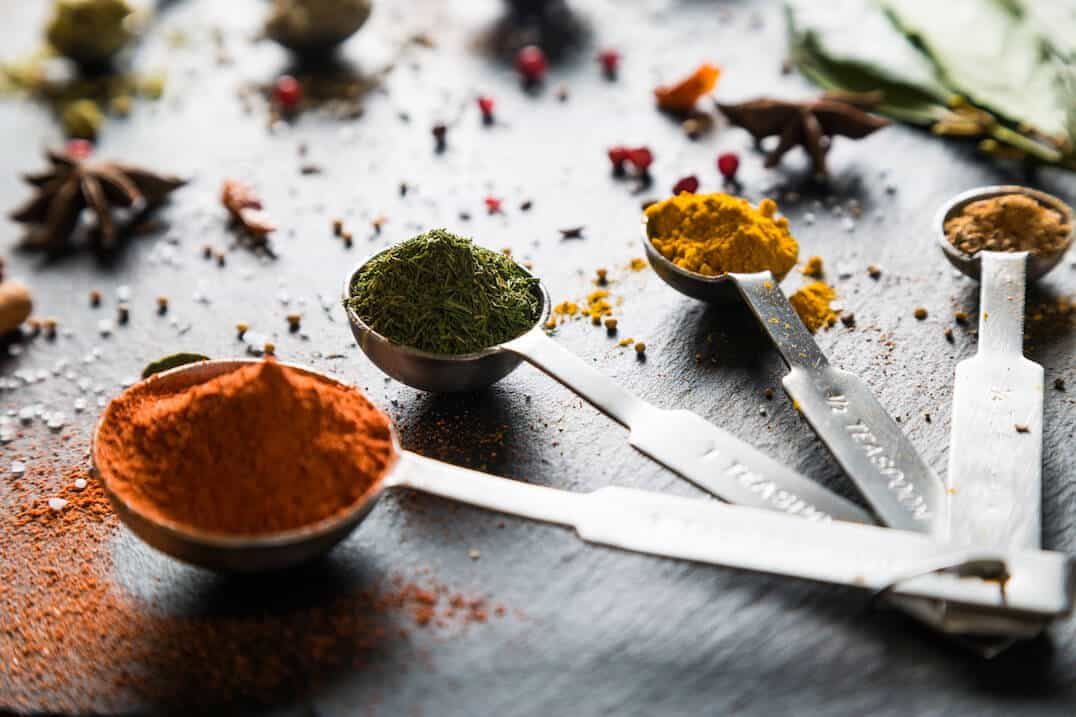
Dried spices don’t go bad the way milk or fresh produce does. They fade. McCormick puts it plainly: spices do not expire the way milk does, and they don’t become moldy or rotten the way fresh produce does; it is better to think of them as going “not good” rather than bad.1 An old jar of ground cumin is not dangerous because it is old. It just does less in the pot. How fast that happens depends on the form of the spice and how it is stored, and the published figures disagree.
At a glance
| Question | Short answer |
|---|---|
| Do spices expire? | They lose aroma and color over time; age is a quality issue, not a safety date.1 |
| Ground spices | 1 year (UC Extension, America’s Test Kitchen) to 2–4 years (McCormick).231 |
| Whole spices | 2 years (UC Extension, ATK) to 3–4 years (McCormick).231 |
| Dried leafy herbs | 1 year (ATK) to 1–3 years (McCormick).31 |
| Salt | Plain salt has no expiration date; Morton gives iodized salt 5 years because iodine can dissipate.4 |
| How to tell | Crush a little and smell it; if aroma and color have faded, replace it.23 |
| Worst enemies | Air, light, moisture and heat.2 |
How long spices last: what named sources say
Shelf-life charts circulate widely online with no source attached. These are the figures we could trace to a named publisher, with their scope. They disagree, so we show them side by side rather than averaging.
| Category | UC Cooperative Extension, 20022 | America’s Test Kitchen3 | McCormick (spice company)1 |
|---|---|---|---|
| Whole spices (peppercorns, allspice, seeds such as caraway) | 2 years | 2 years | 3–4 years |
| Ground spices | 1 year | 1 year | 2–4 years |
| Dried leafy herbs | 1 year (grouped with ground) | 1 year | 1–3 years |
| Seasoning blends | not given | not given | 1–3 years for most |
| Salt | not given | not given | indefinite |
McCormick defines shelf life for spices as the length of time they are most aromatic and delicious for cooking.1 That definition fits all three sources: these are windows for best flavor, not dates after which a spice becomes unsafe.
McCormick prints a “best by” date on the lid of its bottles.1 Other brands vary, and if a jar has no date, writing the purchase date on the lid is a simple habit. America’s Test Kitchen recommends labeling the lids of spice jars.5
Salt
Salt is the clearest case. Morton says salt itself has no expiration date, but its recommended use-by guidance differs by product:4
| Morton product group | Recommended use-by | Morton’s reason |
|---|---|---|
| Iodized table salt, iodized sea salt | 5 years | Iodine can dissipate over time |
| Plain table salt, sea salts, kosher salt | 5 years | Contains anti-caking additives, but clumping may occur |
| Natural all-purpose sea salt (no anti-caking agent) | 3 years | May become caked over time |
| Season-All seasoned salt | 2 years | For optimal color and flavor |
Those are one manufacturer’s figures for its own products. McCormick also lists salt as indefinite.1
Fresh garlic
Fresh garlic is a different kind of product. UC Agriculture and Natural Resources gives fresh garlic a storage life of 3 to 5 months under cool (60°F, or 16°C), dry, dark conditions.6 For dried garlic, see garlic powder.
Are old spices safe?
Age itself is not the safety issue. The real food-safety question with spices is contamination before they reach you. In its risk profile on spices, the FDA found that spice shipments offered for import in fiscal years 2007 to 2009 had a Salmonella prevalence of about 6.6%, about twice the average for all other imported FDA-regulated foods.7 The FDA did not recommend that consumers change how much spice they use, and noted that cooking can reduce pathogen contamination, depending on the length of cooking and the temperature.7 That is a supply-chain finding, not a reason to throw out an old jar.
Damp is the exception at home. A spice that has gotten wet, clumped hard or shows visible mold should be thrown out. That is our cautious judgment rather than a sourced rule; we found no source giving a safe way to rescue moldy spice.
How to tell if a spice is still good
- Smell it. The UC Extension guidance is that if a spice smells strong and flavorful, it is probably still potent. Crush or break whole spices such as peppercorns and cinnamon sticks first to release their aroma.2
- Crumble herbs. America’s Test Kitchen suggests crumbling a little dried herb between your fingers; if it releases a lively aroma it is still good, and if aroma and color have faded, it is time to restock.3
- Look at red spices. Color loss in paprika is measurable. In a 1992 laboratory study, untreated paprika powder lost an estimated 27% of its color in 150 days at room temperature.8 A paprika, chili powder or cayenne that has dulled toward brown has lost color.
A faded spice can still be used. You will need more of it to get the same effect, so add it gradually and taste.
How to make spices last longer
The UC Cooperative Extension names air, light, moisture and heat as the four things that speed flavor and color loss.2 Its advice:2
- Store in a tightly covered container, in a dark place away from sunlight, inside a cupboard or drawer.
- Avoid storing above the stove, dishwasher, microwave or refrigerator, or near a sink or heating vent.
- Use a dry spoon, and don’t sprinkle straight from the jar into a steaming pot, which lets steam into the container.
- Buy a smaller container until you know how fast you use a spice.
America’s Test Kitchen adds: buy whole spices when possible and grind them just before use.3
The refrigerator. The extension service recommends refrigerating paprika, chili powder and red pepper for best color retention, especially in hot weather.2 The 1992 paprika study supports this: untreated powder lost an estimated 15% of its color in 150 days under refrigeration, compared with 27% at ambient temperature.8 We found no named source recommending refrigeration or freezing for other dried spices, and none advising against it either.
For containers, see the best containers for spices.
Not yet measured
- Shelf life measured on individual spices in home storage. The figures above are general guidance, not per-spice measurements.
- Whether freezing helps or harms dried spices.
- Whether seeds high in oil, such as sesame and poppy, need a shorter window. Figures circulate, but we could not trace them.
Related
- The best containers for spices
- How long can spices last?
- How to store nutmeg
- How to store saffron
- Dried herbs vs fresh
- Paprika, chili powder, cayenne pepper
- The master list of herbs and spices
- The most expensive spices
Footnotes
-
How Long Do Spices Last?, McCormick. mccormick.com · Merchant ↩ ↩2 ↩3 ↩4 ↩5 ↩6 ↩7 ↩8 ↩9
-
Add a Little Spice to Your Life! Part II, University of California Cooperative Extension. ucanr.edu · Reference work ↩ ↩2 ↩3 ↩4 ↩5 ↩6 ↩7 ↩8 ↩9
-
Keeping Spices and Dried Herbs Fresher Longer, America’s Test Kitchen. americastestkitchen.com · Publication ↩ ↩2 ↩3 ↩4 ↩5 ↩6 ↩7
-
Morton Salt Expiration Guide, Morton Salt. mortonsalt.com · Merchant ↩ ↩2
-
The Best Spice Storage Solutions, America’s Test Kitchen. americastestkitchen.com · Publication ↩
-
Garlic: Safe Methods to Store, Preserve, and Enjoy, University of California Agriculture and Natural Resources. ccfruitandnuts.ucanr.edu · Reference work ↩
-
Questions & Answers: Improving the Safety of Spices, U.S. Food and Drug Administration. fda.gov · Regulator ↩ ↩2
-
Biacs, Czinkotai and Hoschke, Journal of Agricultural and Food Chemistry, 1992. agris.fao.org · Peer-reviewed ↩ ↩2