Blog · Uses
Lemongrass Uses: Soups, Curry Pastes, Satay, Laksa, Seafood and Drinks
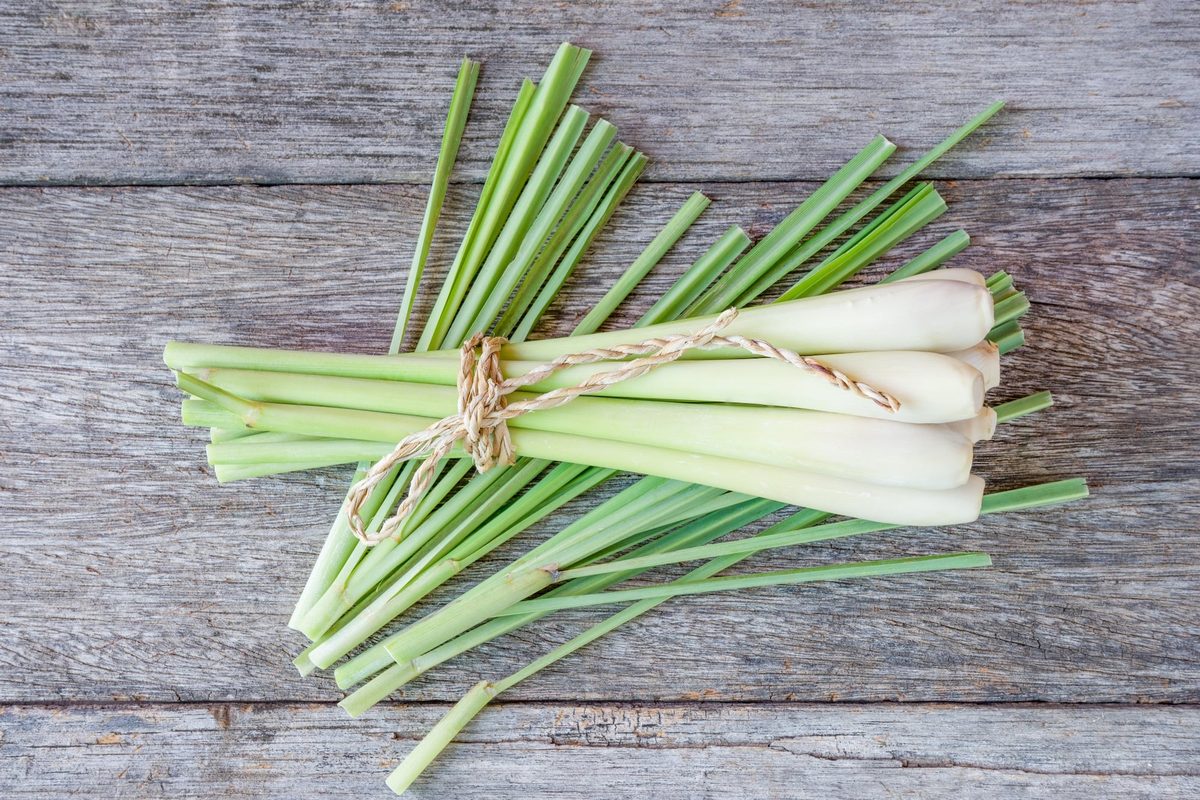
Lemongrass is a grass in the family Poaceae, not a citrus plant, and Britannica describes its flavor as a rich lemon without the acidity.1 That is the whole reason to use it: it gives soups, pastes, marinades and drinks a lemon scent without making them sour. Its stalks are woody and tough,1 so in every dish below it is either bruised and fished out or pounded and minced until it disappears. For the knife work (trimming, bruising, mincing, how long to simmer), see cooking with lemongrass. This page is about what to put it in.
Lemongrass uses at a glance
| Dish | Cuisine | Lemongrass in the recipe | Removed or eaten? |
|---|---|---|---|
| Tom yum goong2 | Thai | 3 large stalks, smashed and knotted, for 4 cups stock (serves 2) | Removed |
| Bún bò Huế3 | Vietnamese | 5 stalks: 4 bruised for the broth, 1 minced for the chile oil (serves 8) | Broth stalks simmer 1 hour; minced one stays |
| Curry laksa (Mandy Yin)4 | Malaysian | 2 stalks, halved and bruised, simmered in a coconut milk broth (serves 6) | Removed |
| Ga xao sa ot cay5 | Vietnamese | 4 plump stalks, about 3/4 cup minced, for 1 pound chicken | Eaten |
| Satay ayam (Liaw and Yeow)6 | Malaysian | 3 stalks sliced into the marinade, 2 into the peanut sauce, green tops as a basting brush | Eaten; brush discarded |
| Yellow kroeung7 | Cambodian | 6 stalks, inner cores only, pounded into about 1 1/4 cups paste | Eaten |
The amounts are each recipe’s own (Attributed). Together they show the two jobs lemongrass does: infusing a broth, or becoming part of a paste or marinade that is eaten.
Soups and broths
Broth is where lemongrass is most often used whole. In Nancie McDermott’s tom yum goong for Saveur, the stalks are smashed, knotted and simmered in stock with makrut lime leaves for about 5 minutes, then discarded before the shrimp go in.2 Saveur’s Huế-style spicy beef noodle soup, bún bò Huế, uses lemongrass twice: bruised lengths simmer in the beef broth with fish sauce and rock sugar for an hour, and a minced stalk is cooked into the chile oil that seasons the bowl.3 Britannica describes the general method: a tied bundle simmered in stock to give up its essence.1
Laksa (Attributed). Mandy Yin’s curry laksa, from her book Sambal Shiok, simmers two bruised stalks in a broth made with 800 ml of coconut milk for 20 minutes, then takes them out along with the other herbs before seasoning.4 A common claim says laksa can have a tamarind base as well as a coconut one; we did not research tamarind laksa, so we cite only the coconut version.
Curry pastes
Britannica says cooks in Thailand, Laos and Vietnam pound lemongrass with garlic, makrut lime leaf and other herbs into thick curry pastes,1 and PROSEA calls it a popular ingredient in many curries.8 Saveur’s Cambodian yellow kroeung uses only the inner cores of six stalks, pounded with makrut lime leaves, garlic, shallots, galangal, turmeric and prahok.7 When lemongrass goes into a curry this way, it is ground fine and stays in the dish. See Thai spices, galangal and makrut lime leaves.
Marinades: chicken and meat
Penn State Extension calls lemongrass a key ingredient in Asian cooking, particularly in stir-fries and meats.9 Two named recipes show how:
- Vietnamese caramelized chicken. In Huong Thu Nguyen’s ga xao sa ot cay, minced lemongrass goes partly into the marinade and the rest is stir-fried with onion and garlic.5
- Malaysian satay. Adam Liaw and Poh Ling Yeow blend sliced lemongrass with shallots, turmeric, garlic and other seasonings into a marinade paste for 1 kg of chicken thighs, put more lemongrass in the peanut sauce, and tie the reserved green tops into a brush for basting the skewers as they grill.6
A widely repeated tip says the stalks can be used as satay skewers. We found no recipe that does it; the satay recipe we read uses the tops as a basting brush instead.6 Rubbing a roasting chicken with lemongrass paste or tucking bruised stalks in the cavity is common practice rather than a sourced recipe.
Seafood
PROSEA notes that in Java the leaf sheaths go into spicy sambals and into cooked fish and fish sauces.8 McDermott’s tom yum pairs lemongrass with shrimp.2 Stuffing bruised stalks into a whole fish before steaming or grilling, or adding minced lemongrass to a shrimp or mussel stir-fry, are common uses; those are kitchen practice. Lemongrass will not add sourness the way lime does, since it has none of the fruit’s acidity,1 so a squeeze of lime still has a place.
Salads and raw uses
Raw lemongrass is only pleasant when it is very fine. Britannica describes cooks peeling back the outer layers to reach the tender shoots at the center, which can be chopped finely and added directly to a dish.1 In Java, PROSEA reports, the heart of young shoots is eaten as a side dish with rice.8 For a salad, slice the pale core paper thin or pound it into the dressing; that is our suggestion, not a named recipe.
Tea and drinks
Kew notes that lemongrass stems are widely used in teas and other drinks,10 and Penn State lists teas among its uses.9 In Java it flavors a popular sherbet.8 For tea, bruise and slice a stalk and steep it in just-boiled water; pairing it with ginger is a common choice. In cocktails, a bruised stalk can be muddled or used as a stirrer. Those methods are common practice. Penn State rates lemon verbena as having the brightest, most intense lemon scent of the lemon herbs,9 so for drinks see lemon verbena vs. lemongrass.
Using dried or frozen lemongrass in these dishes
America’s Test Kitchen, using half as much dried lemongrass as fresh, found it acceptable in a curry paste and a soup but not in a stir-fry, where it kept a hay-like texture.11 The cooking with lemongrass page has the details and ATK’s storage figures. Going by that test, the broths and pastes above are the safer places for dried lemongrass, and the marinades and raw uses are not; that reading is ours.
Not yet sourced
- A tamarind-based laksa that uses lemongrass.
- A recipe that uses lemongrass stalks as satay skewers.
- A named lemongrass cocktail or tea recipe with amounts.
Related
- Lemongrass profile and cooking with lemongrass
- Lemongrass substitutes
- Lemon verbena vs. lemongrass and lemon balm vs. lemongrass
- Thai spices, galangal and ginger
Footnotes
-
Tony Hill, “Lemongrass”, Encyclopaedia Britannica. britannica.com · Reference work ↩ ↩2 ↩3 ↩4 ↩5 ↩6
-
Nancie McDermott, “Tom Yum Goong (Thai Hot and Sour Shrimp Soup)”, Saveur. saveur.com · Publication ↩ ↩2 ↩3
-
Saveur Editors, “Huế-Style Spicy Beef and Rice Noodle Soup (Bún Bò Huế)”, Saveur, 2008. saveur.com · Publication ↩ ↩2
-
Mandy Yin, curry laksa from Sambal Shiok: The Malaysian Cookbook, via lovefood. lovefood.com · Publication ↩ ↩2
-
Huong Thu Nguyen, “Caramelized Chicken with Lemongrass and Chilies”, from Patricia Tanumihardja, The Asian Grandmother’s Cookbook, via Asia Society. asiasociety.org · Publication ↩ ↩2
-
Adam Liaw and Poh Ling Yeow, “Malaysian chicken satay (satay ayam)”, SBS Food, 2023. sbs.com.au · Publication ↩ ↩2 ↩3
-
“Khmer Yellow Curry Paste (Kroeung)”, Saveur, 2015. saveur.com · Publication ↩ ↩2
-
L.P.A. Oyen, Cymbopogon citratus, Plant Resources of South-East Asia (PROSEA). uses.plantnet-project.org · Reference work ↩ ↩2 ↩3 ↩4
-
Smith and Marquesen, “Lemon-Scented Herbs in the Garden and the Kitchen”, Penn State Extension, 2025. extension.psu.edu · Reference work ↩ ↩2 ↩3
-
Cymbopogon citratus (DC.) Stapf, Plants of the World Online, Royal Botanic Gardens, Kew. powo.science.kew.org · Reference work ↩
-
“Dried vs. Fresh Lemongrass”, America’s Test Kitchen. americastestkitchen.com · Publication ↩