Spice Substitutes · Substitutes
Mahlab Substitutes: Matching the Bitter-Almond, Vanilla-Like Kernel
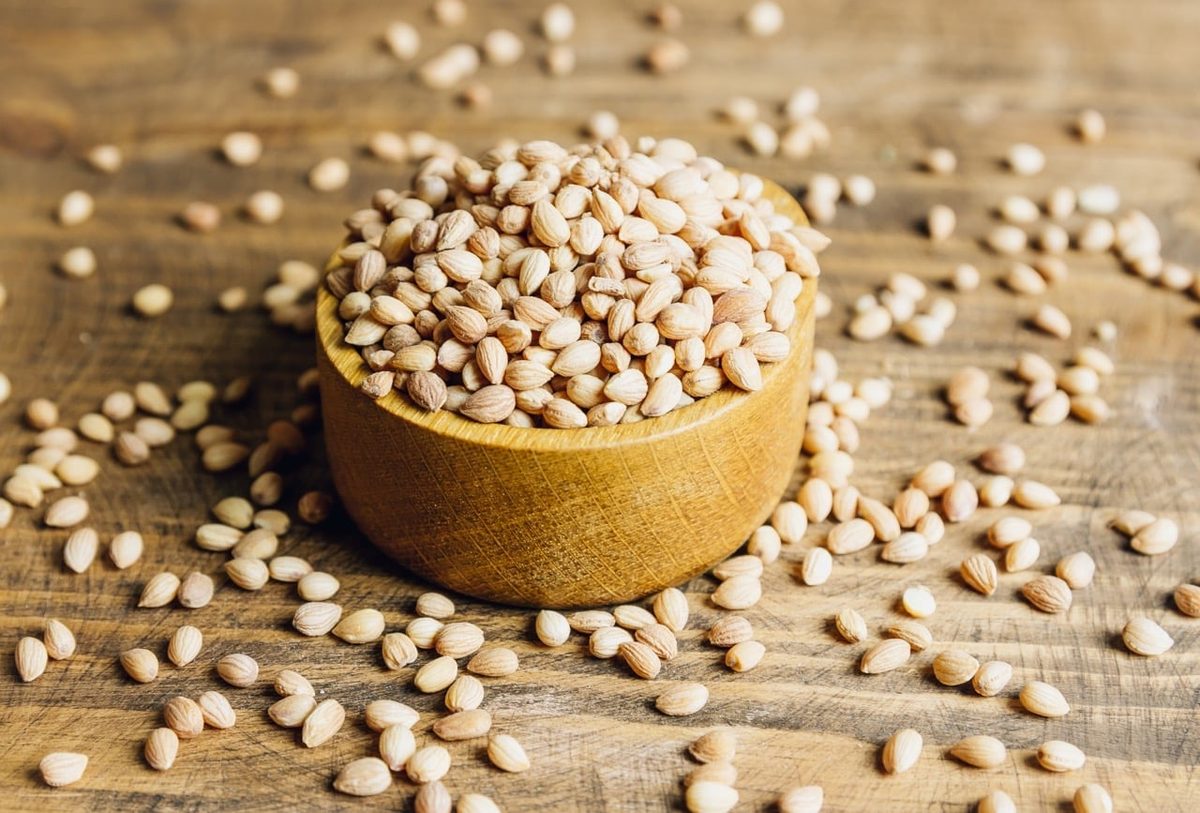
Mahlab is the kernel inside the stone of the mahaleb cherry, Prunus mahaleb, a tree in the rose family.12 It is used almost entirely in sweet breads and pastries, such as Greek tsoureki, Armenian chorak and Levantine ma’amoul.3 Nothing else tastes quite like it, and no source we found publishes a substitution ratio. What the chemistry does show is which flavors to aim for, and that points to almond extract, with vanilla in a supporting role.
Quick answer
| What mahlab is doing | Best substitute | Starting amount, per 1 teaspoon ground mahlab | Treatment |
|---|---|---|---|
| Bitter-almond, cherry-pit perfume in sweet bread or cookies | Pure almond extract | About 1/8 teaspoon | Method |
| The soft, vanilla-like background note | Vanilla extract, added with the almond | About 1/4 teaspoon | Method |
| A small amount in a recipe with other strong flavors | Leave it out | None | Method |
How the ratios on this page are labeled
- Computed: based on a measurable physical relationship, with the source named.
- Attributed: a named source publishes this ratio. We quote it as theirs.
- Disputed: named sources give different answers to the same swap. We show each one and do not average them.
- Method: we found no published ratio. We give a direction and a starting point, and say so.
Everything on this page is Method. We checked a spice reference, two cookbook authors and a merchant; none gives a quantity for any mahlab substitute.3456
What you are trying to replace
Cooks describe mahlab in similar terms. Maureen Abood calls its flavor almond, earthy and incredibly gentle;4 Eleanor Ford says it adds a sweet and almondy complexity to baking that sits gently in the background;5 Curio Spice compares it to bitter almond and cherry.6 Katzer, tasting the raw kernel, finds it bitter and aromatic, with a subtle tonka-bean flavor that comes through after some chewing.3
Two groups of compounds line up with those descriptions:
- Benzaldehyde, the bitter-almond note. In a 2021 study of mahlab seeds, benzaldehyde was the most abundant aldehyde, at about 18.7 percent of the volatiles in raw red Egyptian seeds, and the authors say it accounts for the characteristic smell of bitter almonds. Roasting lowered it.1
- Coumarins, the vanilla-like note. Katzer reports coumarin, dihydrocoumarin and herniarin in the kernels and calls coumarins “in all probability” the main flavor compounds.3 Coumarin is known for a pleasant, vanilla-like odor.7
So the closest substitutes supply a bitter-almond aroma and a soft vanilla warmth.
If mahlab is the bitter-almond perfume in a sweet bread or cookie
1. Almond extract
In our judgment, almond extract is the closest match for the bitter-almond note that the 2021 study ties to benzaldehyde in mahlab.1 Read the label: some extracts list bitter almond oil. Under US rules, bitter almond oil is permitted as a flavoring only when free from prussic acid, and it may come from almond, apricot or peach kernels.8 What extract will not give you is mahlab’s earthiness, its bitterness, or the texture of a ground kernel in the crumb.
Ratio (Method): No published ratio was found. Start with about 1/8 teaspoon pure almond extract per teaspoon of ground mahlab, added with the wet ingredients. Extract is concentrated and you can’t easily taste a raw yeast dough, so stay low the first time and adjust on the next batch.
2. Almond extract plus vanilla
Adding vanilla covers the coumarin side of mahlab’s flavor in direction, though not in chemistry: we found no source comparing vanilla’s aroma compounds with mahlab’s.
Ratio (Method): Use the almond extract above plus about 1/4 teaspoon vanilla extract per teaspoon of mahlab. This is our judgment, not a tested blend.
Why not tonka beans?
Katzer compares mahlab’s aftertaste to tonka beans,3 and US rules note that coumarin occurs naturally in tonka beans. In the United States, though, food containing added coumarin, alone or as a constituent of tonka beans or tonka extract, is deemed adulterated.9 They are not a legal option in US cooking.
Why not bitter almonds?
Some cooks suggest raw bitter almonds. Food Standards Scotland advises not eating raw bitter almonds because they can contain high levels of cyanide, and notes they are normally used only after further processing.10 A widely repeated claim says the FDA bans both the bitter almond kernel and the tree; we found no source for it. What US rules do say is that bitter almond oil is permitted as a flavoring only when free from prussic acid.8 Almond extract is the safer way to get the same note.
Spices that are often suggested but don’t match well
Anise, star anise, fennel and cardamom turn up in mahlab substitute lists. None of the sources on mahlab’s flavor mentions an anise or licorice note.31456 Star anise and fennel get their aroma from anethole,1112 and cardamom’s oil is mostly 1,8-cineole and α-terpinyl acetate;13 none of these compounds is among the mahlab volatiles discussed above. In our judgment they make a pleasant sweet bread, but it will taste of anise or cardamom, not mahlab.
Ratio (Method): If you use one, start with a small pinch, about 1/4 teaspoon ground spice per teaspoon of mahlab, and don’t combine it with almond extract unless you like both flavors together.
If mahlab is a small part of a strongly flavored recipe
Ratio (Method): If a recipe uses mahlab alongside stronger flavors, leaving it out is an honest option. In recipes where mahlab is the main spice, expect a noticeable difference; that is our judgment.
A note on coumarin
Mahlab itself contains coumarin. One 2012 analysis measured 0.87 mg of coumarin per gram of fresh kernel,7 and EFSA’s tolerable daily intake is 0.1 mg of coumarin per kg of body weight.14 Our arithmetic: a 60 kg adult would reach that intake with about 7 g of kernels with that coumarin content every day. That is far more than recipes use, and the figure comes from one study’s samples; coumarin in other lots is not known. The 2021 study notes that coumarins have been linked to liver damage and carcinogenic effects in experimental animals.1
Buying and keeping mahlab, if you find it
Katzer advises buying whole kernels because the powder spoils quickly given its high fat content.3 Abood stores mahleb in the freezer,4 and Curio Spice says to keep it in the fridge and grind right before use.6
What isn’t known
- No published ratio exists for any mahlab substitute.
- The benzaldehyde figure is from raw red Egyptian seeds in one study; other origins and roasted seed differ.1
- Coumarin content was measured in one study’s samples; no survey of retail mahlab was found.
Related
- Mahlab
- Star anise, star anise substitutes, anise seed substitutes, fennel seed, cardamom
- Vanilla, vanilla extract substitutes
- Cassia cinnamon, the other common dietary source of coumarin
- The master list of herbs and spices and do spices go bad?
Footnotes
-
Farag et al., Profiling of Primary Metabolites and Volatile Determinants in Mahlab Cherry (Prunus mahaleb L.) Seeds, Foods, 2021. mdpi.com · Peer-reviewed ↩ ↩2 ↩3 ↩4 ↩5 ↩6
-
Prunus mahaleb L., Plants of the World Online, Royal Botanic Gardens, Kew. powo.science.kew.org · Reference work ↩
-
Gernot Katzer, Mahaleb Cherry (Prunus mahaleb), Gernot Katzer’s Spice Pages. gernot-katzers-spice-pages.com · Reference work ↩ ↩2 ↩3 ↩4 ↩5 ↩6 ↩7
-
Maureen Abood, Ingredient: Mahleb, 2013 (updated 2024). maureenabood.com · Publication ↩ ↩2 ↩3 ↩4
-
Eleanor Ford, “Mahleb”, A Whisper of Cardamom, 2024, via ckbk. app.ckbk.com · Publication ↩ ↩2 ↩3
-
Mahlab product page, Curio Spice Co. curiospice.com · Merchant ↩ ↩2 ↩3 ↩4
-
Ieri, Pinelli and Romani, Simultaneous determination of anthocyanins, coumarins and phenolic acids in Prunus mahaleb L., Food Chemistry, 2012. flore.unifi.it · Peer-reviewed ↩ ↩2
-
21 CFR 182.20, Essential oils, oleoresins and natural extractives, eCFR. ecfr.gov · Regulator ↩ ↩2
-
Update on advice on sale of apricot kernels and bitter almonds, Food Standards Scotland, 2017. foodstandards.gov.scot · Regulator ↩
-
Vu Ngoc Lô, Illicium verum, Plant Resources of South-East Asia (PROSEA). uses.plantnet-project.org · Reference work ↩
-
Purwaningsih, Harmida and Brink, Foeniculum vulgare, Plant Resources of South-East Asia (PROSEA). uses.plantnet-project.org · Reference work ↩
-
Wardini and Thomas, Elettaria cardamomum, Plant Resources of South-East Asia (PROSEA). uses.plantnet-project.org · Reference work ↩
-
Coumarin in flavourings and other food ingredients with flavouring properties, EFSA AFC Panel, 2008. efsa.europa.eu · Regulator ↩