Spices · Substitutes
Anise Seed Substitutes: Star Anise, Fennel and When Not to Swap
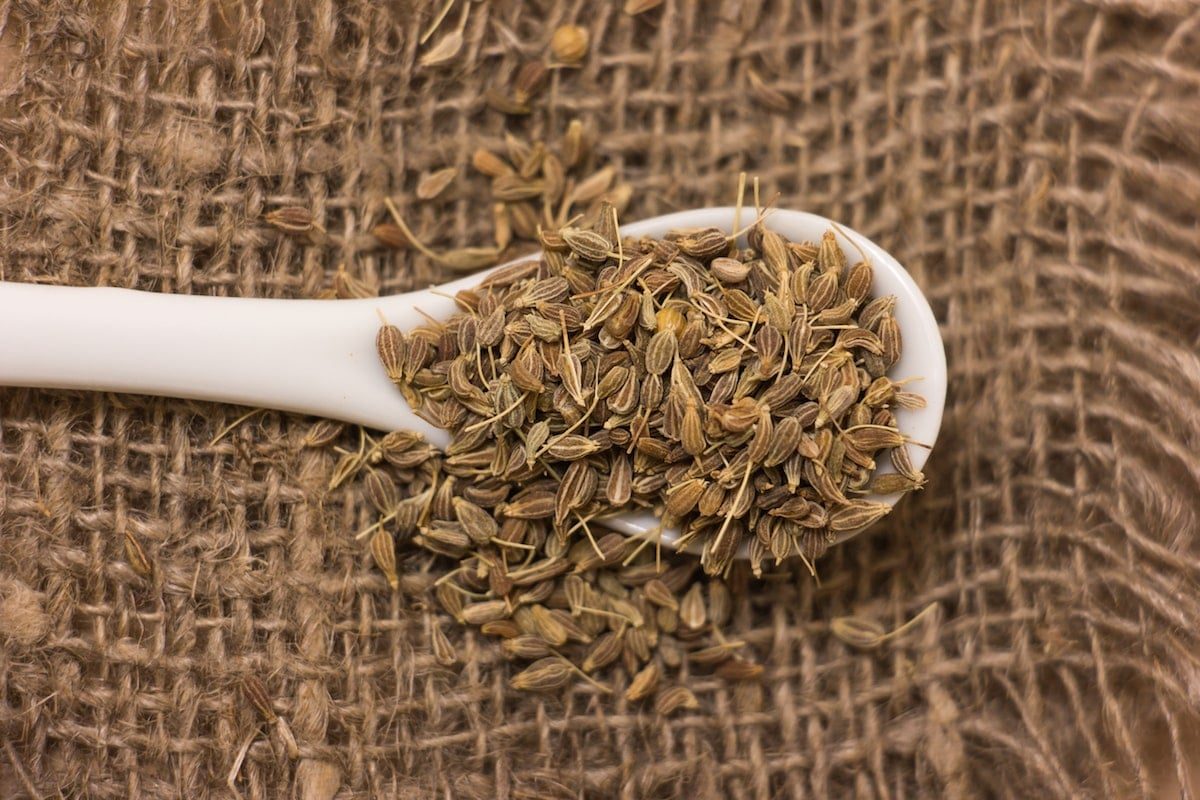
Anise seed is the dried fruit of Pimpinella anisum, a parsley-family herb from the eastern Mediterranean.1 Its oil is 80 to 95 percent trans-anethole, which PROSEA calls the compound that gives anise its character.2 Star anise and fennel seed carry the same compound, which makes them the obvious substitutes. They are not identical, though. When America’s Test Kitchen tried the three in place of one another, tasters noticed, and the magazine advises against swapping them.3 If you have no anise seed, the closest choice depends on what the anise is doing in your recipe.
Quick answer
| What anise seed is doing | Best substitute | Starting amount, per 1/2 teaspoon anise seed | Treatment |
|---|---|---|---|
| Lead flavor in cookies, biscotti, breads | Star anise, ground | About 1/2 teaspoon ground (1 whole star) | Attributed (whole star), Method (ground) |
| One note in a savory dish (sausage, sauces) | Fennel seed | 1/2 teaspoon, then taste | Method |
| Steeped in a liquid (syrups, poaching, braises) | Whole star anise | 1 whole star | Attributed |
| A mild anise hint in breads | Caraway seed | 1/4 teaspoon, then taste | Method |
How the ratios on this page are labeled
- Computed: based on a measurable physical relationship, with the source named.
- Attributed: a named source publishes this ratio. We quote it as theirs.
- Disputed: named sources give different answers to the same swap. We show each one and do not average them.
- Method: we found no published ratio. We give a direction and a cautious starting point, and say so.
No study measures the flavor strength of anise seed against any substitute. The one published ratio we found is a merchant’s.
Why the substitutes work, and where they fall short
The three licorice-like spices share one main compound and differ in the rest.
| Anise seed | Star anise | Fennel seed | |
|---|---|---|---|
| Plant | Pimpinella anisum, Apiaceae1 | Illicium verum, Schisandraceae4 | Foeniculum vulgare, Apiaceae5 |
| trans-Anethole in the oil | 80 to 95%2 | 70 to 93%6 | Up to 70 to 80% in sweet fennel7 |
Each anethole range comes from a separate PROSEA entry and different samples, so the table shows overlap, not a ranking. ATK puts it plainly: the licorice character comes from high concentrations of trans-anethole, but each spice comes from a different plant with its own secondary compounds, and that is what tasters picked up.3
Is the swap acceptable at all? Sources disagree on that, not on a ratio.
| Source | Position |
|---|---|
| America’s Test Kitchen (tested in biscotti, pho and meatballs) | Not interchangeable; “we don’t recommend it”3 |
| The Spice House (merchant) | Star anise and anise seed are unrelated but share a flavor, making anise seed “a great substitute” for star anise8 |
| PROSEA | Fennel and anise fruits are often confused and substituted for each other7 |
Our reading: in a dish where anise is the flavor you would name, any substitute will be noticed. In a dish with many other spices, it may not be. ATK found exactly that pattern.3
If anise is the lead flavor in baking
This is anise in biscotti, anise cookies and breads such as the German Anisbrot, for which Britannica calls it the characteristic ingredient.9 ATK’s tasters “easily picked out differences” when the spices were swapped in a biscotti recipe written for anise seed.3 Expect a change.
1. Star anise, ground
Star anise is the dried fruit of a tree thought most likely to be native to southern China and northeast Vietnam.4 Its oil is mostly trans-anethole, with an anise-like odor and sweet flavor.6
Ratio (Attributed, whole star): The Spice House says star anise is the stronger of the two and that 1/2 teaspoon of anise seeds replaces one whole star anise.8 Read the other way, use one whole star where a recipe calls for 1/2 teaspoon of anise seed.
Ground star anise (Method): McCormick’s conversion is 1 whole star = 1/2 teaspoon ground.10 Combining that volume conversion with The Spice House’s swap gives roughly equal volumes of ground star anise and anise seed. That is arithmetic across two sources, not a tested ratio, so start a little under it in a delicate cookie and taste the dough.
Buy star anise from a food source. Japanese star anise (Illicium anisatum) is a toxic relative, and in 2003 the FDA reported about 40 illnesses, including seizures, linked to teas made from star anise.411 See star anise.
2. Fennel seed
PROSEA says the anethole in sweet fennel oil is responsible for its anise fragrance and sweet taste, while bitter or common fennel tastes pungent and camphor-like.7 Use sweet fennel seed if you have the choice, and expect the flavor to shift.
Ratio (Method): No published ratio. Start with the same amount as the anise seed and taste. Grind it if the recipe uses ground anise.
If anise is one note in a savory dish
In Italian sausage, meatballs, tomato sauces and braises, anise is often one of many seasonings. ATK found the differences between the three spices “harder to detect” in Italian sausage meatballs, because the dish contained many other spices.3 This is where a substitute works best.
1. Fennel seed
Its anethole gives the same sweet, anise-like note.7 Britannica lists fennel seed as a flavoring for pastries, sweet pickles and fish.5
Ratio (Method): No published ratio. Start 1:1 and add more to taste once the dish has simmered.
2. Chinese five-spice powder
Britannica’s list for five-spice is fennel seeds, cassia, cloves, star anise and Szechuan pepper, and it describes licorice base notes with sweet top notes.12 Some versions add ginger, nutmeg, licorice, orange peel or galangal.13 Two of the five, star anise and fennel, carry anethole,67 but the cassia, cloves and Szechuan pepper will change the dish.
Ratio (Method): No published ratio. Start with half as much as the anise seed called for, and only in a savory dish where cinnamon and clove are welcome.
If anise is steeped in a liquid
For syrups, poaching liquids, braises and broths, a whole spice that can be fished out is easiest.
1. Whole star anise
Ratio (Attributed): One whole star for each 1/2 teaspoon of anise seed, per The Spice House’s equivalence above.8 ATK’s tasters also noticed swaps in pho broth,3 so in a clear, lightly seasoned liquid, expect a difference.
2. Fennel seed
Ratio (Method): No published ratio. Use the same amount as the anise seed, in a tea ball or cheesecloth, and taste as it steeps.
If you want only a hint of anise
Caraway seed
Caraway is another parsley-family seed, and Britannica describes its aroma as reminiscent of anise, with a warm, slightly sharp taste.14 Its oil is different, though: PROSEA names carvone and limonene as the principal components,15 not anethole. Expect a rye-bread flavor with a faint anise edge, not anise itself.
Ratio (Method): No published ratio. Start with half the anise seed amount, in breads and savory dishes rather than sweets.
What about licorice?
PROSEA notes that anise’s flavor is often confused with licorice, and that anise oil is traditionally used together with licorice in licorice candy.2 That makes licorice a partner of anise, not a stand-in for it. We found no credible source giving a way to use licorice root in place of anise seed.
What isn’t known
- No published measurement compares the strength of anise seed with star anise, fennel or caraway in a dish. The Spice House’s equivalence is a merchant’s rule of thumb, and it is published for the opposite direction (anise seed in place of star anise).
- No source gives a ratio for fennel, caraway or five-spice in place of anise seed.
- The idea that “most” licorice candy contains more anise than licorice is widely repeated; no source we found supports it.
Related
- Anise seed, star anise, fennel seed, caraway seeds
- Star anise vs. anise seed, fennel seed vs. anise seed, caraway seeds vs. fennel seeds
- Star anise substitutes, fennel seed substitutes, caraway seed substitutes
- Chinese five-spice powder, star anise uses, the master list of herbs and spices
Footnotes
-
Pimpinella anisum L., Plants of the World Online, Royal Botanic Gardens, Kew. powo.science.kew.org · Reference work ↩ ↩2
-
L.B. Cardenas and C.C. de Guzman, Pimpinella anisum, Plant Resources of South-East Asia (PROSEA). uses.plantnet-project.org · Reference work ↩ ↩2 ↩3
-
Andrew Janjigian, Why Anise Seed, Fennel Seed, and Star Anise aren’t Interchangeable, America’s Test Kitchen, 2020. americastestkitchen.com · Publication ↩ ↩2 ↩3 ↩4 ↩5 ↩6 ↩7
-
Illicium verum Hook.f., Plants of the World Online, Royal Botanic Gardens, Kew. powo.science.kew.org · Reference work ↩ ↩2 ↩3
-
“Fennel”, Encyclopaedia Britannica. britannica.com · Reference work ↩ ↩2
-
Vu Ngoc Lô, Illicium verum, PROSEA. uses.plantnet-project.org · Reference work ↩ ↩2 ↩3
-
Purwaningsih, Harmida and M. Brink, Foeniculum vulgare, PROSEA. uses.plantnet-project.org · Reference work ↩ ↩2 ↩3 ↩4 ↩5
-
Star Anise Substitute, The Spice House. thespicehouse.com · Merchant ↩ ↩2 ↩3
-
“Anise”, Encyclopaedia Britannica. britannica.com · Reference work ↩
-
How to Grind Your Own Spices, McCormick. mccormick.com · Merchant ↩
-
Teas Made from Star Anise Were Associated With Illnesses Including Seizures, US Food and Drug Administration, 2003. fda.gov · Regulator ↩
-
Tony Hill, “Five-spice powder”, Encyclopaedia Britannica. britannica.com · Reference work ↩
-
Five Spice Powder, The Woks of Life. thewoksoflife.com · Publication ↩
-
“Caraway”, Encyclopaedia Britannica. britannica.com · Reference work ↩
-
H. Toxopeus and J.H. Lubberts, Carum carvi, PROSEA. uses.plantnet-project.org · Reference work ↩