Spices · Profile
Cassia Cinnamon: Species, Flavor, Coumarin and How It Is Used
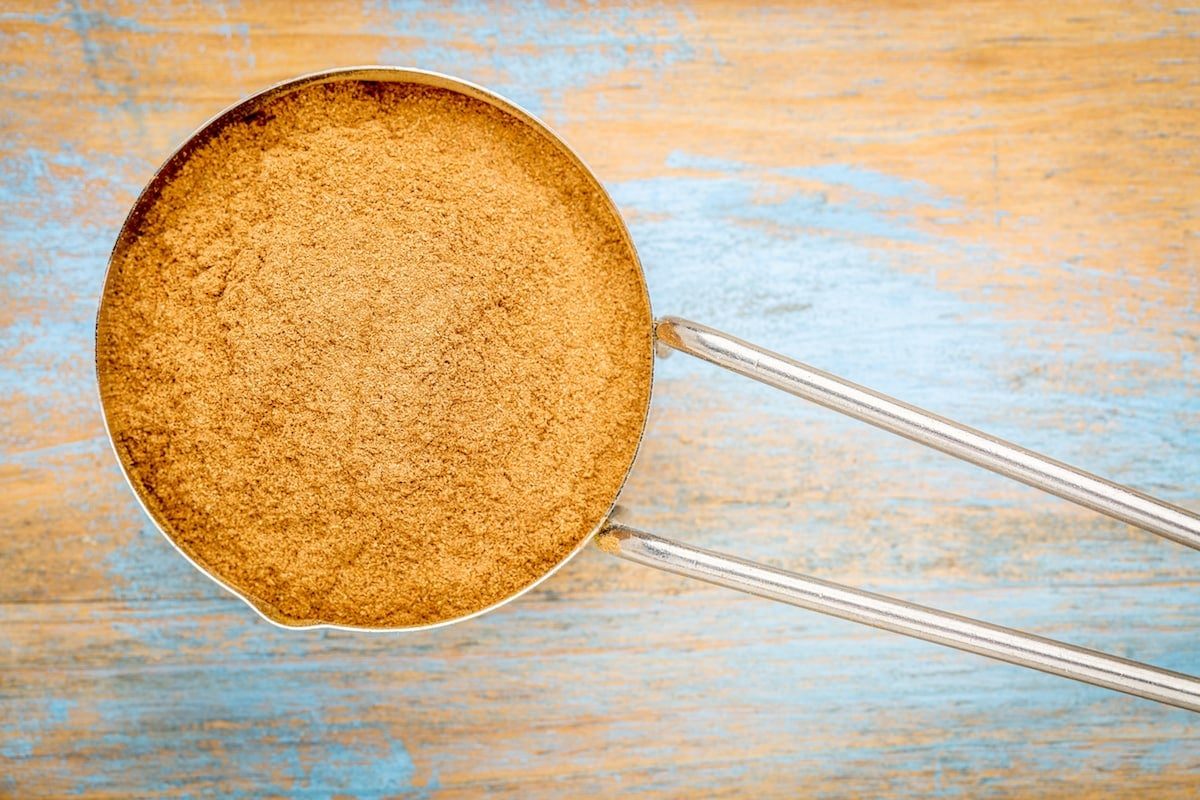
Cassia is the cinnamon most Americans know: the hard, reddish-brown quills and the strong, sweet-hot powder in most supermarket jars. NCCIH calls it the most common type sold in North America.1 It is not one plant but the bark of three related Asian trees, and its main difference from Ceylon cinnamon, beyond flavor, is coumarin, a natural compound European regulators limit. This page covers the species, what drives the flavor, how the bark is made, its real and imagined history, how it is used, and what the safety figures show.
At a glance
| What it is | Dried bark of several Cinnamomum species2 |
| Species | Chinese cassia (C. aromaticum, often cited as C. cassia), Indonesian cassia (C. burmanni), Vietnamese or Saigon cassia (C. loureiroi)3451 |
| Plant family | Lauraceae (laurel family)3 |
| Native ranges | SE China to Vietnam; S China to western and central Malesia; Vietnam (Kew)345 |
| Main producers | China for Chinese cassia; Vietnam for Vietnamese cassia; Indonesia for C. burmanni (PROSEA)2 |
| Key aroma compound | Cinnamaldehyde, 70–95% of Chinese cassia bark oil2 |
| Bark essential oil | 1–4% (Chinese cassia)2 |
| Coumarin | About 3,000 mg/kg on average in German monitoring data6 |
| Forms sold | Quills (sticks), pieces, ground; bark and leaf oils |
Measured values
4 figures, sourced| Measure | Value | Scope | Source |
|---|---|---|---|
| Essential oil | 1–4 % of bark | Chinese cassia (PROSEA) | prosea.prota4u.org |
| Cinnamaldehyde | 70–95 % of bark oil | Chinese cassia bark oil (PROSEA) | prosea.prota4u.org |
| Coumarin | about 3,000 on average; highest up to 10,000 mg/kg | cassia, German food monitoring data, as summarized by BfRSources differ; different sampling programs | bfr.bund.de |
| Coumarin | brand means 2,650 to 7,017 mg/kg | ground cinnamon, Czech retail, 60 samples from 12 brands (Blahová & Svobodová 2012)Sources differ; different sampling programs | doaj.org |
Each figure is quoted as its source states it, with the samples or standard it applies to. Where sources differ, both are shown; nothing is averaged. All measured values
The three cassias
| Trade name | Species (Kew name) | Native range (Kew) | Producer (PROSEA) |
|---|---|---|---|
| Chinese cassia | Cinnamomum aromaticum (syn. C. cassia) | SE China to Vietnam3 | China, mainly Guangxi and Guangdong; commercially grown only in China and Vietnam2 |
| Indonesian cassia | Cinnamomum burmanni | S China to western and central Malesia4 | Indonesia; Padang, West Sumatra, is an important production area2 |
| Vietnamese (Saigon) cassia | Cinnamomum loureiroi | Vietnam5 | Vietnam2 |
Ceylon cinnamon, Cinnamomum verum, is a separate species from Sri Lanka; see Ceylon vs. cassia cinnamon and Ceylon cinnamon. Related profiles: Saigon cinnamon and Korintje cinnamon. The nickname “bastard cinnamon” is often repeated for cassia; we found no source documenting it.
Flavor and aroma
Cassia tastes stronger, hotter and more single-minded than Ceylon cinnamon: sweet, a little peppery, with a candy-like punch where Ceylon is milder and more layered. That description is ours, and the chemistry fits it:
- Cassia. PROSEA gives Chinese cassia bark oil as 70–95% cinnamaldehyde with only traces of eugenol.2 The bark holds 1–4% essential oil.2
- Ceylon, for comparison. Ceylon bark oil is 50–75% cinnamaldehyde with 5–18% eugenol.7
- Coumarin. PROSEA notes that among the less volatile constituents, only coumarin contributes substantially to the taste and smell.2
How cassia bark is made
PROSEA describes the harvest of Chinese and Vietnamese cassia: trees are first coppiced at 5–7 years, when 1.5–2.5 m tall; the cut stems are ringed every 30–60 cm and split lengthwise so the bark can be peeled.2 Vietnamese cassia bark is also stripped from standing trees, sometimes from bamboo scaffolding.2 The bitter-tasting outer layer is scraped off, and the bark dries in the sun, curling into reddish-brown quills.2 It is graded mainly by type (scraped, unscraped, quills, quillings, featherings, chips) and appearance, and grinding is usually done in the countries that buy it.2
History
What can be shown
- Herodotus. The Greek historian Herodotus described Arabians gathering cassia from a shallow pool guarded by winged creatures resembling bats, which they fended off with hides wrapped over everything but their eyes.8 It is a traveler’s tale, not natural history. A companion story about cinnamon gathered from the nests of great birds is often quoted next to it; that chapter could not be opened for this review.
- The Bible. Psalm 45:8 in the King James Version describes garments that “smell of myrrh, and aloes, and cassia”.9 The Hebrew word, qetsiah, is defined in Strong’s lexicon as “cassia (a powdered bark)”, and this is its only occurrence in scripture.10 Whether that ancient bark was the same plant as today’s Chinese cassia cannot be shown from the text.
What could not be confirmed
Several stories circulate about cassia’s history: that the city of Guilin was named for cassia in the Qin dynasty, that Persian traders coined the name dar-chin (“wood of China”), that Jewish traders introduced cassia to Europe, and that it became popular in the 19th century. Britannica gives the meaning of Guilin’s name as “Forest of Sweet Osmanthus”, not cassia, and notes that Guilin has not been Guangxi’s provincial capital since Nanning replaced it in 1949.11 We found no source for the rest.
How cassia is used
- Baking and sweets. In Europe, cinnamon in general goes into bakery products and sweets, hot drinks and herbal infusions, according to CBI, the Dutch government’s import-promotion agency.12 PROSEA notes a clear US preference for cassia over Ceylon cinnamon, and for Vietnamese cassia in particular.2
- Savory and spice blends. Britannica lists cassia, which it calls Chinese cinnamon, as one of the five spices in Chinese five-spice powder.13 CBI names cinnamon as a key ingredient in garam masala and masala chai.12 Whole quills go into braises, stocks and mulled drinks and are removed before serving (common practice).
- Flavor industry. Chinese cassia leaf oil, usually just called cassia oil, is of special importance in cola-type drinks, per PROSEA.2
For technique (sticks versus ground, when to add) see ground cinnamon vs. cinnamon sticks. For blends built on cassia see apple pie spice and pumpkin pie spice.
Buying and quality
Ground cinnamon in a US supermarket is most likely cassia.1 BfR, Germany’s risk agency, says shoppers can hardly tell Ceylon and cassia apart, and notes that some packs state “Ceylon cinnamon”.6
Storage
No regulator or standards body publishes a shelf life for cassia, and the figures that circulate online have no traceable source. Common practice is to keep it sealed, cool and dark, and to judge it by smell: if a pinch of the ground spice smells faint, it has faded.
Safety
Coumarin
Coumarin is the main reason to know which cinnamon you are using in large amounts. The European Food Safety Authority’s tolerable daily intake is 0.1 mg per kg of body weight, and EFSA judged that exceeding it threefold for one to two weeks is not a safety concern.14 BfR says that in a small group of especially sensitive people, even relatively low doses can cause liver damage.6
| Scope | Coumarin | Source |
|---|---|---|
| Cassia, German food monitoring data | About 3,000 mg/kg on average; highest up to 10,000 mg/kg | BfR6 |
| Ground cinnamon, Czech retail, 60 samples from 12 brands | Brand means 2,650 to 7,017 mg/kg | Blahová & Svobodová 201215 |
| US study of the three cassia species and C. verum | Substantial in all three cassias; only traces in C. verum | Wang et al. 201316 |
BfR estimates that a 60 kg adult reaches the tolerable intake with about 2 g a day of cassia with average coumarin content, and a 15 kg child with about 0.5 g.17 NCCIH says eating cassia doesn’t usually supply enough coumarin to cause significant problems, but that prolonged use could matter for sensitive people, such as those with liver disease.1
The EU sets no maximum for coumarin in cinnamon itself.6 It does limit coumarin in foods that contain cinnamon:18
| Food (EU Regulation 1334/2008, Annex III) | Maximum coumarin |
|---|---|
| Traditional and/or seasonal bakery ware labeled as containing cinnamon | 50 mg/kg |
| Breakfast cereals, including muesli | 20 mg/kg |
| Other fine bakery ware | 15 mg/kg |
| Desserts | 5 mg/kg |
Is coumarin a blood thinner? A widely repeated claim says so. France’s food safety agency, ANSES, says the anticoagulant properties often attributed to coumarins belong to dimeric derivatives such as dicoumarol, and that simple coumarins do not have them; drugs like warfarin are synthetic coumarin derivatives.19
Lead alerts
Since 2024 the US FDA has issued public health alerts on specific lots of ground cinnamon products found to contain elevated lead, with results it summarizes as 2.03 to 7.68 parts per million.20 The alerts concern particular products, not cassia as a whole; the brand-by-brand list is on our cinnamon page.
Health claims
NCCIH says research does not clearly support using cinnamon for any health condition, and that it is unclear whether cinnamon supplements help with diabetes or weight loss.1 PROSEA notes that the barks of all three cassia species are folk medicines for a long list of ailments,2 which describes tradition, not proven effect. Claims that cassia acts like insulin, fights food poisoning or is a good source of minerals could not be supported and are not made here.
Substitutes and comparisons
Ceylon cinnamon swaps in directly, with a milder flavor; PROSEA notes the barks are interchangeable in many applications.2 No source gives a tested ratio. See cinnamon substitutes for other options, and cassia buds for the dried fruits of the same Chinese tree. Comparisons: Ceylon vs. cassia cinnamon, Saigon vs. Ceylon cinnamon, cinnamon vs. nutmeg and cloves vs. cinnamon. If a dish has too much, see too much cinnamon.
Footnotes
-
Cinnamon: Usefulness and Safety, National Center for Complementary and Integrative Health. nccih.nih.gov · Regulator ↩ ↩2 ↩3 ↩4 ↩5
-
Cinnamomum (cassia species), PROSEA Handbook No. 13: Spices. prosea.prota4u.org · Reference work ↩ ↩2 ↩3 ↩4 ↩5 ↩6 ↩7 ↩8 ↩9 ↩10 ↩11 ↩12 ↩13 ↩14 ↩15 ↩16 ↩17 ↩18
-
Cinnamomum aromaticum Nees, Plants of the World Online, Royal Botanic Gardens, Kew. powo.science.kew.org · Reference work ↩ ↩2 ↩3 ↩4
-
Cinnamomum burmanni (Nees & T.Nees) Blume, Plants of the World Online, Royal Botanic Gardens, Kew. powo.science.kew.org · Reference work ↩ ↩2 ↩3
-
Cinnamomum loureiroi Nees, Plants of the World Online, Royal Botanic Gardens, Kew. powo.science.kew.org · Reference work ↩ ↩2 ↩3
-
FAQ on coumarin in cinnamon and other foods, German Federal Institute for Risk Assessment (BfR). bfr.bund.de · Regulator ↩ ↩2 ↩3 ↩4 ↩5
-
Cinnamomum verum, PROSEA Handbook No. 13: Spices. prosea.prota4u.org · Reference work ↩
-
Herodotus, Histories 3.110, translated by G.C. Macaulay, Internet Sacred Text Archive. sacred-texts.com · Reference work ↩
-
Psalm 45:8, King James Version, Bible Hub. biblehub.com · Reference work ↩
-
Strong’s Hebrew 7102, qetsiah, Bible Hub. biblehub.com · Reference work ↩
-
“Guilin”, Encyclopaedia Britannica. britannica.com · Reference work ↩
-
The European market potential for cinnamon, CBI. cbi.eu · Regulator ↩ ↩2
-
Tony Hill, “Five-spice powder”, Encyclopaedia Britannica. britannica.com · Reference work ↩
-
Coumarin in flavourings and other food ingredients with flavouring properties, EFSA, 2008. efsa.europa.eu · Regulator ↩
-
Blahová and Svobodová, “Assessment of Coumarin Levels in Ground Cinnamon Available in the Czech Retail Market”, The Scientific World Journal, 2012. doaj.org · Peer-reviewed ↩
-
Wang et al., “Cassia cinnamon as a source of coumarin in cinnamon-flavored food and food supplements in the United States”, Journal of Agricultural and Food Chemistry, 2013. hero.epa.gov · Peer-reviewed ↩
-
“Cassia cinnamon with high coumarin contents to be consumed in moderation”, BfR press release. bfr.bund.de · Regulator ↩
-
Regulation (EC) No 1334/2008, Annex III Part B, EUR-Lex. eur-lex.europa.eu · Regulator ↩
-
Opinion on the risk of hepatotoxicity associated with the coumarin content of certain plants, ANSES, 2018. anses.fr · Regulator ↩
-
More Ground Cinnamon Products Added to FDA Public Health Alert Due to Presence of Elevated Levels of Lead, U.S. FDA, 2024, updated. fda.gov · Regulator ↩