Spice Fixes · Fix
Too Much Basil? How to Fix It, Fastest Fix First
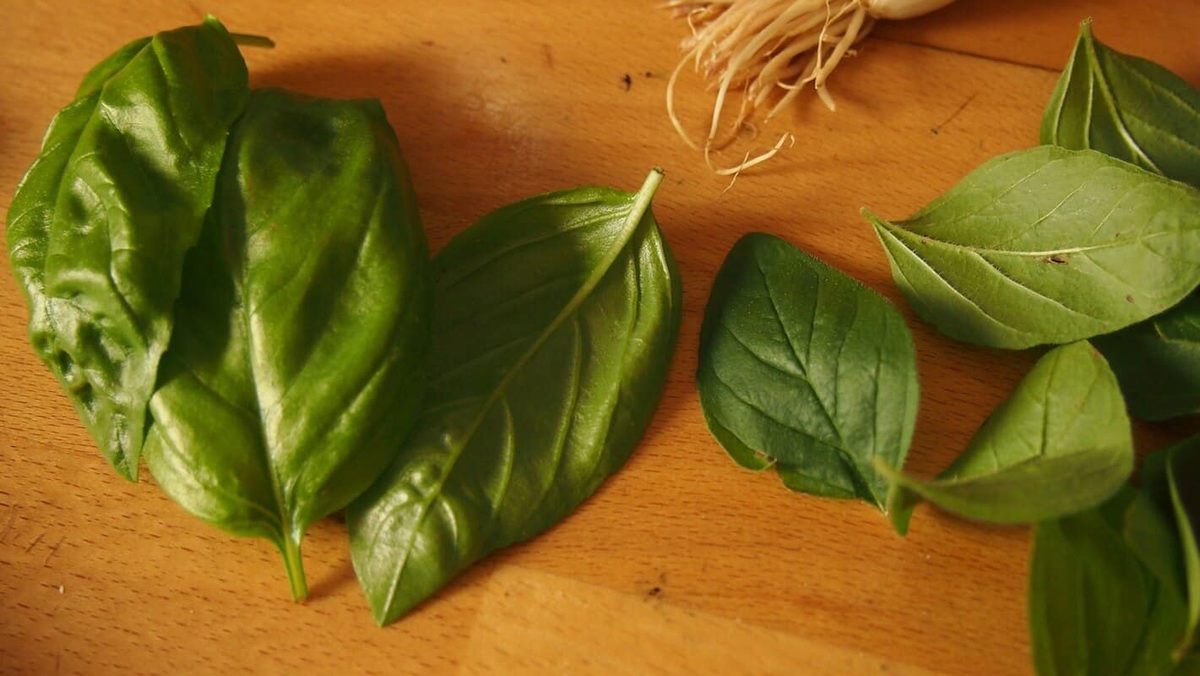
Too much basil shows up in one of two ways: the herb’s sweet, perfumed aroma crowds out everything else in the dish, or the dish has turned bitter, which is most common in pesto. The fixes differ, so taste first. Fresh basil has one advantage over a ground spice: if you catch it early, much of it can still come out.
Quick answer
| What’s wrong | Fastest fix | If that’s not enough |
|---|---|---|
| Just added, leaves still whole or torn | Pick or skim the leaves out; strain a smooth sauce | Dilute with more of the base |
| Too much basil, overall | Add more of everything else, or make a basil-free second batch and combine | Add more of a strong ingredient the dish already has (cheese, garlic, tomato) |
| Bitter pesto | Add more of the other ingredients, a pinch of salt or a little more cheese | A small pinch of sugar |
| Long-simmered sauce, still too basil-forward | Simmer a little longer, uncovered | Dilute |
Caught early: take it out
This is the one fix that removes basil instead of hiding it, and it works best with fresh leaves that are whole, torn or roughly chopped. Fish them out with a slotted spoon or tongs, or skim what is floating on a soup or sauce. A smooth tomato sauce can go through a sieve, which catches leaves and leaves the sauce. Finely chopped basil is harder to chase down, and dried basil can’t be removed at all.
Do it quickly. We found no measurement of how fast basil flavors a sauce, so in our judgment, the sooner the leaves come out the better.
Sheer volume: too much basil for the dish
Dilute. Add more of every ingredient except basil: more crushed tomatoes and aromatics to a tomato sauce, more broth to a soup. If you can’t add to the pot without changing the dish, Tasting Table suggests (for garlic) cooking a second batch without the overdosed ingredient and combining the two.1 The arithmetic is the same for basil: two equal batches halve the concentration. Freeze what you don’t need. If you don’t have enough ingredients for a full second batch, set some of the over-basiled dish aside for another use and dilute the rest.
Lean on what’s already in the dish. Parmesan, pecorino Romano or mozzarella in an Italian dish, more garlic in a garlicky one. These add bulk and strong flavors of their own that compete with the basil. Treat this as kitchen judgment: we found no source showing that cheese, garlic or any other ingredient “cancels out” basil. The same goes for a dash of cayenne or slices of fresh bell pepper. Chile heat or a green vegetable note can shift attention away from basil, but they add a new flavor rather than removing the old one, so add a little, taste, and stop if the dish starts tasting like the fix.
Bitter: usually a pesto problem
Bitterness in basil dishes most often comes from how the basil was handled, not only how much was used. According to Tasting Table, blending pesto too long can bruise the leaves and release bitter compounds, and mature or damaged leaves taste more bitter than young, tender ones.2 Some extra-virgin olive oils are naturally peppery or bitter as well, so the oil may be part of the problem.2
Add more of the other ingredients. More pine nuts, cheese and a mild oil spread the bitterness over a bigger batch. Stir them in by hand or pulse briefly rather than blending the whole batch again.
Blunt it with salt or a little sugar. In controlled taste tests with pure solutions, both sweet tastes and sodium salts suppressed bitterness, while citric acid was the weakest suppressor.3 That is a laboratory result, not a test on pesto, but it points the same way as common practice: a pinch of salt, or more salty cheese, is more likely to help than a squeeze of lemon. Add sugar only in small pinches, tasting each time.
Cooking it out
Fresh basil is one of the delicate herbs that LSU AgCenter advises adding a minute or two before the end of cooking, because prolonged heat causes flavor and aroma losses.4 That means extra simmering time will tone down fresh basil in a sauce or soup. We found no test of how long it takes, and the rest of the dish keeps cooking too, so give it a few more minutes uncovered, taste, and stop before the sauce over-reduces.
Dried basil is a different case. LSU AgCenter’s rule of thumb is that one teaspoon of crumbled dried herb does the work of a tablespoon of fresh,4 so a heavy hand with dried basil is a bigger overdose to begin with, and there are no leaves to fish out. Dilution is the main fix.
Is a lot of basil unsafe?
Basil contains estragole, which the EU’s former Scientific Committee on Food assessed in 2001. It listed estragole as 20 to 43 percent of sweet basil essential oil, concluded that estragole is genotoxic and carcinogenic, and said it could not set a safe exposure limit, calling for reductions in exposure and restrictions in use levels.5 Its carcinogenicity evidence came mainly from mice dosed orally.5 Germany’s Federal Institute for Risk Assessment (BfR) wrote in 2022 that the health risk from foods containing these compounds cannot currently be conclusively assessed, and named basil-containing pesto among foods that may contain high amounts.6
Neither body gives a limit for basil in home cooking, and the BfR communication makes no recommendation to avoid basil.6 The SCF expressed exposure as average daily intake (4.3 mg a day for consumers, from all sources including added flavorings), not as an amount per dish.5
Fixes that don’t hold up
A potato in the pot. The idea that a raw potato absorbs excess flavor comes from the oversalted-soup trick, and even there a Tasting Table writer calls the potato “more of an aid than a final answer.”7 We found no test of a potato against basil. Potato chunks left in a soup do add bland bulk, which is ordinary dilution.
Hours of extra cooking. Prolonged heat does reduce fresh herb aroma,4 but hours of simmering will also reduce, darken and change the rest of the sauce. A few minutes is a reasonable try; beyond that, dilute.
Preventing it next time
Add fresh basil at the end. LSU AgCenter suggests adding delicate herbs including basil a minute or two before cooking ends, or sprinkling them over the food just before serving.4 Basil added late is also basil you can still see and pick out.
Convert carefully between fresh and dried. Use about one teaspoon of dried basil where a recipe calls for a tablespoon of fresh.4 More on the difference in dried basil vs. fresh.
Start small with dried. LSU AgCenter’s general advice is to begin with 1/4 teaspoon of most ground spices or ground dried herbs and adjust from there.4 It’s easy to add more basil and hard to take it out.
For pesto, blend briefly and use young leaves.2 Taste before adding the last of the basil.
Related
Footnotes
-
Simple Ways To Tone Down The Pungency Of Garlic, Harmony Colangelo, Tasting Table, 2023. tastingtable.com · Publication ↩
-
5 Possible Reasons Your Homemade Pesto Has A Bitter Taste, Sara Klimek, Tasting Table, 2026. tastingtable.com · Publication ↩ ↩2 ↩3
-
Green BG et al., Taste Mixture Interactions: Suppression, Additivity, and the Predominance of Sweetness, Physiology & Behavior, 2010. pmc.ncbi.nlm.nih.gov · Peer-reviewed ↩
-
Flavorful Herbs, LSU AgCenter. lsuagcenter.com · Reference work ↩ ↩2 ↩3 ↩4 ↩5 ↩6
-
Opinion of the Scientific Committee on Food on Estragole, European Commission, 2001. food.ec.europa.eu · Regulator ↩ ↩2 ↩3
-
Alkenylbenzenes in food: how large is the health risk?, BfR Communication No. 22/2022, German Federal Institute for Risk Assessment, 2022. bfr.bund.de · Regulator ↩ ↩2
-
How To Fix An Oversalted Soup, Alison Spiegel, Tasting Table, 2016. tastingtable.com · Publication ↩