Spice Comparisons · Comparison
Basil vs. Mint: Same Family, Different Flavor Chemistry
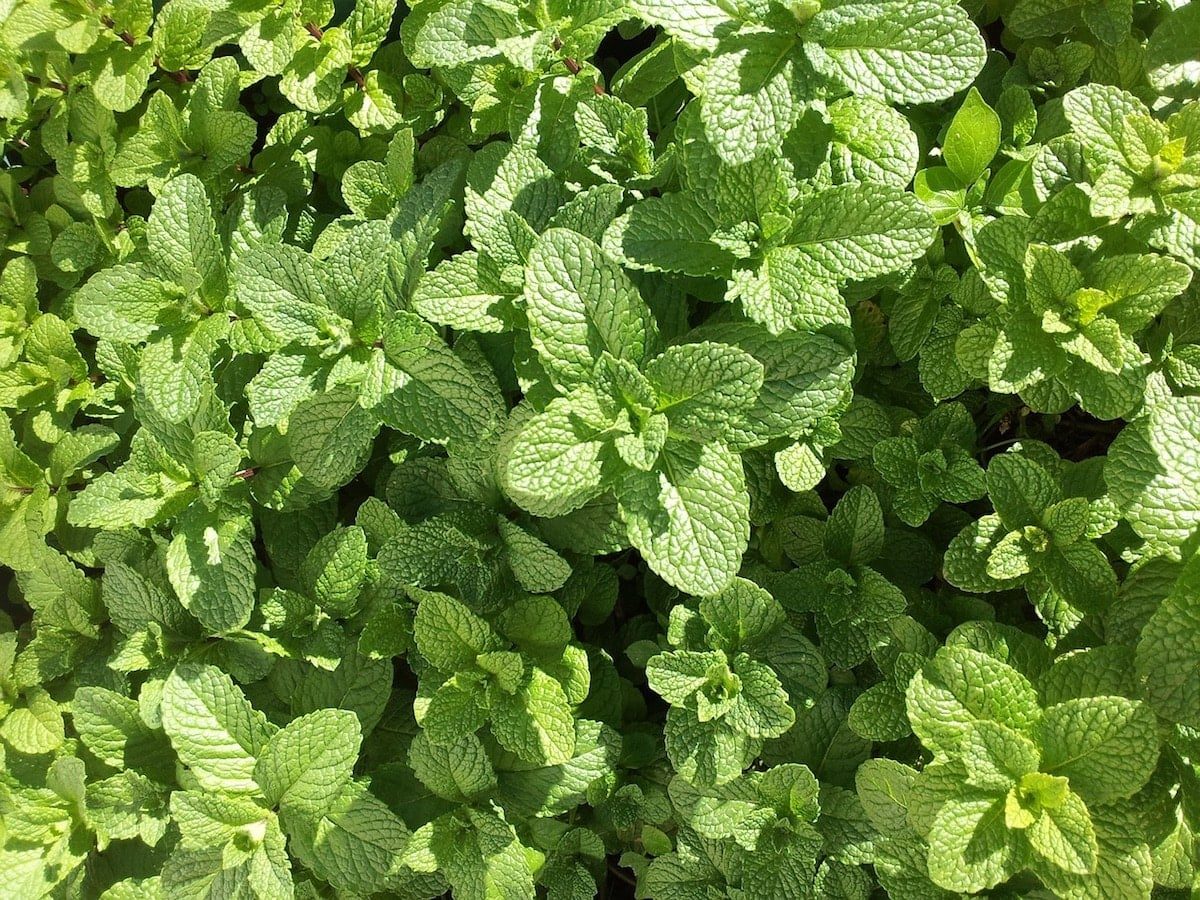
Basil and mint are cousins in the same plant family, but their flavors come from different compounds. Sweet basil oil is built on methyl chavicol (estragole), while the two culinary mints run on menthol and menthone (peppermint) or carvone (spearmint).12 That is why basil reads as sweet and spicy and mint as cool, and why they swap well in some savory dishes and not at all in a mint tea or a basil pesto.
Side by side
| Basil (sweet basil) | Mint (spearmint and peppermint) | |
|---|---|---|
| Species | Ocimum basilicum3 | Spearmint, Mentha spicata; peppermint, M. × piperita24 |
| Family | Mint family (Lamiaceae)5 | Mint family (Lamiaceae)2 |
| Native range | Tropical and subtropical Asia to northern Australia (Kew)3 | Spearmint: Europe to China (Kew)4 |
| Growth | Annual herb5 | Perennial; spearmint spreads by creeping stolons6 |
| Key aroma compounds | Methyl chavicol (estragole): 53.3% in one French-type oil1 | Spearmint: carvone, and no menthol per McCormick; peppermint: menthol and menthone267 |
| Flavor (editorial) | Sweet, green and spicy, with anise and clove notes | Spearmint sweet and gently cool; peppermint sharp and cold |
| Strength | Medium-strength herb (University of Delaware)8 | Also medium-strength8 |
| Forms | Fresh and dried leaves | Fresh and dried leaves, essential oils, extracts |
| Typical uses | Pesto, pizza, pasta, Thai cooking1 | Sweets, drinks, English mint sauce69 |
| Cost | No dated, sourced price comparison found | No dated, sourced price comparison found |
The flavor row is our description, not a measurement. PROSEA describes French-type basil oil as sweet-spicy, slightly green and fresh,1 and Katzer calls spearmint minty but not pungent.10 For which mint is which, see mint and types of mint.
The differences that change a dish
Coolness
Mint’s cooling character comes with menthol, and only peppermint has much of it. McCormick describes spearmint as milder than peppermint and lacking menthol, and Britannica names carvone as spearmint’s principal component.76 A widely repeated description gives spearmint “a strong menthol flavor”; the sources reviewed here say the opposite. Basil has no cooling note at all (editorial), so it cannot replace mint where coolness is the point: tea, a mojito, mint chocolate.
Which basil
“Sweet basil” is the species Ocimum basilicum, and Genovese is one cultivar group within it, not another name for the whole species: a US trial of commercial basils lists ‘Genovese’ among the O. basilicum cultivars.11 The protected Basilico Genovese PDO goes further and requires a total absence of mint aroma in the leaf.12 That rule is a neat summary of how differently the two herbs are judged. See Genovese basil.
Heat and drying
Both are delicate herbs. LSU AgCenter lists basil and mint among those best added in the last minute or two of cooking.13 America’s Test Kitchen lists both among herbs that are much weaker in flavor when dried,14 and its tests describe delicate herbs such as basil as more volatile.15 Britannica says dried common basil is less fragrant and more pungent than fresh.5 Dried basil can go into long-cooked sauces and dried mint into recipes written for it, but neither replaces the fresh leaf as a garnish (editorial).
Nutrition
| Per 100 g, fresh | Basil | Spearmint |
|---|---|---|
| Vitamin A (RAE) | 264 µg (29% DV) | 203 µg (23% DV) |
| Calcium | 177 mg (14% DV) | 199 mg (15% DV) |
| Iron | 3.17 mg (18% DV) | 11.9 mg (66% DV) |
| Vitamin C | 18.0 mg (20% DV) | 13.3 mg (15% DV) |
Source: USDA FoodData Central;1617 percentages are our arithmetic against FDA Daily Values.18 A widely repeated comparison credits 100 g of basil with 175% of daily vitamin A and spearmint with 135%; against today’s Daily Values the figures are 29% and 23%. Typical servings are a few grams, so neither herb is a meaningful source of these nutrients in normal cooking; basil’s vitamin K is the exception (see the basil profile).
Can one stand in for the other?
Partly. The mint substitutes page found no published ratio for basil and treats it as Method:
- Basil in place of mint. For mint as a fresh green herb in a salad, yogurt sauce or herb sauce, start with about half the mint amount and add more to taste, at the end of cooking.13 Basil brings sweetness and green freshness but not mint’s coolness, so it does not belong in mint tea or a mint dessert (editorial). The peppermint substitutes page reaches the same conclusion for peppermint.
- Mint in place of basil. No published ratio was found (Method). In a herb salad, a Southeast Asian noodle dish or a fruit salad, start with about half the basil amount, since mint is the more insistent flavor in our judgment. In a mint-and-herb pesto it makes a different sauce, not a stand-in; in a long-simmered tomato sauce it reads as out of place (editorial).
How each is used
- Basil. In Italian cooking the leaves go into pizzas, pasta, chicken and cheese dishes, and pesto; PROSEA also calls sweet basil an important ingredient of Thai cuisine.1 See basil uses and cooking with basil.
- Mint. Britannica says spearmint leaves flavor many foods, particularly sweets.6 By Katzer’s account peppermint is used almost exclusively in confectionery and sweet liqueurs.10 Saveur describes English mint sauce as a simple mix of fresh mint, sugar and vinegar;9 by long custom it is served with roast lamb. Peas, potatoes, yogurt and fruit are common pairings by kitchen habit. See mint uses and cooking with mint.
What isn’t known
- No study compares the aroma strength of basil and mint, so the swap amounts above are starting points.
- We found no source for the widely repeated idea that mint is mainly a Middle Eastern or Asian herb and basil a Mediterranean one; both are used across many cuisines.
- No dated, sourced price comparison was found.
Related
- Profiles: basil, mint, spearmint, peppermint
- Mint substitutes and peppermint substitutes
- Comparisons: oregano vs. mint, lemon balm vs. mint, basil vs. oregano, dried basil vs. fresh, Thai basil vs. holy basil
- Too much basil and too much mint
Footnotes
-
N.O. Aguilar, Pham Truong Thi Tho and L.P.A. Oyen, Ocimum basilicum, Plant Resources of South-East Asia (PROSEA). uses.plantnet-project.org · Reference work ↩ ↩2 ↩3 ↩4 ↩5
-
Pooja Singh and Abhay K. Pandey, “Prospective of Essential Oils of the Genus Mentha as Biopesticides: A Review”, Frontiers in Plant Science, 2018. frontiersin.org · Peer-reviewed ↩ ↩2 ↩3 ↩4
-
Ocimum basilicum L., Plants of the World Online, Royal Botanic Gardens, Kew. powo.science.kew.org · Reference work ↩ ↩2
-
Mentha spicata L., Plants of the World Online, Royal Botanic Gardens, Kew. powo.science.kew.org · Reference work ↩ ↩2
-
“Basil”, Encyclopaedia Britannica, 2026. britannica.com · Reference work ↩ ↩2 ↩3
-
“Spearmint”, Encyclopaedia Britannica. britannica.com · Reference work ↩ ↩2 ↩3 ↩4 ↩5
-
McCormick Kitchens, “About Mint: Uses, Pairings and Recipes”, McCormick, 2026. mccormick.com · Merchant ↩ ↩2
-
“Using Herbs and Spices”, University of Delaware Cooperative Extension, 2025. udel.edu · Reference work ↩ ↩2
-
“Mint Sauce”, Saveur, quoting Megan Wetherall, 2000. saveur.com · Publication ↩ ↩2
-
“Mint (Mentha)”, Gernot Katzer’s Spice Pages. gernot-katzers-spice-pages.com · Reference work ↩ ↩2
-
“Comparative evaluation of North American commercially available Ocimum basil cultivars”, Perspectives on New Crops and New Uses, 1999, Table 1. hort.purdue.edu · Peer-reviewed ↩
-
Basilico Genovese DOP, disciplinare di produzione, European Commission eAmbrosia register. webgate.ec.europa.eu · Regulator ↩
-
“Flavorful Herbs”, LSU AgCenter. lsuagcenter.com · Reference work ↩ ↩2
-
Danielle Lapierre, “When You Should Actually Use Dried Herbs (and Which Ones to Avoid)”, America’s Test Kitchen, 2022. americastestkitchen.com · Publication ↩
-
“Science: Substituting Dried Herbs for Fresh”, America’s Test Kitchen. americastestkitchen.com · Publication ↩
-
Basil, fresh (FDC 172232), USDA FoodData Central. fdc.nal.usda.gov · Regulator ↩
-
Spearmint, fresh (FDC 173475), USDA FoodData Central. fdc.nal.usda.gov · Regulator ↩
-
Daily Value on the Nutrition and Supplement Facts Labels, U.S. Food and Drug Administration. fda.gov · Regulator ↩