Spice Fixes · Fix
Too Much Oregano? How to Fix the Dish, Fastest Fix First
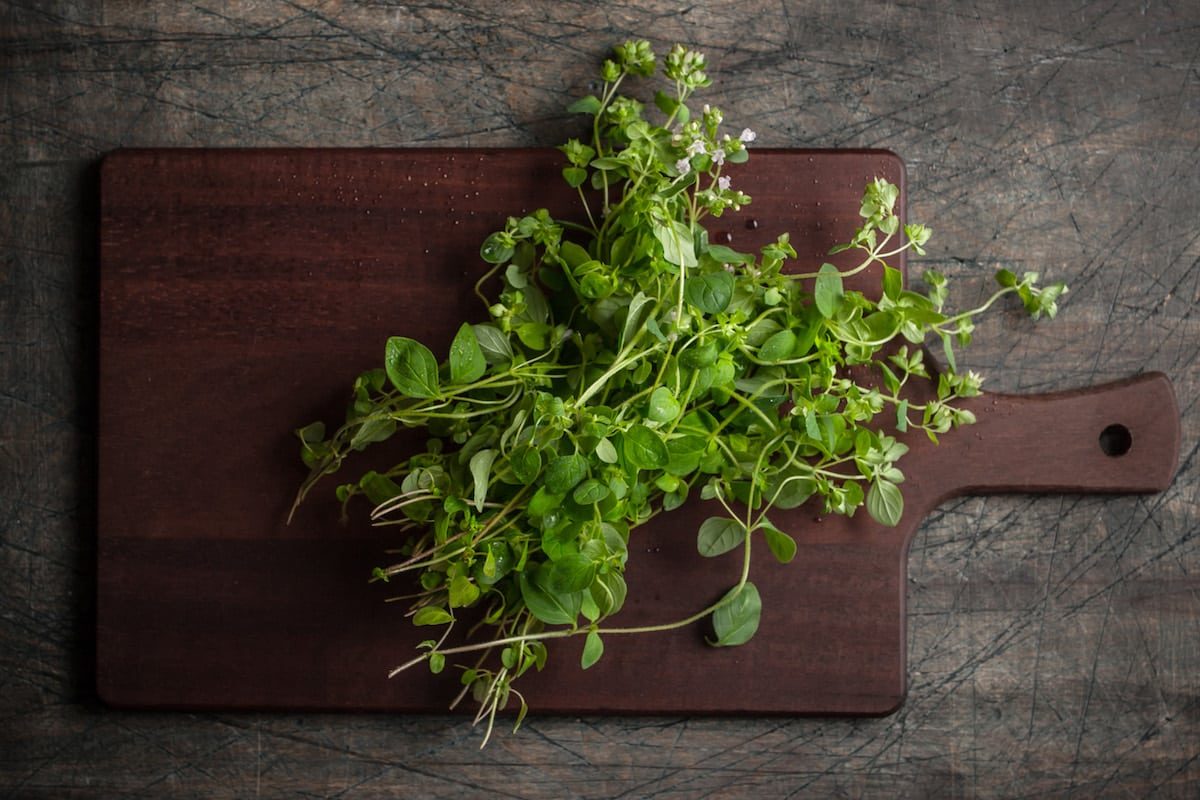
Too much oregano shows up as a dish that tastes medicinal, sharp or bitter, with the herb drowning out everything else. How you fix it depends on whether you can still get some of the oregano out and how much room the dish has to grow. Fastest fixes come first.
Quick answer
| What’s wrong | Fastest fix | If that’s not enough |
|---|---|---|
| Fresh sprigs still in the pot | Pull them out now | Dilute |
| Loose leaves or dried oregano in a soup or sauce | Skim what floats with a fine strainer, then dilute | Make a second, oregano-free batch and combine |
| Bitter edge | A pinch of sugar or a little more salt | A sweeter ingredient that suits the dish, such as tomato or roasted pepper |
| Caked on the outside of meat or vegetables | Scrape or wipe off the excess | Don’t rinse raw meat or poultry under the tap |
Why oregano takes over
Oregano’s essential oil is dominated by two phenolic compounds. A 2020 review puts carvacrol and thymol together at almost 78 to 85% of oregano (Origanum vulgare) oil.1 Carvacrol usually leads: in one set of Spanish oregano samples it made up 58.7 to 77.4% of the oil, against 0.2 to 5.8% thymol.1 Those are figures for the distilled oil from particular samples, not for a jar of dried leaves. In our judgment, that dominance by one compound family is why an overdose reads as a single loud, medicinal note.
The University of Delaware’s extension guide classes oregano as a medium-strength herb, not one of the strong or dominant ones, and warns that an herb’s flavor “can be extremely objectionable if too much is used.”2 The same guide says dried herbs are stronger than fresh because the chemicals behind their flavor are more concentrated,2 so a spoonful of dried oregano goes further than the same spoonful of fresh leaves.
Sheer volume: too much oregano for the dish
Take out what you can. Fresh sprigs come straight out with tongs. For loose leaves or dried oregano in a soup or sauce, run a fine strainer or slotted spoon across the surface to catch what floats. You won’t get it all, but anything you remove stops adding flavor.
Dilute. Adding more of everything except oregano is the one fix that lowers the amount of oregano in each bite. Add more tomatoes, stock or beans to a sauce or soup, or more of the main ingredients to a casserole. If the pot won’t hold more, the second-batch method Tasting Table recommends for too much garlic works the same way: cook a batch with no oregano and combine the two.3 Freeze what you can’t eat.
Balance with acid or fresh herbs. A squeeze of lemon, a splash of vinegar, or a handful of chopped parsley gives the palate something else to register. This is kitchen judgment rather than chemistry: none of these removes oregano, and we found no source showing any of them neutralizes carvacrol.
Bitter edge
Too much dried oregano can leave a dish tasting bitter as well as herbal. If yours does, sweetness and salt are the two tastes most likely to help. In controlled taste tests with pure solutions, both sugar and sodium salts suppressed bitterness, and sugar was the strongest suppressor of other tastes; citric acid was the weakest.4 That was a laboratory study, not a test on food, so start small: a pinch of sugar in a tomato sauce, or a little more salt if the dish can take it. The goal is a dish that tastes less bitter, not one that tastes sweet.
Caked on the surface
When dried oregano coats the outside of a roast, chicken pieces or vegetables, scrape or wipe off the excess with a knife or paper towel, then re-season lightly. Don’t rinse raw meat or poultry under the tap: the USDA does not recommend washing raw poultry, beef, pork, lamb or veal before cooking, because rinsing raises the risk of cross-contamination.5
Fixes that don’t hold up
Cooking it longer. It is sometimes said that oregano’s flavor fades if you simmer the dish longer. America’s Test Kitchen classes oregano as a hearty herb to add early in cooking, and notes that the volatile flavor compounds in hearty herbs are more heat-stable than those in delicate herbs.6 We found no test showing how long, if ever, simmering takes to bring down an oregano overdose, so don’t count on it.
Adding thyme to cover it. Thyme carries the same compounds. In one 2023 analysis, Thymus vulgaris oil was 42.44% thymol and 2.28% carvacrol,7 the two phenols that dominate oregano oil.1 Piling on thyme adds more of the same flavor family rather than masking it.
A potato in the pot. The raw-potato trick comes from oversalted soup, and even there a Tasting Table writer who uses it calls it “more of an aid than a final answer.”8 We found no test of a potato against too much oregano or any other herb. A potato does add bland bulk, so if potato suits the dish, leave it in and count it as dilution.
Preventing it next time
Start with a modest amount and taste. The University of Delaware guide suggests using medium-strength herbs, oregano among them, in moderate amounts of 1 to 2 teaspoons for 6 servings.2 The guide doesn’t say whether that means fresh or dried, so treat it as a ceiling for dried oregano rather than a target.
Convert fresh to dried with care. The same guide gives a rough equivalence of 3/4 to 1 teaspoon dried crumbled herb to 2 to 3 teaspoons fresh.2 If a recipe calls for fresh oregano and you’re using dried, start at the low end. More on the differences in fresh oregano vs. dried.
Crush dried oregano as you add it. The extension guide recommends crushing dried herbs in quick- and medium-cooking dishes to release some of their oils.2 It also means you taste the full strength sooner, before you’re tempted to add more.
Shake into your hand, not over the pot. Common kitchen practice: a loose shaker lid then spills onto the counter, not into dinner.
Related
- Oregano substitutes
- Cooking with oregano
- Oregano vs. thyme
- Mexican oregano vs. oregano
- Too much thyme
- Too much basil
Footnotes
-
Lombrea A et al., A Recent Insight Regarding the Phytochemistry and Bioactivity of Origanum vulgare L. Essential Oil, International Journal of Molecular Sciences, 2020. pmc.ncbi.nlm.nih.gov · Peer-reviewed ↩ ↩2 ↩3
-
Using Herbs and Spices, University of Delaware Cooperative Extension, 2025. udel.edu · Reference work ↩ ↩2 ↩3 ↩4 ↩5
-
Simple Ways To Tone Down The Pungency Of Garlic, Harmony Colangelo, Tasting Table, 2023. tastingtable.com · Publication ↩
-
Green BG et al., Taste Mixture Interactions: Suppression, Additivity, and the Predominance of Sweetness, Physiology & Behavior, 2010. pmc.ncbi.nlm.nih.gov · Peer-reviewed ↩
-
Washing Food: Does it Promote Food Safety?, USDA Food Safety and Inspection Service. fsis.usda.gov · Regulator ↩
-
Our Guide to Fresh Herbs, Liz Bomze, America’s Test Kitchen, 2019. americastestkitchen.com · Publication ↩
-
Dong Y et al., Chemical Compositions of Essential Oil Extracted from Eight Thyme Species and Potential Biological Functions, Plants, 2023. mdpi.com · Peer-reviewed ↩
-
How To Fix An Oversalted Soup, Alison Spiegel, Tasting Table, 2016. tastingtable.com · Publication ↩