Blog · Storage
How to Store Cilantro: The Jar Method, How Long It Really Lasts, and Freezing
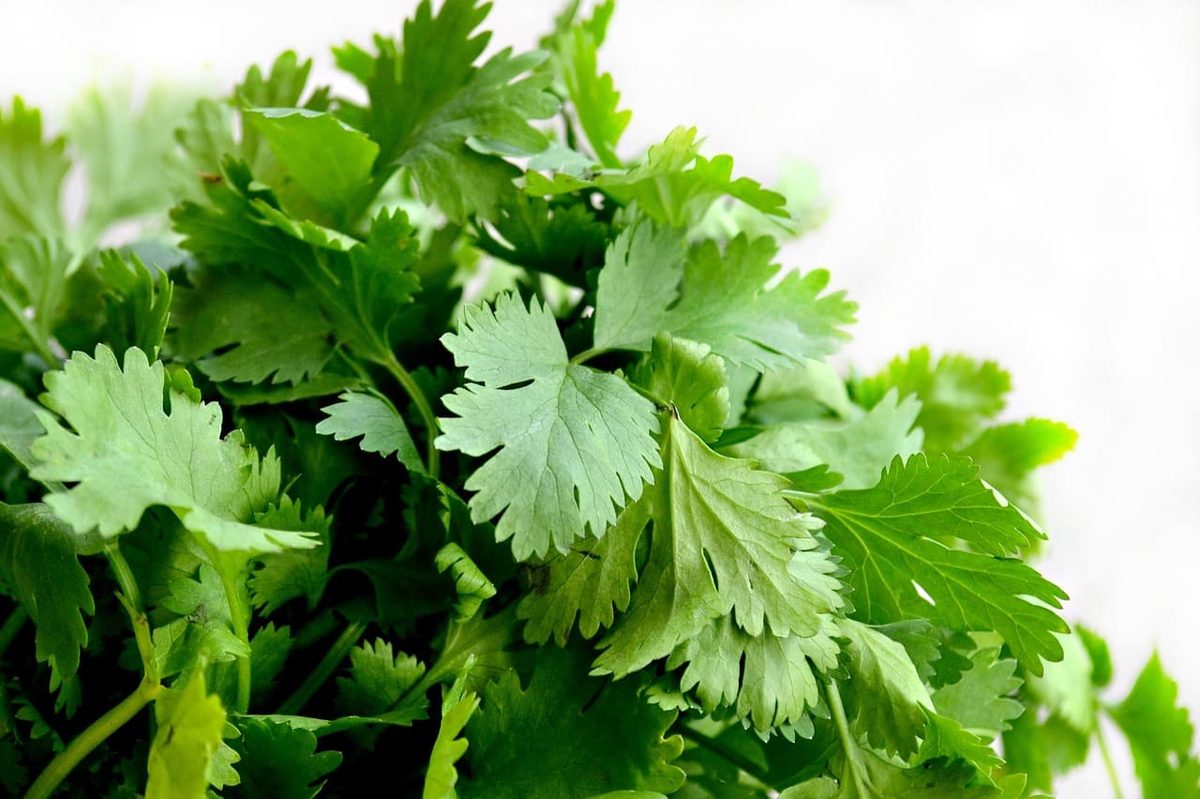
Cilantro, unlike basil, does well in the cold. The colder it is kept (short of freezing), the longer it lasts, and the best home method is the simplest: stems in a jar of water, leaves loosely covered, in the refrigerator.12 Expect its aroma to fade before its looks do.1 For longer than a few weeks, freeze it for cooking; dried cilantro is a poor substitute.3
At a glance
| Method | How long, by source | Best for |
|---|---|---|
| Jar of water, loosely bagged, in the fridge | Just over 4 weeks in one home test2 | Garnish, salsa, anything raw |
| Damp paper towels in an open bag, in the fridge | No duration given (ATK’s method)4 | A small bunch, short term |
| Cut leaves in the fridge | About a week (Wisconsin Extension)5 | Short term |
| Frozen | Up to a year for herbs in general6 | Cooked dishes only |
| Dried | Keeps, but much weaker in flavor3 | Little |
How long fresh cilantro lasts: what the sources say
The figures vary widely, and they come from different conditions. We have not averaged them.
| Source | Conditions | Result |
|---|---|---|
| Loaiza and Cantwell, UC Davis, 19971 | Commercial cilantro, held in air in the lab | Good visual quality for 18 to 22 days at 0°C (32°F); about 14 days at 5°C (41°F) and about 7 days at 7.5°C (45.5°F). Aroma fell off notably after 14 days at every condition. |
| Fine Gardening (Jodi Torpey)2 | One home test of three bundles | Jar of water, covered with a bag, in the fridge: just over four weeks. Airtight container in the fridge: about 10 days longer than the counter jar, but the leaves discolored. Jar of water on the counter: just over seven days. |
| Wisconsin Master Gardener Program5 | Cut leaves, home refrigerator | About a week |
Two practical points follow. First, temperature matters: each step from 0 to 7.5°C cut the study’s shelf life sharply.1 A home refrigerator typically runs at about 40°F (4°C),7 close to the study’s 5°C condition, so keep cilantro in the coldest part of the fridge rather than the door (our judgment). Second, looks are not everything: the UC Davis study found the typical cilantro aroma dropped after two weeks even when the leaves still looked good.1
The jar method
This is the method with the best home result.2
- Trim the stem ends.2
- Stand the bunch in a small jar with water.2
- Cover the leaves loosely with a plastic bag.2
- Refrigerate, and check every few days that there is plenty of water.2
Fine Gardening’s tester checked the jars every few days and topped up the water;2 a fixed schedule for changing it has not been tested. It is one person’s test, not a controlled trial, but it lines up with the commercial finding that cold storage keeps cilantro longest.1
The paper towel method, and a disagreement
America’s Test Kitchen (ATK) groups cilantro with the delicate herbs and gives a different method: wrap the herbs in slightly damp paper towels, put them in an open zipper-lock bag, and refrigerate.4 ATK says delicate herbs must be kept moist or they wilt, but should not touch liquid, which encourages rot.4 That conflicts with the jar method, where the stems stand in water. We found no side-by-side test of the two. The Fine Gardening tester found that cilantro can turn mushy when stored in a plastic bag in the refrigerator,2 but did not test ATK’s damp-towel method.
If you wash cilantro before storing it, dry it well; ATK spins herbs dry in a paper towel–lined salad spinner.4
Freezing cilantro
Frozen cilantro will not work as a garnish. Colorado State University Extension says frozen herbs go limp when thawed and are best in cooked dishes, and that quick-frozen herbs keep up to a year if well packaged.6 A common claim says frozen cilantro turns to slimy mush because of enzymes; we found no source that measures this for cilantro.
- Prepare. Wash, drain and pat dry.6
- Tray freeze. Strip the leaves from the stems, spread them in a single layer on a cookie sheet and freeze,8 then pack them into bags or containers.
- Cubes. Herbs can be frozen in ice cube trays half filled with water, then topped off the next day so they are fully covered.6 Oklahoma State University Extension also freezes herbs in oil, 1/3 to 1/2 cup of oil to 2 cups of chopped herbs.8
- Wrap well. Oklahoma State advises double-wrapping strong-smelling herbs in foil or using freezer jars so the odor doesn’t spread.8
- Use from frozen. Do not thaw herbs before adding them to cooked dishes.8
For more, see can you freeze cilantro.
Cilantro in oil: a safety rule
Cilantro sauces, pestos and herb oils made with fresh cilantro are fresh herbs in oil. Oregon State University Extension says homemade mixtures like these must be refrigerated and used within 4 days or frozen,9 because low-acid foods in oil create an oxygen-free environment where Clostridium botulinum can grow.9 By that rule, a thawed oil cube falls back under the 4-day limit (our reading).
Drying cilantro
You can dry cilantro, but ATK puts it among the herbs that are much weaker in flavor once dried.3 Research on drying coriander leaves concluded that fresh material is the most valuable source of their aroma compounds, and found that finishing the drying with hot air at 50°C lowered aroma quality.10 If you want to try, the general herb guidance applies: dry small bunches, since large amounts can mold,11 or use a dehydrator at 95 to 115°F.11 The leaves are ready when they crumble.11 For the full method, see how to dry cilantro, and for how dried compares in the pot, dried cilantro vs fresh.
Using stored cilantro
Wisconsin Extension suggests adding cilantro at the very end of cooking to keep it from overcooking.5 That suits frozen cilantro too: stir it into a soup, curry or sauce just before serving.
Not yet measured
- A controlled comparison of the jar method and damp paper towels in a home refrigerator.
- How long frozen cilantro keeps its aroma, measured on cilantro rather than herbs in general.
- Whether changing the jar water on a schedule extends shelf life.
Related
- Cilantro
- Can you freeze cilantro?
- How to dry cilantro
- Dried cilantro vs fresh
- Cooking with cilantro
- Cilantro substitutes
- Too much cilantro
- Cilantro vs parsley
- Coriander vs cilantro
- How to store basil
- How to store parsley
Footnotes
-
Loaiza and Cantwell, Postharvest physiology and quality of cilantro, HortScience, 1997 (abstract). agris.fao.org · Peer-reviewed ↩ ↩2 ↩3 ↩4 ↩5 ↩6
-
How to Store and Preserve Fresh Cilantro, Fine Gardening. finegardening.com · Publication ↩ ↩2 ↩3 ↩4 ↩5 ↩6 ↩7 ↩8 ↩9 ↩10
-
When You Should Actually Use Dried Herbs, America’s Test Kitchen. americastestkitchen.com · Publication ↩ ↩2 ↩3
-
Our Guide to Fresh Herbs, America’s Test Kitchen. americastestkitchen.com · Publication ↩ ↩2 ↩3 ↩4
-
Cilantro, Wisconsin Master Gardener Program, University of Wisconsin-Madison Extension. mastergardener.extension.wisc.edu · Reference work ↩ ↩2 ↩3
-
Herbs: Preserving and Using, Fact Sheet 9.335, Colorado State University Extension. ccfruitandnuts.ucanr.edu · Reference work ↩ ↩2 ↩3 ↩4
-
Garlic: Safe Methods to Store, Preserve, and Enjoy, ANR Publication 8568, UC Agriculture and Natural Resources. ccfruitandnuts.ucanr.edu · Reference work ↩
-
Freezing Herbs, Oklahoma State University Extension. extension.okstate.edu · Reference work ↩ ↩2 ↩3 ↩4
-
Herbs and vegetables in oil, SP 50-701, Oregon State University Extension Service. extension.oregonstate.edu · Reference work ↩ ↩2
-
Herbs (Drying), National Center for Home Food Preservation. nchfp.uga.edu · Reference work ↩ ↩2 ↩3