Spice Fixes · Fix
Too Much Coriander? How to Fix a Dish That Tastes Dusty, Perfumed or Bitter
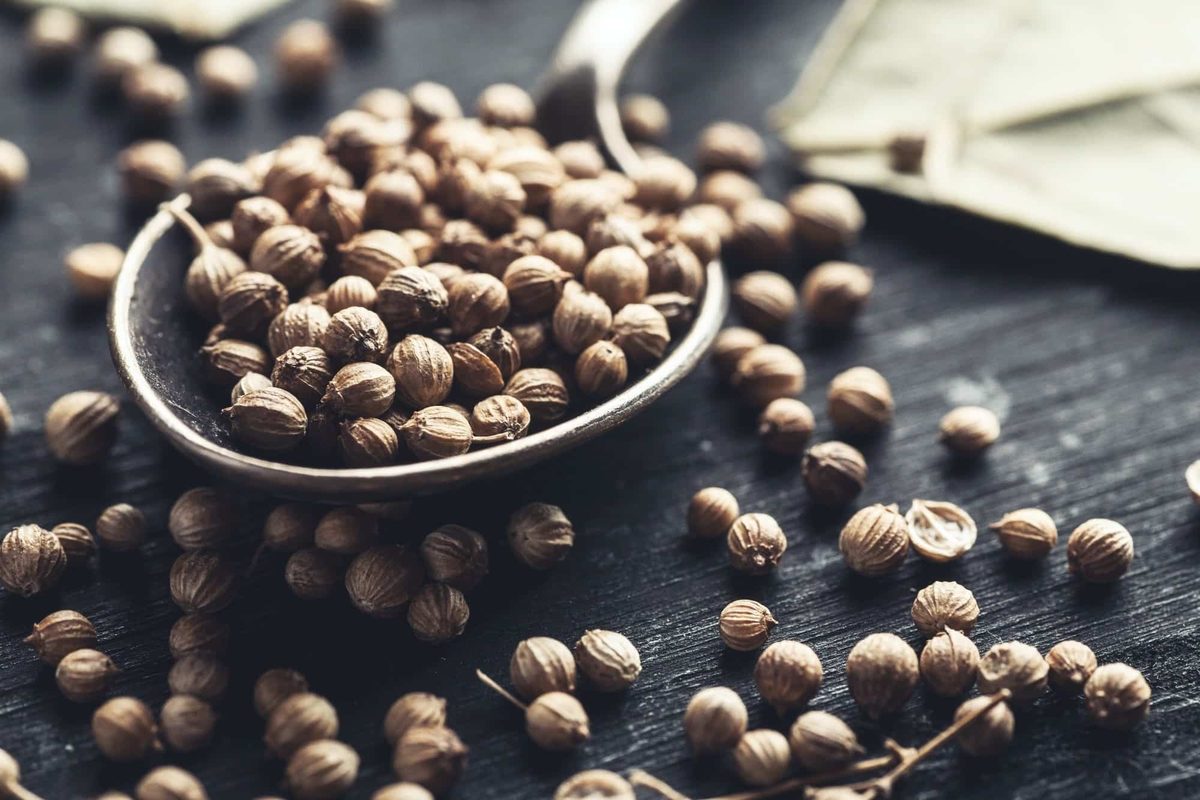
Ground coriander seed is usually a supporting player. A 2023 review of its essential oil describes “a mild, sweet, warm and aromatic flavor,”1 and Healthline’s comparison calls it milder than cumin.2 The USDA’s purchasing specification lists it among the ingredients curry powder should include,3 and in most recipes it rounds out stronger spices rather than leading. So it takes a lot to overpower a dish, but when it does, the result tends to taste dusty, perfumed or faintly bitter (our description, not a measured one). This page is about the seed. If the problem is too much of the fresh leaves, see too much cilantro.
Quick answer
| What’s wrong | Fastest fix | If that’s not enough |
|---|---|---|
| Coriander dominates the dish | Add more of everything else, or make a coriander-free second batch and combine | Add mild bulk; finish with yogurt, coconut milk or fresh herbs |
| Bitter or harsh edge | A pinch of sugar or a little more salt | A sour note (lemon, lime, tamarind) for brightness |
| Whole seeds in a broth, pickle or braise | Strain or spoon them out | Then dilute what’s left |
| Thick coating on meat or vegetables | Scrape or wipe off the excess | Don’t rinse raw meat under the tap |
| Scorched in the pan | Move the food to a clean pan without scraping | Sweeten or salt lightly, or redo the step |
Why coriander can take over
Most of coriander’s aroma comes from one compound. The Al-Khayri review reports that 60 to 80 percent of coriander essential oil is linalool, a terpene alcohol.1 With one compound carrying so much of the aroma, a large dose doesn’t add depth so much as more of the same note, which in our judgment reads as perfumed rather than warm. The same review reports seed oil yields from 0.18 to 1.40 percent,1 so the strength of one jar against another can differ a lot.
Coriander is in the same plant family as cumin, the parsley family (Apiaceae),4 and the two often appear together. If both are in a dish and it tastes overpowering, it can be hard to tell which one is responsible. See too much cumin as well.
Too much coriander, overall
Dilute. The only fix that reduces the amount of coriander in each bite. Add more of every other ingredient. If that would make too much food, scoop out half (freeze it, to mix later with an unspiced batch) and rebuild the rest. Tasting Table gives the same advice for too much garlic: make a second batch without the problem ingredient and combine.5 This works best in soups, stews, curries and braises; it’s harder in a dry rub or a baked dish.
Add mild bulk. Rice, potatoes, chickpeas, lentils or extra vegetables cooked into the dish add volume without competing flavors. That is dilution, not absorption.
Finish with something creamy or fresh. Yogurt, sour cream or coconut milk, or a handful of chopped fresh herbs at the end. Yogurt already belongs in many dishes that use coriander; Saveur notes that it works as a souring agent in curries and appears in raitas.6 In our judgment these make the dish taste less dominated by coriander by adding contrast. We found no source showing that dairy or coconut milk masks or binds coriander’s aroma compounds, so we won’t claim it does.
Bitter or harsh
Sweetness first. In controlled taste tests, sweet tastes suppressed bitterness, and sugar was the strongest suppressor of other tastes.7 That was a laboratory study with pure taste solutions, not food. Add a pinch of sugar or a little honey and taste. Because coriander mostly goes into savory food, go slowly: the goal is less bitterness, not a sweet dish.
A little salt. The same study found that sodium salts also suppressed bitterness.7 A pinch more salt, or a salty ingredient such as soy sauce or miso where it suits the dish, can help when the excess is modest. If you used far too much coriander, salt won’t be enough on its own; dilute first.
Acid for brightness, not as a cure. Lemon or lime juice, or tamarind in an Indian dish, adds a sour note that shifts attention away from the coriander. Saveur calls tamarind “the key souring agent in sambhar.”6 But acid is not a reliable fix for bitterness: in the lab study above, citric acid was the least effective suppressor of the tastes tested.7 A common claim says acid “neutralizes” excess spice; no source we found supports it.
Whole seeds, surface coatings and scorching
Strain out whole seeds. Whole coriander seed in a broth, pickling liquid or braise can be strained or lifted out with a slotted spoon. Once out, they stop adding flavor. Taste, then dilute if needed.
Scrape off a coating. Ground coriander on the surface of meat, fish or roasted vegetables can be scraped or wiped off, then the food re-seasoned lightly. Don’t rinse raw meat or poultry: the USDA advises against washing it before cooking because rinsing spreads bacteria around the kitchen.8
If it scorched, get the food into a clean pan without scraping the bottom, which only adds burnt flavor.9 Ground spices burn fairly quickly in hot fat.10
Fixes that don’t hold up
A potato to “soak up” coriander. This comes from the oversalted-soup trick, and even there the evidence is thin: a Tasting Table writer who uses it calls the potato “more of an aid than a final answer.”11 We found no test of a potato against coriander or any other spice. If potato suits the dish, leave it in and count it as dilution.
Washing coriander off food. Fine for vegetables you’re about to cook again; not for raw meat or poultry (see above).
Preventing it next time
Know your whole-to-ground conversion. McCormick’s volume conversion gives 1 teaspoon of coriander seeds as equal to 1 1/4 teaspoons ground.12 That’s volume, not strength. Freshly ground seed from a strong lot can taste stronger than the same spoonful from an old jar.
Bloom it. Cooking ground spices briefly in fat before adding the rest of the dish develops their flavor; America’s Test Kitchen gives anywhere from 30 seconds to several minutes, and warns that ground spices burn fairly quickly.10 Taste after blooming rather than adding more straight away.
Start a little under the recipe. No source gives a standard amount of coriander per serving. Our method, not a published figure: when you’re unsure of a jar, add about three quarters of the amount, cook a few minutes, taste, and add the rest only if the dish needs it.
Related
- Coriander vs. cilantro
- Cooking with coriander
- Coriander substitutes
- Coriander vs. cumin
- Too much cumin
- Too much curry powder
Footnotes
-
Al-Khayri JM et al., Essential Oil from Coriandrum sativum: A Review on Its Phytochemistry and Biological Activity, Molecules, 2023. mdpi.com · Peer-reviewed ↩ ↩2 ↩3
-
8 Good Substitutes for Cumin, Lisa Wartenberg, Healthline, 2023. healthline.com · Publication ↩
-
Commercial Item Description A-A-20001C: Spices and Spice Blends, USDA Agricultural Marketing Service, 2023. ams.usda.gov · Regulator ↩
-
Coriander, Encyclopaedia Britannica. britannica.com · Reference work ↩
-
Simple Ways To Tone Down The Pungency Of Garlic, Harmony Colangelo, Tasting Table, 2023. tastingtable.com · Publication ↩
-
Get to Know the Sour, Twangy Ingredients that Give Indian Cooking a Kick Beyond Spice, Michael Snyder, Saveur, 2016. saveur.com · Publication ↩ ↩2
-
Green BG et al., Taste Mixture Interactions: Suppression, Additivity, and the Predominance of Sweetness, Physiology & Behavior, 2010. pmc.ncbi.nlm.nih.gov · Peer-reviewed ↩ ↩2 ↩3
-
Washing Food: Does it Promote Food Safety?, USDA Food Safety and Inspection Service. fsis.usda.gov · Regulator ↩
-
What To Do With Burnt Soup, Karen Greco, Tasting Table, 2022. tastingtable.com · Publication ↩
-
How to Bloom Spices, America’s Test Kitchen, 2023. americastestkitchen.com · Publication ↩ ↩2
-
How To Fix An Oversalted Soup, Alison Spiegel, Tasting Table, 2016. tastingtable.com · Publication ↩
-
How to Grind Your Own Spices, Plus Spice Conversions, McCormick, 2025. mccormick.com · Merchant ↩