Spice Comparisons · Comparison
Dried Cilantro vs. Fresh: Why Drying Mutes It, and When Dried Is Worth Using
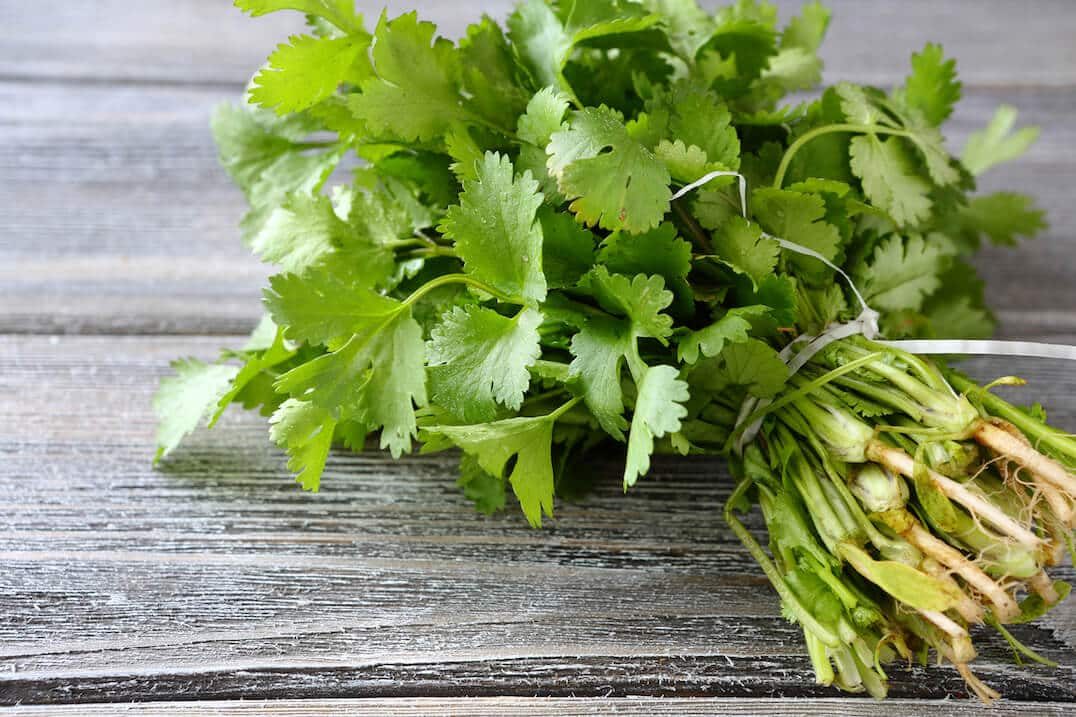
Dried cilantro is the leaf of Coriandrum sativum with the water taken out,1 and for this herb that costs most of what people buy it for. America’s Test Kitchen puts cilantro on its short list of herbs that are much weaker in flavor when dried.2 In a 2021 drying study, leaves dried with hot air at higher temperatures were grouped with descriptors such as “dry grass”, “hay-like” and “parsley-like”.3 Dried cilantro can add a mild green note to a cooked dish, but it can’t stand in for fresh leaves in salsa or as a garnish.
Side by side
| Fresh cilantro | Dried cilantro | |
|---|---|---|
| Plant | Coriandrum sativum, family Apiaceae14 | Same |
| Part used | Young leaves4 | Leaves, dried and crushed; also sold as an ingredient of spice blends3 |
| Aroma chemistry | Volatile oil about 4 mg per gram of fresh leaf, more than 80% aldehydes (PROSEA)5 | Drying changes the profile; which compounds survive depends on the method (see below)3 |
| Aroma (description) | Citrusy with a biting tang to some people, soapy to others67 | Hay-like, dry grass, parsley-like, sweet or chamomile in hot-air-dried samples3 |
| Strength | The baseline | Much weaker (ATK)2 |
| Flavor (editorial) | Bright, green, lemony, fades fast with heat | Faint, grassy, hard to identify as cilantro |
| Best uses | Raw and at the end of cooking8 | Cooked dishes and seasoning blends, where fresh isn’t available |
| Keeps | Cut leaves about a week in the refrigerator6 | Penn State: most dried herbs keep well for a year9 |
What drying does to cilantro
Cilantro’s aroma comes from volatile compounds, and drying removes or reshapes them.
The fresh leaf. PROSEA puts the leaf’s volatile oil at about 4 mg per gram of fresh leaves, more than 80% of it aldehydes, led by (E)-2-dodecenal, (E)-2-tetradecenal and (E)-2-decenal.5 Those (E)-2-alkenals are the compounds people describe as soapy, fatty, “like cilantro” or pungent.7
What a drying study found. Łyczko and colleagues dried chopped cilantro leaves by hot-air (convective) drying, vacuum-microwave drying and combinations of the two, and analyzed the aroma by headspace sampling and taste panels.3 A few things stand out:
- Their fresh-leaf profile looks different from PROSEA’s. In their headspace analysis the largest single compound in fresh cilantro was (Z)-3-hexen-1-ol acetate, at 34.54% of the total, with decanal at 4.53% and (E)-2-dodecenal at 4.18%.3 Headspace sampling and oil distillation capture different things, so these figures can’t be set against PROSEA’s.
- Drying shifted the balance. The share of cilantro’s key odor-active compounds in the profile rose significantly after drying, with one exception, (Z)-hex-3-en-1-ol, which fell.3 These are proportions of what was left, not amounts, so they don’t show that dried cilantro has more of anything.
- Method mattered. Hot-air drying at 70°C, alone or followed by vacuum-microwave finishing, ranked best for cilantro-like aroma. Vacuum-microwave drying alone scored lowest, and finishing at 50°C lowered aroma quality.3
- The authors’ own starting point: fresh, unprocessed material is the most valuable source of cilantro’s aromatic compounds.3
We found no study that compares a supermarket jar of dried cilantro with fresh leaves on a taste panel.
Can one stand in for the other?
Dried for fresh, raw (salsa, guacamole, tacos, garnish). No. ATK lists cilantro among the herbs to keep fresh,2 and warns that dried herbs used as a garnish can add an unpleasant texture and taste dusty.2 For a raw dish, a fresh substitute does far more; see cilantro substitutes, which ranks culantro, flat-leaf parsley, pápalo and others by what cilantro is doing in the dish.
Dried for fresh, cooked (Computed, with a caveat). The general extension rule is 1 tablespoon of finely cut fresh herbs to 1 teaspoon of crumbled dried,8 and ATK’s testing found 1 part dried to 3 parts fresh came closest to equal strength for herbs in general.10 For cilantro, expect that ratio to fall short: ATK says the delicate herbs are much weaker dried,2 and no source we found measures how much. Start at 1 teaspoon dried per tablespoon fresh, taste, and add more. ATK found dried herbs work best with more than 20 minutes of cooking and plenty of liquid,10 which points dried cilantro toward soups, stews, rice and braises.
Fresh for dried. This works. Use about three times the dried amount, chopped,8 and add it late: LSU AgCenter groups cilantro with the delicate herbs best added in the last minute or two of cooking, because prolonged heat costs flavor and aroma.8
When to add dried cilantro. ATK advises adding dried herbs at the same point you would add fresh.2
If you dislike cilantro
It is sometimes suggested that dried cilantro is a good compromise for people who find the fresh herb soapy. No study we found has tested that. The 2021 drying study didn’t look at the soapy taste, and it reported that drying raised the share of cilantro’s key odor-active compounds overall, with one exception.3 Nothing in it shows that drying removes the aldehydes behind the soapy taste.7 The genetics of the soapy taste are covered on the cilantro page. If cilantro tastes like soap to you, leaving it out or using a different herb is the safer choice.
What isn’t known
- How much aroma retail dried cilantro retains compared with fresh. No study measures a store-bought jar.
- Whether people who find fresh cilantro soapy also object to dried.
- How much more dried cilantro than the 1:3 rule you need to match fresh. No source gives a figure.
Related
- Cilantro: the full profile, including the soapy-taste genetics and food safety
- Cilantro substitutes: fresh alternatives ranked by job
- Dried herbs vs. fresh: the general rules and conversion table
- Coriander vs. cilantro and dried vs. fresh coriander: the seed side of the same plant
- How to dry cilantro, how to store cilantro and can you freeze cilantro?
- Cooking with cilantro, too much cilantro and culantro vs. cilantro
- Dried vs. fresh basil
Footnotes
-
Coriandrum sativum L., Plants of the World Online, Royal Botanic Gardens, Kew. powo.science.kew.org · Reference work ↩ ↩2
-
Danielle Lapierre, “When You Should Actually Use Dried Herbs (and Which Ones to Avoid)”, America’s Test Kitchen, 2022. americastestkitchen.com · Publication ↩ ↩2 ↩3 ↩4 ↩5 ↩6
-
Łyczko et al., “Coriandrum sativum L.: Effect of Multiple Drying Techniques on Volatile and Sensory Profile”, Foods, 2021. mdpi.com · Peer-reviewed ↩ ↩2 ↩3 ↩4 ↩5 ↩6 ↩7 ↩8 ↩9 ↩10
-
“Coriander”, Encyclopaedia Britannica. britannica.com · Reference work ↩ ↩2
-
Coriandrum sativum, Plant Resources of South-East Asia (PROSEA). uses.plantnet-project.org · Reference work ↩ ↩2
-
Susan Mahr, “Cilantro”, Wisconsin Master Gardener Program, University of Wisconsin-Madison, 2017. mastergardener.extension.wisc.edu · Reference work ↩ ↩2
-
Eriksson et al., “A genetic variant near olfactory receptor genes influences cilantro preference”, Flavour, 2012. link.springer.com · Peer-reviewed ↩ ↩2 ↩3
-
“Flavorful Herbs”, LSU AgCenter. lsuagcenter.com · Reference work ↩ ↩2 ↩3 ↩4
-
Stacy Reed, “Preserving Herbs by Drying”, Penn State Extension, 2024. extension.psu.edu · Reference work ↩
-
“Science: Substituting Dried Herbs for Fresh”, America’s Test Kitchen. americastestkitchen.com · Publication ↩ ↩2