Spice Fixes · Fix
Too Much Clove? How to Tone It Down, Fastest Fix First
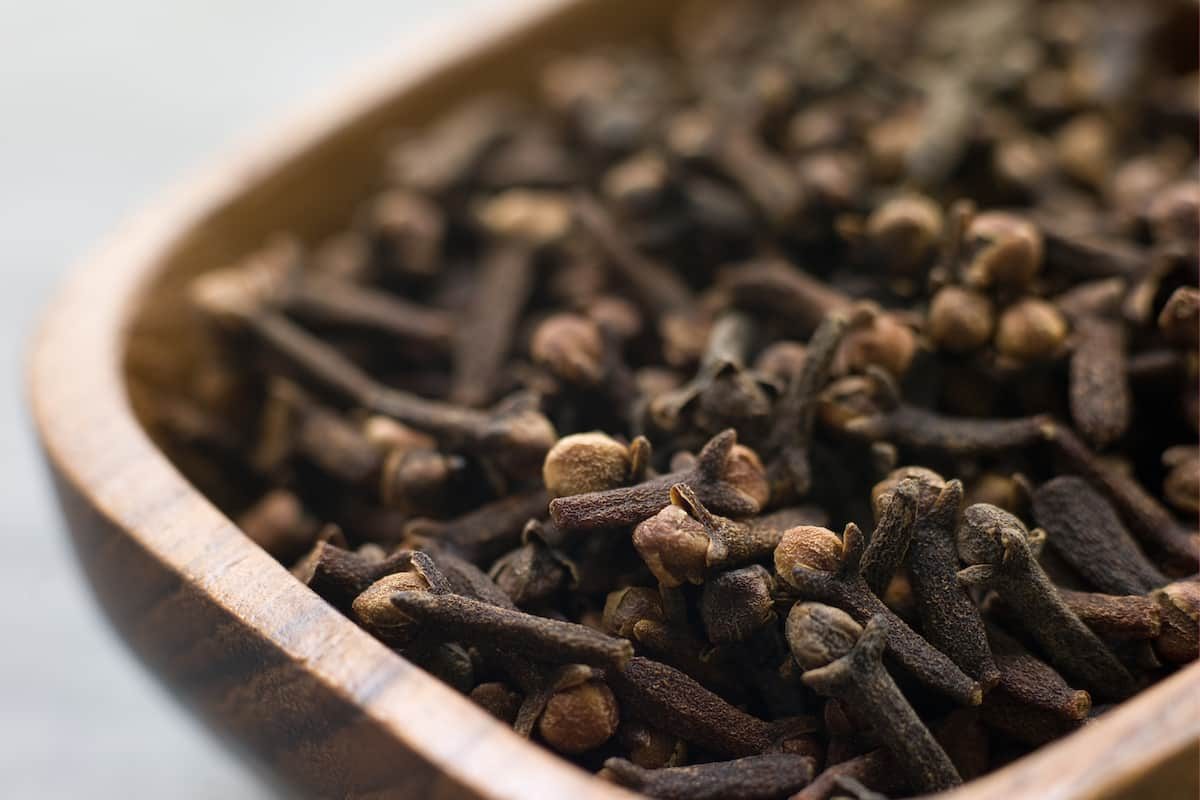
Too much clove is easy to spot: the dish tastes of cloves and not much else, often with a bitter, medicinal edge. It takes very little to get there. The fixes depend on whether you used whole or ground cloves, so start there. Within each section the fastest fix comes first.
Quick answer
| What’s wrong | Fastest fix | If that’s not enough |
|---|---|---|
| Whole cloves in a simmering dish | Fish them out now | Dilute what’s left |
| Too much ground clove, overall | Add more of everything else, or make a clove-free second batch and combine | Balance with sweetness, or more of the dairy the dish already uses |
| Bitter, medicinal edge | Dilute | A little sugar, maple syrup or molasses, or a pinch of salt |
| Caked on the outside of a roast or vegetables | Scrape or wipe off the excess | Don’t rinse raw meat or poultry under the tap |
Why cloves take over so fast
Cloves are dried flower buds, and a 2020 review reports they can contain up to 18% essential oil.1 Eugenol makes up about 85 to 92% of that oil, with eugenyl acetate and β-caryophyllene the other main compounds.1 Clove oil and eugenol have anesthetic effects and are commonly used in dentistry.1 In our judgment that same quality is behind the faintly numbing, medicinal note an overdose of cloves leaves in food, though no source we found measures it at kitchen amounts. Eugenol is also one of the main constituents of allspice oil, and allspice’s flavor is likened to a mix of cinnamon, cloves and nutmeg,2 so in our judgment adding allspice won’t help.
Whole cloves: get them out
Remove whole cloves the moment you realize there are too many. In our judgment a whole clove left in a simmering liquid keeps releasing flavor, so taking it out stops the problem from growing. Cloves are small and dark; a slotted spoon or a strainer for the liquid helps. Then taste and dilute if needed.
Sheer volume: too much ground clove
Dilute. This is the one fix that actually lowers the amount of clove in each bite. Add more of every other ingredient except clove. If you can’t add to the pot without changing the dish, Tasting Table’s method for an over-garlicked dish works the same way: cook a second batch without the spice and combine the two.3 Two equal batches halve the concentration. Or set half the original aside and build the other half back up to a full recipe, which avoids a double batch.
Add more of the dairy that’s already there. In a creamy soup, curry or custard, more of the milk, cream or yogurt the recipe uses is dilution that fits the dish. It also adds a mild, rich flavor that, in our judgment, softens the overall impression. We could not find a source showing that dairy binds clove’s essential oil, so treat this as dilution plus balance, not a neutralizer.
Tomato in savory dishes. In a stew, chili or braise that already has tomato, more tomato or tomato sauce adds bulk plus its own sweetness and acidity. That’s dilution and balance, not chemistry: we found no source showing that acid neutralizes clove flavor.
A bitter, medicinal edge
Add sweetness. In controlled taste tests, sweet tastes suppressed bitterness, and sugar was the strongest suppressor of other tastes overall; sodium salts also suppressed bitterness, while citric acid was the weakest suppressor.4 Those were pure taste solutions, not food, but they support the kitchen habit. In a dessert, a little more sugar or maple syrup is low risk. Molasses brings its own strong flavor along with sweetness, which in our judgment can help in gingerbread, baked beans or barbecue sauce. In a savory dish, add sweetener in small amounts: it’s easy to tip into sweet.
Check for scorching. If ground cloves went into hot oil and the dish tastes burnt rather than just strong, that’s a different problem: ground spices burn fast and turn bitter.5 Move the food to a clean pan and see too much garlic powder for the scorched-spice fixes.
Caked on the surface
When a clove-heavy rub sits on the outside of a ham, roast or roasted vegetables, scrape or wipe off the excess with a knife or paper towel and re-season without clove. Don’t rinse raw meat or poultry to get it off: the USDA advises against washing raw poultry, beef, pork, lamb or veal before cooking, because its research found rinsing raises the risk of cross-contamination.6
Fixes that don’t hold up
Masking with garlic or cinnamon. Adding lots of garlic to a savory dish, or cinnamon to a sweet one, to cover clove is common advice. In our judgment it trades one overpowering flavor for two, and both are easy to overdo themselves (see too much cinnamon). A little cinnamon can round off a dessert that is only slightly heavy on clove; for a real overdose, dilute.
Is too much clove a safety issue?
We found no regulator or clinical source that sets a level at which ground or whole cloves eaten in food become a safety concern, so we can’t give one. Clove oil is a different, far more concentrated product than the spice,1 and in our judgment it should never stand in for ground cloves in a recipe.
Preventing it next time
Count whole cloves. If you stud a ham or an onion with cloves, or drop them into mulled cider, count them in so you can count them out.
Start low and taste. We found no published guideline for how much clove a dish should take. Because a small amount goes so far, the method that works is to start with a fraction of what you think you need (a pinch of ground clove, or one or two whole buds), let it cook in, taste, and add more in stages. More on technique in cooking with cloves and ground vs. whole cloves.
Shake into your hand, not over the pot. Common kitchen practice: a loose lid or a clogged shaker hole that suddenly clears spills onto the counter, not into dinner.
Related
Footnotes
-
Batiha GE et al., Syzygium aromaticum L. (Myrtaceae): Traditional Uses, Bioactive Chemical Constituents, Pharmacological and Toxicological Activities, Biomolecules, 2020. mdpi.com · Peer-reviewed ↩ ↩2 ↩3 ↩4
-
Andrade Avila YY et al., Antioxidant Effect and Medicinal Properties of Allspice Essential Oil, IntechOpen, 2022. intechopen.com · Peer-reviewed ↩
-
Simple Ways To Tone Down The Pungency Of Garlic, Harmony Colangelo, Tasting Table, 2023. tastingtable.com · Publication ↩
-
Green BG et al., Taste Mixture Interactions: Suppression, Additivity, and the Predominance of Sweetness, Physiology & Behavior, 2010. pmc.ncbi.nlm.nih.gov · Peer-reviewed ↩
-
How To Improvise Instant Pot Seasoning Without Burning Your Spices, Marco Rossi, Tasting Table, 2023. tastingtable.com · Publication ↩
-
Washing Food: Does it Promote Food Safety?, USDA Food Safety and Inspection Service. fsis.usda.gov · Regulator ↩