Spice Substitutes · Substitutes
Substitutes for Cloves: Allspice First, and What to Do When You Need Whole Cloves
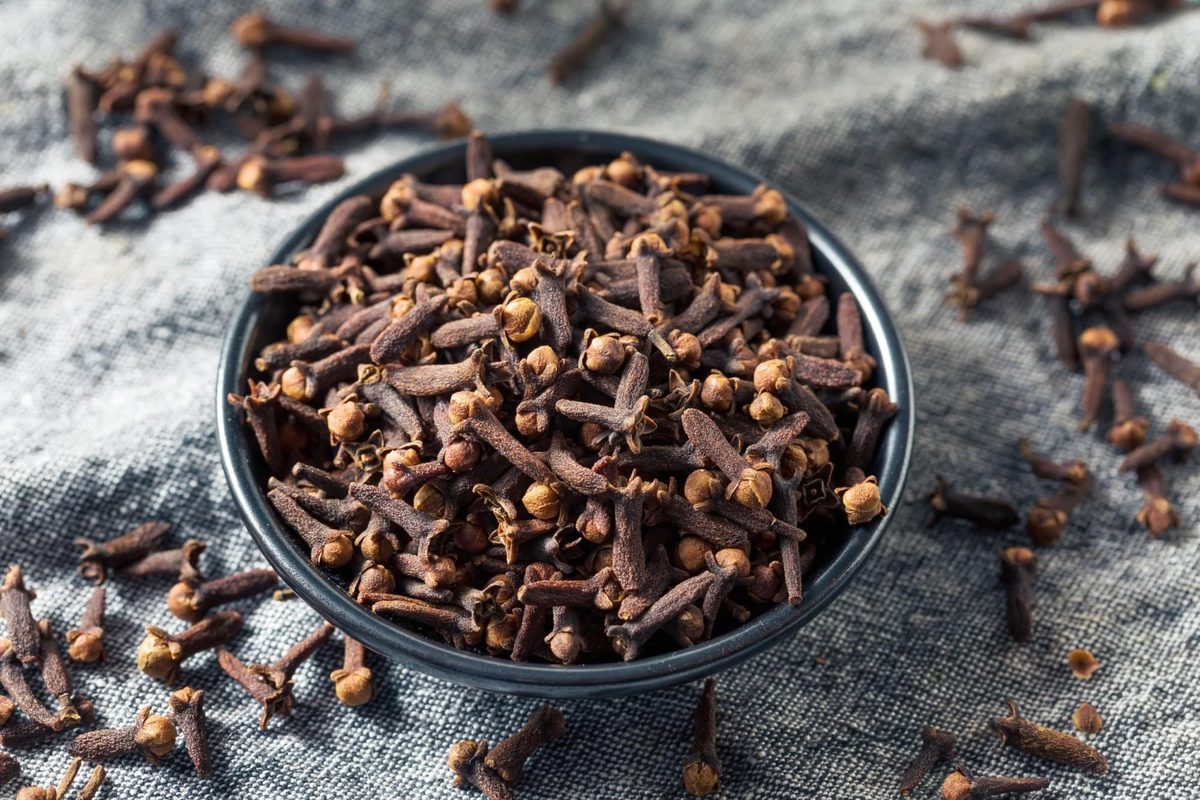
Cloves are the dried flower buds of Syzygium aromaticum. Britannica describes them as strong in aroma and hot and pungent in taste, and says they flavor many foods, particularly meats and baked goods.1 Most of that strength comes from one compound: eugenol makes up 70 to 90 percent of clove bud oil.2 The best substitute shares it. The right choice also depends on whether your recipe uses ground cloves in a batter or whole cloves steeped in a liquid.
Quick answer
| What cloves are doing | Best substitute | Starting amount, per 1 part ground cloves | Treatment |
|---|---|---|---|
| Warm spice in baking, rubs and sauces | Ground allspice | 1 part | Attributed |
| Same job, no allspice | Cinnamon with a little nutmeg | Less than 1 part combined, then taste | Method |
| One of several warm spices in a dessert | Pumpkin pie spice, if the label lists cloves or allspice | 1 part | Attributed |
| Warmth in a curry | Curry powder, or 4 parts cumin to 1 part allspice | A pinch at a time, tasting | Attributed (blend), Method (amount) |
| Whole cloves steeped in a liquid | Ground cloves | 3/4 teaspoon per 1 teaspoon whole | Attributed |
How the ratios on this page are labeled
- Computed: based on a measurable physical relationship, with the source named.
- Attributed: a named source publishes this ratio. We quote it as theirs.
- Disputed: named sources give different answers to the same swap. We show each one and do not average them.
- Method: we found no published ratio. We give a direction and a cautious starting point, and say so.
The clove ratios we found come from a merchant and a food writer, and neither says how they were arrived at. No study compares the flavor strength of cloves with any substitute.
Why allspice is the closest match
Allspice berry oil is 50 to 80 percent eugenol,3 the same compound that dominates cloves.2 Britannica says allspice was named because its flavor resembles a combination of cinnamon, nutmeg and cloves.4 The other common substitutes get their aroma from different compounds:
| Spice | Main aroma compounds, per PROSEA | How close to cloves |
|---|---|---|
| Cloves | Eugenol 70 to 90%, eugenyl acetate up to 17%2 | n/a |
| Allspice | Eugenol 50 to 80%3 | Shares the main compound |
| Cinnamon (bark) | Cinnamaldehyde 70 to 95%, only traces of eugenol5 | Different main compound |
| Nutmeg | Aromatic ethers such as myristicin, 2 to 18% of the oil6 | Different main compound |
| Cardamom | 1,8-cineole and alpha-terpinyl acetate7 | Different main compound |
The PROSEA ranges come from different samples and entries, so treat them as a guide to which compound leads, not as a precise comparison.
If cloves are a warm spice in baking or a sauce
1. Ground allspice
Ratio (Attributed): The Spice House says to use allspice and cloves at a 1:1 ratio, because allspice has the same peppery notes.8 A Couple Cooks also calls ground allspice a 1-for-1 substitute for ground cloves.9 Two sources agree; neither says how the ratio was set.
2. Cinnamon and nutmeg together
The Spice House says a combination of cinnamon and nutmeg recreates the essence of cloves, with cinnamon balancing the bite of the nutmeg.8 A Couple Cooks lists the pair as the next choice after allspice.9 Neither contains much eugenol (see the table above), so the result is a general warm-spice note rather than a clove flavor.
Ratio (Method): Neither source gives amounts. Cloves are the stronger spice in our judgment, so start with a combined amount slightly below the cloves called for, about two parts cinnamon to one part nutmeg, and taste.
3. Pumpkin pie spice (check the label)
A Couple Cooks says pumpkin pie spice already contains cloves and suggests starting with an equal amount.9 That depends on the brand. McCormick’s pumpkin pie spice lists cinnamon, ginger, nutmeg and allspice, with no cloves.10 The Spice House makes the same point: pumpkin pie spice may not contain cloves, so make sure the mixture includes allspice.8
Ratio (Attributed): A Couple Cooks says to start with an equal amount and adjust to taste.9 Use it only if the label lists cloves or allspice.
If cloves are warming a curry
Great British Chefs lists cloves among the spices commonly used in garam masala.11 If your recipe uses a few cloves alongside other whole or ground spices, The Spice House suggests curry powder, or its own mix of ground cumin and allspice.
Ratio (Attributed, blend): The Spice House recommends 4 parts ground cumin to 1 part allspice as a substitute for cloves and garam masala in curries.8 It does not say how much of the mix to use per clove. Our starting point (Method): a pinch at a time, tasting as the curry simmers.
If the recipe calls for whole cloves
Whole cloves are pushed into a ham or an orange, or simmered in mulled cider and then removed. A Couple Cooks says most recipes that call for whole cloves really need them: mulled cider made with ground cloves turns grainy, and cloves poked into oranges or meat cannot be replaced with ground.9 If you have whole cloves and the recipe calls for ground, or the reverse, use a conversion.
Ratio (Attributed): The Spice House and A Couple Cooks both say to use 3/4 teaspoon of ground cloves for every 1 teaspoon of whole cloves.89 McCormick counts it another way: 3 whole cloves equal 1/4 teaspoon ground.12 The two rules use different units, and no source we found says how many cloves fill a teaspoon, so they can’t be checked against each other.
Ground cloves can’t be fished out of a liquid. In a mulled drink, a tea ball or a coffee filter tied with string keeps them contained. Whole allspice berries can stand in for whole cloves in a steeped liquid (Method: about the same number, then taste).
If you have nothing suitable
Method: We found no published guidance on leaving cloves out. When cloves are one of several spices, the dish will usually still work without them, in our judgment. Where cloves are the lead flavor, as in a clove-studded ham, there is no good substitute for the whole spice.
What isn’t known
- No published study compares the flavor strength of cloves with allspice, cinnamon, nutmeg or cardamom. The 1:1 allspice swap is a rule of thumb that two sources share.
- No source gives the number of whole cloves in a teaspoon, so the McCormick count and the 3/4-teaspoon rule cannot be reconciled.
- The often-repeated claim that nutmeg is the best clove substitute and can be swapped 1:1 could not be traced. Nutmeg’s aroma comes from different compounds.
- No source reviewed here gives a ratio for cardamom in place of cloves.
Related
- Cloves, ground vs whole cloves, cooking with cloves, too much clove
- Allspice vs cloves, nutmeg vs cloves, cloves vs cinnamon, cardamom vs cloves, cloves vs star anise
- Allspice, cinnamon, nutmeg, cardamom, pumpkin pie spice, garam masala
- Allspice substitutes, nutmeg substitutes, pumpkin pie spice substitutes
Footnotes
-
Clove, Encyclopaedia Britannica. britannica.com · Reference work ↩
-
Verheij and Snijders, Syzygium aromaticum, PROSEA. uses.plantnet-project.org · Reference work ↩ ↩2 ↩3
-
Sulistiarini, Pimenta dioica, PROSEA. uses.plantnet-project.org · Reference work ↩ ↩2
-
Allspice, Encyclopaedia Britannica. britannica.com · Reference work ↩
-
Cinnamomum, PROSEA Spices. uses.plantnet-project.org · Reference work ↩
-
Flach and Tjeenk Willink, Myristica fragrans, PROSEA. uses.plantnet-project.org · Reference work ↩
-
Wardini and Thomas, Elettaria cardamomum, PROSEA. uses.plantnet-project.org · Reference work ↩
-
Substitute for Cloves, The Spice House, 2021. thespicehouse.com · Merchant ↩ ↩2 ↩3 ↩4 ↩5
-
Overhiser, Best Substitute for Cloves, A Couple Cooks, 2026. acouplecooks.com · Publication ↩ ↩2 ↩3 ↩4 ↩5 ↩6
-
McCormick Pumpkin Pie Spice, McCormick & Company. mccormick.com · Merchant ↩
-
How to make garam masala, Great British Chefs. greatbritishchefs.com · Publication ↩
-
How to Grind Your Own Spices, McCormick. mccormick.com · Merchant ↩