Cooking · Cooking with
Cooking With Cloves: How Much to Use, Whole vs. Ground, and What to Pair Them With
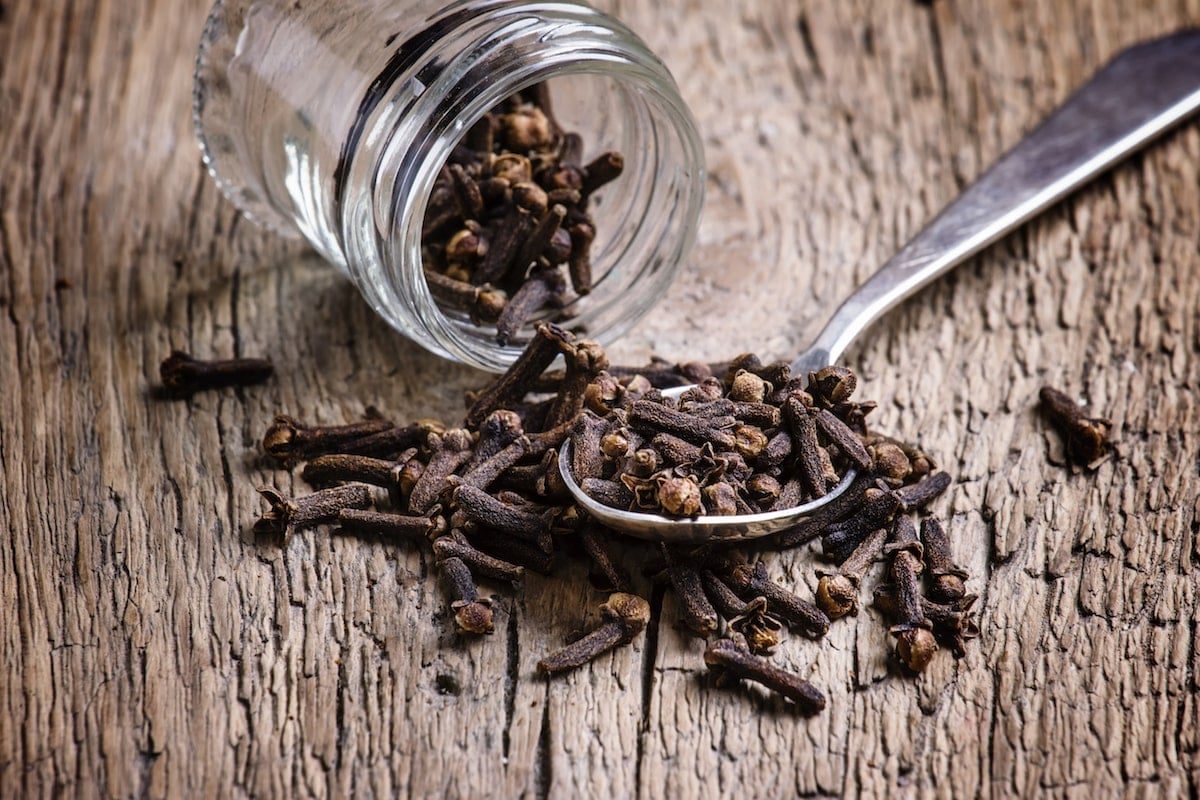
Cloves are the dried flower buds of Syzygium aromaticum. Britannica describes them as strong in aroma and hot and pungent in taste, and says they flavor many foods, particularly meats and baked goods.1 Their strength is the whole story in the kitchen: a few go a long way, and how you add them (whole and removed, or ground and stirred in) matters as much as how many. For the plant, its history and its chemistry, see the cloves profile.
Why a little goes a long way
A 2020 review reports that eugenol makes up about 85 to 92% of clove oil, and that clove oil and eugenol have analgesic, anesthetic and antiseptic effects, which is why they are used in dentistry.2 That same compound is a reasonable explanation for the faintly numbing, medicinal note that too many cloves leave in food, though no source measures it at kitchen amounts; that link is our judgment.
America’s Test Kitchen calls ground cloves potent and says its test kitchen uses them sparingly in baked goods.3 The Spice House, suggesting cloves as part of a cardamom substitute, advises cutting the amount to a half or three quarters because cloves can overpower a dish.4
Amounts (Attributed):
| Recipe | Cloves | For |
|---|---|---|
| Tasting Table onion piqué béchamel5 | 2 whole cloves | 2 cups whole milk, simmered 10 minutes, then removed |
| Oregon State Food Hero hot apple orange cider6 | 12 whole cloves | A batch simmered for 2 hours |
Method starting point: For ground cloves in a cake, spiced cookie dough or pie filling with no recipe to follow, start at about 1/8 teaspoon per teaspoon of cinnamon and adjust next time. That is a starting point, not a published ratio. If you overshoot, see too much clove.
Whole or ground: pick the form for the job
America’s Test Kitchen uses whole cloves to flavor stocks, to stud holiday hams and in poaching liquids for fruit, and keeps ground cloves for baking.3 A Couple Cooks says recipes that call for whole cloves usually need them: a mulled drink turns grainy with ground cloves, and cloves poked into oranges or meat cannot be replaced with ground.7 For conversions between the two, see ground vs. whole cloves.
Studding: ham, onions and oranges
- Ham. ATK lists studding holiday hams among the jobs for whole cloves.3 Pressed into the scored surface, they perfume the glaze and look decorative.
- Onion piqué. The French way to flavor a béchamel or a stock without loose cloves. Tasting Table describes it as half an onion with a bay leaf pinned to it by a couple of whole cloves. Its béchamel simmers the onion in 2 cups of whole milk for 10 minutes, then removes it.5 The same trick works in soups and braises: one studded onion goes in, and it comes out in one piece.
- Oranges. Cloves poked into oranges or apples are mostly decorative pomanders. A Couple Cooks notes that studded fruit needs whole cloves.7
Fish them out
Whole cloves stay hard and intensely flavored, and biting into one is unpleasant; that is the main reason to remove them, and it is our judgment rather than a sourced rule. A common claim says whole cloves are a choking hazard; we found no source that documents it. Two easy ways to keep track of them:
- Bundle them. Saveur’s choucroute garnie ties cloves with juniper berries, garlic and bay leaf in a piece of cheesecloth.8
- Count them. Note how many went in so you can count them out, or use an onion piqué as above.
The name itself comes from that hard, spiky shape: etymonline traces “clove” back through Old French to Latin clavus, “a nail,” so called from its shape.9
When to add them
Whole cloves are for long cooking. The Food Hero cider simmers 12 whole cloves for 2 hours,6 and the onion piqué goes in at the start of the béchamel.5 We found no measurement of how fast whole or ground cloves release flavor, or of the point at which long cooking turns a dish bitter. A common claim says cloves keep releasing oil until the dish tastes of nothing else; if you are worried, pull whole cloves out once the liquid tastes right, which is kitchen judgment.
Ground cloves go into batters, rubs and spice blends. If you bloom ground spices in hot fat, keep the heat moderate: Tasting Table warns that scorched spices become bitter and can ruin a dish.10
Pairings and blends
Cloves rarely work alone. Sourced combinations:
- Chinese five-spice. Britannica lists fennel seeds, cassia, cloves, star anise and Szechuan pepper.11 See Chinese five-spice powder.
- Garam masala. Great British Chefs lists cloves among the spices commonly used, along with bay leaf, fennel, cinnamon and cardamom.12 See garam masala.
- Allspice, cinnamon and nutmeg. Britannica says allspice is so named because its flavor resembles a combination of cinnamon, nutmeg and cloves.13 In our judgment those warm spices, plus ginger, are the most reliable company for cloves in baking; see cloves vs. cinnamon, nutmeg vs. cloves and allspice vs. cloves.
- Star anise and cardamom. Both share cloves’ warm, sweet register: see cloves vs. star anise and cardamom vs. cloves.
Pumpkin pie spice is often assumed to contain cloves. McCormick’s does not: its label lists cinnamon, ginger, nutmeg, allspice and sulfiting agents.14 If you want clove in a pumpkin pie, add it yourself. See pumpkin pie spice.
Grinding and storing ground cloves
Grinding whole cloves yourself gives a fresher powder, by common practice. Where you keep the result matters. America’s Test Kitchen ground a five-spice mix that included cloves and stored it in a plastic deli container; a week later the plastic appeared to have melted where it touched the spices.15 ATK explains that the eugenol in cloves and the anethole in star anise are chemically similar to polystyrene (plastic #6), so they can soften or dissolve it, and it recommends storing ground cloves and star anise in glass; whole spices were not a problem.15 ATK’s test was about storage containers, not grinders. Whether clove oil damages a plastic grinder bowl has not been tested in any source we found; washing the grinder promptly after use is sensible either way.
Related pages
Footnotes
-
“Clove”, Encyclopaedia Britannica, 2026. britannica.com · Reference work ↩
-
Batiha et al., “Syzygium aromaticum L. (Myrtaceae): Traditional Uses, Bioactive Chemical Constituents, Pharmacological and Toxicological Activities”, Biomolecules, 2020. mdpi.com · Peer-reviewed ↩
-
“Getting to Know: Baking Spices”, America’s Test Kitchen. americastestkitchen.com · Publication ↩ ↩2 ↩3
-
“Cardamom Substitute”, The Spice House, 2017. thespicehouse.com · Merchant ↩
-
Susan Olayinka and Tasting Table Staff, “Onion Pique Béchamel Sauce Recipe”, Tasting Table, 2022. tastingtable.com · Publication ↩ ↩2 ↩3
-
“Hot Apple Orange Cider”, Food Hero, Oregon State University Extension Service. extension.oregonstate.edu · Reference work ↩ ↩2
-
Sonja Overhiser, “Best Substitute for Cloves”, A Couple Cooks, 2026. acouplecooks.com · Publication ↩ ↩2
-
“Sauerkraut With Pork and Sausages (Choucroute Garnie)”, Saveur. saveur.com · Publication ↩
-
“clove”, Online Etymology Dictionary. etymonline.com · Reference work ↩
-
Marco Rossi, “How To Improvise Instant Pot Seasoning Without Burning Your Spices”, Tasting Table, 2023. tastingtable.com · Publication ↩
-
Tony Hill, “Five-spice powder”, Encyclopaedia Britannica. britannica.com · Reference work ↩
-
“How to make garam masala”, Great British Chefs, 2025. greatbritishchefs.com · Publication ↩
-
“Allspice”, Encyclopaedia Britannica, 2026. britannica.com · Reference work ↩
-
McCormick Pumpkin Pie Spice, product page, McCormick. mccormick.com · Merchant ↩
-
“Why You Should Store Spices in Glass”, America’s Test Kitchen. americastestkitchen.com · Publication ↩ ↩2