Spice Fixes · Fix
Too Much Fenugreek? How to Fix Bitterness and That Maple-Syrup Smell
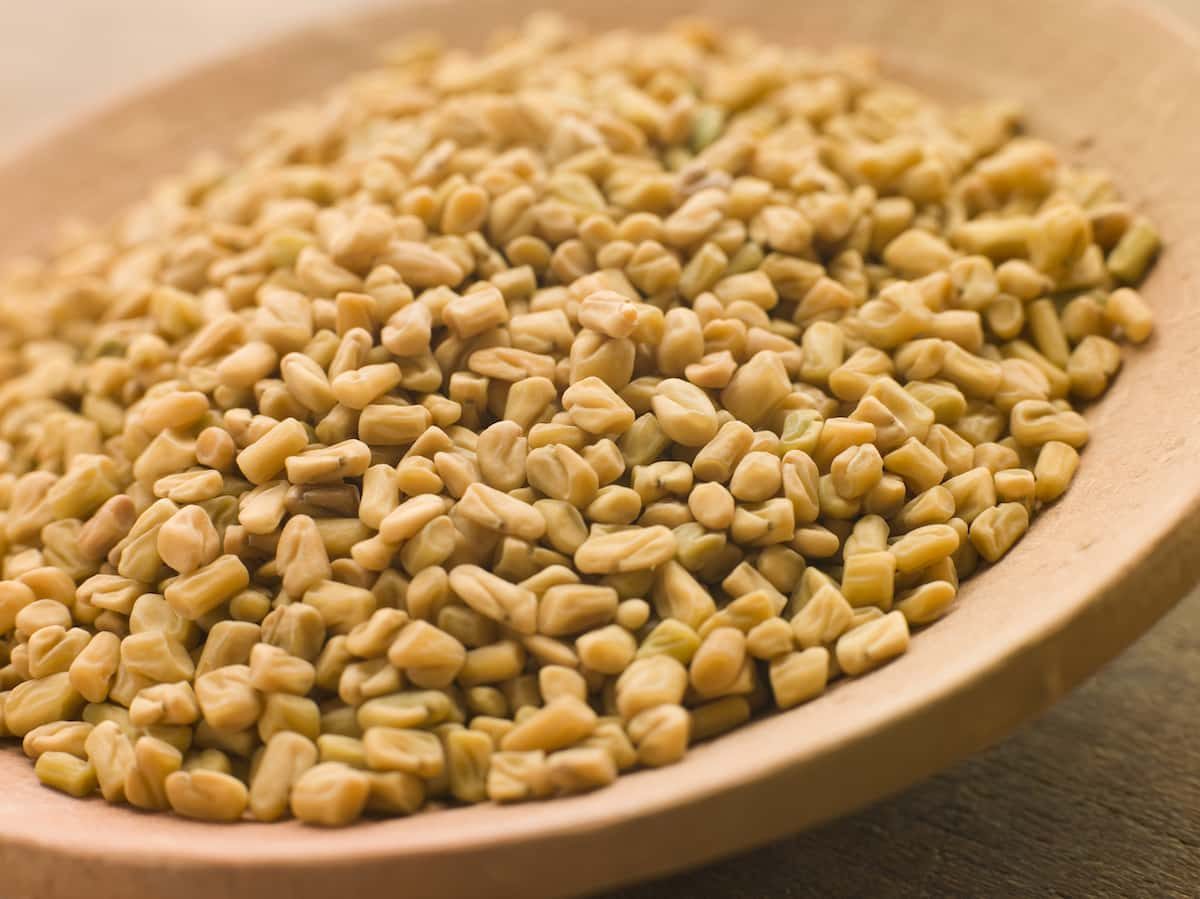
Fenugreek seed is one of the stronger spices in the curry cupboard. Britannica describes its aroma and taste as “strong, sweetish, and somewhat bitter, reminiscent of burnt sugar,”1 and the USDA’s specification for curry powder lists it among the ingredients a blend should include.2 In a small amount it gives depth. Too much brings two problems: a bitter edge, and a sweet, maple-syrup aroma that takes over the dish. Taste first, then use the section that matches.
Quick answer
| What’s wrong | Fastest fix | If that’s not enough |
|---|---|---|
| Fenugreek dominates the dish | Add more of everything except fenugreek | Make a fenugreek-free second batch and combine |
| Bitter | A pinch of sugar or jaggery, or a little more salt | Yogurt or coconut milk where they suit the dish |
| Maple or burnt-sugar smell takes over | Dilute; nothing cancels the aroma | Brighten with lime, tamarind or fresh herbs |
| Whole seeds in the pot | Lift them out with a slotted spoon | Then dilute |
| Seeds or powder burned in the oil | Move the dish to a clean pot without scraping | If the tempering itself burned, start that step over |
Where fenugreek’s flavor comes from
The maple note is a specific compound. NCCIH says fenugreek seeds “smell and taste like maple syrup,”3 and Britannica notes the herb is used to make imitation maple syrup.1 The compound behind that aroma is sotolon (also spelled sotolone), which a 1999 study in the Journal of Inherited Metabolic Disease describes as a well-known flavor impact compound in fenugreek and lovage.4 The same study found sotolon in the urine of patients with maple syrup urine disease, a metabolic disorder named for that smell, and concluded that sotolon is responsible for it.4
The aroma can carry through the body. A 2001 case report describes mothers who took fenugreek during labor whose newborns then had a maple syrup-like odor, which led doctors to suspect maple syrup urine disease until fenugreek was identified as the cause.5 That was a medical setting, not a dinner, and we found no study of how much fenugreek in ordinary cooking produces a noticeable odor.
The bitterness is in the seed. Britannica’s “somewhat bitter” description is of the seeds themselves.1 More seed means more bitterness.
Too much fenugreek, overall
Dilute. The one fix that lowers the fenugreek in each bite. Add more liquid and more of every other ingredient. To avoid doubling the pot, take out half the batch (freeze it to mix later with an unspiced batch) and rebuild the rest without fenugreek. Tasting Table gives the same advice for a dish with too much garlic: cook a second batch without the offending ingredient and combine the two.6
Add yogurt, cream or coconut milk where they fit. Yogurt often belongs in the dishes fenugreek goes into; Saveur notes that it works as a souring agent in curries.7 Coconut milk or coconut cream suits many curries. In our judgment these make a fenugreek-heavy dish more balanced because they add volume and mild richness. We found no source showing that dairy masks fenugreek’s flavor compounds. Because extra volume dilutes every spice in the dish, you may need to add back some of the others (cumin, coriander, chile, salt) to keep the dish from going flat.
Bitter
Sweetness, in moderation. In controlled taste tests, sweet tastes suppressed bitterness, and sugar was the dominant suppressor of other tastes.8 Those were lab tests with pure taste solutions, not food. Palm sugar, jaggery, cane sugar or honey all work; add a little at a time. Fenugreek already has a sweetish, burnt-sugar character,1 so taste carefully to avoid tipping the dish into sweetness.
A little salt. The same study found sodium salts also suppressed bitterness.8
Acid for brightness, not as a cure. Lime juice or tamarind adds a sour note that shifts attention away from the bitterness. Saveur calls tamarind “the key souring agent in sambhar.”7 But in the lab study, citric acid was the least effective suppressor of the tastes tested,8 so acid won’t cancel bitterness.
The maple-syrup smell
Nothing we found neutralizes sotolon in a finished dish. What helps is making it a smaller share of what you smell.
Dilute as above. That’s the only fix that lowers the aroma directly.
Add competing fresh aromas at the end: lime juice, chopped cilantro, or fresh ginger, whatever suits the dish. This is kitchen judgment, not a tested remedy.
Whole seeds and burnt seeds
Lift out whole seeds. Whole fenugreek seeds used in a tempering or a pickle can be fished out with a slotted spoon. They stop adding flavor once removed.
If they burned, the bitterness gets worse. Ground spices burn fairly quickly in hot fat, leaving a scorched flavor,9 and NPR’s guide to Indian tempering is blunt that there is “NO way of saving a burned tadka.”10 If the tempering oil burned and you haven’t added much else, throw it out and start that step over. If the dish is further along, move it to a clean pot without scraping the bottom, which only adds burnt flavor.11
Fixes that don’t hold up
Dried mint or fennel seed to “cancel” fenugreek. It is sometimes said that dried mint masks fenugreek completely, or that fennel seeds remove its smell. We found no source for either. Both are strong flavors in their own right; in our judgment they add a second aroma rather than removing the first.
A teaspoon-and-a-lime formula. A specific ratio of ground coriander and lime juice is sometimes offered as a fenugreek fix. We found no source for any such ratio. If coriander and lime suit your dish, add them by taste.
Is too much fenugreek unsafe?
In cooking, mostly no. NCCIH says fenugreek is believed to be safe for adults and children in the amounts commonly found in foods.3 It notes possible digestive side effects such as diarrhea and nausea, and that large doses may cause a harmful drop in blood sugar.3 Two points apply to anyone:
- Pregnancy. NCCIH says fenugreek is not safe during pregnancy in amounts greater than those found in food, and links its use to increased risks of birth defects in animals and people.3
- Allergy. Fenugreek can cause allergic reactions, including serious ones, in some people.3
Preventing it next time
Treat it as a strong spice. Britannica calls it a characteristic ingredient in some curries and chutneys,1 and the USDA’s curry powder specification lists it alongside seven other spices.2 Measure it rather than shaking it from the jar.
Bloom gently. Cooking spices briefly in fat develops their flavor; America’s Test Kitchen gives 30 seconds to several minutes and warns that ground spices burn fairly quickly.9 Use moderate heat for fenugreek, since burning adds bitterness on top of its own.
Start low. No source gives a standard amount per serving. Our method, not a published figure: with an unfamiliar recipe or a new jar, start with about half the stated amount of fenugreek, cook it in, taste, and add more only if the dish needs it. Fenugreek leaves are a different ingredient; see fenugreek leaves vs. seeds and kasuri methi.
Related
Footnotes
-
Fenugreek, Encyclopaedia Britannica. britannica.com · Reference work ↩ ↩2 ↩3 ↩4 ↩5
-
Commercial Item Description A-A-20001C: Spices and Spice Blends, USDA Agricultural Marketing Service, 2023. ams.usda.gov · Regulator ↩ ↩2
-
Fenugreek, National Center for Complementary and Integrative Health, 2025. nccih.nih.gov · Regulator ↩ ↩2 ↩3 ↩4 ↩5
-
Podebrad F et al., 4,5-dimethyl-3-hydroxy-2[5H]-furanone (sotolone): the odour of maple syrup urine disease, Journal of Inherited Metabolic Disease, 1999. pubmed.ncbi.nlm.nih.gov · Peer-reviewed ↩ ↩2
-
Korman SH, Cohen E, Preminger A, Pseudo-maple syrup urine disease due to maternal prenatal ingestion of fenugreek, Journal of Paediatrics and Child Health, 2001. pubmed.ncbi.nlm.nih.gov · Peer-reviewed ↩
-
Simple Ways To Tone Down The Pungency Of Garlic, Harmony Colangelo, Tasting Table, 2023. tastingtable.com · Publication ↩
-
Get to Know the Sour, Twangy Ingredients that Give Indian Cooking a Kick Beyond Spice, Michael Snyder, Saveur, 2016. saveur.com · Publication ↩ ↩2
-
Green BG et al., Taste Mixture Interactions: Suppression, Additivity, and the Predominance of Sweetness, Physiology & Behavior, 2010. pmc.ncbi.nlm.nih.gov · Peer-reviewed ↩ ↩2 ↩3
-
How to Bloom Spices, America’s Test Kitchen, 2023. americastestkitchen.com · Publication ↩ ↩2
-
The Crackling Spices of Indian Tempering, Monica Bhide, NPR, 2011. npr.org · Publication ↩
-
What To Do With Burnt Soup, Karen Greco, Tasting Table, 2022. tastingtable.com · Publication ↩