Spice Fixes · Fix
Too Much Cumin? How to Rescue the Dish, Fastest Fix First
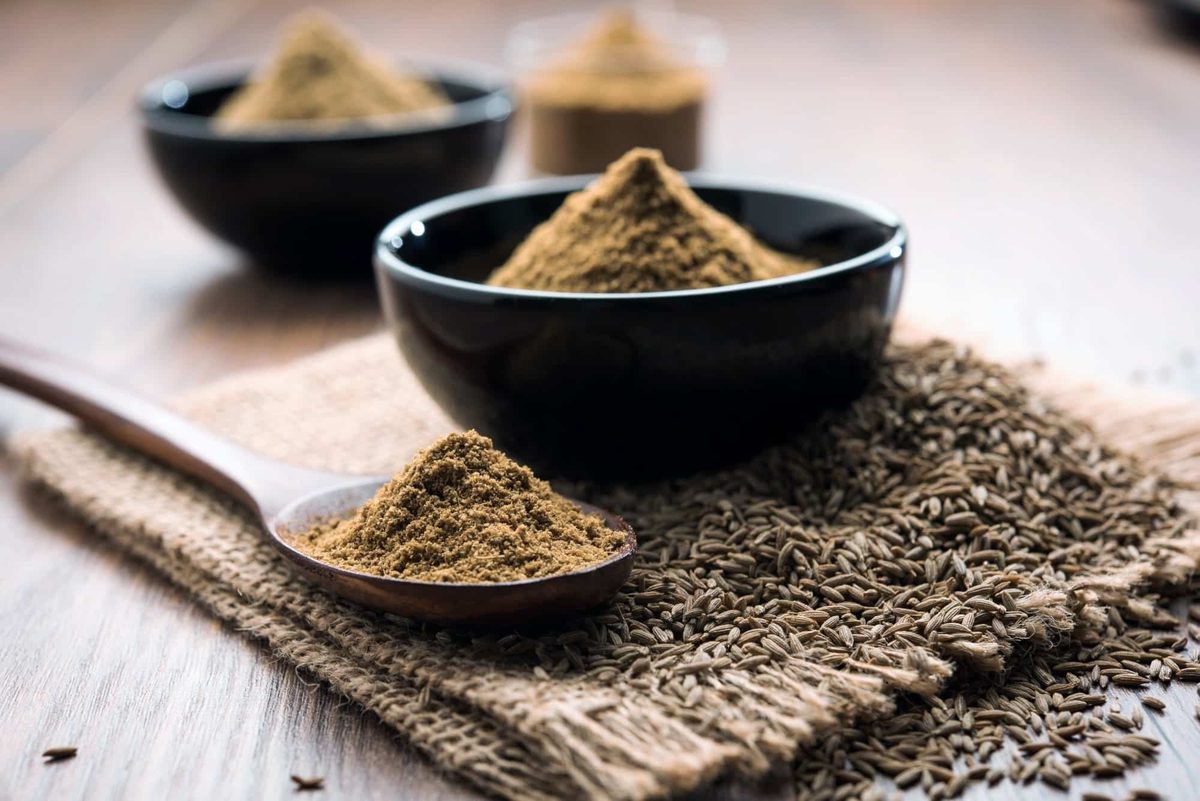
Cumin is hard to hide once there is too much of it. The PROSEA plant-resources handbook describes its aroma as strong, warm, pungent and persistent,1 and that persistence is the problem: a heavy hand doesn’t fade into the background as the dish cooks. Too much cumin usually shows up in one of three ways: the whole dish tastes of cumin and little else, the cumin tastes harsh or bitter, or the spice scorched in the pan. Taste first, find your problem below, and start with the fix at the top of each section.
Quick answer
| What’s wrong | Fastest fix | If that’s not enough |
|---|---|---|
| Everything tastes of cumin | Add more of everything else, or cook a cumin-free second batch and combine | Add bulk with mild ingredients; finish with fresh herbs or a creamy topping |
| Harsh or bitter edge | A pinch of sugar or a little more salt | A sour note (lime, tamarind) for brightness, not as a cure |
| Acrid, burnt smell (spice scorched) | Move the food to a clean pan without scraping the bottom | If the tempering oil itself burned, start that step over |
| Whole seeds everywhere | Lift them out with a slotted spoon or strainer | Then dilute whatever cumin flavor stayed behind |
| Caked on a dry rub | Scrape or wipe off the excess | Don’t rinse raw meat under the tap |
Why cumin takes over
Cumin’s flavor sits in its essential oil, which makes up about 2.5 to 4.5 percent of the dried seed.2 The most important single compound in that oil is cuminaldehyde; PROSEA reports its share varying between 20 and 72 percent across the literature, so one lot of cumin can be noticeably stronger than another.1 Ground cumin also releases its flavor faster than whole seed, which is why The Spice House advises using slightly less ground spice when it stands in for whole.3
Some dishes are built around a lot of cumin. The Spice House calls chili and tacos “very cumin-forward.”3 If a cumin-heavy dish tastes unfamiliar, check the recipe before assuming something went wrong.
Too much cumin, overall
Dilute. This is the only fix that lowers the amount of cumin in each bite. Add more of every other ingredient: more beans, meat or vegetables to a chili, more tomatoes and stock to a soup, more rice to a pilaf. If doubling the whole recipe is too much food, take out half the batch (freeze it for later, mixed with fresh unspiced food) and rebuild the other half. Tasting Table suggests the same move for an over-garlicked dish: cook a second batch without the offending ingredient and combine the two.4 Two equal batches halve the concentration.
Watch the liquid. Adding only stock thins the texture as well as the cumin; add solids too, or reduce the dish again afterward.
Add mild bulk. Potatoes, rice, beans or lentils cooked into the dish add volume without competing flavors. This is dilution by another route, not absorption: nothing here soaks cumin out.
Finish with something fresh or creamy. Chopped cilantro, a squeeze of lime, sour cream or yogurt on top of chili or tacos, coconut milk in a curry. In our judgment these make a cumin-heavy dish more pleasant by adding contrast. No source we found shows that fat or dairy binds cumin’s flavor compounds, so treat this as balancing, not removal.
Harsh or bitter
A heavy dose of cumin can taste harsh and slightly bitter (a flavor judgment, not a measured finding). Two tastes can blunt bitterness.
Sweetness first. In controlled taste tests, sweet tastes suppressed bitterness, and sugar was the dominant suppressor of other tastes overall.5 Those were lab tests with pure taste solutions, not food, but they point the same way as kitchen practice. Pick a sweetener that suits the dish: a pinch of sugar or a little honey in chili, a spoonful of chopped dried fruit or a little jaggery in a curry, a touch of maple syrup or agave in a glaze. Add a little at a time and taste; the aim is less bitterness, not a sweet dish.
A little salt. The same study found sodium salts also suppressed bitterness.5 If the dish isn’t already well salted, a pinch more salt, or a salty ingredient such as soy sauce, miso or bacon where it fits, can help.
Acid for brightness, not as a cure. Lime juice, vinegar or tamarind add a sour note that gives your palate something besides cumin to notice. Tamarind is a natural fit in South Indian dishes; Saveur calls it “the key souring agent in sambhar.”6 But don’t expect acid to cancel bitterness: in the same lab tests, citric acid was the least effective suppressor of the tastes studied.5 A widely repeated claim says acid “neutralizes” excess spice; no source we found supports that.
Burnt or acrid
In Indian tempering (tadka), spices are heated in hot oil or ghee, and NPR’s guide to the technique has cooks put whole cumin seeds in first, before garlic.7 Ground spices go from fragrant to burnt quickly, and burnt spices turn bitter.89
Get the food out of the pan. Move a soup, stew or sauce to a clean pot without scraping the bottom, which only adds burnt flavor.10
If the tempering oil burned, redo it. NPR’s writer is blunt: there is “NO way of saving a burned tadka.”7 If you haven’t added much to the pan yet, discard the oil and start that step again.
Blunt what’s left with sugar or salt, as above.5
Whole seeds and dry rubs
Fish out whole seeds. Whole cumin seeds can be lifted out with a slotted spoon, or strained from a broth or sauce, and they stop adding flavor once they’re out. Then taste and dilute if needed.
Scrape a rub, don’t rinse it. On a pork shoulder, steak or chicken, scrape or wipe off excess rub with a knife or paper towel and season again lightly. The USDA does not recommend washing raw meat or poultry, because rinsing spreads bacteria around the kitchen.11
Fixes that don’t hold up
Nutmeg or cinnamon to “distract” from cumin. You will sometimes read that nutmeg is an antidote to cumin, or that cinnamon offsets cumin’s bitterness in chili. We found no source for either. Both are strong spices in their own right; in our judgment they add a second dominant flavor rather than removing the first. If a little cinnamon suits your chili anyway, use it for that reason.
Acid that “neutralizes” cumin. See above: acid adds brightness, but lab tests found citric acid the weakest bitterness suppressor of those tested.5
Preventing it next time
Measure ground against whole carefully. By McCormick’s volume conversion, 1 teaspoon of cumin seeds equals 1 1/4 teaspoons of ground cumin.12 That is a volume conversion, not a measure of strength, and The Spice House advises erring lower with ground because it releases flavor faster.3
Bloom it, briefly. Cooking ground spices in fat before the other ingredients brings out their flavor; America’s Test Kitchen says blooming takes anywhere from 30 seconds to several minutes, and warns that ground spices burn fairly quickly.9 Bloomed cumin tastes fuller, so you may need less. Use moderate heat and have the next ingredient ready.
Start below the recipe if your jar is fresh. No source gives a standard amount of cumin per serving, and cuminaldehyde content varies widely between lots.1 Our method, not a published figure: add about three quarters of what the recipe says, simmer for a few minutes, taste, then add the rest if it needs it.
Related
- Cumin seeds vs. ground cumin
- Cumin substitutes
- Cumin uses
- Cumin vs. curry powder
- Too much coriander
- Too much curry powder
- Too much salt
Footnotes
-
Cuminum cyminum (PROSEA), P.C.M. Jansen, Plant Resources of South-East Asia. uses.plantnet-project.org · Reference work ↩ ↩2 ↩3
-
Cumin, Encyclopaedia Britannica. britannica.com · Reference work ↩
-
Cumin Substitute, The Spice House, 2017. thespicehouse.com · Merchant ↩ ↩2 ↩3
-
Simple Ways To Tone Down The Pungency Of Garlic, Harmony Colangelo, Tasting Table, 2023. tastingtable.com · Publication ↩
-
Green BG et al., Taste Mixture Interactions: Suppression, Additivity, and the Predominance of Sweetness, Physiology & Behavior, 2010. pmc.ncbi.nlm.nih.gov · Peer-reviewed ↩ ↩2 ↩3 ↩4 ↩5
-
Get to Know the Sour, Twangy Ingredients that Give Indian Cooking a Kick Beyond Spice, Michael Snyder, Saveur, 2016. saveur.com · Publication ↩
-
The Crackling Spices of Indian Tempering, Monica Bhide, NPR, 2011. npr.org · Publication ↩ ↩2
-
How To Improvise Instant Pot Seasoning Without Burning Your Spices, Marco Rossi, Tasting Table, 2023. tastingtable.com · Publication ↩
-
How to Bloom Spices, America’s Test Kitchen, 2023. americastestkitchen.com · Publication ↩ ↩2
-
What To Do With Burnt Soup, Karen Greco, Tasting Table, 2022. tastingtable.com · Publication ↩
-
Washing Food: Does it Promote Food Safety?, USDA Food Safety and Inspection Service. fsis.usda.gov · Regulator ↩
-
How to Grind Your Own Spices, Plus Spice Conversions, McCormick, 2025. mccormick.com · Merchant ↩