Spice Fixes · Fix
Too Much Curry Powder? Fixes for Bitter, Raw-Tasting or Overspiced Curry
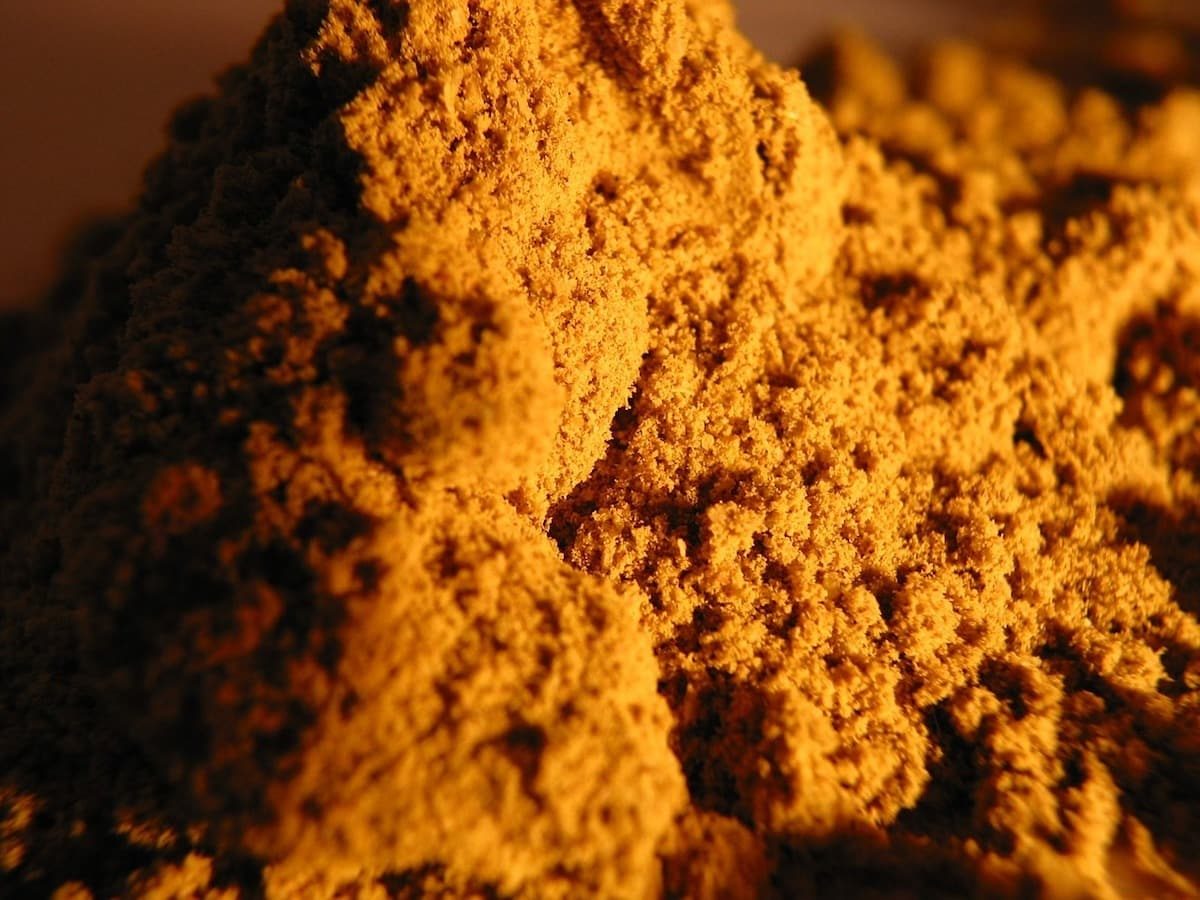
How much curry powder is too much is partly a matter of taste, and blends differ from brand to brand. But a curry can clearly go too far: bitter, dusty, harsh, or so heavily spiced that nothing else comes through. Taste first and figure out which of those you have. The fixes differ, and within each section the fastest one comes first.
Quick answer
| What’s wrong | Fastest fix | If that’s not enough |
|---|---|---|
| Overspiced: everything tastes of curry powder | Add more of everything except the curry powder | Add coconut milk, stock, tomatoes, lentils or vegetables as bulk |
| Bitter | A little sugar (palm sugar, jaggery) or salt | Slow-browned onions or tomatoes for sweetness and body |
| Raw, dusty or musty | Simmer longer; next time bloom the powder in fat first | Fry fresh aromatics in fat and stir them in |
| Burnt | Move the curry to a clean pot without scraping | If the spices burned at the start, begin that step again |
| Too hot | Dilute | See is curry powder spicy? for which blends carry heat |
What’s in curry powder, and why it turns bitter
There’s no single recipe. The USDA’s purchasing specification says curry powder should include, but is not limited to, turmeric, coriander, fenugreek, cinnamon, cumin, black pepper, ginger and cardamom.1 The same specification expects “a warm bitter taste.”1 Bitterness, in other words, is part of the intended flavor; too much powder just pushes it forward.
Two of those ingredients are bitter on their own. Britannica describes fenugreek seed as “strong, sweetish, and somewhat bitter,”2 and a reference chapter on turmeric describes its taste as “bitter, slightly acrid, yet sweet.”3 For those spices individually, see too much fenugreek and too much turmeric.
Overspiced
Make more. Adding more of every ingredient except the curry powder is the only fix that reduces the spice in each bite. If the pot can’t take it, cook a second batch without curry powder and combine, the approach Tasting Table recommends for a dish with too much garlic.4 You’ll have leftovers, but you won’t have to throw anything out.
Add coconut milk where it belongs. In a curry that already uses coconut milk, more of it adds volume and richness. Watch the texture: you may need to add vegetables or simmer to thicken it again.
Add stock. Chicken, beef or vegetable stock dilutes without adding much flavor of its own. Too much thin stock makes a curry watery, so simmer to reduce, or thicken with a little cornstarch slurry.
Add lentils, potatoes or vegetables. Lentils, diced potato, cauliflower, peas or extra onions and peppers add bulk with mild flavors. They work as dilution: more food carrying the same amount of spice.
Add peeled tomatoes. A can of tomatoes adds volume along with some sweetness and acidity. It suits tomato-based curries better than coconut-based ones.
Bitter
Sweetness. In controlled taste tests, sweet tastes suppressed bitterness and sugar was the dominant suppressor of other tastes.5 That was a lab study with pure taste solutions, not food, but kitchen practice agrees. Palm sugar or jaggery suits curries that already use it; plain sugar works anywhere. Add a pinch, stir, taste.
Slow-browned onions. Onions cooked slowly until golden add sweetness and body. This is kitchen technique; we found no source that tests it against curry bitterness.
Salt. The same study found sodium salts also suppressed bitterness.5 Check the seasoning before reaching for anything else.
Acid for brightness, not as a cure. Lime or lemon juice, vinegar, tamarind or amchur add a sour lift. Saveur describes tamarind as “the key souring agent in sambhar” and amchur as made from sun-dried unripe mango pulp.6 But in the lab study, citric acid was the least effective suppressor of the tastes tested.5 A sour note can make a curry taste livelier; it won’t erase bitterness. A widely repeated claim says acid “neutralizes” excess spice; no source we found supports that.
Raw, dusty or musty
This one is often a cooking problem rather than an amount problem. America’s Test Kitchen says adding curry powder or other powdered spices straight to the pot can leave “a bland, musty flavor or texture,” and that blooming the powder in fat first brings out its warm, layered flavors.7 A curry that tastes dusty may need cooking, not diluting.
Simmer longer and taste again before changing anything else.
Add a bloomed base. Heat a little oil or ghee, gently fry some onion, garlic or ginger, and stir it in. This adds cooked flavor and a little bulk. It’s technique, not a tested fix.
Burnt
Ground spices burn fairly quickly in hot fat, leaving a scorched flavor.7 If the curry tastes acrid:
Move it to a clean pot without scraping the bottom, which only adds burnt flavor.8
If the spices burned in the first step, start again. NPR’s guide to Indian tempering puts it plainly: there is “NO way of saving a burned tadka.”9 Discarding a few tablespoons of oil and spice costs less than a pot of curry.
Too hot
The USDA’s ingredient list includes black pepper and ginger but no chile,1 though it is a minimum list, not a limit. Check your jar’s label for chile or cayenne. Heat is diluted the same way as everything else: more of the other ingredients. For which blends tend to be hot, see is curry powder spicy? and Madras curry powder.
Fixes that don’t hold up
A potato to “soak up” the spice. The claim that potato starch absorbs excess spice comes from the oversalted-soup trick, and even for salt a Tasting Table writer who uses it calls the potato “more of an aid than a final answer.”10 We found no test of potato against curry powder. Diced potato left in the curry is still useful as bulk and as a thickener.
Acid that “erases” bitterness. See above: acid brightens, but it was the weakest bitterness suppressor in the lab study.5
Preventing it next time
Bloom it. Cook the powder in fat for a short time before adding liquid. America’s Test Kitchen gives anywhere from 30 seconds to several minutes for blooming and warns that ground spices burn fairly quickly.7 Bloomed curry powder tastes fuller, so you’re less likely to keep adding more.
Know your blend. Blends vary, and the USDA’s specification sets out what a blend should include, not how much of each.1 A new jar can be stronger or hotter than the last one.
Start lower, then build. No source gives a standard amount of curry powder per serving. Our method, not a published figure: start with about three quarters of the recipe’s amount, bloom it, simmer a few minutes, then taste before adding the rest.
Related
- Cooking with curry powder
- Curry paste vs. curry powder
- Garam masala vs. curry powder
- Too much garam masala
- Too much cumin
- Too much salt
Footnotes
-
Commercial Item Description A-A-20001C: Spices and Spice Blends, USDA Agricultural Marketing Service, 2023. ams.usda.gov · Regulator ↩ ↩2 ↩3 ↩4
-
Fenugreek, Encyclopaedia Britannica. britannica.com · Reference work ↩
-
Prasad S, Aggarwal BB, Turmeric, the Golden Spice, in Herbal Medicine: Biomolecular and Clinical Aspects, 2011. ncbi.nlm.nih.gov · Reference work ↩
-
Simple Ways To Tone Down The Pungency Of Garlic, Harmony Colangelo, Tasting Table, 2023. tastingtable.com · Publication ↩
-
Green BG et al., Taste Mixture Interactions: Suppression, Additivity, and the Predominance of Sweetness, Physiology & Behavior, 2010. pmc.ncbi.nlm.nih.gov · Peer-reviewed ↩ ↩2 ↩3 ↩4
-
Get to Know the Sour, Twangy Ingredients that Give Indian Cooking a Kick Beyond Spice, Michael Snyder, Saveur, 2016. saveur.com · Publication ↩
-
How to Bloom Spices, America’s Test Kitchen, 2023. americastestkitchen.com · Publication ↩ ↩2 ↩3
-
What To Do With Burnt Soup, Karen Greco, Tasting Table, 2022. tastingtable.com · Publication ↩
-
The Crackling Spices of Indian Tempering, Monica Bhide, NPR, 2011. npr.org · Publication ↩
-
How To Fix An Oversalted Soup, Alison Spiegel, Tasting Table, 2016. tastingtable.com · Publication ↩