Spice Fixes · Fix
Too Much Ginger? How to Tone Down the Heat, Fastest Fix First
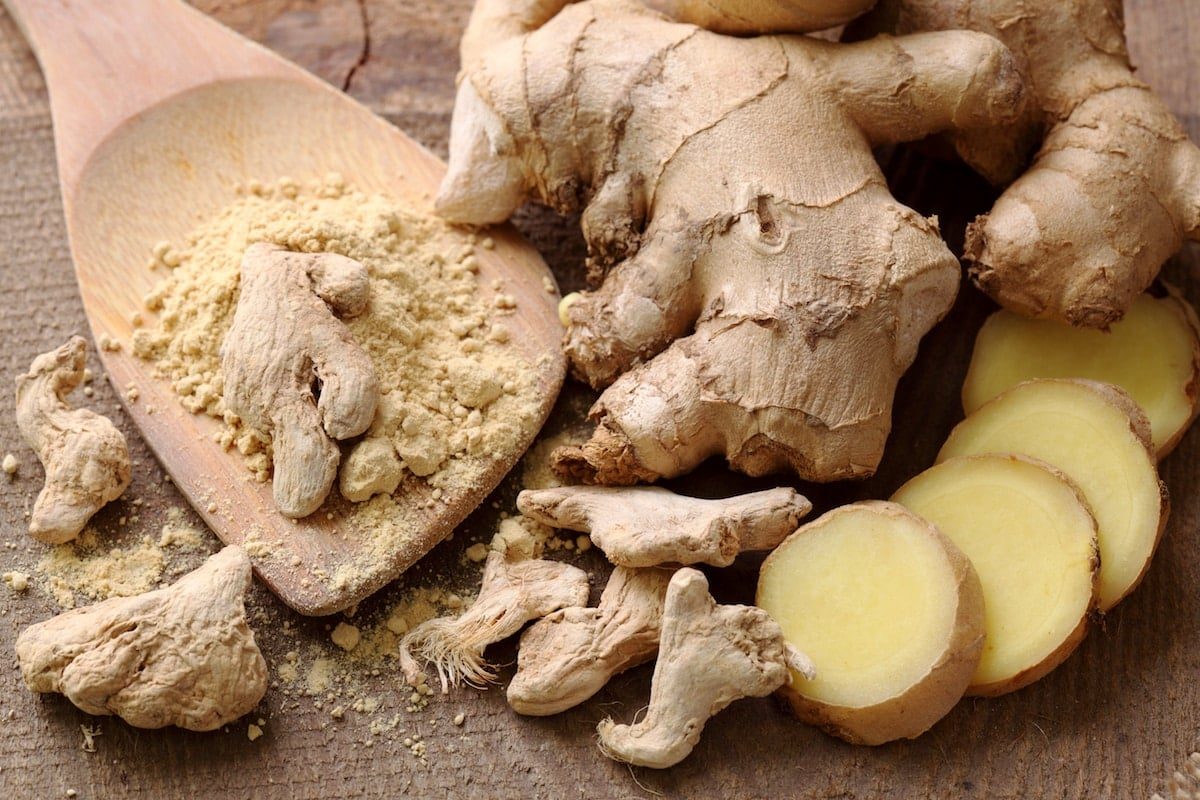
Too much ginger usually means too much heat: a peppery burn at the back of the throat that crowds out everything else. Sometimes it is a strong, perfumey ginger flavor, and occasionally a bitter, scorched note from ground ginger that hit a hot, dry pan. Find your problem below and start with the first fix in that section.
Quick answer
| What’s wrong | Fastest fix | If that’s not enough |
|---|---|---|
| Slices, coins or chunks of fresh ginger in the dish | Lift them out now | Dilute what’s left |
| Too hot or too gingery, overall | Add more of everything else | Balance with sweetness, something creamy, or acid |
| Ground ginger sitting on top, not yet stirred in | Spoon off what you can | Dilute |
| Bitter or acrid (ground ginger scorched) | Move the food to a clean pan without scraping | A pinch of sugar or a little salt |
| Too much ginger in a cake or cookies | Serve with something rich and mild | Bake the next batch with less |
Why ginger gets hot
Ginger’s pungency comes mainly from gingerols, its major non-volatile compounds.1 When ginger is heated or dried, 6-gingerol can lose a water molecule and become 6-shogaol, a change the authors of a 2025 study describe as increasing the overall pungency of ginger; zingerone also rose as gingerols broke down under heat.1 That study measured spray-dried ginger extract, so it describes industrial processing, not what happens in a home pot, and it doesn’t measure how hot commercial ground ginger is compared with fresh. More in is ginger spicy?.
Too hot or too gingery: sheer volume
Take out what you can. Coins, slices or large pieces of fresh ginger can be lifted out with a slotted spoon or fork. Do it as soon as you notice. If ground ginger is still floating on a thick sauce, skim off what you can before stirring.
Dilute. Add more of every ingredient except ginger. Doubling the rest halves the concentration. If the pot can’t hold more, split the dish, rebuild one half to a full batch with everything but ginger, and freeze the rest. This is the only fix that lowers the amount of ginger in each bite.
Add sweetness. Many ginger dishes already contain sugar, honey or mirin, so a little more is an easy adjustment. Treat it as balancing: we found no source testing sugar against ginger’s heat specifically. It works best for a dish that’s slightly over; a big overdose would need enough sugar to make the dish too sweet.
Something creamy. Yogurt in a curry, coconut milk in a Thai or Indian dish, or ice cream or whipped cream with an overly gingery cake. This adds volume and mild richness. A widely repeated claim says dairy tames gingerol the way it tames chili heat; we found no source that tested ginger, so we won’t claim it.
Acid, in small amounts. A little lime, lemon or rice vinegar can bring a soup or sauce back into balance. This is kitchen practice, not a neutralizer; add a little and taste so the dish doesn’t turn sour.
Other spices, with care. In some savory dishes, bringing the other spices up makes the ginger less prominent. It also adds more total seasoning, so add in small amounts and taste between additions.
Bitter or acrid: ground ginger scorched
Ground spices burn quickly over intense heat and turn bitter.2 If ground ginger went into hot, dry oil and the dish now tastes acrid:
Move the food to a clean pan, leaving the scorched layer behind, and don’t scrape the bottom.3
Blunt the bitterness with sugar or salt, not lemon. In controlled taste tests with pure solutions, sweet tastes and sodium salts both suppressed bitterness, while citric acid was the weakest suppressor.4 That is a lab result, not a test on food.
Safety note
Ginger in food amounts isn’t a safety concern for most people. NIH’s National Center for Complementary and Integrative Health notes that ginger taken by mouth can cause abdominal discomfort, heartburn, diarrhea and mouth and throat irritation, and advises anyone taking medicine to talk with a health care provider before using ginger supplements.5 Those notes refer to ginger products and supplements; NCCIH gives no amount at which culinary ginger becomes a problem.
Preventing it next time
Treat fresh and ground as different ingredients. No credible source we found gives a measured fresh-to-ground ratio, so when swapping one for the other, start small, taste, and build up. See ginger substitutes for the options.
Grate or slice to match the job. Grated or minced ginger spreads through a dish; slices can be removed later. Use slices when you’re unsure how strong a batch of ginger is.
Add ground ginger with liquid. Keep it out of a smoking-hot, dry pan.2
Taste before adding more. Let the dish simmer a few minutes after adding ginger before deciding it needs more.
Related
Footnotes
-
Warren-Walker A et al., Effect of Thermal Processing by Spray Drying on Key Ginger Compounds, Metabolites, 2025. pmc.ncbi.nlm.nih.gov · Peer-reviewed ↩ ↩2
-
How To Improvise Instant Pot Seasoning Without Burning Your Spices, Marco Rossi, Tasting Table, 2023. tastingtable.com · Publication ↩ ↩2
-
What To Do With Burnt Soup, Karen Greco, Tasting Table, 2022. tastingtable.com · Publication ↩
-
Green BG et al., Taste Mixture Interactions: Suppression, Additivity, and the Predominance of Sweetness, Physiology & Behavior, 2010. pmc.ncbi.nlm.nih.gov · Peer-reviewed ↩
-
Ginger, National Center for Complementary and Integrative Health, NIH. nccih.nih.gov · Regulator ↩