Blog · Fix
Too Much Black Pepper? How to Fix the Dish, Fastest Fix First
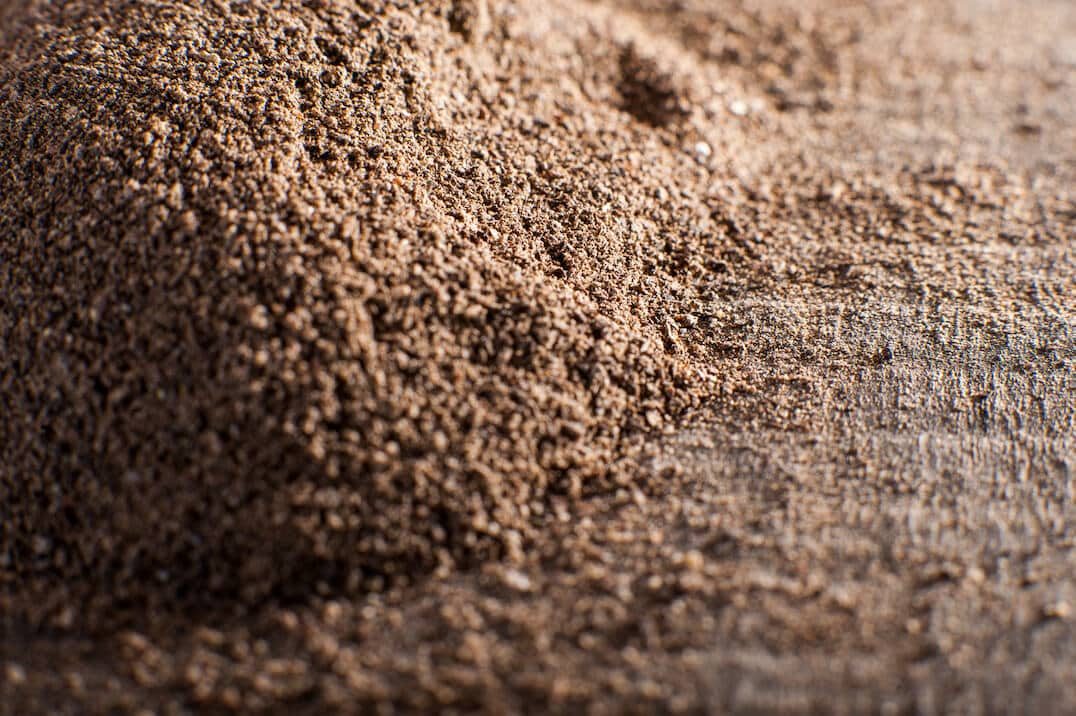
Too much black pepper makes a dish hot, sharp and dusty, with a bite that builds at the back of the throat, and scorched pepper adds bitterness on top. This page is about black and white pepper, which both come from Piper nigrum.1 Chile heat from cayenne or red pepper flakes comes from a different family of compounds, the capsaicinoids;2 see black pepper vs. cayenne for how the two differ. Fastest fixes come first.
Quick answer
| What’s wrong | Fastest fix | If that’s not enough |
|---|---|---|
| Visible pepper in a soup, sauce or gravy | Skim or pour through a fine strainer | Dilute |
| Too hot all through | Add more of everything else, or a second pepper-free batch | Balance with sweetness, richness or acid |
| Bitter or acrid (pepper scorched in hot oil or on a crust) | Move the food to a clean pan without scraping | A pinch of sugar or a little salt |
| Heavy crust on steak, chicken or vegetables | Scrape or wipe off the excess | Don’t rinse raw meat or poultry under the tap |
Why black pepper bites
The pungent compound in black pepper is piperine, an alkaloid.3 It produces its burning sensation through the same receptor that responds to chile’s capsaicin, TRPV1.3 In a laboratory study on human TRPV1 receptors grown in cells, piperine was a far less potent activator than capsaicin (it needed a concentration of 37.9 μM to reach half its effect, against 0.29 μM for capsaicin), though at high concentrations it produced a larger maximum response.3 That is a cell experiment, not a tasting panel, so it doesn’t tell you how hot a peppered dish will taste.
The University of Delaware’s extension guide lists black pepper with red pepper, mustard and paprika as peppery flavors to “use with care since their flavors stand out.”4
Too much pepper in a liquid: strain or skim first
In a soup, sauce or gravy, a lot of the excess may still be floating or suspended. Pour the liquid through a fine strainer or cheesecloth into a clean pot, or skim the surface, then taste. Coarsely cracked pepper and whole peppercorns come out easily; finely ground pepper only partly. Straining also removes herbs and other small solids, so you may need to re-season with those afterward. If the dish still tastes too hot, move on to dilution.
Too hot all through: dilute, then balance
Dilute. Adding more of everything except pepper is the one fix that lowers the amount of piperine in each bite. Add broth, vegetables or meat to a soup or stew; more pasta or rice to a casserole; more noodles or breadcrumbs, with another egg to bind, to a meatloaf. If the pot won’t take more, the second-batch method Tasting Table gives for too much garlic works the same way: cook a batch with no pepper and combine the two.5
Balance with sweetness. Sweet ingredients don’t remove piperine, but they give the palate something else to register. Carrots, tomatoes or sweet onions suit soups and casseroles; barbecue sauce, a honey glaze, maple syrup or molasses suit heavily peppered meat. Add a little at a time and taste: the aim is a dish that tastes less peppery, not sweet. This is kitchen judgment; we found no study of sweetness against piperine’s burn.
Add richness. Cheese in a casserole, cream in a broth-based soup, coconut milk in a stir-fry, or a drizzle of olive oil over pasta adds volume and a mild, rich flavor that softens the overall impression. We found no source showing that fat or dairy reduces piperine’s effect, so treat this as balancing, not neutralizing.
Brighten with acid. Lime juice in Southeast Asian dishes, lemon on fish or in a glaze, cider vinegar with pork, a splash of balsamic in a tomato sauce. Again, this is balance: no source we found shows that acid neutralizes piperine.
Add complementary seasonings. In a dish with few other seasonings, more of something that suits it can make the pepper read as one note among several: cumin and garlic in a stew, basil and oregano in an Italian sauce, tarragon with fish or vegetables. Add a little at a time so you don’t swap one excess for another.
Bitter or acrid: the pepper scorched
Ground pepper on a seared steak crust or in very hot oil can burn, and ground spices in general turn bitter quickly under intense heat.6 For a sauce or sauté, transfer the food to a clean pan, leaving the burnt layer behind and not scraping the bottom, which only adds burnt flavor.7 If bitterness remains, sweetness and salt are better bets than acid: in controlled taste tests with pure solutions, sugar and sodium salts both suppressed bitterness, with sugar the strongest suppressor of other tastes, while citric acid was the weakest.8 That is a laboratory result, not a test on food.
Too much on the surface
Scrape or wipe excess pepper off a steak, roast, chicken or tray of vegetables, then re-season lightly. Don’t rinse raw meat or poultry under the tap: the USDA does not recommend washing raw poultry, beef, pork, lamb or veal before cooking, because rinsing raises the risk of cross-contamination.9
Fixes that don’t hold up
“Fat neutralizes pepper by denaturing its enzymes.” Pepper’s bite doesn’t come from an enzyme; it comes from piperine, an alkaloid.3 Richness can still help as balance, as above, but not by this mechanism.
“Pepper is a base, so acid neutralizes it.” We found no source showing that an acid neutralizes piperine or black pepper’s flavor. Acid is useful for balance, not chemistry.
“The tongue tastes sweetness before anything else.” A widely repeated idea, offered as the reason sweetening works. We found no source for it, and the taste-mixture research we rely on above tests suppression between tastes, not which is noticed first.8
A potato to absorb it. The raw-potato trick comes from oversalted soup, and even there a Tasting Table writer who uses it calls it “more of an aid than a final answer.”10 We found no test of a potato absorbing pepper. Diced potato left in a soup or stew is still useful as dilution.
Flour or cornstarch. Thickening a sauce doesn’t lower the amount of pepper in it, and we found no source showing starch reduces pungency. Use it if you’ve thinned the sauce while diluting, not as a fix in itself.
Does cooking it longer help?
Possibly, a little, but don’t plan on it. A 1992 study of domestic cooking, in which spice mixes were boiled with food for 15 to 30 minutes, found a 50 to 60% loss of piperine when black pepper was part of a curry powder; when black pepper was used alone, the loss was smaller, and the abstract gives no figure.11 We found no sensory test showing how much longer simmering reduces perceived pepper heat, and in our judgment, simmering uncovered also boils off some of the liquid that is diluting it.
Preventing it next time
Start low and taste. The University of Delaware guide suggests about 1 teaspoon of peppery seasonings for 6 servings.4 For black pepper, treat that as a ceiling rather than a target, and season in stages.
Grind into your hand or a small bowl, not over the pot. Common practice: a loose shaker lid then lands on the counter, not in dinner.
Watch high heat. Ground pepper scorches like other ground spices.6 For a seared crust, keep the heat moderate or pepper the meat after searing. More on grinds in cracked vs. ground black pepper.
Related
- Black pepper substitutes
- White pepper vs. black pepper
- Black pepper vs. cayenne
- Too much salt
- Too much garlic powder
Footnotes
-
21 CFR 182.10, Spices and other natural seasonings and flavorings, U.S. Food and Drug Administration. ecfr.gov · Regulator ↩
-
Measuring Chile Pepper Heat (H-237), Paul W. Bosland and Stephanie J. Walker, NMSU, 2010. pubs.nmsu.edu · Reference work ↩
-
McNamara FN, Randall A, Gunthorpe MJ, Effects of piperine, the pungent component of black pepper, at the human vanilloid receptor (TRPV1), British Journal of Pharmacology, 2005. pmc.ncbi.nlm.nih.gov · Peer-reviewed ↩ ↩2 ↩3 ↩4
-
Using Herbs and Spices, University of Delaware Cooperative Extension, 2025. udel.edu · Reference work ↩ ↩2
-
Simple Ways To Tone Down The Pungency Of Garlic, Harmony Colangelo, Tasting Table, 2023. tastingtable.com · Publication ↩
-
How To Improvise Instant Pot Seasoning Without Burning Your Spices, Marco Rossi, Tasting Table, 2023. tastingtable.com · Publication ↩ ↩2
-
What To Do With Burnt Soup, Karen Greco, Tasting Table, 2022. tastingtable.com · Publication ↩
-
Green BG et al., Taste Mixture Interactions: Suppression, Additivity, and the Predominance of Sweetness, Physiology & Behavior, 2010. pmc.ncbi.nlm.nih.gov · Peer-reviewed ↩ ↩2
-
Washing Food: Does it Promote Food Safety?, USDA Food Safety and Inspection Service. fsis.usda.gov · Regulator ↩
-
How To Fix An Oversalted Soup, Alison Spiegel, Tasting Table, 2016. tastingtable.com · Publication ↩
-
Srinivasan K, Sambaiah K, Chandrasekhara N, Loss of active principles of common spices during domestic cooking, Food Chemistry, 1992 (abstract). agris.fao.org · Peer-reviewed ↩