Spice Substitutes · Substitutes
Ginger Substitutes, Ranked by the Job Ginger Is Doing
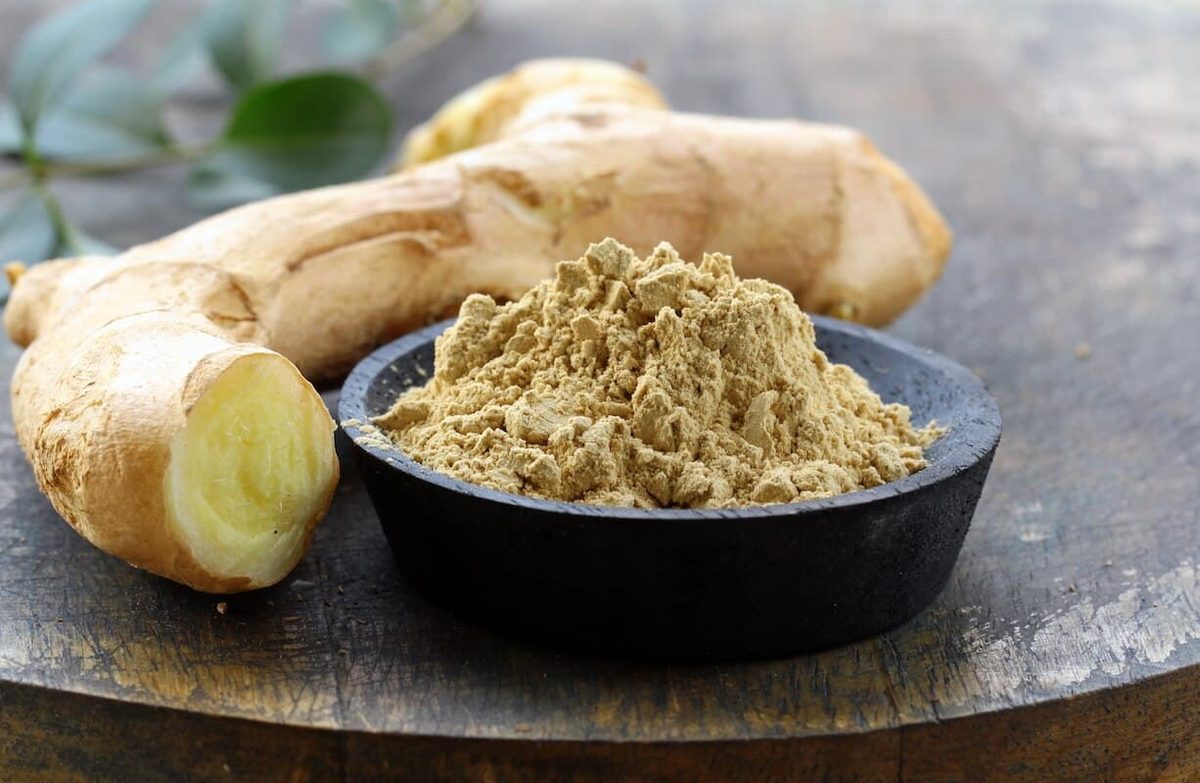
Ginger is the rhizome of Zingiber officinale.1 Its bite comes from gingerols, non-volatile phenolic compounds,2 and heat processing turns some 6-gingerol into 6-shogaol.3 Its smell comes from an essential oil, usually 1 to 3 percent of commercial dried ginger.2 No common spice shares that chemistry, so every substitute is a compromise. The useful question is which form of ginger your recipe wants. Kew notes that in Asia the fresh rhizome is essential to many dishes, while the dried, powdered spice is more popular in European cooking.1 Fresh ginger in a stir-fry and ground ginger in gingerbread are doing different jobs.
Quick answer
| What ginger is doing | Best substitute | Starting amount | Treatment |
|---|---|---|---|
| Fresh ginger in stir-fries, curries, marinades and soups | Ground ginger | 1/8 tsp per 1 Tbsp grated fresh, then taste | Disputed |
| Fresh ginger, when you have crystallized ginger | Candied ginger, rinsed of its sugar | 1 Tbsp finely cut per 1 Tbsp fresh | Attributed |
| Fresh ginger in Thai and Southeast Asian soups and pastes | Galangal | Same amount sliced; half as much grated | Method |
| Ground ginger in baking | Allspice, cinnamon, mace or nutmeg, or a mix | 1:1 | Attributed |
| Ground ginger in a warm spice mix | Pumpkin pie spice | 1:1, trimming the recipe’s other warm spices | Method |
The rest of the page explains each choice.
How the ratios on this page are labeled
Every ratio carries one of four labels.
- Computed: based on a measurable physical relationship, with the source named.
- Attributed: a named source publishes this ratio. We quote it as theirs.
- Disputed: named sources give different answers to the same swap. We show each one and do not average them.
- Method: we found no published ratio. We give a direction and a cautious starting point, and say so.
No published study compares the strength of fresh ginger, ground ginger and the other spices below. Every figure on this page is a kitchen rule.
If the recipe calls for fresh ginger
In stir-fries, curries, marinades, dressings and broths, fresh ginger brings heat and a bright, sharp aroma. The best stand-in is another form of ginger.
1. Ground ginger
Ratio (Disputed): Published conversions disagree by a factor of six.
| Source | Ground ginger | Fresh ginger, grated |
|---|---|---|
| NDSU Extension, FN1984 | 1/8 tsp | 1 Tbsp |
| NMSU Extension, E-1315 | 1/8 tsp | 1 Tbsp (raw ginger) |
| The Spice House6 | 1/4 tsp | 1 Tbsp |
| McCormick spice conversion chart7 | 1/4 tsp | 1 tsp (that is, 3/4 tsp per Tbsp) |
None of these sources says how its figure was arrived at, and none measured pungency. Start at 1/8 teaspoon of ground ginger per tablespoon of fresh, add it with the liquid rather than to a dry, hot pan (our judgment), taste once the dish has simmered, and add more if you want more heat. That is our Method starting point, not a measurement.
Expect a different flavor, not just a weaker one. The Spice House says ground ginger is less bright and zesty than fresh.6 The chemistry fits. Drying shifts ginger’s oil away from monoterpenes and toward sesquiterpenes,2 and in a 2025 study of spray-dried ginger extract, heat turned 6-gingerol into 6-shogaol, a change the authors describe as raising overall pungency.3 That study measured an industrial drying process, so it explains the direction of the change, not the size of it. The Spice House suggests a little citrus or pepper to brighten a stir-fry made with ground ginger.6
2. Crystallized (candied) ginger
Ratio (Attributed): NDSU and NMSU both list 1 tablespoon of candied ginger, rinsed in water to remove the sugar and finely cut, and 1 tablespoon of grated fresh ginger as equal replacements for 1/8 teaspoon of ground ginger.45 By their tables, rinsed candied ginger stands in for fresh ginger one for one.
Rinsing removes surface sugar, but candied ginger is cooked in syrup, so in our judgment it suits glazes, sauces and baking better than a savory stir-fry.
3. Galangal
Galangal (Alpinia galanga) is in the same plant family as ginger, the Zingiberaceae.18 PROSEA describes its taste as strongly pungent, like a mixture of pepper and ginger, and lists cineole and methyl cinnamate among the compounds described in its oil.9 In our judgment it tastes noticeably different from ginger, with a sharper, more resinous edge, so this swap changes the dish. See galangal and galangal vs. ginger.
Ratio (Method): No published ratio was found. In a broth where the slices are lifted out, use the same amount. Grated into a dish, start with half as much and taste.
If the recipe calls for ground ginger
In gingerbread, gingersnaps, spice cakes, pumpkin pie and many spice rubs, ground ginger is one warm spice among several.
1. Allspice, cinnamon, mace or nutmeg
Ratio (Attributed): The Spice House says to “use a 1:1 ratio of ground allspice, ground cinnamon, ground mace or ground nutmeg,” alone or mixed, and to start with a 1:1 swap in baking and adjust to taste.6 Its cinnamon page says ginger and cinnamon are “fairly equal in strength.”10 Both are merchant rules of thumb with no stated basis.
None of the four reproduces ginger’s bite. None of the sources on these spices lists gingerols among their main compounds, so they bring warmth and aroma of their own:
- Allspice is the dried berry of Pimenta dioica, picked before it is fully ripe.11 Britannica describes its flavor as aromatic and pungent, resembling a combination of cinnamon, cloves and nutmeg.12 PROSEA puts eugenol at 50 to 80 percent of the berry oil.11 In our judgment it is the most versatile of the four, since it works in savory dishes as well as baking.
- Nutmeg has a distinctive pungent fragrance and a warm, slightly sweet taste, according to Britannica.13 The Spice House says its spicy-sweet flavor resembles ginger.6
- Mace is made from the dried covering of the nutmeg seed.14 Its oil has a higher share of aromatic ethers than nutmeg oil, with elemicin the main one in the samples FAO describes.15 In our judgment it is the more delicate of the two.
- Cinnamon bark oil is dominated by cinnamaldehyde.16 It brings sweetness rather than heat; The Spice House notes that nutmeg and cinnamon bring different notes from ginger.6
The Spice House also suggests mixing small amounts of two or more for a more complex flavor.6 In our judgment, a mix of allspice and nutmeg comes closest in a gingerbread or spice cake.
2. Pumpkin pie spice
A pumpkin pie spice blend already contains ginger. McCormick’s lists cinnamon, ginger, nutmeg and allspice,17 and because US labels list ingredients in descending order by weight, ginger is the second-largest ingredient after cinnamon.18 NMSU’s homemade formula is 1/2 teaspoon cinnamon, 1/4 teaspoon ginger, 1/8 teaspoon allspice and 1/8 teaspoon nutmeg,5 so ginger makes up a quarter of that blend by volume.
Ratio (Method): No published ratio was found for using pumpkin pie spice in place of ginger. Use it 1:1 and reduce the cinnamon, nutmeg or allspice the recipe already calls for by about the same amount, so the dish doesn’t end up dominated by cinnamon.
3. Fresh ginger in place of ground
The table above, read in reverse, gives 1 tablespoon of grated fresh ginger for every 1/8 to 3/4 teaspoon of ground ginger, depending on the source. Fresh ginger adds moisture and fibers, so in our judgment it suits wet batters, sauces and marinades better than shortbread or dry rubs.
What isn’t known
- No source measured the pungency of commercial ground ginger against fresh ginger. The fresh-to-ground conversions above are kitchen rules that differ sixfold.
- No study compares the flavor strength of ginger with allspice, cinnamon, mace, nutmeg or galangal.
- It is sometimes said that cinnamon tastes like ginger. No source reviewed here says so; The Spice House says only that they are similar in strength.
- No source was found for ginger juice as a substitute for dried, ground or crystallized ginger.
Related
- Ginger, fresh ginger vs. ground ginger, is ginger spicy?
- Cooking with ginger, how to store ginger, too much ginger
- Galangal, galangal vs. ginger, galangal substitutes, turmeric vs. ginger
- Allspice, cinnamon, mace, nutmeg, mace vs. nutmeg, allspice vs. nutmeg
- Garlic vs. ginger
Footnotes
-
Zingiber officinale Roscoe, Plants of the World Online, Royal Botanic Gardens, Kew. powo.science.kew.org · Reference work ↩ ↩2 ↩3
-
Zingiber officinale (PROSEA), Plant Resources of South-East Asia. uses.plantnet-project.org · Reference work ↩ ↩2 ↩3
-
Warren-Walker et al., Effect of Thermal Processing by Spray Drying on Key Ginger Compounds, Metabolites, 2025. pmc.ncbi.nlm.nih.gov · Peer-reviewed ↩ ↩2
-
Julie Garden-Robinson, Ingredient Substitutions (FN198), NDSU Extension, 2018. ksre.ksu.edu · Reference work ↩ ↩2
-
In a Pinch Ingredient Substitution (E-131), NMSU Cooperative Extension, 2016. pubs.nmsu.edu · Reference work ↩ ↩2 ↩3
-
Ginger Substitute, The Spice House, 2018. thespicehouse.com · Merchant ↩ ↩2 ↩3 ↩4 ↩5 ↩6 ↩7
-
How to Grind Your Own Spices, Plus Spice Conversions, McCormick, 2025. mccormick.com · Merchant ↩
-
Alpinia galanga (L.) Willd., Plants of the World Online, Royal Botanic Gardens, Kew. powo.science.kew.org · Reference work ↩
-
Alpinia galanga (PROSEA), Plant Resources of South-East Asia. uses.plantnet-project.org · Reference work ↩
-
The 9 Best Cinnamon Substitutes, The Spice House, 2018. thespicehouse.com · Merchant ↩
-
Pimenta dioica (PROSEA), Plant Resources of South-East Asia. uses.plantnet-project.org · Reference work ↩ ↩2
-
Allspice, Encyclopaedia Britannica. britannica.com · Reference work ↩
-
Nutmeg, Encyclopaedia Britannica. britannica.com · Reference work ↩
-
Mace, Encyclopaedia Britannica. britannica.com · Reference work ↩
-
Composition and constituents of nutmeg and mace, in Production, handling and processing of nutmeg and mace, FAO. fao.org · Reference work ↩
-
Ranasinghe et al., Medicinal properties of ‘true’ cinnamon: a systematic review, BMC Complementary and Alternative Medicine, 2013. link.springer.com · Peer-reviewed ↩
-
McCormick Pumpkin Pie Spice product page, McCormick. mccormick.com · Merchant ↩
-
21 CFR 101.4, Food; designation of ingredients, US Code of Federal Regulations. ecfr.gov · Regulator ↩