Spice Comparisons · Comparison
Mexican Oregano vs. Oregano: Two Plant Families, One Shared Flavor
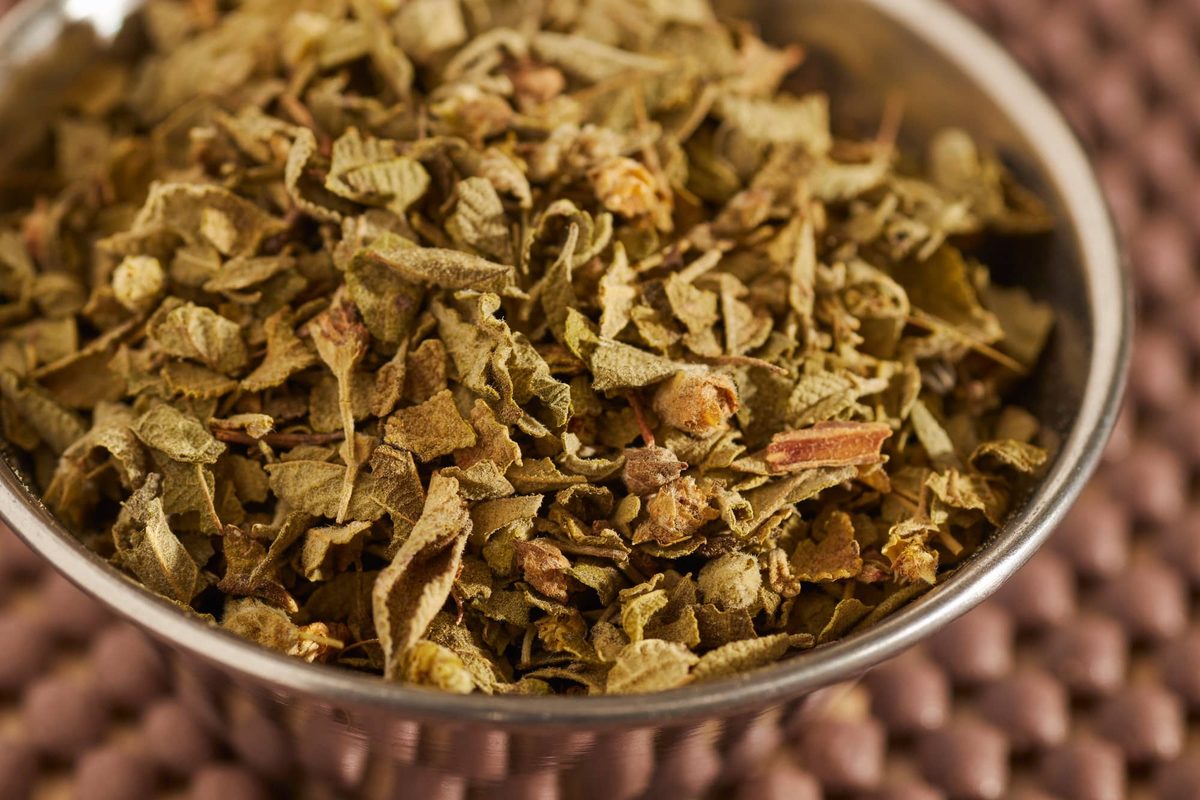
Mexican oregano and oregano come from different plant families. Mexican oregano is the leaf of Lippia graveolens, a shrub in the verbena family (Verbenaceae); oregano is Origanum vulgare, a perennial in the mint family (Lamiaceae).123 They still taste alike because both oils are built on the same two phenols, thymol and carvacrol, in different proportions.45 In America’s Test Kitchen’s side-by-side tasting the differences in finished dishes were minimal, with the Mexican type the stronger of the two.6
Side by side
| Mexican oregano | Oregano (Mediterranean) | |
|---|---|---|
| Species | Lippia graveolens Kunth; Kew now treats it as a synonym of Lippia origanoides17 | Origanum vulgare L.; other Origanum species are also sold as oregano25 |
| Family | Verbenaceae (verbena family)1 | Lamiaceae (mint family)3 |
| Native range | Southern United States to Nicaragua (PROSEA); tropical and subtropical America (Kew)47 | Macaronesia to China (Kew)2 |
| Plant | Shrub4 | Perennial herb of the temperate zone2 |
| Part used | Dried leaves; essential oil4 | Leaves, mostly dried |
| Key compounds | Thymol 40–60% and carvacrol 3–25% of the oil (PROSEA)4 | Carvacrol and thymol together about 78–85% of the oil, usually led by carvacrol (review)5 |
| Oil content | About 3–4%4 | Varies by subspecies; northern forms are poorer in oil5 |
| Flavor (editorial) | Louder and more resinous, with a sharp, slightly citrusy edge | Warm, pungent and a little bitter |
| Typical uses | Mexican and Central American cooking; New Mexico chile sauces48 | Italian pizza and pasta sauces, Greek salads, gyros3 |
| Quality | No separate fraud data found | 48% of samples in an EU-wide fraud survey were suspect, mostly with olive leaves9 |
| Cost | No dated, sourced price comparison found | No dated, sourced price comparison found |
The flavor row is our description, and it fits what the sources report. PROSEA calls the Mexican herb stronger, sharper and more pungent than Origanum,4 and ATK’s tasters found Mediterranean oregano milder and faintly sweeter, and the Mexican type stronger, with a hint of menthol.6
Why two unrelated plants share a name
“Oregano” names a flavor, not a genus. A 2020 review of oregano chemistry notes that the name is applied to several Origanum species and to plants in other genera, Lippia among them.5 What links them is the oil. Mexican oregano’s family tie is to lemon verbena, Aloysia citrodora, which Kew also places in Verbenaceae;10 oregano’s relatives are mint, thyme and marjoram.
The chemistry, sample by sample
Each figure belongs to the oil it was measured on. These are essential-oil figures from different studies, not measurements of dried leaf from a jar, and they should not be merged into a single comparison.
| Herb and scope | Thymol | Carvacrol | Source |
|---|---|---|---|
| Mexican oregano, range given by PROSEA | 40–60% | 3–25% | PROSEA4 |
| Oregano oil, typical range in a 2020 review | 78–85% combined | Lombrea et al.5 | |
| Oregano, Spanish O. vulgare samples, as tabulated in the same review | 58.7–77.4% | Lombrea et al.5 |
On these figures, Mexican oregano leans on thymol and Mediterranean oregano usually leans on carvacrol. ATK notes that both plants contain carvacrol.6 A 2021 review of L. graveolens also names β-caryophyllene and p-cymene among its terpenes.11 We found no study that measured both herbs side by side under the same conditions.
The differences that change a dish
Strength
The Mexican herb is the stronger one, by both PROSEA’s account and ATK’s tasting.46 In a dish built around a teaspoon of dried oregano, that is the difference most cooks will notice.
Which cooking it belongs to
PROSEA calls Mexican oregano an important spice in Mexico and Central America.4 US extension recipes use it in chile cooking: NMSU’s New Mexico red chile sauce adds crushed dried Mexican oregano near the end and simmers it another 5–7 minutes,8 and a University of Tennessee white chicken chili calls for 2 teaspoons.12 By common practice it also goes into pozole, beans, salsas and adobos, often with cumin and dried chiles.
Oregano is the herb of Italian and Greek cooking. Britannica calls it essential in Italian pizza and pasta sauces, Greek salads and gyros, and a key ingredient in Mediterranean and Middle Eastern cooking.3
Long cooking
Both are used dried, and dried oregano copes well with heat. America’s Test Kitchen classes oregano among the hearty herbs that go in early,13 and in its dried-versus-fresh tests dried oregano held up reasonably well in dishes with more than 20 minutes of cooking and a good amount of liquid.14 In chili, dried oregano was the tasters’ favorite over fresh.14 The University of Delaware’s general rule for long simmering is to add herbs during the last 45 minutes.15 We found no test of how Mexican oregano behaves over long cooking.
Can one stand in for the other?
Yes, in most cooked dishes. ATK tried both kinds in tomato sauce and in mojo-marinated skirt steak and noticed only minimal differences.6 Maggie Unzueta of Mama Maggie’s Kitchen, writing about Mexican cooking, says most cooks of Mexican food use regular oregano all the time.16
- Oregano in place of Mexican oregano (Attributed). RawSpiceBar’s Joseph Rosenblatt says to start with 1.5 times as much regular oregano; the same article elsewhere suggests about 25% more, so the merchant’s own advice runs from 1 1/4 to 1 1/2 times.17 Given ATK’s finding of minimal differences,6 starting with an equal amount and adding the rest after tasting is the cautious route. See Mexican oregano substitutes.
- Mexican oregano in place of oregano (Method). No published ratio was found. Because the Mexican herb is the stronger,46 start with about three quarters of the oregano amount and taste. Our oregano substitutes page uses the same starting point.
- Rub it first. Unzueta suggests rubbing dried oregano between your hands to release its flavor,16 and the University of Delaware suggests crushing dried herbs for the same reason.15
Where the swap shows most is a raw salsa or a quick dish where the herb is not cooked down (editorial).
What isn’t known
- No published measurement compares the flavor strength of the two herbs. Every ratio above is a rule of thumb.
- A widely repeated description gives Mexican oregano a licorice note. No source reviewed here mentions licorice; ATK’s tasters reported a hint of menthol instead.6
- The common claim that Mexican oregano is used as a tea herb could not be traced to a source we could open.
- The claim that oregano most likely originated in Greece does not match Kew, which gives a native range from Macaronesia to China.2
Related
- Profiles: Mexican oregano, oregano, lemon verbena, marjoram
- Substitutes: Mexican oregano substitutes, oregano substitutes
- Comparisons: marjoram vs. oregano, oregano vs. thyme, cilantro vs. oregano, fresh oregano vs. dried
- Best spices for chili and too much oregano?
Footnotes
-
Lippia graveolens Kunth, Plants of the World Online, Royal Botanic Gardens, Kew. powo.science.kew.org · Reference work ↩ ↩2 ↩3
-
Origanum vulgare L., Plants of the World Online, Royal Botanic Gardens, Kew. powo.science.kew.org · Reference work ↩ ↩2 ↩3 ↩4 ↩5
-
Anoushka Pant, “Oregano”, Encyclopaedia Britannica, 2026. britannica.com · Reference work ↩ ↩2 ↩3 ↩4
-
H.C. Ong and M. Brink, Lippia graveolens, Plant Resources of South-East Asia (PROSEA). uses.plantnet-project.org · Reference work ↩ ↩2 ↩3 ↩4 ↩5 ↩6 ↩7 ↩8 ↩9 ↩10 ↩11 ↩12
-
Lombrea et al., “A Recent Insight Regarding the Phytochemistry and Bioactivity of Origanum vulgare L. Essential Oil”, International Journal of Molecular Sciences, 2020. mdpi.com · Peer-reviewed ↩ ↩2 ↩3 ↩4 ↩5 ↩6 ↩7
-
“Oregano: Mediterranean and Mexican”, America’s Test Kitchen. americastestkitchen.com · Publication ↩ ↩2 ↩3 ↩4 ↩5 ↩6 ↩7 ↩8
-
Lippia origanoides Kunth, Plants of the World Online, Royal Botanic Gardens, Kew. powo.science.kew.org · Reference work ↩ ↩2
-
Benson and Garcia-Anaya, “Preserving Red Chile”, NMSU Cooperative Extension Service. bernalilloextension.nmsu.edu · Reference work ↩ ↩2
-
“Herbs and spices (2019-2021): EU coordinated action”, European Commission. food.ec.europa.eu · Regulator ↩
-
Aloysia citrodora Paláu, Plants of the World Online, Royal Botanic Gardens, Kew. powo.science.kew.org · Reference work ↩
-
“Mexican Oregano (Lippia graveolens Kunth) as Source of Bioactive Compounds: A Review”, Molecules, 2021 (abstract via DOAJ). doaj.org · Peer-reviewed ↩
-
“White Chicken Chili”, University of Tennessee Extension, Bedford County. bedford.tennessee.edu · Reference work ↩
-
Liz Bomze, “Our Guide to Fresh Herbs”, America’s Test Kitchen, 2019. americastestkitchen.com · Publication ↩
-
“Science: Substituting Dried Herbs for Fresh”, America’s Test Kitchen. americastestkitchen.com · Publication ↩ ↩2
-
“Using Herbs and Spices”, University of Delaware Cooperative Extension, 2025. udel.edu · Reference work ↩ ↩2
-
Maggie Unzueta, “What Is Mexican Oregano?”, Mama Maggie’s Kitchen, 2022. inmamamaggieskitchen.com · Publication ↩ ↩2
-
Joseph Rosenblatt, “Can I Use Regular Oregano Instead of Mexican Oregano?”, RawSpiceBar, 2025. rawspicebar.com · Merchant ↩