Cooking · Dish guide
The Best Spices and Flavorings for Chocolate Chip Cookies: Vanilla, Salt, Brown Sugar, Browned Butter and Nutmeg
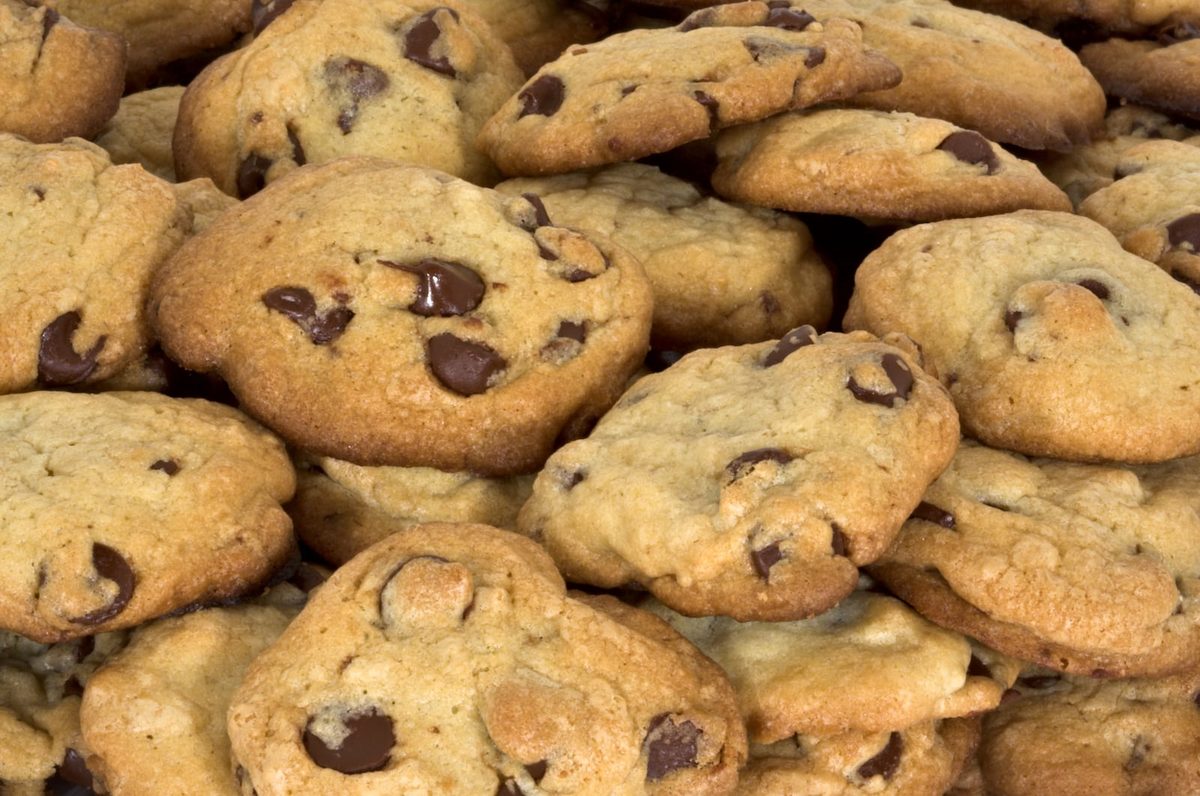
A chocolate chip cookie has few seasonings, and each one matters. Ruth Wakefield’s original 1938 recipe flavors the dough with just 1 teaspoon of vanilla and 1 teaspoon of salt, alongside equal parts brown and white sugar.1 Browned butter and darker brown sugar are the best-known ways to deepen the flavor,2 and a little nutmeg is an optional extra. This page covers what each one does and how much the named recipes use.
At a glance
| Flavoring | What it does | In the 1938 recipe1 |
|---|---|---|
| Vanilla | Rounded, sweet aroma behind the chocolate | 1 tsp |
| Salt | Seasoning; balances the sugar | 1 tsp |
| Brown sugar | Molasses flavor, color and chew | 3/4 cup (with 3/4 cup granulated) |
| Browned butter | Toasted, nutty flavor | Not used (1 cup butter, creamed) |
| Nutmeg | Warm spice note | Not used |
The original recipe
Tasting History’s Max Miller reports that Ruth Wakefield and her head pastry chef, Sue Brides, created what they called the chocolate crunch cookie in 1938, at the Toll House Inn in Whitman, Massachusetts.1 The recipe from Wakefield’s Toll House Tried and True Recipes, as he reproduces it:1
| Ingredient | Amount |
|---|---|
| Butter | 1 cup, creamed |
| Brown sugar | 3/4 cup |
| Granulated sugar | 3/4 cup |
| Eggs | 2, beaten |
| Baking soda | 1 tsp, dissolved in 1 tsp hot water |
| Flour | 2 1/4 cups, sifted with the salt |
| Salt | 1 tsp |
| Chopped nuts | 1 cup |
| Semisweet chocolate | 2 bars (7 oz), cut into pea-sized pieces |
| Vanilla | 1 tsp |
The dough is dropped by half teaspoons and baked at 375°F for 10 to 12 minutes, which yields 100 small cookies.1
The flavorings and what each one does
Vanilla
Vanilla comes from tropical climbing orchids.3 The main commercial species, Vanilla planifolia, is native to a range from southern Mexico to northern Brazil, according to Kew’s Plants of the World Online.4 A widely repeated claim places its home in South America and Polynesia; Kew’s range does not include Polynesia.
Vanillin is the best-known flavor compound in the bean: Gernot Katzer puts it at about 2% of the fully cured fruit, depending on origin.5 Vanillin can also be made cheaply from wood wastes of the paper industry,5 which is the basis of imitation vanilla. U.S. rules separate the two: pure vanilla extract must contain at least 35% alcohol by volume, and a product with added vanillin must say it contains vanillin, an artificial flavor.6 Whether a taster can tell pure from imitation once a cookie is baked is a question no source we checked has tested. See vanilla extract substitutes and too much vanilla.
Vanilla bean seeds scraped into the dough, or vanilla sugar, are alternatives to extract; that is common practice. The 1938 recipe simply calls for 1 teaspoon of vanilla.1
Salt
The 1938 recipe uses 1 teaspoon of salt, sifted into the flour.1 A common claim says sea salt is best because it is purer and tastes of the ocean. America’s Test Kitchen found that once mixed into food, sea salt doesn’t taste any different than table salt.7 A sprinkle of flaky sea salt on top just before baking is a popular finish (common practice). See table salt vs. sea salt and sea salt.
Brown sugar
Brown sugar does more than sweeten. Domino says the molasses in its light brown sugar gives deeper flavor and color to baked goods.8 In America’s Test Kitchen’s development of its chocolate chip cookie, Charles Kelsey notes that brown sugar is hygroscopic, attracting and holding water, which makes cookies chewier, and that tasters preferred dark brown sugar for its deeper flavor; ATK’s recipe uses a higher proportion of dark brown sugar than the original.2 Wakefield’s recipe uses equal parts brown and white.1
Browned butter
Browned butter is not a spice, but it is a flavoring. Kelsey notes that as butter browns it takes on the flavor and aroma of toasted nuts, and that browning develops a complex flavor that balances the cookie’s sweetness.2
Nutmeg
Nutmeg is the seed of Myristica fragrans, native to the Banda Islands.9 PROSEA notes that in most countries grated nutmeg is used in small quantities to flavor confectionery.10 It is not in the classic recipe;1 a pinch to 1/4 teaspoon per batch is a reasonable starting point (Method, not a sourced amount), with cinnamon as an alternative warm spice. Used as recipes call for, nutmeg is not a safety concern; the National Capital Poison Center notes that none of these kitchen flavorings is dangerous used as recommended.11 See too much nutmeg and cinnamon vs. nutmeg.
Related
- Vanilla and vanilla powder vs. vanilla extract
- Pancake spices and French toast spices
- Too much sugar
- The master list of herbs and spices
Footnotes
-
Max Miller, “Original Chocolate Chip Cookies”, Tasting History, citing Ruth Wakefield, Toll House Tried and True Recipes (1938). tastinghistory.com · Publication ↩ ↩2 ↩3 ↩4 ↩5 ↩6 ↩7 ↩8 ↩9
-
Charles Kelsey, “The Perfect Chocolate Chip Cookie”, America’s Test Kitchen (Cook’s Illustrated), 2009. americastestkitchen.com · Publication ↩ ↩2 ↩3
-
“Vanilla”, Encyclopaedia Britannica. britannica.com · Reference work ↩
-
“Vanilla planifolia Andrews”, Plants of the World Online, Royal Botanic Gardens, Kew. powo.science.kew.org · Reference work ↩
-
Gernot Katzer, “Vanilla (Vanilla planifolia)”, Gernot Katzer’s Spice Pages. gernot-katzers-spice-pages.com · Reference work ↩ ↩2
-
21 CFR Part 169 Subpart B (vanilla extract and related standards), eCFR. ecfr.gov · Regulator ↩
-
“Salt Types and Measurements”, America’s Test Kitchen. americastestkitchen.com · Publication ↩
-
Domino Light Brown Sugar product listing, ShopRite. shoprite.com · Merchant ↩
-
“Myristica fragrans Houtt.”, Plants of the World Online, Royal Botanic Gardens, Kew. powo.science.kew.org · Reference work ↩
-
M. Flach and M. Tjeenk Willink, “Myristica fragrans”, Plant Resources of South-East Asia (PROSEA). uses.plantnet-project.org · Reference work ↩
-
Rose Ann Gould Soloway, “Kitchen surprises and cautions”, National Capital Poison Center. poison.org · Reference work ↩