Seasonings · Profile
Apple Pie Spice: What’s in It, How It Tastes and How to Use It
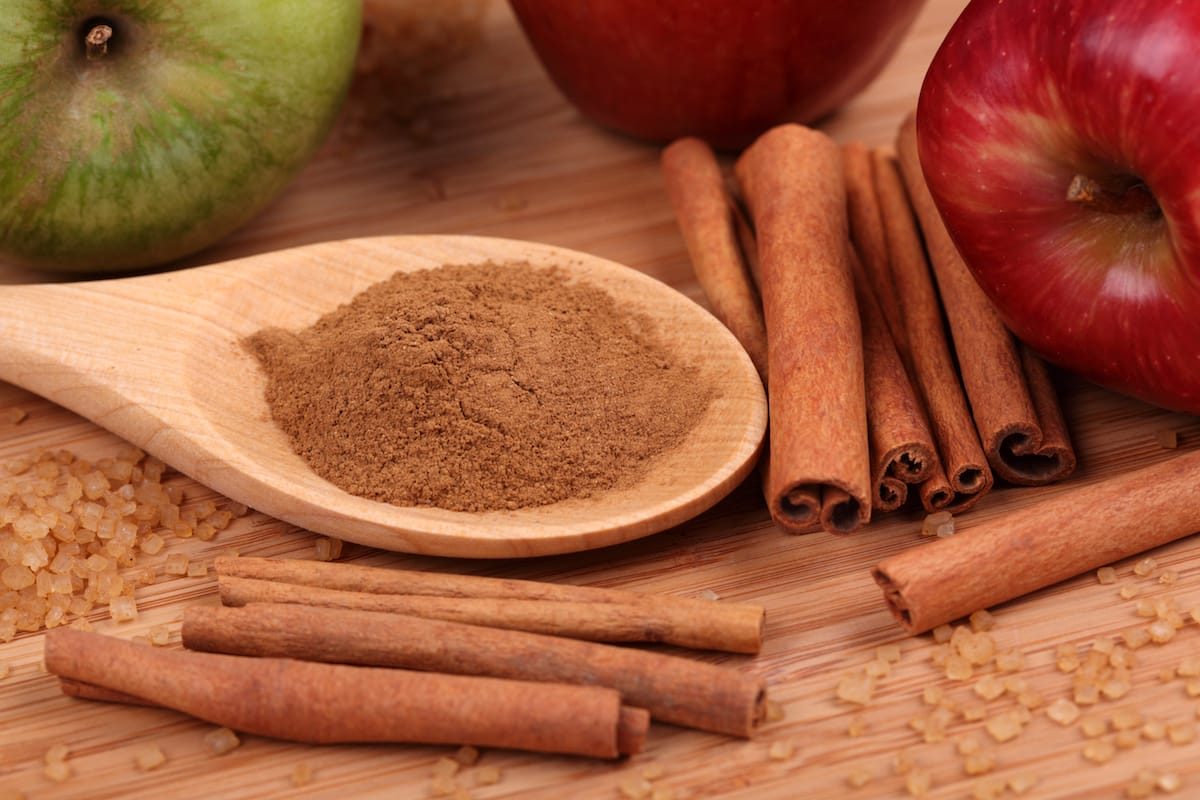
Apple pie spice is a ready-mixed blend of the warm, sweet baking spices, built on cinnamon. There is no standard recipe: each maker decides what goes in. The simplest commercial versions are three spices; others add ginger, cloves or star anise. This page shows what named makers put in theirs, what an early American apple pie was actually spiced with, how to use the blend beyond pie, and the one safety point worth knowing.
At a glance
| What it is | A blend of ground baking spices |
| Main ingredient | Cinnamon, listed first by McCormick and The Spice House12 |
| Common partners | Nutmeg and allspice (in all three blends below); some add ginger, cloves, star anise123 |
| Standard recipe | None; no regulator or standards body defines it |
| Forms sold | Ground, in jars |
| Safety note | Cinnamon’s coumarin, if the cinnamon is cassia and the amounts are large and daily4 |
What’s in it: three named blends
| Maker | Ingredients as the maker lists them | Source |
|---|---|---|
| McCormick | Cinnamon, nutmeg and allspice | 1 |
| The Spice House | Cinnamon, star anise, nutmeg, allspice, ginger, cloves | 2 |
| King Arthur Baking | Described as a blend of cinnamon, nutmeg and allspice (no ingredient list on the product page) | 3 |
US labeling rules require ingredients to be listed in descending order of predominance by weight,5 so cinnamon is the largest ingredient in both the McCormick and Spice House blends. Neither maker publishes its proportions. Cardamom is sometimes said to be a usual addition; none of these three blends lists it.
Allspice is a single spice, not a mix; Britannica says it is so named because its flavor resembles a combination of cinnamon, nutmeg and cloves.6
Making your own
No named source publishes a ratio we could verify, so this is a Method starting point, not a tested recipe: start with mostly cinnamon, then add nutmeg and allspice in much smaller amounts, mix, and taste a pinch in something sweet. Add ground ginger or a little clove if you want more bite.
Flavor
Apple pie spice tastes sweet, warm and woody, led by cinnamon, with nutmeg’s rounder, slightly piny warmth and allspice’s clove-like edge behind it. Blends with ginger, cloves or star anise read sharper and more complex. That description is ours. The point of the blend in a pie is to support tart apples without hiding them.
History: what early American apple pies used
Amelia Simmons’s American Cookery, printed in Hartford in 1796, has three apple recipes that show the spicing of the time.7
| Recipe (Simmons, 1796) | Spices and flavorings |
|---|---|
| Apple Pie | Grated fresh lemon peel, cinnamon, mace, rose-water and sugar “to your taste” |
| A buttered apple Pie | Sugar, butter, cinnamon, mace, wine or rose-water, added after baking under the raised top crust |
| Apple Tarts | Cinnamon, rose-water, wine and sugar, with orange juice squeezed over |
So cinnamon and mace, not nutmeg, were the pie spices in that book, and rose-water did much of the perfuming.7
Several other claims about apple pie’s history circulate: that English recipes calling for “good spices” go back to Chaucer’s time, that the dish came to America in English, Dutch and Swedish versions, and that nutmeg was once worth more than gold. We could not trace these to a source, so they are not given as fact here.
How to use it
McCormick suggests its blend for apple pies, tarts, crisps, baked apples and homemade applesauce; for oatmeal, French toast, sweet potatoes, fruit salad and mulled cider; for spice cakes, quick breads, gingerbread cookies and glazed nuts; for pancakes, waffles, muffins and granola; and in hot coffee or cocoa.1 It also suggests swapping the blend in for cinnamon in baked goods.1 Beyond that, it works anywhere you would use cinnamon and want more depth, from roasted squash to popcorn (our suggestion).
A reasonable amount for a standard pie is about a teaspoon, adjusted to the apples; no source tested this, so treat it as a starting point.
Buying and storage
The ingredient list is how to compare one blend with another. No regulator or standards body publishes a shelf life for ground spice blends. Common practice is to keep it sealed, cool and dark, and to replace it when a pinch no longer smells strongly.
Safety
The main point concerns cinnamon. Cassia cinnamon, the most common type sold in North America,8 contains much more coumarin than Ceylon cinnamon; BfR gives about 3,000 mg/kg on average for cassia.4 The European Food Safety Authority’s tolerable daily intake is 0.1 mg of coumarin per kg of body weight,9 which BfR estimates a 60 kg adult reaches with about 2 g a day of average cassia, and a 15 kg child with about 0.5 g.10 The EU limits coumarin in traditional and seasonal bakery ware labeled as containing cinnamon to 50 mg/kg.11 See Ceylon vs. cassia cinnamon.
Nutmeg can cause poisoning in large amounts, but the National Capital Poison Center says nutmeg and similar kitchen spices are not dangerous when used as recommended.12 See too much nutmeg.
Health claims
NCCIH says research does not clearly support using cinnamon for any health condition and that it is unclear whether cinnamon supplements help with diabetes.8 This page makes no health claims for the blend.
Substitutes and related pages
Pumpkin pie spice is the nearest stand-in; plain cinnamon with a pinch of nutmeg works too. See apple pie spice substitutes for the ranked list, and pumpkin pie spice for the sister blend. Individual spices: cinnamon, cassia cinnamon, nutmeg, allspice, mace, cloves, ginger and star anise. If a dish has gone over, see too much cinnamon.
Footnotes
-
McCormick Apple Pie Spice, product page, McCormick & Company. mccormick.com · Merchant ↩ ↩2 ↩3 ↩4 ↩5
-
Apple Pie Spice, product page, The Spice House. thespicehouse.com · Merchant ↩ ↩2 ↩3
-
Apple Pie Spice, product page, King Arthur Baking Company. shop.kingarthurbaking.com · Merchant ↩ ↩2
-
FAQ on coumarin in cinnamon and other foods, German Federal Institute for Risk Assessment (BfR). bfr.bund.de · Regulator ↩ ↩2
-
21 CFR 101.4, Food; designation of ingredients, eCFR. ecfr.gov · Regulator ↩
-
“Allspice”, Encyclopaedia Britannica. britannica.com · Reference work ↩
-
Amelia Simmons, American Cookery, Hartford, 1796, Project Gutenberg. gutenberg.org · Reference work ↩ ↩2
-
Cinnamon: Usefulness and Safety, National Center for Complementary and Integrative Health. nccih.nih.gov · Regulator ↩ ↩2
-
Coumarin in flavourings and other food ingredients with flavouring properties, EFSA, 2008. efsa.europa.eu · Regulator ↩
-
“Cassia cinnamon with high coumarin contents to be consumed in moderation”, BfR press release. bfr.bund.de · Regulator ↩
-
Regulation (EC) No 1334/2008, Annex III Part B, EUR-Lex. eur-lex.europa.eu · Regulator ↩
-
Rose Ann Gould Soloway, “Kitchen surprises and cautions”, National Capital Poison Center. poison.org · Reference work ↩