Spice Comparisons · Comparison
Hyssop vs. Lavender: Two Mint-Family Herbs With Different Chemistry and Uses
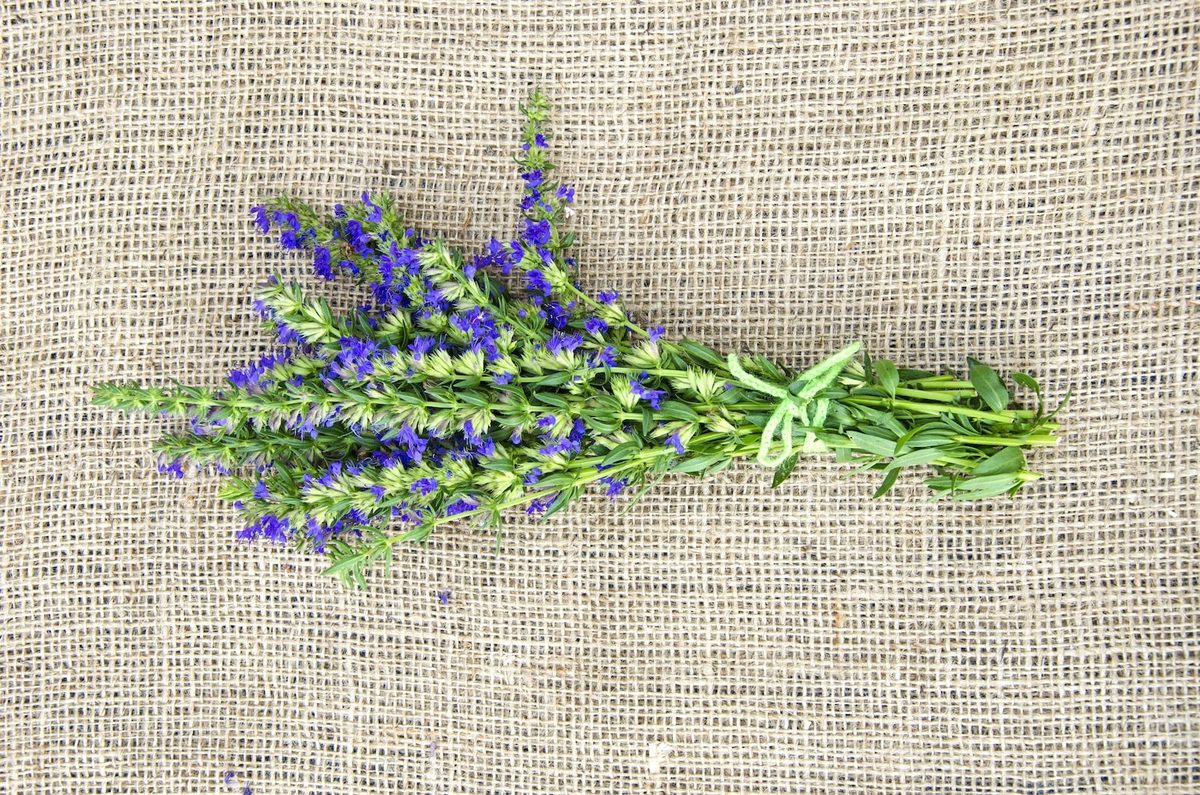
Hyssop and lavender are both mint-family herbs, but they do different jobs. Hyssop’s leaves are strongly aromatic and somewhat bitter, with an oil led by pinocamphone and pinenes; culinary lavender is a flower bud whose oil is led by linalool and linalyl acetate, and it tastes floral and sweet.1234 Hyssop leans savory and resinous, lavender leans sweet and perfumed, and neither copies the other.
Side by side
| Hyssop | Lavender (culinary) | |
|---|---|---|
| Botanical name | Hyssopus officinalis L.; Kew now accepts Dracocephalum officinale5 | Lavandula angustifolia Mill. (English or true lavender)63 |
| Family | Lamiaceae (mint family)5 | Lamiaceae (mint family)7 |
| Native range (Kew) | Europe and the Mediterranean to Iran5 | Northeastern Spain to Italy6 |
| Plant | A woody subshrub with slim, four-sided stems51 | One of about 30 Lavandula species7 |
| Part used | Leaves and flowering tops; essential oil12 | Flowers (buds), usually dried73 |
| Main oil compounds | Pinocamphone, isopinocamphone and β-pinene28 | Linalool and linalyl acetate34 |
| Flavor (editorial) | Herbal and resinous, between mint, sage and rosemary, with a bitter finish | Floral and sweet, slightly resinous; soapy if overused |
| Typical uses | Meats, fish, vegetables, salads, sweets and liqueurs such as absinthe (Britannica)1 | Sweets, baked goods, custards, drinks and syrups; some savory dishes (Herb Society of America)3 |
| US status | GRAS as a spice and as an essential oil910 | GRAS as a spice and as an essential oil910 |
| Oil safety | The oil has caused convulsions in rats; case reports of seizures in people (see Safety)2 | NCCIH: likely safe in food amounts11 |
| Price | No dated, sourced comparison found | No dated, sourced comparison found |
For each herb in depth, see hyssop and lavender.
Which hyssop, and which lavender?
Both names cover more than one plant, and that changes the comparison.
- Hyssop. The culinary herb is Hyssopus officinalis, which Kew now lists as Dracocephalum officinale.5 Anise hyssop is a different plant, Agastache foeniculum, native from Canada to the northwestern and north-central United States.12 It is in the same family but a different genus.512 The “hyssop” of the Bible is a third question; Britannica says it was not Hyssopus officinalis.1 See hyssop for that story.
- Lavender. Lavandula is a genus of about 30 species.7 For cooking, the Herb Society of America calls L. angustifolia the most delightful species, and describes lavandins and other high-camphor lavenders as having a strong, astringent aroma and bitter taste.3 Check the botanical name on the package.
Differences that change the dish
Chemistry. The two oils share almost nothing at the top. Hyssop’s oil is made up mainly of pinocamphone, isopinocamphone, α- and β-pinene and camphene, according to the Wolters Kluwer monograph,2 and a 2011 review names pinocamphone, isopinocamphone and β-pinene as principal components.8 Lavender’s oil, in a 2021 study of 13 L. angustifolia cultivars, had linalool and linalyl acetate as the principal constituents of every sample.4 The Herb Society credits those two compounds with true lavender’s pleasant kitchen flavor, and blames the harshness of other lavenders on cineole and camphor.3 Neither source we opened for hyssop gives percentages for its oil, so we can’t line the two up number for number.
Bitterness and strength. Hyssop is the more bitter of the two, and a little goes a long way. Lavender turns soapy rather than bitter when overdone. Both statements are kitchen judgment. The Herb Society’s advice for lavender is to use less than you think and add gradually.3
Part of the plant. Hyssop is a leaf herb, chopped into a dish.1 Lavender is a bud, usually dried, and often infused in cream, sugar or syrup and strained out; the infusing is common practice rather than a sourced finding. The Herb Society says dried buds are three times more concentrated than fresh blooms, which is their rule of thumb.3
Savory vs. sweet. Britannica lists both savory and sweet uses for hyssop: meats, fish, vegetables, salads, sweets and liqueurs.1 The Wolters Kluwer monograph adds that extracts have flavored liqueurs, sauces, puddings and candies.2 Lavender’s uses run mostly sweet: Britannica says it is sometimes used to flavor beverages and sweets,7 and the Herb Society’s list runs from cookies, cakes, custards and ice cream to lemonade and cocktails, with savory uses in roast chicken and beef using lower-camphor lavandins alongside rosemary, sage and thyme.3
Health claims and safety
Medicinal claims are not a reason to choose one over the other.
- Hyssop. The Wolters Kluwer monograph says hyssop has many traditional uses but no clinical trial data supporting them, and the 2011 review found human studies lacking.28 Britannica records a strong leaf tea sweetened with honey as a traditional remedy for nose, throat and lung complaints.1 That is tradition, not evidence.
- Lavender. NCCIH says studies suggest that a lavender oil product taken orally might help with anxiety, and that the benefits of lavender aromatherapy for sleep and some types of pain are unclear.11 That evidence concerns concentrated oil products, not lavender in a cookie. We found no source supporting lavender as a remedy for poor digestion or inflammation.
- The oils are not interchangeable either. The Wolters Kluwer monograph reports that commercial hyssop oils caused convulsions in rats at 0.13 g/kg, links the neurotoxicity to pinocamphone and isopinocamphone, notes case reports of seizures in adults and children, and advises against use in pregnancy.2 Those findings concern the oil, not leaves used as a seasoning. For lavender, NCCIH says it is likely safe in the amounts typically used in foods.11
Both hyssop and lavender are on FDA’s lists of spices and essential oils generally recognized as safe for their intended use.910 This page makes no claim that either herb treats or prevents any condition.
Can one stand in for the other?
Only partly. No published source gives a ratio for this swap in either direction. The first starting point below is the one on our hyssop substitutes page; the second is ours.
| Swap | Starting amount | Treatment |
|---|---|---|
| Lavender for hyssop, in sweets, syrups and infusions | 1/2 part lavender per 1 part hyssop, then taste | Method |
| Hyssop for lavender, in savory dishes | 1/2 part hyssop per 1 part lavender, then taste | Method |
- Lavender for hyssop. Lavender gives you hyssop’s floral side but none of its pine or bitterness (our judgment). Use L. angustifolia sold for cooking, and add more as you go.3 In a savory dish, rosemary or sage covers hyssop better; see hyssop substitutes.
- Hyssop for lavender. Hyssop can stand in for lavender’s resinous, herbal side in a roast or a rub, but it is more bitter and less floral, so start low (our starting point). In a lavender shortbread or custard, it is a poor swap; lemon zest or edible rose petals are closer to the job, as the lavender substitutes page explains.
- Never swap the oils. Hyssop oil is not a substitute for anything in food, for the reasons above.2
What isn’t known
- No published ratio exists for swapping hyssop and lavender in either direction.
- No sensory study compares their strength or flavor.
- The hyssop oil sources we could open give its main compounds but no percentages.28
- No dated price comparison was found.
Related
- Hyssop, cooking with hyssop and hyssop substitutes
- Lavender, cooking with lavender, lavender substitutes, how to dry lavender and how to store lavender
- Rosemary vs. lavender and sage vs. lavender
- Herbes de Provence, rosemary, mint and sage
Footnotes
-
“Hyssop”, Encyclopaedia Britannica. britannica.com · Reference work ↩ ↩2 ↩3 ↩4 ↩5 ↩6 ↩7 ↩8
-
Hyssop, professional natural product monograph, Wolters Kluwer Health via Drugs.com, 2026. drugs.com · Reference work ↩ ↩2 ↩3 ↩4 ↩5 ↩6 ↩7 ↩8 ↩9 ↩10
-
Paola Legarre, “Lavender in the Kitchen: Flavor Profiles Across Species and Cultivars”, Herb Society of America blog, 2025. blog.herbsociety.org · Publication ↩ ↩2 ↩3 ↩4 ↩5 ↩6 ↩7 ↩8 ↩9 ↩10 ↩11
-
Pokajewicz et al., “Chemical Composition of the Essential Oil of the New Cultivars of Lavandula angustifolia Mill. Bred in Ukraine”, Molecules, 2021. mdpi.com · Peer-reviewed ↩ ↩2 ↩3
-
Dracocephalum officinale (syn. Hyssopus officinalis L.), Plants of the World Online, Royal Botanic Gardens, Kew. powo.science.kew.org · Reference work ↩ ↩2 ↩3 ↩4 ↩5 ↩6
-
Lavandula angustifolia Mill., Plants of the World Online, Royal Botanic Gardens, Kew. powo.science.kew.org · Reference work ↩ ↩2
-
“Lavender”, Encyclopaedia Britannica. britannica.com · Reference work ↩ ↩2 ↩3 ↩4 ↩5
-
Fathiazad and Hamedeyazdan, “A review on Hyssopus officinalis L.: Composition and biological activities”, African Journal of Pharmacy and Pharmacology, 2011. dspace.tbzmed.ac.ir · Peer-reviewed ↩ ↩2 ↩3 ↩4
-
21 CFR 182.10, Spices and other natural seasonings and flavorings. ecfr.gov · Regulator ↩ ↩2 ↩3
-
21 CFR 182.20, Essential oils, oleoresins (solvent-free), and natural extractives. ecfr.gov · Regulator ↩ ↩2 ↩3
-
“Lavender”, National Center for Complementary and Integrative Health, 2025. nccih.nih.gov · Regulator ↩ ↩2 ↩3
-
Agastache foeniculum (Pursh) Kuntze, Plants of the World Online, Royal Botanic Gardens, Kew. powo.science.kew.org · Reference work ↩ ↩2