Cooking · Cooking with
Cooking With Herbes de Provence: How Much, When to Add It and What to Make
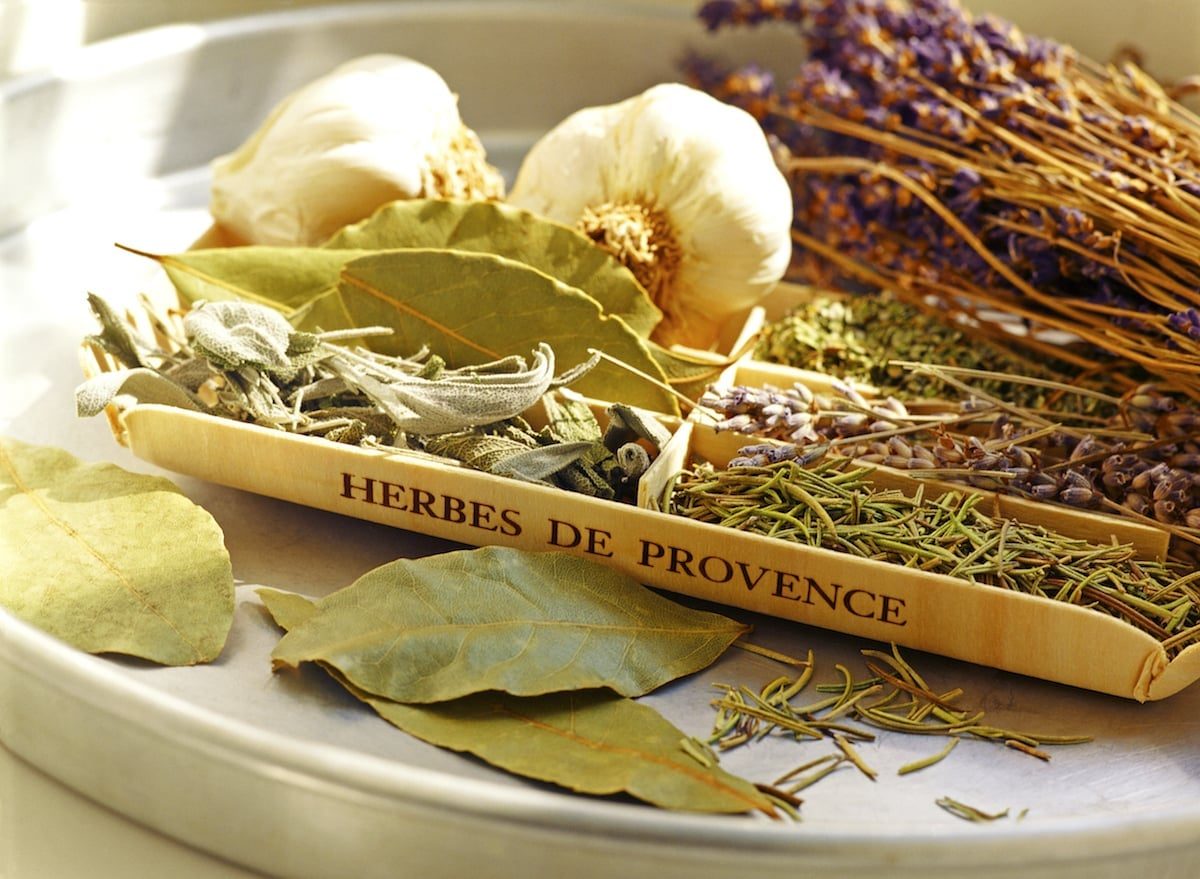
Herbes de Provence is a blend of dried, mostly woody Mediterranean herbs, and it behaves like them: it does its best work early in a dish that cooks for a while with some liquid or fat, and it can take over if you pile it on. Because the recipe varies from jar to jar, start by reading the label.
At a glance
| Question | Short answer |
|---|---|
| What is in it? | Thyme, rosemary, savory and oregano in the French Label Rouge version;1 marjoram, fennel seed, basil and others in many commercial blends2 |
| Lavender? | Not in the Label Rouge recipe;1 added to some commercial blends2 |
| When to add it | Early, in dishes that cook with liquid; ATK found hardy dried herbs hold up in long, moist cooking3 |
| How much? | The Spice House starts at 1 to 2 teaspoons per pound of meat;4 recipe amounts below |
| Best dishes | Grilled fish, marinated meat and roasted vegetables (The Takeout);2 braised chicken, ratatouille, roast chicken, lamb and beef stew in the recipes below56 |
| Fresh herbs instead? | Use about three times as much fresh as dried (Spice House)4 |
Read the label first
There is no single recipe. One French version carries the Label Rouge quality mark, and its specification fixes thyme, rosemary, savory and oregano (with a little basil in the original text) and leaves out lavender.1 Ducros’s current Label Rouge blend is rosemary, savory and oregano at 27% each and thyme at 19%.7 Outside that label, Leah Kaplan of The Takeout lists rosemary, fennel seed, thyme, marjoram and savory as the most common herbs, with basil, mint, oregano and tarragon, and sometimes bay leaves, chervil or culinary lavender.2
That matters in the pan. A thyme-and-savory blend tastes peppery and resinous; one with fennel seed adds an anise note; one with lavender is floral (our description). Full details of the certified recipe are on the herbes de Provence profile.
When to add it
Add it early. America’s Test Kitchen found that dried rosemary, sage and thyme fared reasonably well in dishes with fairly long cooking times (more than 20 minutes) and a good amount of liquid.3 Those are the herbs that make up most of a typical blend. The recipes below follow the same pattern:
- In ATK’s Classic Chicken Provençal, the optional herbes de Provence is stirred in with the broth, tomatoes and fresh herbs before the pot goes into the oven to braise.5
- In Beth Schreibman-Gehring’s ratatouille for the Herb Society of America, three tablespoons of the blend go in after the vegetables are cooked, and the pot then simmers gently for about two and a half hours.6 Fresh basil is stirred in at the end.6
That second recipe shows a useful division of labor: the dried blend for long cooking, a delicate fresh herb to finish (our reading of the recipe).
For dishes with little or no cooking time, such as a vinaigrette, crush the blend between your fingers and give it time to soften in the oil or acid before serving (common practice).
How much to use
No standard amount exists. These are named sources’ figures (Attributed), and they vary with the dish:
| Source | Dish | Amount |
|---|---|---|
| The Spice House4 | Meat, general starting point | 1 to 2 teaspoons per pound |
| America’s Test Kitchen5 | Chicken Provençal: 8 bone-in thighs (about 3 pounds), braised with tomatoes, wine and fresh thyme and oregano; serves 4 | 1 teaspoon, optional |
| Herb Society of America blog6 | Ratatouille: about 8 cups of vegetables, simmered about 2 1/2 hours | 3 tablespoons |
The ATK figure is low because that recipe also uses fresh thyme, oregano and a bay leaf; the blend is a supporting note there.5 If your blend contains lavender, start at the low end and taste before adding more (our Method starting point). The Spice House suggests leaving lavender out of a homemade blend entirely, or using a very small pinch of lemon zest for brightness instead.4
What to make with it
- Grilling and roasting. The Takeout recommends it for grilling fish, marinating meat and roasting vegetables.2 The Herb Society writer uses it on grilled fish and lamb.6
- Roast chicken. The same writer blends it into butter with a bit of garlic and tucks it under the skin of a roasting chicken.6
- Braises and stews. ATK’s Chicken Provençal and the Herb Society writer’s beef stew both use it.56
- Ratatouille. See the timing and amount above.6
- Other ideas (our suggestions). Compound butter for steak or vegetables, a pinch in tomato sauce, meatloaf or white beans, and olive oil for dipping bread.
Olive oil and butter
Both recipes above cook the blend with fat: the ratatouille starts with about 4 tablespoons of olive oil and finishes with butter,6 and the chicken recipe uses a tablespoon of extra-virgin olive oil.5 For a rub, mixing the blend with olive oil before spreading it on meat or vegetables is common practice.
Fresh herbs instead of dried
You can make the blend from fresh herbs. The Spice House says to use roughly three times as much fresh as dried.4 ATK’s tests with individual herbs found that 1 part dried to 3 parts fresh came closest to equal flavor, and that tasters preferred fresh herbs in all but one application.3 Fresh herbs suit shorter cooking and finishing; dried suits long braises (common practice, consistent with ATK’s finding above).
The lavender question
A common claim says lavender is not a traditional Provençal culinary herb. What can be shown is narrower: the Label Rouge recipe contains none,1 and Kaplan writes that it was added to the blend to appease tourists.2 That is her account, not documented history. You do not need lavender for the blend to work, and if your jar has it, the floral note is easy to overdo. See cooking with lavender for handling lavender on its own.
Swapping it
The closest everyday stand-in is Italian seasoning, which USDA’s purchasing specification describes as thyme, rosemary, sage, oregano and basil.8 The Takeout says the two can typically be swapped one for one.2 More options are in herbes de Provence substitutes and herbes de Provence vs. Italian seasoning.
Storing it
The Takeout says the blend can last up to a year in an airtight container in a cool, dry place.2 Ducros gives its Label Rouge blend a best-before period of 24 months.7 Neither is a measured shelf life. Rub a pinch between your fingers: if it smells faint or looks gray-brown rather than green, it has faded (kitchen judgment).
Not yet measured
- No source gives a general amount of the blend per serving; the figures above are individual recipes.
- No source compares how blends with and without lavender behave in long cooking.
- How quickly the blend loses aroma once opened.
Related
- Herbes de Provence
- Herbes de Provence uses
- Herbes de Provence substitutes
- Herbes de Provence vs. Italian seasoning
- Cooking with lavender
- French spices and fines herbes
- Thyme, rosemary, summer savory, oregano and lavender
Footnotes
-
Cahier des charges du Label Rouge LA 02/03 « Herbes de Provence », modification request, INAO, 2014. extranet.inao.gouv.fr · Regulator ↩ ↩2 ↩3 ↩4
-
Leah Kaplan, What Is Herbs De Provence, Really?, The Takeout, 2025. thetakeout.com · Publication ↩ ↩2 ↩3 ↩4 ↩5 ↩6 ↩7 ↩8
-
Science: Substituting Dried Herbs for Fresh, America’s Test Kitchen. americastestkitchen.com · Publication ↩ ↩2 ↩3
-
Herbes De Provence Substitute, The Spice House, 2017. thespicehouse.com · Merchant ↩ ↩2 ↩3 ↩4 ↩5
-
Classic Chicken Provençal, Cook’s Illustrated, America’s Test Kitchen, 2007. americastestkitchen.com · Publication ↩ ↩2 ↩3 ↩4 ↩5 ↩6
-
Beth Schreibman-Gehring, Herbes de Provence Essential to Ratatouille, The Herb Society of America Blog, 2019. blog.herbsociety.org · Publication ↩ ↩2 ↩3 ↩4 ↩5 ↩6 ↩7 ↩8 ↩9
-
Provencal herbs red label 78g, product specification, McCormick for Chefs (Ducros), 2025. mccormickforchefs.com · Merchant ↩ ↩2
-
Commercial Item Description A-A-20001C, Spices and Spice Blends, USDA Agricultural Marketing Service, 2023. ams.usda.gov · Regulator ↩