Cooking · Cooking with
Cooking With Orange Mint: Teas, Desserts, Drinks and How to Keep It
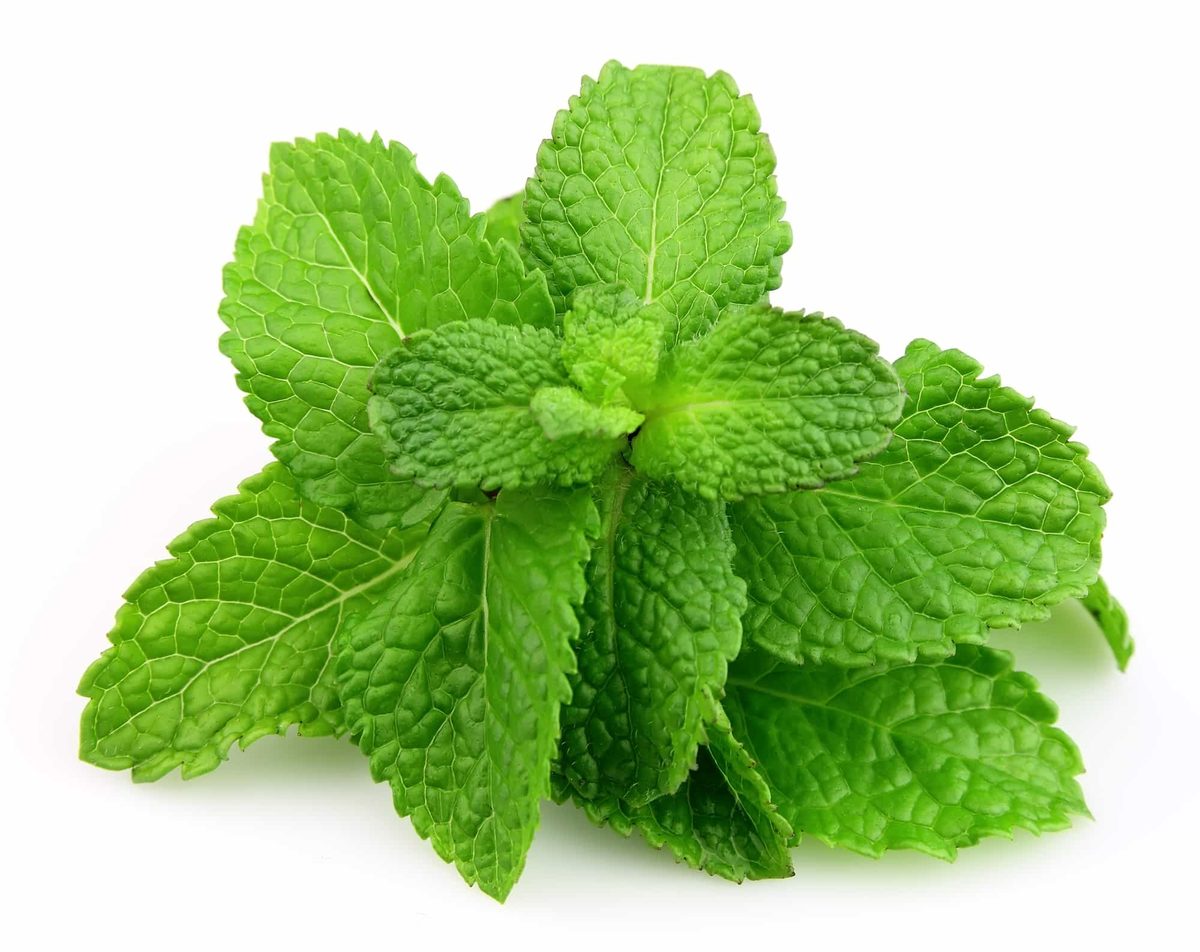
Orange mint is the citrus-scented mint also sold as bergamot mint and eau-de-Cologne mint.1 It cooks like any soft mint, but it does not taste like peppermint: the main components of its essential oil are linalool and linalyl acetate, and menthol is not among the compounds the study names.2 That chemistry decides where it works. It shines in teas, cream and fruit desserts and soft drinks, and it is a poor stand-in where a recipe wants peppermint’s cooling bite. For the plant itself, see orange mint.
At a glance
| Question | Short answer |
|---|---|
| What it tastes like | Citrus and floral more than minty; herbalist Susan Belsinger says it has no menthol and compares it to bergamot and Earl Grey3 |
| When to add it | At the end: LSU AgCenter puts mint among the delicate herbs added a minute or two before cooking ends4 |
| Best uses | Tea, cream and fruit desserts, chocolate, cold drinks3 |
| Swap for peppermint? | Only where floral is welcome; it will not supply menthol’s cool23 |
| Fresh or dried? | Fresh for cooking; ATK lists mint among herbs much weaker when dried5 |
| Keeping it | Refrigerate wrapped in damp paper towels; freeze for cooked uses; dry quickly or it molds678 |
How orange mint behaves in the kitchen
It is a delicate herb. America’s Test Kitchen sorts herbs into hearty and delicate, and puts mint with the delicate group, to be added at the last minute.6 LSU AgCenter gives the same advice and the reason: prolonged heat costs flavor and aroma.4 Treat orange mint like basil, not like rosemary. Stir it into a warm dish off the heat, scatter it over the plate, or steep it in a liquid that is then strained.
Its flavor is floral, not cool. A 2008 study of lemon mint (Mentha aquatica var. citrata, the same plant under another name) found linalool and its ester linalyl acetate to be the main components of the essential oil, alongside smaller amounts of compounds such as elemol, caryophyllene and germacrene D.2 Menthol, the compound behind peppermint’s chill, is not on that list.2 Belsinger puts it plainly: there is no menthol, so you taste citrus notes more than mint.3 The Royal Horticultural Society describes the leaves as scented like eau de Cologne.9
Bruise, don’t pound. In drinks, crushing mint hard can release vegetal, bitter flavors and break the leaves into shreds, according to Tasting Table.10 A light press or a quick shake with ice is enough.
Where it works
Tea
Belsinger dries orange mint leaves for tea.3 Fresh sprigs steeped in hot water work too, alone or added to black tea; that is common practice rather than a tested recipe. Its bergamot-like note, which Belsinger compares to Earl Grey, makes it a natural partner for black tea.3
Desserts and chocolate
Belsinger bakes orange mint into peach pies and steeps it in cream to give dark chocolate ganache an orange note.3 Steeping in cream is the useful technique here: warm the cream, add the leaves, cover, let it sit, then strain. The same infused cream can go into ice cream, panna cotta or custard. Belsinger gives no amounts or steeping time, so start with a small handful of leaves per cup of cream and taste as it steeps (Method: a starting point, not a tested ratio).
Fresh leaves chopped into fruit salad, or over berries and stone fruit, are a kitchen judgment rather than a sourced use, but they follow from the same flavor.
Drinks
Orange mint suits lemonade, iced tea and gin or rum drinks where a softer, more perfumed mint is wanted. Where a drink depends on menthol’s sharp cool, such as a classic mojito or julep, ordinary spearmint or peppermint is the better choice; in a mojito, Belsinger notes, it is the brightness of menthol that stands up to rum and lime.3 For simple syrup, steep leaves in the warm syrup and strain (Method).
Savory dishes
Used sparingly, orange mint can go into salads, grain salads, a vinaigrette, or with lamb, where ordinary mint would go. Its perfume is stronger than spearmint’s in those settings, so start with less and add more at the table. These are cooking judgments; we found no named savory recipe built around orange mint.
Using it in place of other mints
- For peppermint (Method). The two can trade places in desserts and teas, but the result will be floral rather than cool, because orange mint lacks the menthol that defines peppermint.23 No source gives a ratio. Start with the same volume of fresh leaves and adjust to taste.
- For “lemon mint” in a recipe. That is very likely the same plant: lemon mint is one of the names for M. aquatica var. citrata, the plant the 2008 study analyzed.2
- For lemon thyme or lemon basil. These are different plants with different flavors. Orange mint can cover the citrus note in a dessert or drink, but not their thyme or basil character; that is our judgment. See lemon thyme and lemon basil.
A common claim says orange mint is unusually concentrated and easy to overdo. We found no source measuring its strength against other mints. The practical caution is about type, not dose: its perfume can dominate a savory dish that expects ordinary mint.
Fresh vs. dried
Dried mint is a weak substitute for fresh in cooking. America’s Test Kitchen lists mint among the herbs to avoid buying dried, because they are much weaker in flavor when dried.5 Dried orange mint still makes good tea, which is how Belsinger uses it.3
Keeping orange mint
In the refrigerator. ATK stores delicate herbs wrapped in slightly damp paper towels in an open zipper-lock bag, and warns that the leaves should not touch liquid, which encourages rot.6 More detail is on how to store mint.
Freezing. Penn State Extension names mint among the herbs that freeze well.7 For ice cubes, half-fill a tray with water and put about a tablespoon of chopped herbs in each section.7 Frozen herbs can be used in the same proportion as fresh, should go into cooked dishes without thawing, and are limp when thawed.7 That makes frozen orange mint fine for tea and sauces, less so for garnish. See can you freeze mint?
Drying. The mints have a high moisture content and will mold if not dried quickly, so the National Center for Home Food Preservation (NCHFP) recommends drying them fast.8 A Wisconsin extension guide calls a dehydrator the best choice for these high-moisture herbs.11 NCHFP preheats the dehydrator to 95°F to 115°F.8 Sources disagree on the faster shortcuts:
| Method | NCHFP | Penn State Extension | Wisconsin Master Gardener Program |
|---|---|---|---|
| Microwave | A fast way to dry small quantities8 | 2 to 3 minutes on high per cup, checked often12 | Cooks the herbs, giving very poor quality11 |
| Oven | “Dry in a very cool oven”8 | Generally not recommended; even the lowest temperature destroys much flavor12 | Up to 180°F with the door open is described as an option11 |
For full instructions, see how to dry mint.
Herb vinegar. Colorado State University Extension lists mint among the fresh herbs for flavored vinegar.13 Its method uses 3 to 4 sprigs per pint, vinegar heated to just below boiling, sterilized containers, and at least 10 days to develop flavor.13 It gives up to three months in a cool, dark place and six to eight months in the refrigerator, and says to throw out any batch that shows mold or fermentation.13
Extracts. Homemade orange mint “extract” made by soaking leaves in vodka is widely suggested, but we found no tested method or timing from a food-safety or recipe source, so this page gives none.
Related pages
- Orange mint, watermint and types of mint
- Cooking with mint and mint uses
- Peppermint, spearmint and spearmint vs. peppermint
- Mint substitutes and too much mint
Footnotes
-
Mentha aquatica L. var. citrata (Ehrh.) W. C. Werner, GRIN Taxonomy, USDA Agricultural Research Service. npgsweb.ars-grin.gov · Reference work ↩
-
Zaks et al., “Biosynthesis of linalyl acetate and other terpenes in lemon mint (Mentha aquatica var. citrata, Lamiaceae) glandular trichomes”, Israel Journal of Plant Sciences, 2008. cris.haifa.ac.il · Peer-reviewed ↩ ↩2 ↩3 ↩4 ↩5 ↩6
-
CJ Lotz Diego, “Meet the Mints”, Garden & Gun, 2017, quoting Susan Belsinger. gardenandgun.com · Publication ↩ ↩2 ↩3 ↩4 ↩5 ↩6 ↩7 ↩8 ↩9 ↩10
-
“Flavorful Herbs”, LSU AgCenter. lsuagcenter.com · Reference work ↩ ↩2
-
Danielle Lapierre, “When You Should Actually Use Dried Herbs (and Which Ones to Avoid)”, America’s Test Kitchen, 2022. americastestkitchen.com · Publication ↩ ↩2
-
Liz Bomze, “Our Guide to Fresh Herbs”, America’s Test Kitchen, 2019. americastestkitchen.com · Publication ↩ ↩2 ↩3
-
Martha Zepp, “Freezing Herbs”, Penn State Extension, 2025. extension.psu.edu · Reference work ↩ ↩2 ↩3 ↩4
-
“Drying Herbs”, National Center for Home Food Preservation. nchfp.uga.edu · Reference work ↩ ↩2 ↩3 ↩4 ↩5
-
Mentha × piperita f. citrata, Royal Horticultural Society. rhs.org.uk · Reference work ↩
-
Sylvia Tomczak, “Why You Should Think Twice Before Muddling Mint In Your Next Mojito”, Tasting Table, 2024. tastingtable.com · Publication ↩
-
Susan Mahr, “Drying Herbs”, Wisconsin Master Gardener Program, 2012. mastergardener.extension.wisc.edu · Reference work ↩ ↩2 ↩3
-
“Let’s Preserve: Drying Herbs”, Penn State Extension, 2023. extension.psu.edu · Reference work ↩ ↩2
-
“Making Flavored Vinegar”, Fact Sheet 9.340, Colorado State University Extension, 2021. foodsmartcolorado.colostate.edu · Reference work ↩ ↩2 ↩3