Spice Fixes · Fix
Too Much Mint? Fixes for Food and Drinks
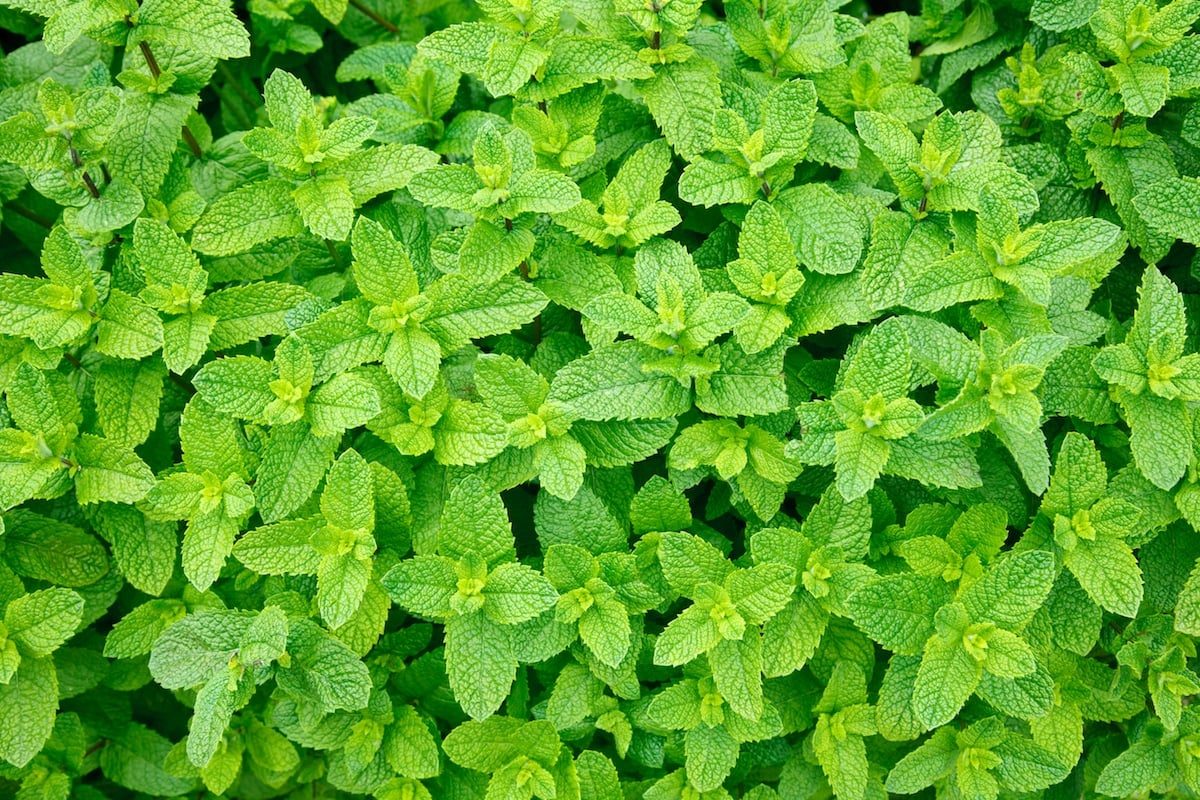
Too much mint shows up two ways. Either the cool, sharp mint aroma has taken over a salad, sauce or dessert, or the dish or drink has turned bitter and grassy, which in cocktails usually comes from how the mint was handled. When mint goes in as whole leaves or sprigs, as it often does in drinks, teas and garnishes, some of it can simply come out.
Quick answer
| What’s wrong | Fastest fix | If that’s not enough |
|---|---|---|
| Drink with too many leaves | Strain the drink off the leaves | Top up with more of the other ingredients |
| Bitter, grassy mojito or julep | Strain; next time shake instead of muddling hard | Add a little more sweetener |
| Leaves or sprigs in a soup, sauce or salad | Pick or skim them out | Dilute |
| Minty dessert | Add more of the base: cream, chocolate, batter | |
| Savory dish, too minty overall | Add more of everything else | A little sweetness or acid to rebalance |
Which mint, and why it’s strong
Mint belongs to the genus Mentha in the family Lamiaceae.1 The two common culinary mints have different main aroma compounds: peppermint oil’s major components are menthol and menthone, while spearmint is rich in carvone.1 In our judgment the difference shows in an overdose: too much peppermint reads as cooling and medicinal, too much spearmint as sweeter and greener, and peppermint is the harder one to hide in a savory dish. More in spearmint vs. peppermint and types of mint.
Drinks: strain it out
In a mojito, julep or iced tea, the leaves are usually still in the glass, which makes this the easiest mint overdose to fix. Pour the drink through a strainer into a fresh glass, or fish out some sprigs. If it’s still too minty, add more of everything else: more lime and soda in a mojito, more tea in a pitcher.
If it tastes bitter, the muddler may be to blame. According to Tasting Table, pressing mint too hard releases its vegetal and bitter qualities, can make a drink taste earthy or grassy, and breaks the leaves into small pieces.2 Straining removes the bits, though not the bitterness already in the drink. A little more sweetener can soften what’s left (see the bitterness section below). Next time, press gently or shake the leaves with ice in a cocktail shaker instead.2
Food: take it out early
Whole sprigs and torn leaves can be lifted out of a soup, a pot of peas, or a salad. Chopped mint floating on a soup can be skimmed off with a slotted spoon if you notice early. Mint minced into meatballs, kofta or a sauce won’t come back out, so go to dilution.
Sheer volume: too much mint for the dish
Dilute. Add more of every ingredient except mint: more ground meat, garlic and other seasonings to a meatball mix, more peas or broth to a soup, more yogurt to a raita. If adding to the dish isn’t practical, Tasting Table suggests (for garlic) making a second batch without the overdosed ingredient and combining the two.3 The arithmetic is the same for mint. Dilution works in any dish or drink because it changes the ratio of mint to everything else, rather than trying to hide it.
Desserts: more of the base. For an over-minted ice cream base, frosting or chocolate filling, add more of the unflavored base. If the culprit is mint extract rather than leaves, dilution is the only real fix.
Rebalance with acid. Lime, lemon or vinegar gives the palate something sharp to register alongside the mint, and tomatoes can do the same in a tomato-based soup. Treat this as a balancing technique: we found no source showing that acid neutralizes or masks mint’s aroma compounds.
Bitterness
In controlled taste tests with pure solutions, sweet tastes and sodium salts suppressed bitterness, and sugar was the strongest suppressor of other tastes; citric acid was the weakest.4 That is a laboratory finding, not a test on mint, but it supports what cooks already do: a little sugar or honey in a sweet dish or a drink, or a pinch of salt, will do more against bitterness than more lime. In savory dishes such as minted peas or carrots, add sweetener in small amounts and taste each time.
Cooking it out
LSU AgCenter lists mint among the delicate herbs best added a minute or two before cooking ends, because prolonged heat causes flavor and aroma losses.5 A few more minutes of simmering may soften fresh mint in a soup. We found no test of how long it takes.
Fixes that don’t hold up
A potato to draw out the mint. The raw-potato trick comes from oversalted soup, and even there a Tasting Table writer calls the potato “more of an aid than a final answer.”6 We found no test of a potato absorbing mint or neutralizing bitterness. A potato left in pea soup adds bland bulk, which is ordinary dilution; pulling it out before serving takes most of that benefit with it.
Preventing it next time
Add fresh mint late. LSU AgCenter suggests adding delicate herbs including mint in the last minute or two of cooking, or sprinkling them on just before serving.5
Go easy on the muddler. Press gently, or shake with ice instead.2
Convert carefully between fresh and dried. LSU AgCenter’s rule of thumb is one teaspoon of crumbled dried herb for one tablespoon of fresh.5
Start small. No source we found gives a mint-specific starting amount. Add part of what the recipe calls for, taste, and add the rest if you want it.
Related
Footnotes
-
Singh P, Pandey AK, Prospective of Essential Oils of the Genus Mentha as Biopesticides: A Review, Frontiers in Plant Science, 2018. frontiersin.org · Peer-reviewed ↩ ↩2
-
Why You Should Think Twice Before Muddling Mint In Your Next Mojito, Sylvia Tomczak, Tasting Table, 2024. tastingtable.com · Publication ↩ ↩2 ↩3
-
Simple Ways To Tone Down The Pungency Of Garlic, Harmony Colangelo, Tasting Table, 2023. tastingtable.com · Publication ↩
-
Green BG et al., Taste Mixture Interactions: Suppression, Additivity, and the Predominance of Sweetness, Physiology & Behavior, 2010. pmc.ncbi.nlm.nih.gov · Peer-reviewed ↩
-
Flavorful Herbs, LSU AgCenter. lsuagcenter.com · Reference work ↩ ↩2 ↩3
-
How To Fix An Oversalted Soup, Alison Spiegel, Tasting Table, 2016. tastingtable.com · Publication ↩