Herbs · Profile
Spearmint: The Carvone Mint, Where It Comes From, and How Cooks Use It
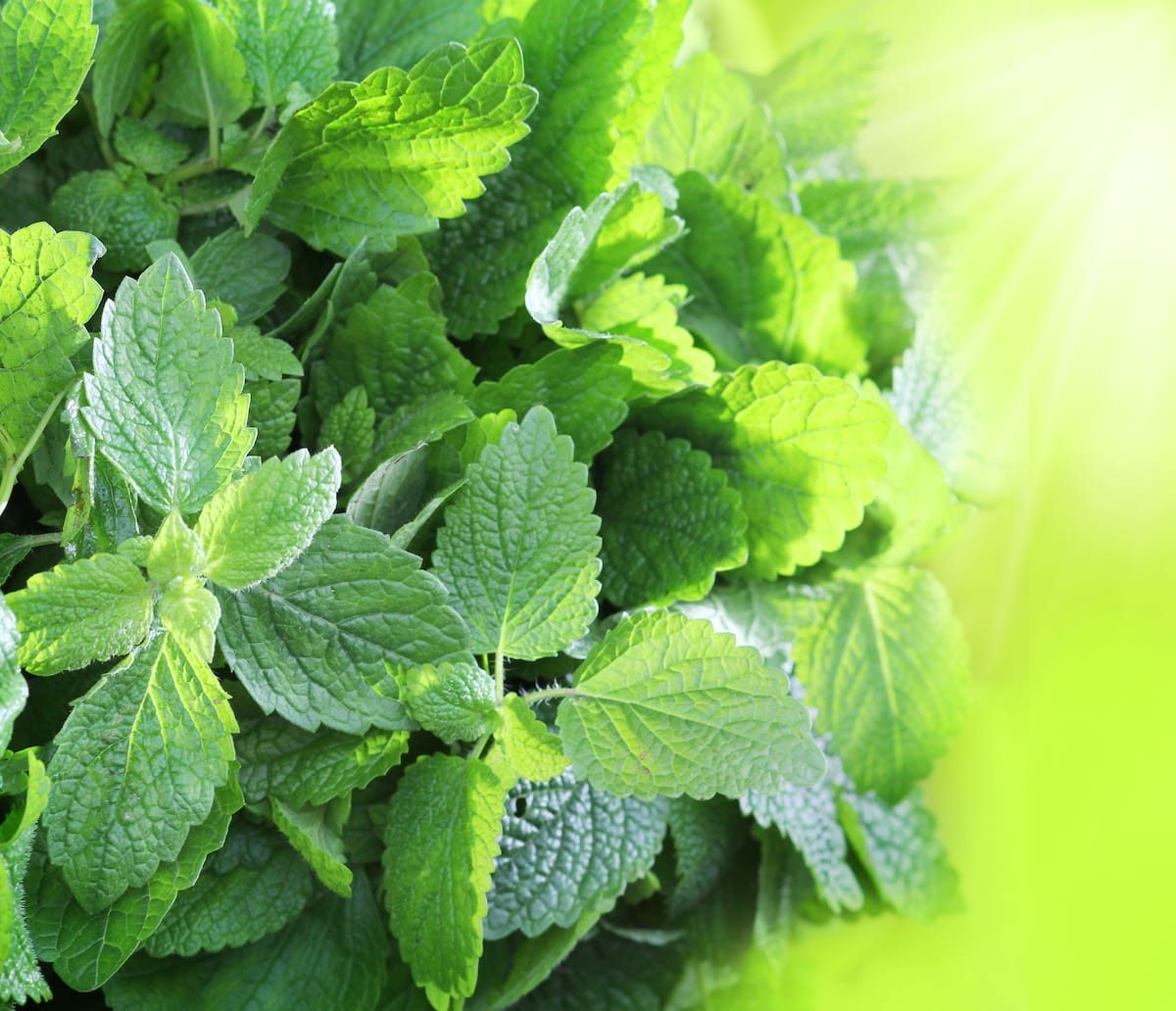
Spearmint, Mentha spicata, is an aromatic perennial of the mint family and one of the two mints most cooks mean when they say “mint.”12 Where peppermint tastes of menthol, spearmint’s character comes from carvone, the principal component of its oil, which is why it reads as sweeter and gentler.13 It is the mint behind British mint sauce and most of the world’s spearmint chewing gum.4
At a glance
| Botanical name | Mentha spicata L.51 |
| Plant family | Lamiaceae (mint family)1 |
| Part used | Leaves, fresh or dried; essential oil1 |
| Native range | Europe to China (Kew); Europe and Asia (Britannica)51 |
| Key aroma compound | Carvone13 |
| Growth habit | Perennial that spreads aggressively by creeping stolons1 |
| US status | Listed by FDA as a GRAS spice and as a GRAS essential oil source67 |
| Forms sold | Fresh sprigs, dried leaf, tea, essential oil and flavorings |
Measured values
9 figures, sourced| Measure | Value | Scope | Source |
|---|---|---|---|
| Carvone | 69.5 % of essential oil | One Serbian spearmint oil tabulated in Singh and Pandey's reviewA single sample, not a typical value. | frontiersin.org |
| Menthone | 21.9 % of essential oil | One Serbian spearmint oil tabulated in Singh and Pandey's review | frontiersin.org |
| Energy Nutrient | 44 kcal per 100 g | USDA FoodData Central, spearmint, fresh (FDC ID 173475, SR Legacy) | fdc.nal.usda.gov |
| Vitamin A Nutrient | 203 µg RAE (4,050 IU) per 100 g | USDA FoodData Central, spearmint, fresh (FDC ID 173475, SR Legacy) | fdc.nal.usda.gov |
| Vitamin C Nutrient | 13.3 mg per 100 g | USDA FoodData Central, spearmint, fresh (FDC ID 173475, SR Legacy) | fdc.nal.usda.gov |
| Folate Nutrient | 105 µg per 100 g | USDA FoodData Central, spearmint, fresh (FDC ID 173475, SR Legacy) | fdc.nal.usda.gov |
| Calcium Nutrient | 199 mg per 100 g | USDA FoodData Central, spearmint, fresh (FDC ID 173475, SR Legacy) | fdc.nal.usda.gov |
| Iron Nutrient | 11.9 mg per 100 g | USDA FoodData Central, spearmint, fresh (FDC ID 173475, SR Legacy) | fdc.nal.usda.gov |
| Potassium Nutrient | 458 mg per 100 g | USDA FoodData Central, spearmint, fresh (FDC ID 173475, SR Legacy) | fdc.nal.usda.gov |
Each figure is quoted as its source states it, with the samples or standard it applies to. Where sources differ, both are shown; nothing is averaged. All measured values
What spearmint is
Britannica describes spearmint as a perennial with square stems, sharply serrated leaves in opposite pairs, and loose, tapering spikes of lilac, pink or white flowers, and notes that it spreads aggressively by creeping stolons.1
Kew gives its native range as Europe to China, and Britannica says it is native to Europe and Asia and has naturalized in North America and parts of Africa.51 Peppermint is one of its offspring: NCCIH describes peppermint as a natural cross between water mint and spearmint.8 For the whole genus, see mint.
Flavor and aroma
Spearmint is sweet, green and clearly minty, without peppermint’s cold, penetrating bite. Katzer calls its flavor hard to describe, “minty but not pungent.”4 The rest of that description is ours.
The compounds
Britannica gives carvone as the principal component of spearmint oil, and Singh and Pandey’s review contrasts carvone-rich spearmint with peppermint, whose oil is dominated by menthol and menthone.13 Katzer lists the main aroma compounds as carvone, limonene, dihydrocarvone, menthone, pulegone, 1,8-cineol and β-pinene.4
Proportions vary from sample to sample. One Serbian spearmint oil tabulated in the review contained 69.5% carvone and 21.9% menthone.3 That is a single sample, not a typical value; see the mint page for other samples side by side.
Origin and history
- Roman cooking. Pliny the Elder noted that mint was a common ingredient in Roman sauces.9 His text does not let us say which mint he meant.
- Which mint the old texts mean. A widely repeated claim says spearmint is the mint referred to in ancient texts. No source we found shows that. Britannica presumes the mint of the Bible to be Mentha longifolia, a different species.2
Several other stories circulate: that no truly wild spearmint survives, that the Romans brought it to Britain, that Greeks and Romans rubbed their tables with it before guests arrived, that the herbalist John Gerard praised it, that it was used to repel mice, and that American colonists drank mint tea because it escaped British taxes. None could be traced to a source we could open, so they are left out.
How spearmint is used
Britannica lists a wide range: the leaves, fresh or dried, flavor sweets, drinks, salads, soups, cheeses, meats, fish, sauces, fruits and vegetables, and the oil flavors toothpaste, candies and jellies.1 Some specific uses:
- Britain. Katzer names spearmint as the mint for the British mint sauce served with lamb.4
- Chewing gum. Katzer says most spearmint today goes to the chewing gum industry.4
- Vietnam. A mild mint with a spearmint or caraway scent is often preferred to the sharper, menthol type, and is served with noodle soup.4
- The mint julep. Britannica describes the julep as an iced cocktail of bourbon, mint and sugar, famously tied to the Kentucky Derby.10 It does not say which mint; spearmint is the usual choice in practice, but that is common practice rather than a sourced fact.
By common practice spearmint is also the mint of choice for yogurt sauces, tabbouleh-style salads, stuffed vine leaves, mint tea and fruit; those are kitchen habits, not sourced facts.
Technique
LSU AgCenter groups mint with the delicate herbs best added near the end of cooking, since prolonged heat costs flavor and aroma.11 Its general rule for swapping fresh and dried herbs is 1 tablespoon finely cut fresh to 1 teaspoon crumbled dried, a guide for herbs in general rather than a spearmint measurement.11 For more, see cooking with mint and mint uses.
Buying and quality
We found no grading standard for fresh spearmint. Look for bright, unwilted leaves that smell strongly when rubbed, with no black or slimy patches; that is kitchen judgment. Check which mint you are buying, since peppermint gives a colder, sharper result.
Storage
We found no published shelf-life figure for fresh or dried spearmint from a regulator or extension service. For dried mint, smell is the test: if a crushed pinch smells faint, it has faded. See how to store mint, can you freeze mint and how to dry mint.
Nutrition
USDA’s FoodData Central lists, per 100 g of fresh spearmint:12
| Nutrient | Per 100 g |
|---|---|
| Energy | 44 kcal |
| Vitamin A | 203 µg RAE (4,050 IU) |
| Vitamin C | 13.3 mg |
| Folate | 105 µg |
| Calcium | 199 mg |
| Iron | 11.9 mg |
| Potassium | 458 mg |
These are per 100 g, which is far more mint than a dish uses.
Health and safety
The research picture for spearmint is thin.
- Hormones and PCOS. A small randomized trial, published as a 2008 conference abstract, gave women with polycystic ovary syndrome two cups of spearmint tea or a placebo tea for 30 days. Androgen levels fell significantly in the spearmint group, but the change in hirsutism score did not reach significance.13 That is one short trial, and the abstract does not report how many women took part.
- Digestion. NIH’s NCCIH summary of the evidence on mint and digestion concerns peppermint oil: enteric-coated peppermint oil capsules may improve IBS symptoms in adults.8 We found no comparable summary for spearmint.
- Regulatory status. FDA lists spearmint among spices and natural seasonings, and spearmint among essential oils, that are generally recognized as safe for their intended use.67
Claims that spearmint protects memory, kills salmonella or H. pylori, or treats IBS could not be traced to human evidence, and this page makes no claim that spearmint treats or prevents any condition.
Substitutes and comparisons
Peppermint can stand in for spearmint but gives a sharper, colder result; use less (editorial, Method: no tested ratio exists). See mint substitutes for other options.
Other mints: peppermint, apple mint, watermint, Moroccan mint and types of mint. If a dish has too much, see too much mint.
Footnotes
-
“Spearmint”, Encyclopaedia Britannica. britannica.com · Reference work ↩ ↩2 ↩3 ↩4 ↩5 ↩6 ↩7 ↩8 ↩9 ↩10 ↩11 ↩12
-
“Mint (plant)”, Encyclopaedia Britannica. britannica.com · Reference work ↩ ↩2
-
Pooja Singh and Abhay K. Pandey, “Prospective of Essential Oils of the Genus Mentha as Biopesticides: A Review”, Frontiers in Plant Science, 2018. frontiersin.org · Peer-reviewed ↩ ↩2 ↩3 ↩4
-
“Mint (Mentha)”, Gernot Katzer’s Spice Pages. gernot-katzers-spice-pages.com · Reference work ↩ ↩2 ↩3 ↩4 ↩5 ↩6
-
Mentha spicata L., Plants of the World Online, Royal Botanic Gardens, Kew. powo.science.kew.org · Reference work ↩ ↩2 ↩3
-
21 CFR 182.10, US Food and Drug Administration. ecfr.gov · Regulator ↩ ↩2
-
21 CFR 182.20, US Food and Drug Administration. ecfr.gov · Regulator ↩ ↩2
-
“Peppermint Oil”, National Center for Complementary and Integrative Health, 2025. nccih.nih.gov · Regulator ↩ ↩2
-
Pliny the Elder, Natural History 20.53, Perseus Digital Library. perseus.tufts.edu · Reference work ↩
-
“Mint julep”, Encyclopaedia Britannica. britannica.com · Reference work ↩
-
“Flavorful Herbs”, LSU AgCenter. lsuagcenter.com · Reference work ↩ ↩2
-
“Spearmint, fresh”, FDC ID 173475, USDA FoodData Central. fdc.nal.usda.gov · Regulator ↩
-
Paul Grant, “A randomised clinical trial of the effects of spearmint herbal tea on hirsutism in females with polycystic ovarian syndrome”, Endocrine Abstracts 15, 2008. endocrine-abstracts.org · Peer-reviewed ↩