Blog · Profile
The Most Expensive Spices: What Saffron, Vanilla and Cardamom Cost, and Why
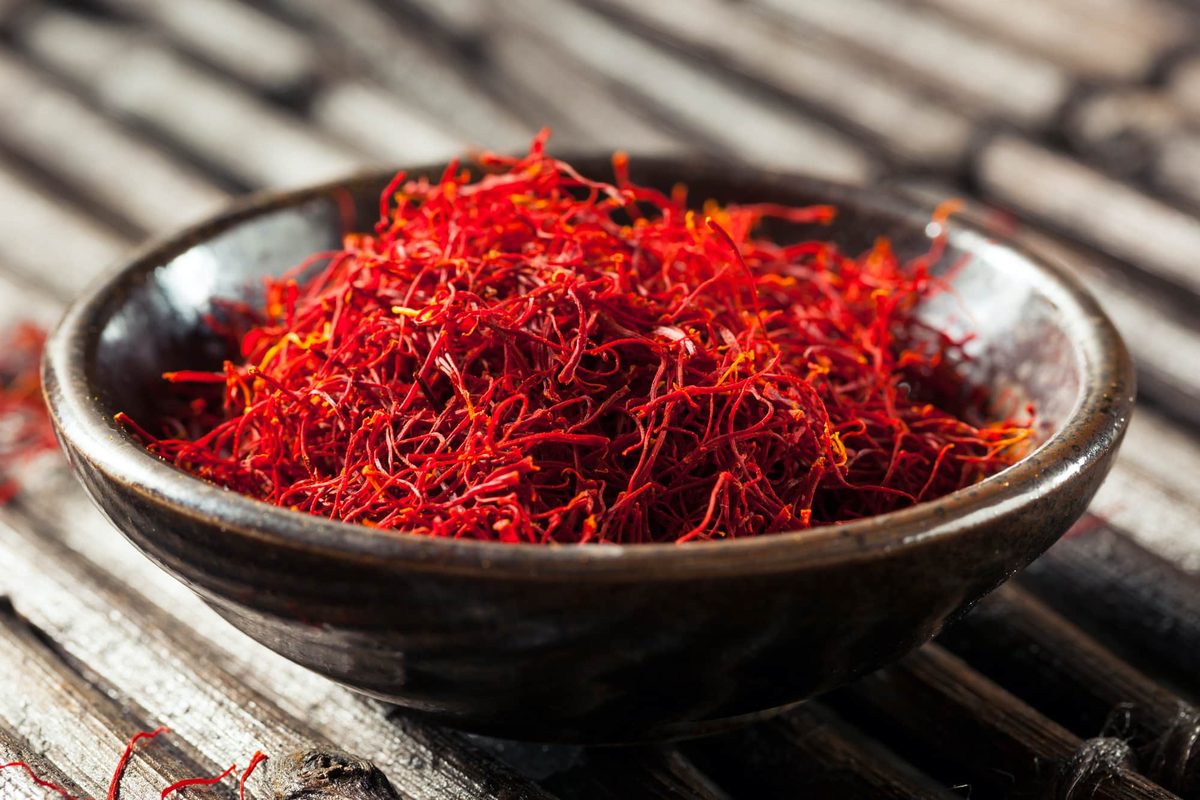
Saffron is the most expensive spice. On that the sources agree: Encyclopaedia Britannica still calls it the most expensive spice in the world, and a 2022 peer-reviewed paper describes prices reaching up to 20,000 euros per kilogram.12 Vanilla is usually named next; Katzer’s Spice Pages calls it one of the most expensive spices because its flowers must be pollinated by hand outside Mexico.3 Beyond those two, there is no published ranking. Cardamom and cloves are often put on such lists, but no source found for this page ranks them, and spice prices swing so much by grade, origin and year that any fixed “top five” would be out of date quickly.
What can be shown is why these spices cost what they do, and what dated prices from named sources look like.
Prices on record
Each figure below has a different scope: a price ceiling quoted in a paper, a market estimate, a government floor, or a wholesale auction on one day. They are in different currencies and cannot be lined up as a league table. None is a current retail price.
| Spice | Figure | What it measures | Date | Source |
|---|---|---|---|---|
| Saffron | Up to 20,000 EUR/kg | A ceiling described in a peer-reviewed paper on saffron quality | Published 2022 | Bergomi et al.2 |
| Vanilla (cured beans, Madagascar) | About US$140 to 150/kg | Export price “according to market sources” | Reported 31 May 2023 | Mintec4 |
| Vanilla (Madagascar) | US$250/kg | Government minimum export price, in force from July 2020 until its removal in 2023; a floor, not a market price | Reported 31 May 2023 | Mintec4 |
| Small (green) cardamom | Rs 3,147.20/kg average; Rs 3,667/kg top lot | One wholesale auction at Kumily, Kerala | 13 October 2026 | Spices Board India5 |
| Large (black) cardamom | Rs 1,250 to 1,475/kg, by grade and market | Wholesale prices at Singtam and Siliguri | 8 October 2026 | Spices Board India6 |
| Black pepper (garbled) | Rs 725/kg average | Wholesale price at Kochi (Cochin) | 8 October 2026 | Spices Board India6 |
| Cloves | No dated price found |
The cardamom and pepper prices are Indian wholesale prices in rupees for bulk lots, not what a shopper pays for a jar. They are included because they are dated and come from a government source, and because they show how far apart spices that are often grouped together can be, even in the same market.
Saffron
What it is. Saffron is the dried stigmas of Crocus sativus, golden-colored threads from the flower, not its stamens.1 Kew records the plant as a cultigen from Greece.7
Why it costs so much. The arithmetic of the harvest: Britannica says a pound (0.45 kg) of saffron represents 75,000 blossoms.1 Bergomi et al. describe saffron as the highest-priced high-value agricultural product.2 A popular claim that the flowers must be picked early in the morning, before they open, or the flavor is lost could not be traced to a source.
What it does in food. Britannica describes a strong aroma and bitter taste, with crocin as the coloring matter, and names saffron in bouillabaisse and in English, Scandinavian and Balkan breads.1 See saffron, why saffron is so expensive, cooking with saffron and safflower vs. saffron, the commonest cheap stand-in.
Vanilla
What it is. Vanilla is the cured pod of a climbing orchid, chiefly Vanilla planifolia, which Kew gives as native from southern Mexico to northern Brazil.8 It is used above all in sweet foods and drinks: chocolate, confections, ice cream and baked goods.9
Why it costs so much. Two reasons, both labor:
- Hand pollination. Katzer says the need to pollinate the flowers by hand outside Mexico makes vanilla one of the most expensive spices.3 The technique used on plantations is credited to Edmond Albius, an enslaved 12-year-old on Réunion, in 1841.10
- Curing. A fresh pod has little smell; its vanillin is locked in an odorless bound form that curing releases.3 In one study of Hainan beans, curing ended with the dried beans conditioned in closed wooden boxes for six months.11
Widely repeated details, such as that vanilla vines take four years to mature or that each flower opens for only one day a year, were not checked against a source for this page and are left out. See vanilla and vanilla extract substitutes.
Cardamom
What it is. Green cardamom is the fruit and seed of Elettaria cardamomum, native to southwest India.12 Black cardamom is a different plant, Amomum subulatum, native from Nepal to central China.13 See black vs. green cardamom.
Why it costs what it does. PROSEA says the fruits are picked when fully developed but still green, one at a time because they ripen unevenly.14 The Spices Board auction figures above show green cardamom averaging roughly four times the price of garbled black pepper in Indian wholesale trading in October 2026 (Rs 3,147 against Rs 725 per kg, on 13 and 8 October respectively).56 The claim that cardamom is the world’s third most expensive spice circulates widely, but no source for that ranking was found.
See cardamom, cooking with cardamom and cardamom substitutes.
Cloves
What it is. A clove is the dried flower bud of Syzygium aromaticum, a tree Kew gives as native to Maluku.15 Britannica says Indonesia is the world’s largest producer.16
Harvest. PROSEA says the whole flower cluster is picked just before the first buds open.17 A frequently quoted rule that cloves can be harvested only when they measure 1.5 to 2 cm could not be traced. No dated price from an official or market source was found for this page, so cloves’ place on any “most expensive” list is unsupported here.
Cloves turn up in pumpkin pie spice, apple pie spice and garam masala. See cloves and substitutes for cloves.
A note on history
Spices were valuable enough in the past that pepper, in particular, often served as a medium of exchange, according to Britannica.18 The broader claim that today’s prices simply reflect the same supply limits as always is a generalization that no source here supports.
Related pages
Footnotes
-
Saffron, Encyclopaedia Britannica. britannica.com · Reference work ↩ ↩2 ↩3 ↩4
-
Bergomi et al., “Determination of Saffron Quality through a Multi-Analytical Approach”, Foods, 2022, MDPI / PubMed Central. pmc.ncbi.nlm.nih.gov · Peer-reviewed ↩ ↩2 ↩3
-
Vanilla (Vanilla planifolia), Gernot Katzer’s Spice Pages. gernot-katzers-spice-pages.com · Reference work ↩ ↩2 ↩3
-
Madagascar lifts minimum export price on vanilla, by Jara Zicha (31 May 2023), Mintec. mintecglobal.com · Publication ↩ ↩2
-
Archive: Daily Auction Price of Small Cardamom (auctions of 7 to 13 October 2026), Spices Board India, Ministry of Commerce and Industry. indianspices.com · Regulator ↩ ↩2
-
Current Market Price of Key Spices (pepper, Cochin; large cardamom banner; last updated 08-Oct-2026), Spices Board India, Ministry of Commerce and Industry. indianspices.com · Regulator ↩ ↩2 ↩3
-
Crocus sativus L., Plants of the World Online. powo.science.kew.org · Reference work ↩
-
Vanilla planifolia Andrews, Plants of the World Online. powo.science.kew.org · Reference work ↩
-
Vanilla (Britannica Editors, updated 15 Sep 2026), Encyclopaedia Britannica. britannica.com · Reference work ↩
-
“Edmond Albius”, Fondation pour la Mémoire de l’Esclavage, via Europeana. europeana.eu · Reference work ↩
-
Cai et al., “Metabolite Transformation and Enzyme Activities of Hainan Vanilla Beans During Curing”, Molecules, 2019, MDPI. mdpi.com · Peer-reviewed ↩
-
Elettaria cardamomum (L.) Maton, Plants of the World Online. powo.science.kew.org · Reference work ↩
-
Amomum subulatum Roxb., Plants of the World Online. powo.science.kew.org · Reference work ↩
-
Elettaria cardamomum (PROSEA), Plant Resources of South-East Asia, via Pl@ntUse. uses.plantnet-project.org · Reference work ↩
-
Syzygium aromaticum (L.) Merr. & L.M.Perry, Plants of the World Online. powo.science.kew.org · Reference work ↩
-
“Clove”, Encyclopaedia Britannica. britannica.com · Reference work ↩
-
Syzygium aromaticum (PROSEA), Plant Resources of South-East Asia, via Pl@ntUse. uses.plantnet-project.org · Reference work ↩
-
“Black pepper”, Encyclopaedia Britannica. britannica.com · Reference work ↩