Blog · Storage
How to Store Sage: Refrigerating, Freezing, Drying, and the Oil Warning
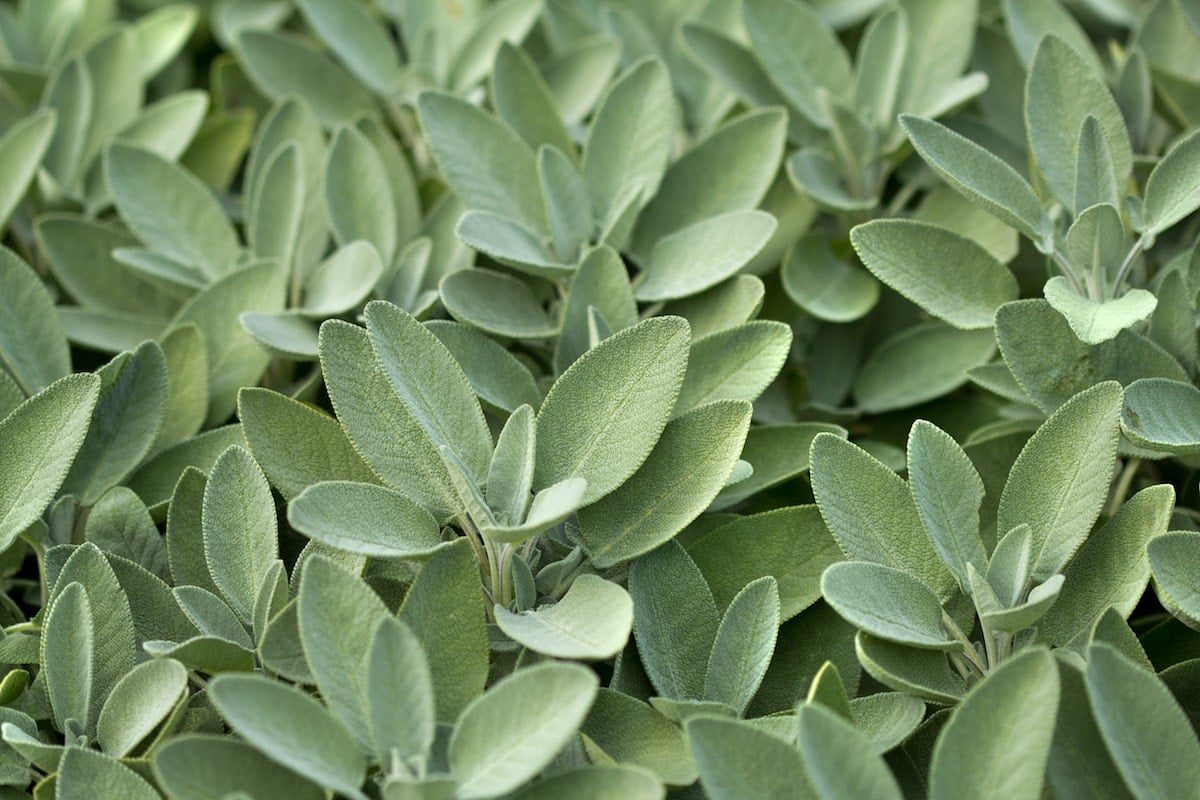
Sage is one of the hearty herbs, a group America’s Test Kitchen sets apart from delicate herbs like basil and tarragon.1 That sturdiness gives you three good ways to keep it: in the refrigerator for days, in the freezer for months, or dried for up to a year. One popular method, sage leaves covered in oil, is a food-safety problem unless it is refrigerated briefly or frozen.2
At a glance
| Method | How | How long | Notes |
|---|---|---|---|
| Refrigerator | In its packaging or a bag; sources differ on damp towels (see below)13 | “A few days” is the only figure we found4 | The week often quoted has no traceable source |
| Freezer | Whole leaves frozen flat, or chopped into ice cube trays45 | 3 to 6 months for best quality46 | Good for cooked dishes |
| Dried | Hang in bundles, or use a dehydrator at 95–115°F67 | Up to a year in most guidance; one source says 3 months at room temperature68 | Keep leaves whole until use8 |
| In oil | Refrigerate, use within 4 days, or freeze2 | 4 days refrigerated | Never at room temperature9 |
| Sage vinegar | Steep in a cool, dark place10 | 3 months cool and dark; 6 to 8 months refrigerated10 | Not in a sunny window |
Fresh sage in the refrigerator
Fresh herbs don’t last long. Ohio State University Extension says harvested fresh herbs keep only a few days in the refrigerator.4 We found no sage-specific figure; the “up to a week” in many guides has no source we could trace.
America’s Test Kitchen has given two different methods for sage, three years apart:
| Source | Method for sage |
|---|---|
| America’s Test Kitchen, 20163 | Wrap in damp paper towels and keep in a zipper-lock bag in the crisper drawer. |
| America’s Test Kitchen, 20191 | Hearty herbs, sage included: keep in the original packaging or an open zipper-lock bag, refrigerated. |
The 2019 guide explains its reasoning: hearty herbs take in moisture through their leaves, so it is important to keep them dry.1 It is the later of the two, but neither article reports how many days the herbs lasted, so we can’t say one method is proven better. Either way, refrigerate the leaves and check them for dark or slimy spots before you cook.
Freezing sage
Two methods turn up across extension guidance:
- Flat freeze. Spread whole leaves on a baking sheet with space between them, freeze, then move them to freezer bags.4 Illinois Extension warns that leaves allowed to thaw during the transfer will freeze together.11
- Ice cubes. Chop the leaves, pack them into ice cube trays, cover with water, broth or oil, and freeze.4 The Royal Horticultural Society suggests the same for sage specifically, adding the cubes straight to cooking.5 Illinois Extension recommends herb cubes for soups, stews, sauces and other cooked dishes.11 Oil cubes go into the freezer right away; South Dakota State says never to hold herbs in oil at room temperature.6
Cubes made with butter instead of water are a common idea. We found no extension guidance on herb butter cubes either way.
How long frozen herbs keep:
| Source | Frozen herbs, best quality |
|---|---|
| Ohio State University Extension4 | Use within 3 to 6 months |
| South Dakota State University Extension6 | Up to 6 months in an airtight container |
A common claim is that frozen sage keeps up to a year. We found no source for that figure.
Drying sage
Sage is one of the herbs that dries well. Ohio State lists it among the best herbs for drying,4 and in America’s Test Kitchen’s tests, dried sage fared reasonably well in long-cooked, liquid-rich dishes.12 It is on ATK’s short list of herbs worth buying dried.13
Air drying. Tie sturdy herbs such as sage into small bundles and hang them where the air is dry and moving.611 A brown paper bag with ventilation holes keeps off dust and catches falling leaves.11 The RHS says to hang sage sprigs in a warm, dark, well-ventilated place.5 Expect five to ten days, by South Dakota State’s and Illinois Extension’s guidance.611 Penn State says sun-drying herbs is not recommended.8
Dehydrator. Preheat it to 95 to 115°F, or as high as 125°F in humid areas; drying takes 1 to 4 hours, so check periodically.7 Ohio State gives the same range and timing.4 The “full day at the lowest setting” sometimes suggested is far longer than any source we found.
Microwave. Ohio State’s guide is 1 to 2 minutes on high for a cup of herbs, moving them every 30 seconds.4
Oven. The sources disagree:
| Source | Oven drying |
|---|---|
| South Dakota State University Extension6 | 180°F or lower |
| National Center for Home Food Preservation7 | A “very cool oven”; an electric oven’s light or a gas pilot light gives enough heat overnight |
| University of Illinois Extension, 202511 | Not recommended |
Heat matters for sage’s flavor. In a 2012 study, drying sage at a temperature 20°C higher cut essential oil yield by as much as 92.3%.14 A 1997 study found a significant loss of volatile compounds only when sage and thyme were dried at 60°C (140°F), not with the gentler methods tested.15 So if you use an oven, the lowest setting with the door propped open is the safer choice for flavor, which is our reading of those studies rather than a tested recipe.
When it is done. The leaves should be brittle and crumble when touched, and stems should snap when bent.711
Storing dried sage
Keep dried sage in an airtight container in a cool, dry, dark place.711 Leave the leaves whole, and crumble them as you use them: Penn State says storing herbs whole is preferred,8 and the National Center for Home Food Preservation gives whole leaves crumpled at use as one option.7 Air, light, moisture and heat all speed flavor and color loss.16
How long dried herbs keep, by source:
| Source | Scope | Figure |
|---|---|---|
| Penn State Extension8 | Most dried herbs | Keep well for one year |
| Ohio State University Extension4 | Dried herbs | Up to a year for best quality |
| University of Illinois Extension11 | Dried herbs | Use within one year for best flavor |
| University of California Cooperative Extension16 | Ground spices and dried herbs | 1 year |
| South Dakota State University Extension6 | Dried herbs | Up to 3 months airtight; up to a year in the refrigerator or freezer |
| America’s Test Kitchen13 | Herbs dried at home in the microwave | Up to 3 months airtight |
Most say a year; South Dakota State and ATK say three months at room temperature. None of these figures was measured on sage. Treat them as quality windows: rub a pinch, and if the smell is faint, it has faded.
Sage in oil: the safety rule
Covering fresh sage with oil and keeping it for weeks is unsafe. Herbs are low-acid foods that can carry Clostridium botulinum, and storing them under oil creates the oxygen-free conditions the bacteria need.2 Oregon State University Extension’s rule is to refrigerate herb-and-oil mixtures and use them within 4 days, or freeze them for longer storage. The same applies to oil flavored with dried herbs.2 A regional extension guide calls storing home-made herb-infused oils at room temperature unsafe, and allows refrigeration for 2 to 4 days at most, or freezing.9
If you want sage in oil on hand, freeze it: Oregon State says herbs in oil can be frozen in ice cube trays.2
Sage vinegar
Sage works in herb vinegar; Colorado State University Extension lists it among suitable fresh herbs.10 Its method differs from the common “sunny windowsill” advice:
- Use commercial vinegar, heated to just below boiling, with 3 to 4 sprigs of fresh herb per pint.10
- Let it stand in a cool, dark place for at least 10 days; the flavor is strongest after three to four weeks.10
- Strain, then store it in the refrigerator for up to six to eight months, or in a cool, dark place (65°F or below) for up to three months.10
- Flavored vinegar kept in bright light or above 65°F for more than a few weeks should be treated as decorative, not eaten. Discard any with mold or signs of fermentation.10
Not yet measured
- How long fresh sage keeps in the refrigerator under either America’s Test Kitchen method.
- A shelf-life figure for frozen or dried sage specifically, rather than herbs in general.
- Whether frozen sage cubes made with butter keep as well as water or oil cubes.
Related
- Sage, cooking with sage and sage uses
- How to dry sage and fresh sage vs. dried sage
- Sage substitutes and too much sage
- Dried herbs vs. fresh and do spices go bad?
- How to store thyme and how to store rosemary
Footnotes
-
Liz Bomze, “Our Guide to Fresh Herbs”, America’s Test Kitchen, 2019. americastestkitchen.com · Publication ↩ ↩2 ↩3 ↩4
-
Raab and Woodburn, “Herbs and vegetables in oil” (SP 50-701), Oregon State University Extension Service, 2025. extension.oregonstate.edu · Reference work ↩ ↩2 ↩3 ↩4 ↩5
-
“How & Where to Buy, Use, and Store Fresh Herbs”, America’s Test Kitchen, 2016. americastestkitchen.com · Publication ↩ ↩2
-
Shari Gallup, “Food Preservation: Preserving Herbs—Freezing and Drying”, Ohio State University Extension, 2026. ohioline.osu.edu · Reference work ↩ ↩2 ↩3 ↩4 ↩5 ↩6 ↩7 ↩8 ↩9 ↩10 ↩11
-
“How to grow sage”, Royal Horticultural Society. rhs.org.uk · Reference work ↩ ↩2 ↩3
-
Lambert, Erickson and Kleine, “Preserving Herbs”, South Dakota State University Extension, 2022. extension.sdstate.edu · Reference work ↩ ↩2 ↩3 ↩4 ↩5 ↩6 ↩7 ↩8 ↩9
-
“Herbs”, National Center for Home Food Preservation (from So Easy to Preserve, 6th ed., 2014). nchfp.uga.edu · Reference work ↩ ↩2 ↩3 ↩4 ↩5 ↩6
-
Stacy Reed, “Preserving Herbs by Drying”, Penn State Extension, 2024. extension.psu.edu · Reference work ↩ ↩2 ↩3 ↩4 ↩5
-
“Making Garlic- and Herb-Infused Oils At Home” (PNW 664), Pacific Northwest Extension, 2014. objects.lib.uidaho.edu · Reference work ↩ ↩2
-
Grubb, Shackelton and Bunning, “Making Flavored Vinegar” (9.340), Colorado State University Extension, 2021. foodsmartcolorado.colostate.edu · Reference work ↩ ↩2 ↩3 ↩4 ↩5 ↩6 ↩7
-
Emily Swihart, “Preserving garden-grown herbs”, University of Illinois Extension, 2025. extension.illinois.edu · Reference work ↩ ↩2 ↩3 ↩4 ↩5 ↩6 ↩7 ↩8 ↩9
-
“Science: Substituting Dried Herbs for Fresh”, America’s Test Kitchen. americastestkitchen.com · Publication ↩
-
Danielle Lapierre, “When You Should Actually Use Dried Herbs (and Which Ones to Avoid)”, America’s Test Kitchen, 2022. americastestkitchen.com · Publication ↩ ↩2
-
Hamrouni Sellami et al., Food and Bioprocess Technology, 2012. humboldt-reloaded.uni-hohenheim.de · Peer-reviewed ↩
-
Venskutonis, “Effect of drying on the volatile constituents of thyme and sage”, Food Chemistry, 1997 (abstract). agris.fao.org · Peer-reviewed ↩
-
Anna Martin, “Add a Little Spice to Your Life! Part II”, University of California Cooperative Extension, 2002. ucanr.edu · Reference work ↩ ↩2