Spice Substitutes · Substitutes
Pickling Salt Substitutes: What’s Safe for Fermented Pickles, Quick Pickles and Everyday Cooking
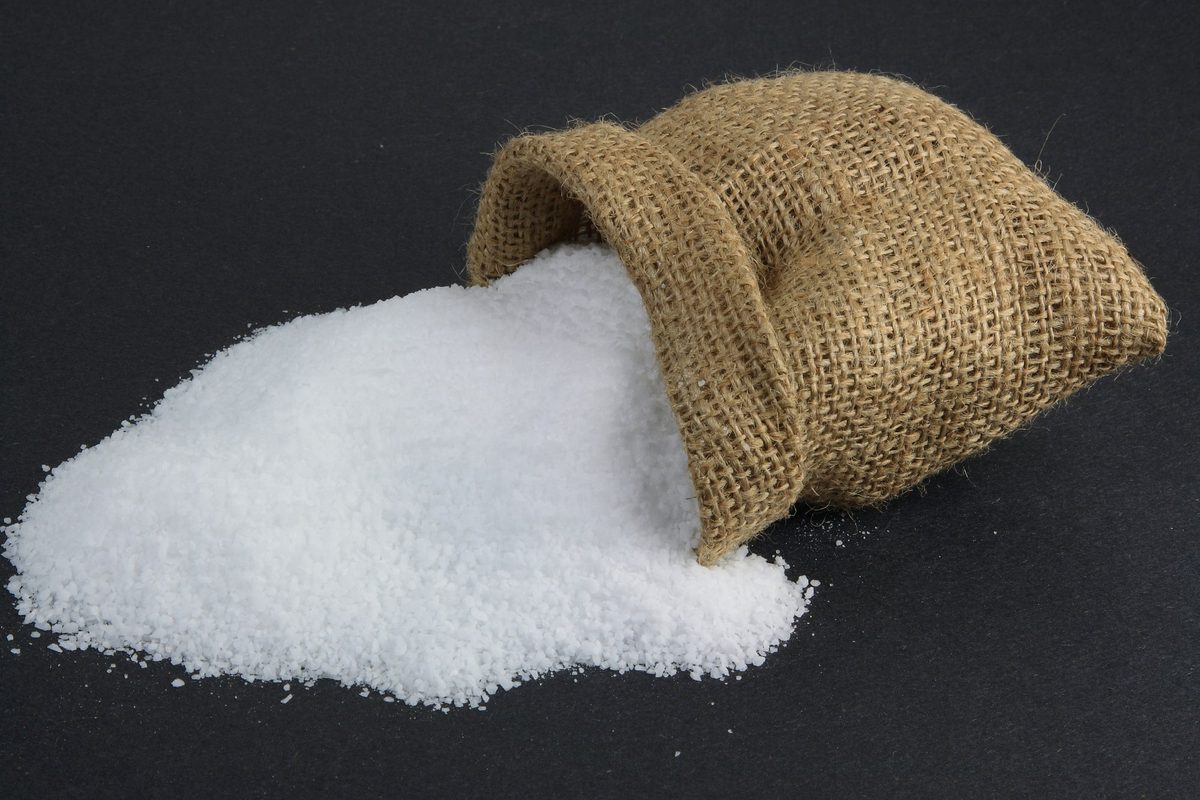
Pickling salt, sold as canning and pickling salt, is the salt home-canning guides recommend for pickles.1 What makes it the right choice is mostly what isn’t in it: the anticaking agents in many table salts can cloud a brine or leave sediment in the jar.12 That is a matter of looks. The amount of salt is a different matter, because in fermented pickles and sauerkraut the salt is part of what keeps the food safe.34 So the right substitute depends first on what kind of pickle you are making, and the rule that matters most is simple: whatever salt you use, never end up with less salt than a fermented recipe calls for.
Quick answer
| What pickling salt is doing | Best substitute | Starting amount, per 1 tablespoon pickling salt | Treatment |
|---|---|---|---|
| Fermented or brined pickles, sauerkraut | Kosher salt, weighed | The same weight as 1 tablespoon of table salt | Computed |
| Fermented pickles, no scale | Table salt, noniodized if you have it | 1 tablespoon | Attributed |
| Quick vinegar pickles | Kosher salt, by the spoon | 1¼ tablespoons Morton or 2 tablespoons Diamond Crystal, then taste the brine | Disputed |
| Quick pickles | Fine sea salt with no additives | 1 tablespoon | Attributed |
| Everyday cooking, baking, brining meat | Table salt | 1 tablespoon | Attributed |
| Any pickle | Flake salt, or reduced-sodium salt in fermented pickles | Not recommended | n/a |
How the ratios on this page are labeled
- Computed: based on a measurable physical relationship, with the source named.
- Attributed: a named source publishes this ratio. We quote it as theirs.
- Disputed: named sources give different answers to the same swap. We show each one and do not average them.
- Method: we found no published ratio. We give a direction and a cautious starting point, and say so.
No published grams-per-teaspoon figure exists for pickling salt that we found, so the swaps on this page work through table salt, which two sources treat as the same size and volume.
What the salt is doing in a pickle
The National Center for Home Food Preservation (NCHFP), whose guidance is adapted from the USDA’s Complete Guide to Home Canning, makes three separate points about salt:
- Additives affect looks, not safety. Noncaking materials added to other salts may make the brine cloudy,3 and an anticaking agent or other additives can leave white sediment in the jar.2 Pickles can be made safely with either iodized or noniodized table salt,1 though iodized salt is listed as one cause of dark or discolored pickles.2
- In fermented pickles, salt is a safety ingredient. In sauerkraut and brined pickles, salt favors the growth of desirable bacteria while holding back others, and NCHFP warns against making them with less salt than the recipe calls for.3 The University of Kentucky’s extension guide puts it the same way: in these products, the salt is necessary for safety.4
- In quick pickles, it mostly isn’t. Fresh-pack pickles made with vinegar may be made safely with reduced salt or none, though quality may be noticeably lower.34
Too much salt is a quality problem too: NCHFP lists a too-strong brine as a cause of shriveled pickles.2 A wrong conversion can fail in either direction, which is why the sources below prefer weighing.
If you’re making fermented or brined pickles
These are crock dills, brined pickles and sauerkraut. Here the substitute has to deliver at least the recipe’s full amount of salt.
1. Kosher salt, matched by weight
Kosher salt grains are larger than pickling salt grains, so a spoonful holds less salt. Oklahoma State University Extension notes that more of the finer grains fit in a tablespoon, so measuring kosher salt by the spoon means using less salt than the recipe calls for, and that for brined or fermented pickles this puts quality and, more importantly, safety at risk.5
Ratio (Computed): OSU’s fix: kosher salt can serve as a substitute if measured by weight.5 Because table salt has the same crystal size as canning and pickling salt, measure the recipe’s amount of table salt, weigh it, preferably in grams, then weigh out the same amount of kosher salt and use that.5 NCHFP likewise advises measuring or weighing amounts carefully.3
Choose the brand with care. Diamond Crystal contains no anticaking agent, according to ATK.6 Morton’s kosher salt lists yellow prussiate of soda, an anticaking agent,7 the kind of additive canning guides blame for cloudy brine. We found no test of how much it clouds a brine in practice.
2. Table salt, if you have no scale
Ratio (Attributed): Morton’s conversion chart treats its table salt and its canning and pickling salt as equal by volume, teaspoon for teaspoon and cup for cup, for swaps between Morton products.8 OSU says the two have the same crystal size.5 So 1 tablespoon of table salt replaces 1 tablespoon of pickling salt, and delivers the full amount of salt.
The cost is appearance. Table salt usually carries an anticaking agent: Morton’s iodized label lists calcium silicate.9 OSU does not recommend table salt for canning because calcium silicate can cloud the jars in storage, and notes that iodide can discolor some foods.5 NCHFP confirms both kinds of table salt are safe for fermented and fresh-pack pickles.1 If you have noniodized table salt, use it, to avoid the darkening.
3. Fine sea salt, checked for additives
Morton’s fine sea salt lists only sea salt as its ingredient,10 and Morton’s chart treats it as equal to its table salt teaspoon for teaspoon.8 OSU warns that sea salt can have the same crystal-size problem as kosher salt.5 Use a fine sea salt with no added ingredients at the same volume, or weigh any coarser sea salt against table salt as above.
What not to use in fermented pickles
- Less salt than the recipe calls for, by any route. Do not attempt a lower-salt sauerkraut or fermented pickle.3
- Reduced-sodium salt. NCHFP does not recommend it in fermented pickle recipes.1 Salt substitutes contain potassium chloride and may make the product taste bitter, the Kentucky guide adds.4
- Flake salt. Its density varies, and NCHFP does not recommend it.1
- Kosher or coarse salt measured by the spoon. See above.
If you’re making quick (vinegar) pickles
Fresh-pack and refrigerator pickles are acidified with vinegar, and both NCHFP and the Kentucky guide say their salt can be safely reduced, at some cost to quality.34 Here a little too little salt makes a blander pickle, not an unsafe one. So converting kosher salt by the spoon is acceptable here, and the published conversions disagree.
Volume swaps: the sources disagree
| Swap for 1 teaspoon of table salt | Morton kosher | Diamond Crystal | Source |
|---|---|---|---|
| ATK’s rule of thumb | 1½ teaspoons | 2 teaspoons | 1112 |
| Morton’s conversion chart (Morton products only) | 1¼ teaspoons | not covered | 8 |
| Computed from ATK’s own gram weights (6.0 ÷ 4.8 and 6.0 ÷ 2.8) | 1¼ teaspoons | about 2⅛ teaspoons | 6 |
The same ratios hold for tablespoons and cups. ATK’s own weights agree with Morton’s chart, not with ATK’s rule, for Morton kosher salt.68
Ratio (Disputed): Because pickling salt measures like table salt,85 use the table. Start at the lower figure: 1¼ tablespoons of Morton kosher salt, or 2 tablespoons of Diamond Crystal, per tablespoon of pickling salt. Taste the cooled brine before it goes into the jars and add more if it is flat. Weighing, as above, removes the guesswork. Reduced-sodium salts may be used in quick pickle recipes that call for them, though the taste may differ.1
Fine sea salt and table salt both work here at the same volume, as above.
If you use pickling salt as everyday salt
Morton lists cooking, baking, marinating and brining among its canning and pickling salt’s uses.13 For any of these jobs, table salt is a one-for-one swap by volume (Attributed, Morton’s chart).8 Taste is not a concern: ATK’s tasters found no detectable difference between iodized and noniodized salt.11
What isn’t known
- No published grams-per-teaspoon figure for canning and pickling salt was found; the weighing method on this page goes through table salt instead.
- No test was found of how much Morton kosher salt’s anticaking agent clouds a pickle brine.
- ATK’s rule of thumb and its own gram weights disagree for Morton kosher salt; nobody has published which one is closer for pickling.
Related
- Pickling salt, pickling salt vs. kosher salt and pickling salt vs. sea salt
- Kosher salt, table salt, sea salt and iodized vs. non-iodized salt
- Kosher salt substitutes and sea salt substitutes
- Pickling spice and pickling spice substitutes, for the aromatics in the jar
- Curing salt, which is a different product for cured meats
Footnotes
-
Salts Used in Pickling, National Center for Home Food Preservation, adapted from USDA Complete Guide to Home Canning. nchfp.uga.edu · Reference work ↩ ↩2 ↩3 ↩4 ↩5 ↩6 ↩7
-
Causes and Possible Solutions for Problems with Pickled Foods, National Center for Home Food Preservation. nchfp.uga.edu · Reference work ↩ ↩2 ↩3 ↩4
-
General Information on Pickling, National Center for Home Food Preservation, reviewed 2018. nchfp.uga.edu · Reference work ↩ ↩2 ↩3 ↩4 ↩5 ↩6 ↩7
-
Sandra Bastin and Annhall Norris, Home Canning Pickled and Fermented Foods (FCS3-582), University of Kentucky Cooperative Extension Service, reviewed 2019. publications.ca.uky.edu · Reference work ↩ ↩2 ↩3 ↩4 ↩5
-
Canning and Pickling Salt, Oklahoma State University Extension, 2026. extension.okstate.edu · Reference work ↩ ↩2 ↩3 ↩4 ↩5 ↩6 ↩7
-
Kate Shannon Levine, The Best Kosher Salt, America’s Test Kitchen, 2019. americastestkitchen.com · Publication ↩ ↩2 ↩3
-
Morton Kosher Salt Flakes, product page, Morton Salt. mortonsalt.com · Merchant ↩
-
Salt Conversion Chart, Morton Salt. mortonsalt.com · Merchant ↩ ↩2 ↩3 ↩4 ↩5 ↩6
-
Morton Iodized Table Salt, product page, Morton Salt. mortonsalt.com · Merchant ↩
-
Morton Fine Sea Salt, product page, Morton Salt. mortonsalt.com · Merchant ↩
-
Salt Types and Measurements, America’s Test Kitchen. americastestkitchen.com · Publication ↩ ↩2
-
Eden Faithfull, The Wrong Brand of Kosher Salt Could Ruin Your Dinner, America’s Test Kitchen, 2022. americastestkitchen.com · Publication ↩
-
Morton Canning and Pickling Salt, product page, Morton Salt. mortonsalt.com · Merchant ↩