Spices · Profile
Rasam Powder: What’s in South India’s Peppery Soup Blend
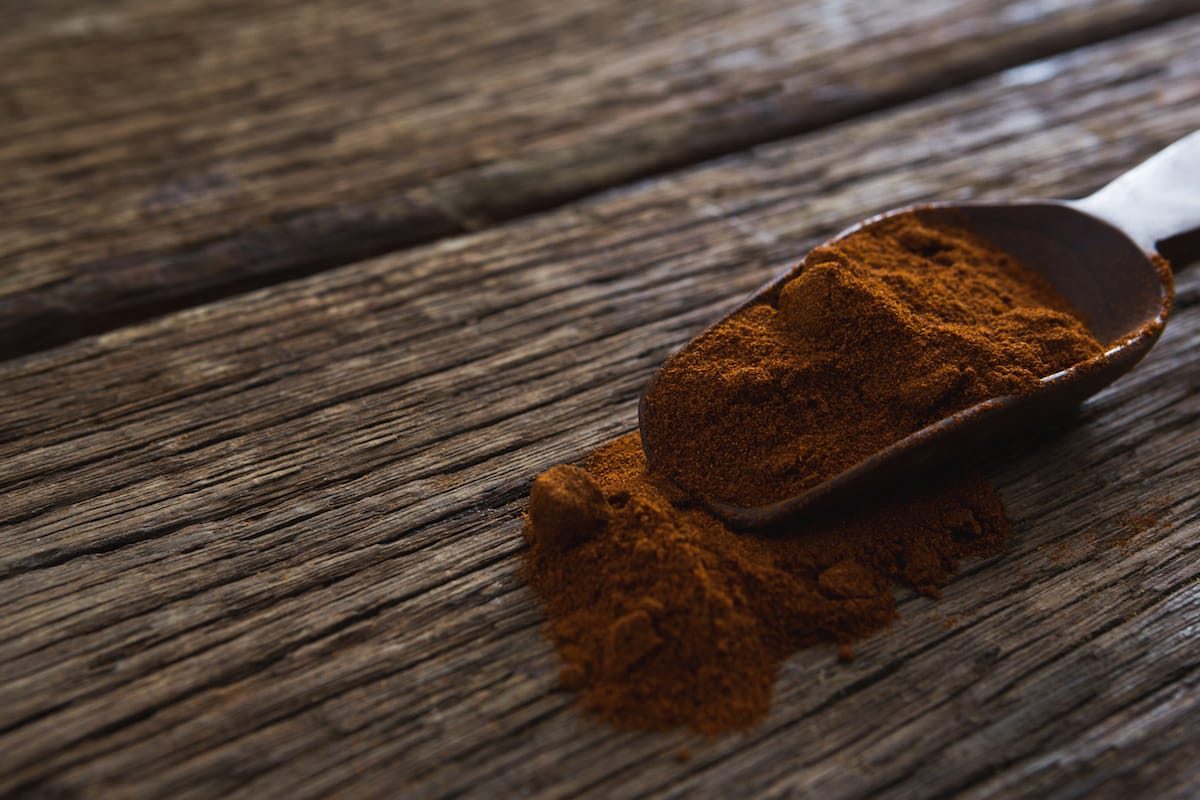
Rasam powder (rasam podi) is a roasted, ground South Indian spice blend used to season rasam, a thin, peppery soup soured with tamarind or tomato. Coriander seed is its bulk, with cumin, black pepper and dried red chiles for warmth and heat, and toor dal (split pigeon peas) roasted in for body; many versions add fenugreek, curry leaves, asafoetida or turmeric. There is no single recipe, so this page sets three published versions side by side, explains what each ingredient brings, and covers how to use and store the blend.
At a glance
| What it is | A roasted, ground South Indian blend used to flavor rasam12 |
| Also called | Rasam podi; close variants include Udipi saru powder, Andhra charu powder and Iyengar rasa podi (Swasthi Shreekanth)1 |
| In every recipe below | Coriander seed, cumin, black pepper, dried red chiles, toor dal312 |
| Often added | Chana dal, fenugreek, curry leaves, asafoetida, turmeric312 |
| Typical amount | About 1 tablespoon per pot of rasam for 4 to 5 servings (Dassana Amit)3 |
Rasam, the dish
Rasam is a thin, soup-like South Indian dish.1 TASTE’s Nikhita Venugopal notes that it goes by different names by state: rasam in Tamil Nadu, saaru in Karnataka and chaaru in Andhra Pradesh.4 Her recipe combines tomatoes, tamarind pulp and the water in which toor dal was boiled, and she notes some versions skip tamarind for another souring agent.4 Rasam is almost always eaten over rice, served as the second or third course of a South Indian meal depending on the state, and almost always served at traditional lunches after Hindu wedding ceremonies.4 A finishing tempering is common: in Smita Chandra’s rasam for Saveur, mustard, cumin and fenugreek seeds, curry leaves and chiles are cooked in oil until the seeds pop and stirred in.5
On the name, Swasthi Shreekanth writes that in Telugu and Tamil “rasam” means liquid essence or juice and “podi” means powder.1 TASTE links rasam to mulligatawny: colonial-era servants turned to rasam, the article says, because Indian cuisine had no soup of its own to offer.4
Rasam’s early history is not well documented. A claim that rasam belongs specifically to the Sourashtra community of Tamil Nadu circulates online; no source for it was found.
What goes in it: three recipes compared
| Ingredient | Dassana Amit, Dassana’s Veg Recipes3 | Swasthi Shreekanth, Swasthi’s Recipes (2022)1 | TarlaDalal.com (no quantities given)2 |
|---|---|---|---|
| Coriander seed | 70 g (1 heaped cup) | 3/4 cup | Yes |
| Toor dal | 60 g (5 tbsp) | 1/4 cup | Yes |
| Chana dal | 30 g (2 tbsp) | 1/4 cup (optional) | No |
| Cumin | 15 g (2 tbsp) | 2 tbsp | Yes |
| Black pepper | 20 g (2 tbsp) | 1 to 2 tsp | Yes |
| Dried red chiles | 20 g (15 to 16 byadagi) | 4 to 6 | Yes |
| Fenugreek seed | No | 1/4 to 1/2 tbsp (optional) | Yes |
| Curry leaves | No | A handful, fresh | Yes |
| Asafoetida (hing) | No | 1/2 tsp | No |
| Turmeric | 1 tsp (optional) | No | Yes |
All three roast the whole ingredients in a dry pan before grinding: Dassana Amit roasts each ingredient separately over low heat in turn, and the TarlaDalal.com method does the same in batches, roasting the curry leaves until crisp.32 The proportions differ more than the ingredient lists. By volume, Dassana’s version uses roughly two to four and a half times as much black pepper relative to coriander as Swasthi’s (computed from the quantities above, with 1 cup as 16 tbsp and 1 tbsp as 3 tsp; her “heaped” cup makes this approximate). Swasthi lists regional variations: a Mysore version with ground mustard seed, a Kerala version with equal toor and chana dal, and a Chettinad version with twice the toor dal.1
Flavor and the compounds behind it
Rasam powder smells toasty and peppery, with coriander’s citrusy sweetness underneath and a nutty depth from the roasted dals. Heat depends on the chiles: Dassana Amit notes that Kashmiri and byadagi chiles won’t make the powder spicy, as they are less hot.3 That flavor description is ours; the compounds belong to the individual spices:
| Ingredient | Key compound | Source |
|---|---|---|
| Coriander seed | Linalool, making up 60–80% of the essential oil | Al-Khayri et al., 20236 |
| Cumin | Cuminaldehyde, 20–72% of the oil in the literature PROSEA summarizes | PROSEA7 |
| Black pepper | Piperine, from which pepper’s characteristic flavor principally derives | Britannica8 |
| Fenugreek | Sotolon, responsible for fenugreek’s characteristic curry aroma | PROSEA9 |
How it is used
The main job is the dish itself. Dassana Amit suggests 1 tablespoon of powder for a rasam serving 4 to 5.3 That is one cook’s starting point, not a standard; strength varies with how much pepper and chile a given blend contains.
Outside rasam, the powder can season dal, roasted vegetables or a dry rub much as other Indian spice blends do; that is common practice rather than a sourced use. For the related lentil-and-vegetable stew blend, see sambar powder.
Buying, making and storing
Rasam powder is sold ready-made, but the TarlaDalal.com page notes that most people prefer to make it at home, in small or large quantities as needed.2
Storage guidance from the recipe writers differs:
- Dassana Amit recommends an airtight glass or steel jar in a cool, dry place, or the refrigerator or freezer, and says her 200 g batch lasts about three months if you make rasam once or twice a week.3
- Swasthi Shreekanth says the powder can be stored for 6 to 12 months without losing freshness and suggests keeping small, well-wrapped packs in the fridge or freezer and opening one at a time.1
Neither is a tested shelf life. The University of California Cooperative Extension identifies air, light, moisture and heat as what speeds flavor and color loss in spices,10 so a sealed, dark, cool container is the general rule. If the powder no longer smells strongly of pepper and roasted coriander, it has faded.
Safety
Asafoetida and gluten. Some rasam powders contain asafoetida, which is usually sold compounded with a filler. India’s food regulator allows compounded asafoetida to contain gum arabic, edible starches or edible cereal flour,11 and Katzer describes the common compounded powder as more than 50% rice flour and gum arabic.12 Anyone avoiding wheat or gluten should check the labels of both the asafoetida and any commercial rasam powder.
Lead in spices. A New York City health department review of 1,496 spice samples found detectable lead in more than half.13 The abstract does not report results for rasam powder specifically.
Health claims. Rasam powder is often credited with lowering blood pressure (through coumarin in asafoetida), aiding digestion and relieving constipation. No regulator summary or systematic review supporting those claims was found. For the turmeric in some versions, NCCIH says there is not enough evidence to conclude that turmeric or curcumin is beneficial for any health purpose.14
Substitutes and comparisons
No tested substitute exists. Sambar powder shares most of the ingredients but is built for a thicker stew; using it in rasam gives a different but recognizable result (Method: start with the same amount and taste). Making a quick version from coriander, cumin, black pepper and dried chiles is the other route. The ingredients: curry leaves, asafoetida, fenugreek, turmeric. More: Indian spices, garam masala, long pepper; and if a rasam ends up too sour, too much tamarind.
Footnotes
-
Swasthi Shreekanth, “Rasam Powder | Rasam Podi Recipe”, Swasthi’s Recipes, 2022. indianhealthyrecipes.com · Publication ↩ ↩2 ↩3 ↩4 ↩5 ↩6 ↩7 ↩8 ↩9
-
“Homemade Rasam Powder”, TarlaDalal.com. tarladalal.com · Publication ↩ ↩2 ↩3 ↩4 ↩5 ↩6
-
Dassana Amit, “Rasam Powder Recipe”, Dassana’s Veg Recipes. vegrecipesofindia.com · Publication ↩ ↩2 ↩3 ↩4 ↩5 ↩6 ↩7 ↩8
-
Nikhita Venugopal, “Rasam Is Southern India’s Peppery Comfort Food”, TASTE, 2017. tastecooking.com · Publication ↩ ↩2 ↩3 ↩4
-
“Smita Chandra’s Rasam (Spicy Tamarind Soup)”, Saveur, 2015. saveur.com · Publication ↩
-
Al-Khayri et al., “Essential Oil from Coriandrum sativum: A Review on Its Phytochemistry and Biological Activity”, Molecules, 2023. mdpi.com · Peer-reviewed ↩
-
P.C.M. Jansen, Cuminum cyminum, Plant Resources of South-East Asia (PROSEA). uses.plantnet-project.org · Reference work ↩
-
“Black pepper”, Encyclopaedia Britannica, 2026. britannica.com · Reference work ↩
-
Trigonella foenum-graecum, Plant Resources of South-East Asia (PROSEA). uses.plantnet-project.org · Reference work ↩
-
Anna Martin, “Add a Little Spice to Your Life! Part II”, University of California Cooperative Extension, San Joaquin County, 2002. ucanr.edu · Reference work ↩
-
FAQ on standards for asafoetida and compounded asafoetida, FSSAI. fssai.gov.in · Regulator ↩
-
Asafetida (Ferula assa-foetida), Gernot Katzer’s Spice Pages. gernot-katzers-spice-pages.com · Reference work ↩
-
Hore et al., “A Spoonful of Lead: A 10-Year Look at Spices as a Potential Source of Lead Exposure”, Journal of Public Health Management and Practice, 2019. scholars.mssm.edu · Peer-reviewed ↩
-
“Turmeric: Usefulness and Safety”, NCCIH, 2025. nccih.nih.gov · Regulator ↩