Seasonings · Profile
Sambar Powder: What Is in It, Where Sambar Comes From, and How to Use It
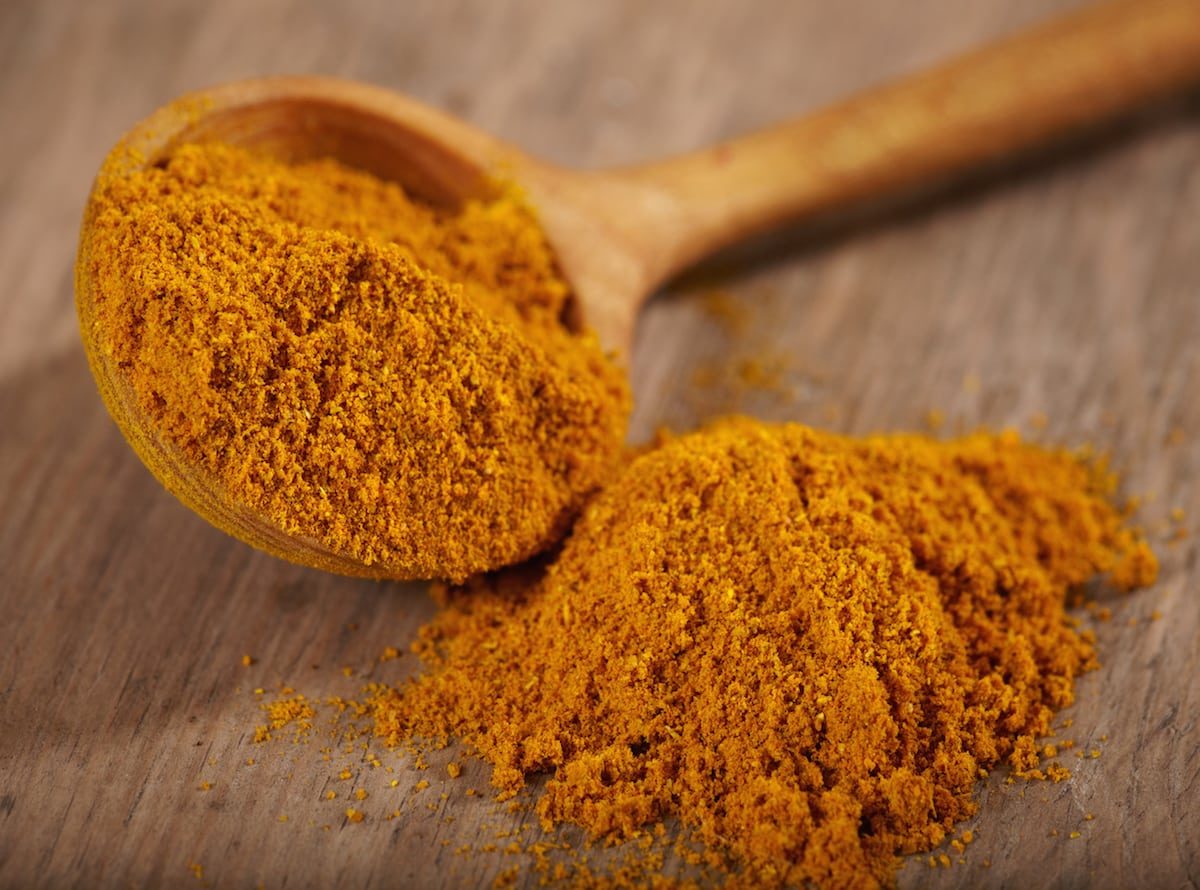
Sambar powder (also called sambar masala or sambar podi) is the ground spice blend that seasons sambar, the lentil and vegetable stew of South India. Saveur describes the blend as essential to sambar, which it calls the ubiquitous split-pea stew of the region.1 What sets it apart from most spice blends is that many recipes roast and grind dried split pulses (dals) along with coriander seed, dried chiles, fenugreek and curry leaves. There is no single recipe: the mix changes by region, community and household.2
At a glance
| What it is | A roasted, ground blend of spices, curry leaves and usually dals; no fixed recipe213 |
| Other names | Sambar masala, sambar podi23 |
| Region | South India; the DNA India report covers Tamil Nadu, Karnataka and Kerala versions of the dish2 |
| Core components in all three recipes below | Coriander seed, dried red chiles, fenugreek seed, curry leaves, asafoetida, chana dal143 |
| Often included | Cumin, urad dal, turmeric, black pepper, mustard seed; one recipe adds sesame, salt and two more dals143 |
| Made how | Ingredients are roasted in a pan until fragrant or browned, cooled, then ground143 |
| Official standard | None found |
| Keeps | Up to 3 months (Saveur); 3 to 4 months (Dassana Amit); Tarla Dalal says to refrigerate143 |
What is in it
Three published recipes show how much sambar powder varies. All three roast the ingredients before grinding.
| Ingredient | Saveur (2014) | Tarla Dalal | Dassana Amit (Veg Recipes of India) |
|---|---|---|---|
| Coriander seeds | 1/4 cup | 4 tbsp | 1/2 cup |
| Dried red chiles | 10 chiles de árbol | 8 Kashmiri chiles | 16 to 18 |
| Fenugreek seeds | 1 1/2 tsp | 1 tsp | 1 1/2 tsp |
| Curry leaves | 22 | 15 to 20 | 1/3 cup |
| Asafoetida | 1 1/2 tsp | 1/4 tsp | 1/2 tbsp |
| Cumin seeds | 1 1/2 tsp | none | 2 tbsp |
| Chana dal | 1/4 cup, plus 1 1/2 cups roasted chana dal | 1 tbsp | 2 tbsp |
| Urad dal | 1/2 cup | 1 tbsp | 1 tbsp (optional) |
| Other dals | 1/3 cup masoor dal | 1 tbsp toor dal | none |
| Turmeric | none | 1 tsp | 1/2 tbsp |
| Black peppercorns | none | none | 1 tbsp |
| Mustard seeds | none | none | 1/2 tbsp |
| Sesame seeds | 1 1/2 tbsp | none | none |
| Salt | 3 tbsp kosher salt | none | none |
| Oil for roasting | 2 tbsp | 1 tsp | none listed |
Sources: Saveur,1 Tarla Dalal,4 Dassana Amit.3
The Saveur version is more than half dal by volume, and it is the only one of the three that is salted, so it seasons as well as spices a pot. Tarla Dalal’s has no cumin or pepper and is the only one with toor dal. Dassana Amit roasts each ingredient separately and lists no oil.3 DNA India notes that in Tamil Nadu alone the podi differs across regions, communities and households, and that it was traditionally sun-dried, roasted and ground at home.2
Flavor and the compounds behind it
Sambar powder smells toasty and savory, with coriander’s sweet-citrus note up front, a nutty depth from the roasted dals, and a sharp, garlicky lift from asafoetida. Heat depends on the chiles and how many are used. That description is ours. The aroma compounds belong to the individual ingredients:
| Ingredient | Key compound or quality | What has been measured | Source |
|---|---|---|---|
| Coriander seed | Linalool | 60–80% of the seed oil (review) | 5 |
| Cumin | Cuminaldehyde | 20–72% of the oil (range in the literature) | 6 |
| Fenugreek | Sotolon | Responsible for fenugreek’s characteristic curry aroma | 7 |
| Turmeric | Curcumin | Gives turmeric its yellow color | 8 |
No published analysis of a sambar powder’s aroma as a whole was found.
Where sambar comes from
The best-known story places sambar in the court of the Maratha rulers of Thanjavur, in today’s Tamil Nadu. DNA India gives it this way: Shahuji Bhonsle, the second Maratha ruler of Thanjavur, who reigned from 1684 to 1712, was hosting Sambhaji, son of Shivaji. Kokum, the souring agent for the Maharashtrian lentil dish amti, was not available, so the cooks used local tamarind; moong dal was also short, and toor dal was used in its place. The result was named sambar in Sambhaji’s honor.2
How much of that is history is disputed:
| Position | Who holds it | Source |
|---|---|---|
| The Thanjavur story is true | Historian Pushpesh Pant, who says manuscripts in Thanjavur’s Saraswati Mahal library prove it | 2 |
| Sambar is not recorded before the Thanjavur Maratha period | Food historian K.T. Achaya, as reported by DNA India | 2 |
| A similar dish existed earlier | DNA India points to a 1648 account of huli, a related Karnataka dish | 2 |
DNA India sums up that reservations about the story are rife.2 Other versions of the legend circulate, including one in which the ruler cooked the dal himself while his chef was away; we found no source for that version.
How sambar powder is used
Its main job is sambar. The dish takes many regional forms, and the DNA India report describes several:2
- Tamil Nadu. The podi itself differs across regions, communities and households.
- Karnataka. Tuluva cooks add white and red pumpkin, drumsticks and okra.
- Kerala. Palghat (Palakkad) Iyers, who migrated to Kerala from Tamil Nadu, are credited with bringing sambar there. Their varutharacha sambar uses a paste of roasted grated coconut ground with fenugreek seeds rather than a dry powder alone.
Technique
The roasting happens when the powder is made, so the ground blend goes into the pot ready to use. America’s Test Kitchen notes that ground spices added straight to a dish can taste bland and musty, and recommends blooming them in fat for anywhere from 30 seconds to several minutes, watching closely because ground spices burn quickly.9
Beyond sambar, Dassana Amit suggests the powder for vegetable stir-fries and sautéed vegetables, and gives 2 to 3 teaspoons as a starting amount for four servings of sambar.3 It can also stand in for curry powder in a vegetable dish, though the dals make it coarser and more savory; that is a cook’s judgment.
Buying and quality
No Codex, ISO or USDA standard for sambar powder was found, so the ingredient list is the only guide. Check whether a blend contains dals (most homemade recipes do), whether it is salted, and how high the chile sits on the list.
Storage
Saveur says to keep its blend in an airtight container for up to 3 months.1 Dassana Amit gives 3 to 4 months in an airtight jar in a cool, dry place, with refrigeration in hot, humid climates.3 Tarla Dalal says to store it refrigerated in an airtight container.4 These are each publisher’s guidance, not measured shelf lives. The University of California Cooperative Extension lists air, light, moisture and heat as the factors that speed the loss of flavor and color in spices.10 If the powder smells flat when rubbed between your fingers, it has faded.
Safety
Asafoetida and gluten. Most sambar powders contain asafoetida, which is usually sold compounded with a filler. India’s food regulator allows compounded asafoetida to contain gum arabic, edible starches or edible cereal flour without naming the cereal,11 and Katzer describes the common compounded powder as more than 50% rice flour and gum arabic.12 Anyone avoiding wheat or gluten should check the label of both the asafoetida and any commercial sambar powder.
Sesame. Some recipes, including Saveur’s, contain sesame seeds,1 which the FDA counts among the nine major food allergens in the US.13
Lead in spices. A New York City health department review of 1,496 spice samples from 41 countries, collected 2008 to 2017, found detectable lead in more than half, and spices bought abroad had higher average levels than those bought in the US.14 The abstract does not report results for sambar powder specifically.
Health claims
No regulator or systematic review we found supports health claims for sambar powder as a blend, and this page makes none. For its best-studied ingredient, the NIH’s National Center for Complementary and Integrative Health says there is not enough evidence to conclude that turmeric or curcumin is beneficial for any health purpose, and it notes that liver damage has been reported in some people taking highly bioavailable curcumin supplements.8 For fenugreek, NCCIH says it may help lower blood sugar in type 2 diabetes, but many of the studies were not of high quality.15 Supplement doses are not the amounts in a pot of sambar. Claims that sambar powder treats skin disease, protects the liver or prevents cancer could not be traced to any credible source.
Substitutes and related pages
For ranked stand-ins, see sambar powder substitutes. The closest blends are Madras curry powder and curry powder; the blends described on those pages contain no dals, so expect a less nutty, less savory result (a cook’s judgment, not a measurement).
The main ingredients: coriander, fenugreek, curry leaves (see also cooking with curry leaves), asafoetida, cumin, turmeric, black pepper and black mustard seeds. The souring agent in the origin story: kokum. If a sambar ends up too sour, see too much tamarind.
Footnotes
-
“Sambar Masala”, Saveur, 2014. saveur.com · Publication ↩ ↩2 ↩3 ↩4 ↩5 ↩6 ↩7 ↩8 ↩9
-
Roshni Nair, “The sambar saga: On the provenance and many variations of a south Indian staple”, DNA India, 2017. dnaindia.com · Publication ↩ ↩2 ↩3 ↩4 ↩5 ↩6 ↩7 ↩8 ↩9 ↩10 ↩11
-
Dassana Amit, “Sambar Powder Recipe (Homemade Sambar Masala)”, Dassana’s Veg Recipes, 2026. vegrecipesofindia.com · Publication ↩ ↩2 ↩3 ↩4 ↩5 ↩6 ↩7 ↩8 ↩9 ↩10
-
Tarla Dalal, “Sambhar Masala Powder”, TarlaDalal.com. tarladalal.com · Publication ↩ ↩2 ↩3 ↩4 ↩5 ↩6
-
Al-Khayri et al., “Essential Oil from Coriandrum sativum: A Review”, Molecules, 2023. mdpi.com · Peer-reviewed ↩
-
P.C.M. Jansen, Cuminum cyminum, Plant Resources of South-East Asia (PROSEA). uses.plantnet-project.org · Reference work ↩
-
C.S. Tawan and N. Wulijarni-Soetjipto, Trigonella foenum-graecum, Plant Resources of South-East Asia (PROSEA). uses.plantnet-project.org · Reference work ↩
-
“Turmeric: Usefulness and Safety”, National Center for Complementary and Integrative Health, 2025. nccih.nih.gov · Regulator ↩ ↩2
-
“How to Bloom Spices”, America’s Test Kitchen, 2023. americastestkitchen.com · Publication ↩
-
Anna Martin, “Add a Little Spice to Your Life! Part II”, University of California Cooperative Extension, San Joaquin County, 2002. ucanr.edu · Reference work ↩
-
“FAQ: standards for asafoetida and compounded asafoetida”, Food Safety and Standards Authority of India. fssai.gov.in · Regulator ↩
-
Gernot Katzer, “Asafetida (Ferula assa-foetida)”, Gernot Katzer’s Spice Pages. gernot-katzers-spice-pages.com · Reference work ↩
-
“Food Allergies”, U.S. Food and Drug Administration. fda.gov · Regulator ↩
-
Hore et al., “A Spoonful of Lead: A 10-Year Look at Spices as a Potential Source of Lead Exposure”, Journal of Public Health Management and Practice, 2019. scholars.mssm.edu · Peer-reviewed ↩
-
“Fenugreek”, National Center for Complementary and Integrative Health, 2025. nccih.nih.gov · Regulator ↩