Cooking · Uses
Smoked Sea Salt Uses: Finishing, Rubs, Popcorn, Cocktails and Jerky
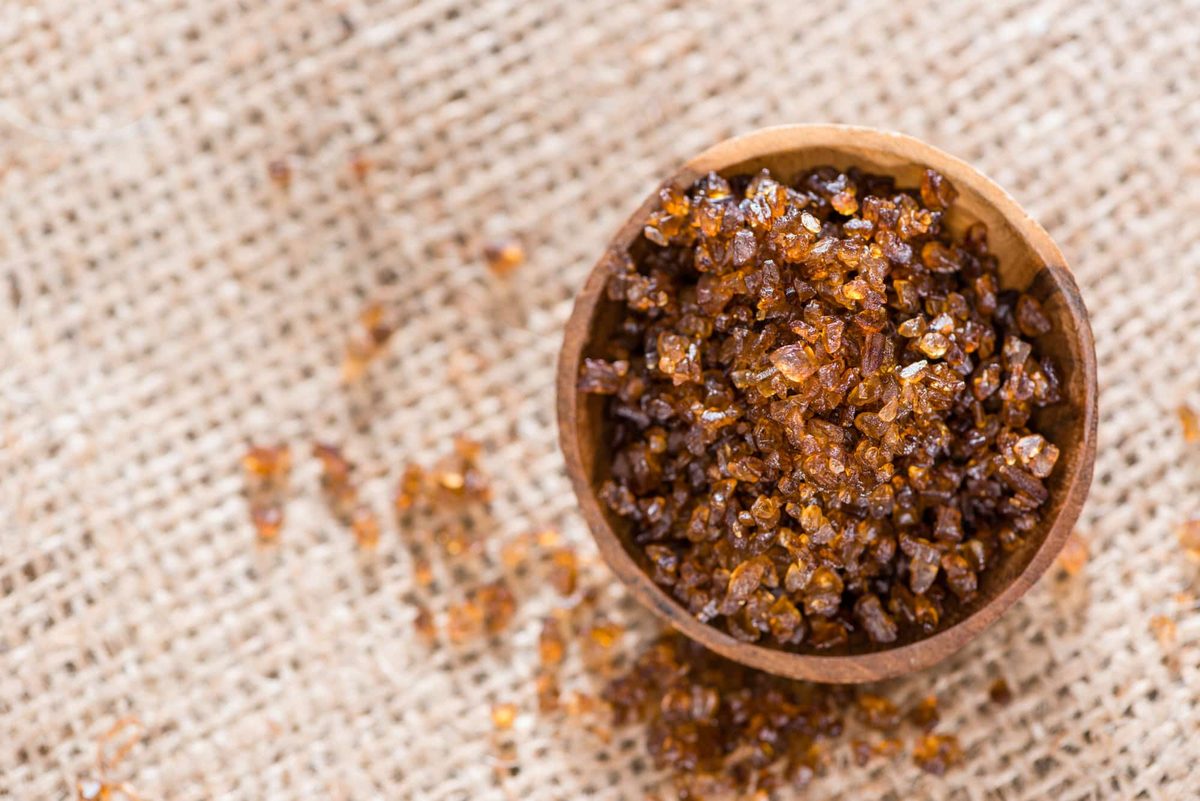
Smoked sea salt is salt that tastes of wood smoke, and it comes two ways. Some is smoked over wood: Maldon sells oak-smoked flakes, and SaltWorks says its smoked salts are cold-smoked with untreated wood and no artificial flavors.12 Other “smoke salts” are salt mixed with smoke flavor, which the ingredient list will show.34 Either way it is still salt, so the best uses are the ones where you want salt and smoke at the same moment, and where the smoke aroma stays on top of the food rather than cooking away.
Quick guide
| Use | How | Basis |
|---|---|---|
| Finishing grilled or roasted food, eggs, tomatoes, melon | Sprinkle just before serving | Maldon; SaltWorks12 |
| Dry rubs for meat and fish | Use it as the rub’s salt | The Spice House; SaltWorks32 |
| Popcorn and sweets | Over buttered popcorn, caramel, toffee | SaltWorks; Maldon21 |
| In place of bacon in vegetarian dishes | On deviled eggs, salads, vinaigrettes | SaltWorks2 |
| Cocktail rims | Bloody Mary, margaritas | SaltWorks2 |
| Jerky | In the marinade or rub; follow USDA heating steps | USDA FSIS5 |
| Make your own | Smoke coarse salt on a covered grill | Sean Sherman6 |
SaltWorks’ general advice applies to all of these: start light and taste, and remember that it is still salt.2
1. As a finishing salt
Maldon suggests its smoked flakes for barbecue, grilled vegetables, sauces and even desserts.1 SaltWorks suggests it on a ripe sliced tomato, over sweet melon, on buttered corn on the cob, in scrambled eggs and over creamy pasta or macaroni and cheese.2 Saveur described a red alder smoked salt as a way to add a touch of barbecue flavor to meat, chicken or salmon.7
A darker smoked salt also shows up well against pale food. That and the advice to add it at the end, so the smoke aroma is fresh when the dish reaches the table, are kitchen judgment rather than tested findings.
2. In dry rubs
In a rub, smoked salt does two jobs in one: it salts and it adds smoke. The Spice House suggests its hickory smoke salt for meat rubs, sausage seasoning, cured meats and baked beans.3 SaltWorks suggests rolling ahi tuna or salmon in a smoked-salt rub before pan searing or plank roasting, adding it to the spice mix for burger patties, and using it on roast chicken, steak or ribs.2
It pairs well with strong spices such as black pepper, garlic, paprika and chile (kitchen judgment). With real smoke or liquid smoke in the recipe already, it adds more of the same.
A common claim says smoke supplies umami to meat. Britannica names three substances behind umami: glutamate, guanylate and inosinate.8 We found no source showing that smoke or smoked salt adds any of them, so this page doesn’t make that claim.
Whatever the rub, cook to the federal safe minimum internal temperatures: 145°F with a 3-minute rest for beef and pork steaks, roasts and chops; 160°F for ground meat such as burger patties; 165°F for all poultry; 145°F for fin fish.9
3. On popcorn and sweets
SaltWorks suggests grinding smoked salt over hot buttered popcorn or homemade toffee fudge, and adding it to salted caramel ice cream.2 Maldon also suggests its smoked flakes for desserts.1 Smoke works with caramel, chocolate and butter (kitchen judgment).
For popcorn, fine smoked salt clings better than large flakes; if yours is flaky, crush it first. This is common practice rather than a tested claim.
4. In vegetarian and vegan dishes
SaltWorks pitches smoked salt to vegetarians as a way to get some of the punch and crunch of bacon, and suggests it on deviled eggs, salads and homemade vinaigrettes.2 It is also a quick way to give a smoky note to potato salad, beans, roasted mushrooms or a tofu scramble (kitchen judgment). For a vegan version, skip the deviled eggs.
5. On cocktail rims
SaltWorks calls smoked salt a near-perfect match for the Bloody Mary and for a mezcal margarita or any margarita.2 Rim the glass as you would with plain salt: moisten the rim with a lime or lemon wedge and dip it in the salt. A fine or crushed salt sticks more evenly than big flakes (kitchen judgment).
6. In homemade jerky
Smoked salt is an easy way to give dehydrator jerky a smoky taste. USDA notes that jerky may be smoked or unsmoked, air dried or oven dried,5 so the smoke is a matter of taste. Add the smoked salt to the marinade or rub in place of some or all of the plain salt (Method; no published ratio).
The safety steps matter more than the seasoning. USDA’s Food Safety and Inspection Service advises:5
- Marinate meat in the refrigerator.
- Heat meat to 160°F and poultry to 165°F, measured with a food thermometer, before dehydrating.
- Use a dehydrator that holds at least 130°F to 140°F throughout drying.
A widely repeated claim says smoked salt is better than liquid smoke for jerky because liquid smoke adds moisture. We found no source for it. Either works for flavor; neither replaces the heating step.
7. Making your own
Attributed: In The Sioux Chef’s Indigenous Kitchen, Sean Sherman smokes 2 cups of coarse salt for 1 hour, with the vents adjusted for medium heat.6 He does not name a wood, and the excerpt we could read ends partway through the method. Oven methods with wood chips on a sheet pan circulate widely; we found no tested version. For more options, see smoked sea salt substitutes.
Safety
Smoke contaminants. Smoking produces polycyclic aromatic hydrocarbons (PAHs). Austria’s food safety agency, AGES, checked 22 smoked salts from across the country and found all of them in compliance with food law on composition and PAH content.10 It did not publish the measured values on the summary page we read.
Smoke flavorings. EU law defines smoke flavorings as made from condensed smoke.11 In April 2024, EU member states endorsed not renewing the authorization of eight smoke flavorings after EFSA found genotoxicity concerns that were either confirmed or could not be ruled out; they are being phased out over transition periods of up to five years.12 That concerns the flavorings themselves; we found no regulator statement on smoke-flavored salt, and the US position was not researched.
Sodium. Smoked salt is ordinary salt for sodium purposes: most sea salts are about 40% sodium.13 The World Health Organization recommends adults stay below 2,000 mg of sodium a day.14
What isn’t known
- No published ratio for smoked salt in rubs, jerky marinades or popcorn; amounts here are Method.
- No source compares how long the smoke aroma lasts in cooking versus finishing.
- The US regulatory status of smoke flavorings was not researched for this page.
Related
- Smoked sea salt, the full profile, and smoked sea salt substitutes
- Smoked paprika and chipotle powder, two other wood-smoked seasonings
- Cooking with sea salt, Maldon sea salt and black lava salt uses
- Best spices for steak
- Too much salt? How to fix the dish
Footnotes
-
Smoked Sea Salt Flakes, product page, Maldon Salt. maldonsalt.com · Merchant ↩ ↩2 ↩3 ↩4 ↩5
-
How to Use Smoked Salt, SaltWorks. seasalt.com · Merchant ↩ ↩2 ↩3 ↩4 ↩5 ↩6 ↩7 ↩8 ↩9 ↩10 ↩11 ↩12
-
Hickory Smoke Salt, product page, The Spice House. thespicehouse.com · Merchant ↩ ↩2 ↩3
-
Old Hickory Smoked Salt, product page, Spice Islands. spiceislands.com · Merchant ↩
-
Jerky and Food Safety, USDA Food Safety and Inspection Service, 2016. fsis.usda.gov · Regulator ↩ ↩2 ↩3
-
Sean Sherman, Smoked Salt, The Sioux Chef’s Indigenous Kitchen, 2017, via ckbk. app.ckbk.com · Publication ↩ ↩2
-
Exotic Sea Salts, Saveur, 2008. saveur.com · Publication ↩
-
Umami, Encyclopaedia Britannica. britannica.com · Reference work ↩
-
Cook to a Safe Minimum Internal Temperature, FoodSafety.gov. foodsafety.gov · Regulator ↩
-
PAHs in smoked salt, Final Report of Priority Action A-004-17, AGES, 2022. ages.at · Regulator ↩
-
Regulation (EC) No 2065/2003 on smoke flavourings, EUR-Lex. eur-lex.europa.eu · Regulator ↩
-
Member States endorse withdrawal of smoke flavourings from EU market, European Commission, 2024. ec.europa.eu · Regulator ↩
-
Sodium Sources: Where Does All That Sodium Come From?, American Heart Association, 2025. heart.org · Reference work ↩
-
Sodium reduction, World Health Organization fact sheet, 2026. who.int · Regulator ↩