Spice Substitutes · Substitutes
Smoked Sea Salt Substitutes: Plain Salt Plus a Smoke Source
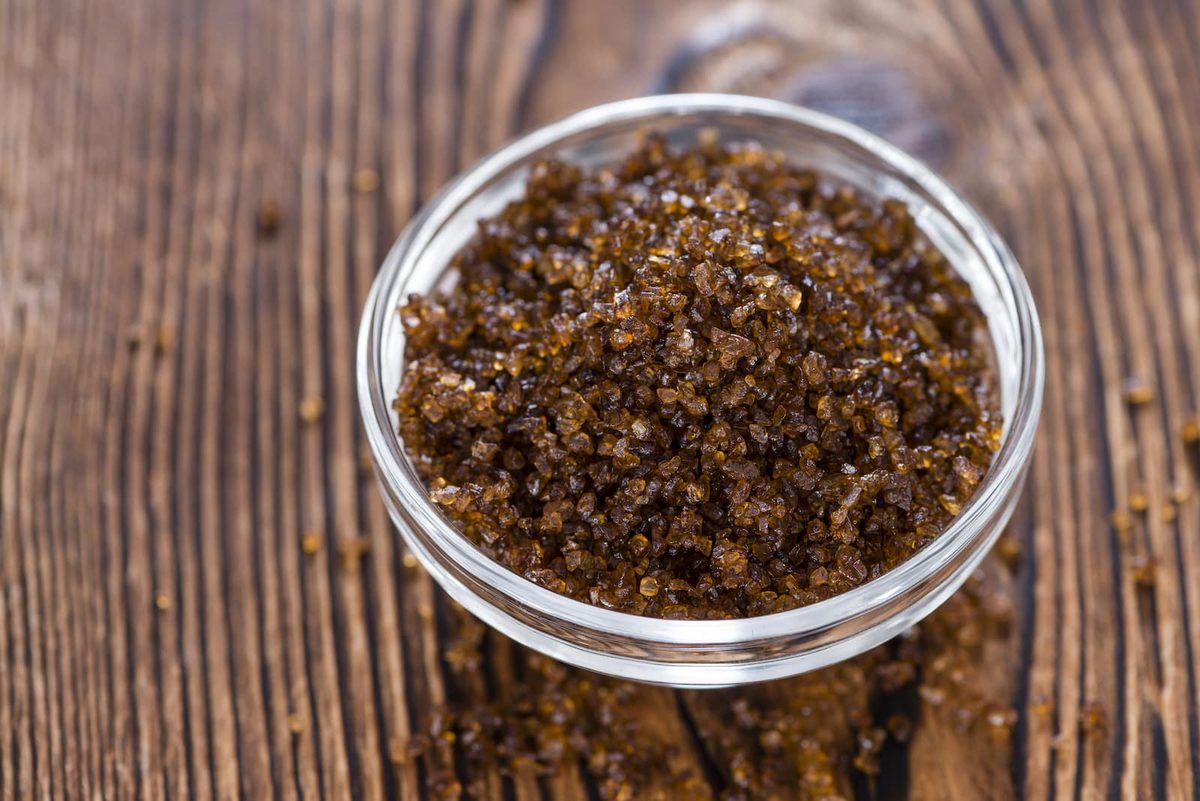
Smoked sea salt does two jobs: it salts, and it adds wood smoke. The salt part is easy to replace. America’s Test Kitchen notes that salt in its most basic form is the same sodium chloride,1 and the American Heart Association says table salt, kosher salt and most sea salts contain about 40 percent sodium.2 The smoke is what you need to find elsewhere.
Smoked salt itself comes two ways. Some is smoked over wood: Maldon sells oak-smoked flakes.3 Some is salt mixed with smoke flavor: The Spice House’s hickory smoke salt lists salt, smoke flavor and silicon dioxide,4 and Spice Islands’ Old Hickory Smoked Salt lists salt, cocoa, natural smoke flavor and propylene glycol.5 Both kinds point to the substitutes below: salt plus a separate source of smoke.
Quick answer
| What the smoked salt is doing | Best substitute | Starting amount | Treatment |
|---|---|---|---|
| Finishing grilled meat, eggs, potatoes or vegetables | Flaky or coarse salt plus a pinch of smoked paprika | Same weight of salt; paprika to taste | Computed (salt), Method (paprika) |
| In a dry rub | Salt plus smoked paprika or chipotle powder | Same weight of salt; start with 1/4 part smoke spice | Computed (salt), Method (spice) |
| In beans, sauces, brines or marinades | Salt plus liquid smoke | Same weight of salt; a drop or two of liquid smoke | Computed (salt), Method (smoke) |
| You have a smoker or covered grill | Smoke your own salt | 2 cups coarse salt, smoked 1 hour | Attributed |
| On caramel, chocolate or other sweets | Plain flaky salt | Same weight | Computed |
How the ratios on this page are labeled
Every ratio carries one of four labels.
- Computed: based on a measurable physical relationship, with the source named.
- Attributed: a named source publishes this ratio. We quote it as theirs.
- Disputed: named sources give different answers to the same swap. We show each one and do not average them.
- Method: we found no published ratio. We give a direction and a cautious starting point, and say so.
The salt side of every swap is Computed: salts are the same compound at about the same sodium share. We found no published figure for how much smoke flavor any smoked salt carries, so every smoke amount is Method.
Measuring the salt
Ratio (Computed): If the recipe gives the smoked salt in grams, use the same weight of any plain salt. Gram for gram, table, kosher and most sea salts carry about the same sodium.2
By volume, crystal size matters more than the type of salt. America’s Test Kitchen weighed a teaspoon of table salt at about 6 grams and a teaspoon of Diamond Crystal kosher salt at 2.8 grams.6 Smoked salts are sold both as flakes and as fine grains.34 We found no published weight per teaspoon for flaky smoked salt, so if you are replacing flakes with fine table salt by the spoon, start with about half the amount and taste (Method).
If it is finishing a dish
Salt plus smoked paprika
Spanish smoked paprika gets its smoke from wood, not flavoring. The Pimentón de la Vera specification describes drying sheds whose lower floor holds a holm oak or oak wood fire,78 and the region’s damp climate does not allow sun drying.8 That makes it the closest pantry spice to a wood-smoked salt. It also brings sweet pepper flavor and red color, which salt does not.
Ratio (Method): No published ratio. Salt the dish as usual with a flaky or coarse salt, then add a small pinch of smoked paprika and taste. Pimentón de la Vera comes sweet, bittersweet and hot,7 so check which one you have before using it on eggs or vegetables.
If it is in a dry rub
Salt plus smoked paprika or chipotle
In a rub, the paprika’s color and flavor are usually welcome. Chipotle is another wood-smoked option: Mick Vann describes chipotles as dried for several days or longer with low heat and wood smoke.9 It adds real heat, so use less.
Ratio (Method): Keep the rub’s salt the same by weight (Computed, above). For the smoke, start with smoked paprika at about a quarter of the salt’s volume, or half that for chipotle powder, and adjust after a test on a small piece. No source gives these figures.
If it is in beans, sauces, brines or marinades
Salt plus liquid smoke
Liquid smoke is the same idea as a smoke-flavored salt, minus the salt. In EU law, smoke flavorings are made from condensed smoke, and the primary smoke condensate is the purified water-based part of it.10 In April 2024, EU member states endorsed withdrawing eight smoke flavorings from the EU market after the European Food Safety Authority found that genotoxicity concerns were either confirmed or could not be ruled out.11 That decision applies in the EU; we did not research the US status of liquid smoke for this page.
Because it is a liquid, it suits wet dishes. It also lets you set the salt and the smoke separately, which smoked salt cannot.
Ratio (Method): No published ratio. Add the salt as you would have added smoked salt, then add liquid smoke a drop or two at a time, stirring and tasting. Its strength varies by brand.
If you have a smoker or covered grill
Smoke your own
Method (Attributed): In The Sioux Chef’s Indigenous Kitchen, Sean Sherman smokes 2 cups of coarse salt for 1 hour over medium heat, using 2 cups of wood chips soaked in cold water for an hour and drained.12 He does not name a wood. The excerpt we could read ends partway through the method, so we cannot report his remaining steps.
Oven methods that put wood chips on a baking sheet circulate widely. We found no tested source for them and do not give one here.
If it is on caramel, chocolate or other sweets
Smoked paprika and liquid smoke both bring flavors you may not want in a dessert. Maldon suggests its smoked flakes even for desserts,3 but without them, plain flaky salt gives the crunch and salt and leaves out only the smoke.
Ratio (Computed): Same weight of salt.2
Black salt (kala namak) is not a smoke substitute
Black salt is sometimes suggested here. It does not taste of smoke. Its characteristic flavor comes from hydrogen sulfide: Germany’s Federal Institute for Risk Assessment (BfR) reported levels around 200 mg per kg, and Switzerland’s food safety office attributes the salt’s sulfuric taste to a high hydrogen sulfide content.1314 The BfR says an unknown amount escapes as gas during cooking.13 We found no source that describes its flavor as smoky. Use it where an eggy, sulfurous note is wanted, not as smoked salt.
What isn’t known
- No producer publishes how much smoke flavor its smoked salt carries, so no smoke amount on this page is a measured equivalence.
- We found no published weight per teaspoon for flaky smoked salt.
- We found no tested oven method for making smoked salt at home.
- The US regulatory status of liquid smoke was not researched for this page.
Related
- Smoked sea salt and smoked sea salt uses
- Smoked paprika, smoked paprika substitutes, paprika, chipotle powder
- Sea salt, sea salt substitutes, Maldon sea salt, Maldon salt substitutes, fleur de sel, kosher salt
- Black salt, black lava salt, truffle salt
- BBQ spices, too much salt
Footnotes
-
Salt Types and Measurements, America’s Test Kitchen. americastestkitchen.com · Publication ↩
-
Sodium Sources: Where Does All That Sodium Come From?, American Heart Association, 2025. heart.org · Reference work ↩ ↩2 ↩3
-
Smoked Sea Salt Flakes, product page, Maldon Salt. maldonsalt.com · Merchant ↩ ↩2 ↩3
-
Hickory Smoke Salt, product page, The Spice House. thespicehouse.com · Merchant ↩ ↩2
-
Old Hickory Smoked Salt, product page, Spice Islands. spiceislands.com · Merchant ↩
-
Kate Shannon Levine, The Best Kosher Salt, America’s Test Kitchen, 2019. americastestkitchen.com · Publication ↩
-
Pimentón de la Vera PDO product specification, Consejo Regulador. assets.publishing.service.gov.uk · Regulator ↩ ↩2
-
Pimentón de la Vera PDO, Foods & Wines from Spain (ICEX). foodswinesfromspain.com · Regulator ↩ ↩2
-
Mick Vann, “Chipotle Chiles”, The Austin Chronicle, 2012. austinchronicle.com · Publication ↩
-
Regulation (EC) No 2065/2003 on smoke flavourings, EUR-Lex. eur-lex.europa.eu · Regulator ↩
-
Member States endorse withdrawal of smoke flavourings from EU market, European Commission, 2024. ec.europa.eu · Regulator ↩
-
Sean Sherman, Smoked Salt, The Sioux Chef’s Indigenous Kitchen, 2017, via ckbk. app.ckbk.com · Publication ↩
-
Vorkommen von Schwefelwasserstoff in “Schwarzsalz”, BfR, 2003. bfr.bund.de · Regulator ↩ ↩2
-
Infanger and Haldimann, Report on the composition of prevalent salt varieties, FSVO, 2016. warwick.ac.uk · Regulator ↩