Spices · Profile
Chipotle Powder: Smoked Jalapeño, How It Is Made, Its Heat and Uses
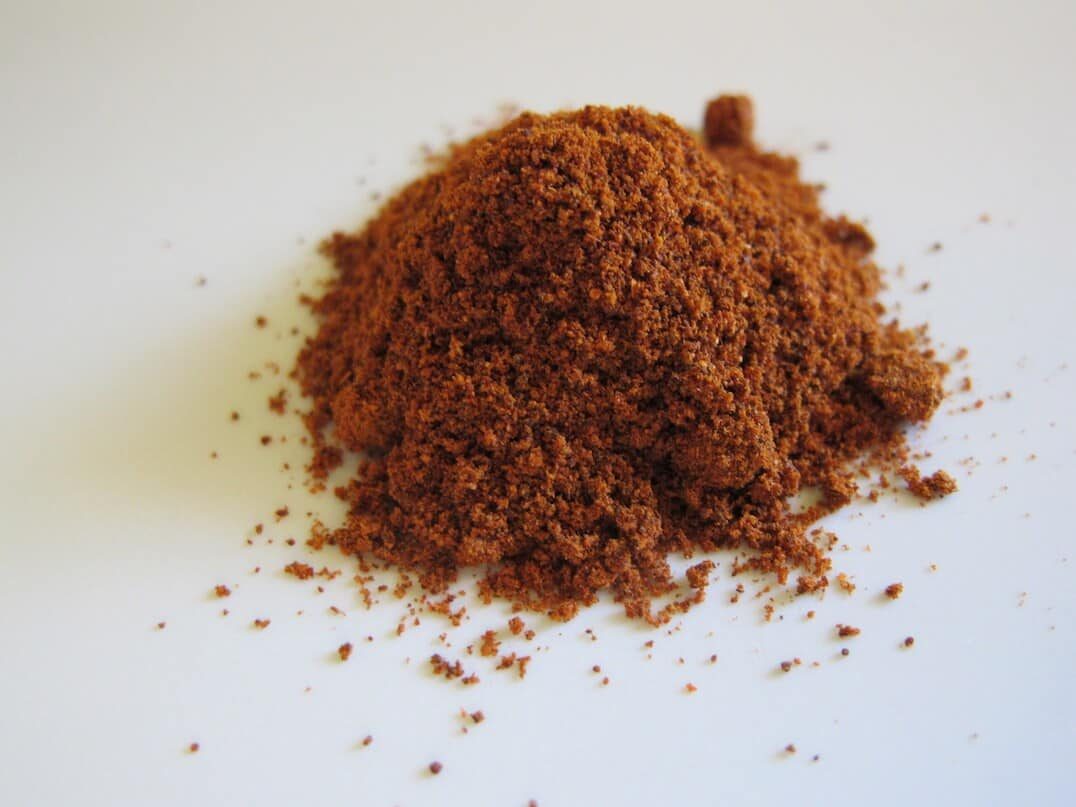
Chipotle powder is ground chipotle chile, and a chipotle is a ripe jalapeño that has been dried over wood smoke.12 The Spanish name comes from the Nahuatl chilpoctli, “smoked chile.”3 The result is smoky, a little sweet and moderately hot. This page covers how chipotles are made, the two main kinds, how hot the powder is (the figures depend on who measured what), and how cooks use it.
At a glance
| What it is | Ground smoke-dried jalapeño12 |
| Botanical name | Capsicum annuum; Katzer covers jalapeños and chipotles in his C. annuum entry1 |
| Plant family | Solanaceae (nightshade family)4 |
| Domesticated | Mexico; the evidence points to central-east Mexico5 |
| Name | From Nahuatl chilpoctli, “smoked chile”3 |
| Main kinds | Morita (most chipotles sold in the US) and meco2 |
| Grown and smoked in | Veracruz, Oaxaca, Sinaloa and Chihuahua, among others2 |
| Heat | Moderate; bylined figures differ, 5,000–10,000 SHU and 2,500–8,000 SHU (see table)26 |
| Forms sold | Whole dried pods, ground powder, and canned chipotles in adobo1 |
Measured values
6 figures, sourced| Measure | Value | Scope | Source |
|---|---|---|---|
| Pungency (Scoville) Conventional range | 5,000–10,000 SHU | chipotle in general, Mick Vann, The Austin Chronicle, 2012; no samples or method statedA journalist's general figure, not a measurement of a stated lot; sources differ | austinchronicle.com |
| Pungency (Scoville) Conventional range | 2,500–8,000 SHU | chipotle in general, conventional range as published by PepperScale, the same range as fresh jalapeño; no samples or method statedSources differ; overlaps Vann's 5,000–10,000 but does not match; not averaged | pepperscale.com |
| Pungency (Scoville), minimum Limit | 900 SHU or more | anything sold as dried chilli pepper under Codex CXS 353-2022 | fao.org |
| Ochratoxin A, maximum Limit | 20 µg/kg | EU, dried Capsicum fruits, whole or ground | eur-lex.europa.eu |
| Aflatoxin B1, maximum Limit | 5.0 µg/kg | EU, dried Capsicum fruits | eur-lex.europa.eu |
| Total aflatoxins, maximum Limit | 10.0 µg/kg | EU, dried Capsicum fruits | eur-lex.europa.eu |
Each figure is quoted as its source states it, with the samples or standard it applies to. Where sources differ, both are shown; nothing is averaged. All measured values
What a chipotle is
The Real Academia Española defines chipotle, as used in Mexico, as a brick-red hot chile that is used smoke-dried.3 Gernot Katzer notes that the term could in principle mean any smoked chile but has come to mean smoked jalapeños almost exclusively.1 Mexico’s agriculture ministry groups chipotle and morita among the dried chiles that are smoked as well as dried.7
How they are made. The three sources checked agree on the method and differ on the details:
| Detail | Gernot Katzer1 | Mick Vann, The Austin Chronicle2 | PepperScale6 |
|---|---|---|---|
| Starting chile | Ripe red jalapeños | A large jalapeño, ripened red | Jalapeños left to ripen red on the vine |
| Smoking time | Slowly, for up to two days | Several days or longer, with low heat and wood smoke | For days, in an enclosed smoking chamber |
| Wood | Commonly pecan or hickory; some prefer mesquite | Not named | Not named |
| Shortcuts | Not mentioned | Some producers use large gas driers and spray the chiles with liquid smoke | Not mentioned |
Vann gives a yield of about 10 pounds of fresh red chile for 1 pound of dried chipotle,2 and PepperScale gives the same ten to one.6 No source checked for this page says smoking removes all of the moisture.
Morita and meco. Vann describes morita, Spanish for “small mulberry,” as grown primarily in Chihuahua State, and says most chipotles eaten in the US are moritas.2 Vann calls meco the chipotle most Mexicans prefer.2 PepperScale places meco in southern Mexico and describes the difference: morita is smoked for less time and tastes slightly sweet and fruity with a hint of smoke, while the grayish meco is smoked longer for an earthier, more intense smoke.6 Naming is not uniform: Mexico’s agriculture ministry lists chipotle and morita as two smoked chiles,7 while Vann treats morita as a kind of chipotle.2
Origin. The species Capsicum annuum is native from the southern United States to Brazil and the Caribbean,8 and four lines of evidence point to its domestication in central-east Mexico.5 When smoking jalapeños began is not documented in any source checked here, and claims about chipotle’s popularity with the Aztecs could not be traced.
Flavor
Katzer describes finished chipotles as combining good paprika aroma, significant heat and intense smoke flavor.1 Vann notes subtle tobacco and chocolate flavors.2 PepperScale calls the flavor earthy, sweet and slightly spicy.6 In a sauce, the powder brings smoke first and heat that builds; that description is editorial.
How hot is chipotle?
| Scope | Heat | Source |
|---|---|---|
| Chipotle in general (no samples or method stated) | Usually 5,000–10,000 SHU | Mick Vann, The Austin Chronicle, 20122 |
| Chipotle in general, the same range as fresh jalapeño, toward its upper end (no method stated) | 2,500–8,000 SHU | PepperScale6 |
| Chipotle powder, as widely repeated | 3,000–10,000 SHU | No traceable source found |
| Anything sold as dried chilli pepper under the international standard | 900 SHU or more | Codex CXS 353-20224 |
| Fresh jalapeños, 10 peppers from each of 10 suppliers, analyzed one by one | No SHU figures in the abstract; heat was very skewed and varied widely within a supplier | Sweat et al., Food Chemistry, 20169 |
How to read this:
- Vann’s 5,000–10,000 is a journalist’s general figure, not a measurement of a stated lot. PepperScale’s 2,500–8,000 is likewise a general figure, borrowed from the fresh jalapeño’s range; the two overlap but do not match, and are not averaged here.
- The 3,000–10,000 range is untraceable, not wrong. It may well be close; nobody we could find shows where it came from.
- The Codex figure is a category boundary, the line between hot paprika and chilli pepper, not a measurement of chipotle.4
- The 2016 study shows why single figures mislead. In 100 fresh jalapeños from ten suppliers, the variation within one supplier was very high, and the variation between suppliers was relatively low.9 It measured fresh fruit, not chipotle powder.
- NMSU notes that HPLC is the most accurate way to measure chile heat; Scoville taste tests are subjective.10
In our judgment, start with ¼ teaspoon of chipotle powder in a dish for four and add more after tasting.
How it is used
Mexican sauces and moles. Katzer writes that mole-type recipes commonly combine mild chiles such as ancho, mulato and pasilla with less aromatic, more pungent ones “like the de arbol or the smoky chipotle.”1 El Universal lists chipotle among the chiles in mole poblano.11 See mole powder.
Chipotles in adobo. Katzer describes chipotles en adobo as whole chipotles stewed in a thin, well-seasoned tomato sauce.1 The dry blend sold as adobo seasoning is a different product.
Everyday uses. As kitchen practice rather than sourced findings, cooks use the powder in:
- Barbecue sauces, dry rubs and marinades for pork, chicken and beef.
- Chili, beans and stews; see best spices for chili.
- Salsas, mayonnaise and sour cream dips, where a pinch adds smoke without liquid.
- Roasted vegetables and sweet potatoes.
PepperScale adds smoky barbecue sauces, Tex-Mex dishes and popcorn tossed with a dash of oil and the powder.6 Among the partners it names are tomatoes, garlic, cumin, honey, chocolate, lime, onions, cilantro, beans, avocado, corn and cheeses such as queso fresco or cheddar.6
Technique. Like other ground chiles, chipotle powder scorches easily. Warm it briefly in oil over moderate heat, or add it with liquid. Kitchen practice, not a sourced finding.
Buying and quality
- Check the label. Pure chipotle powder lists only chipotle chile. A jar that adds salt, garlic or sugar is a seasoning blend.
- Smoking method. Vann reports that some producers dry chiles in large gas driers and spray them with liquid smoke instead of smoking them over wood.2 No label checked for this page states the method.
- Aroma. Good chipotle powder smells clearly of smoke and dried fruit; dull, dusty powder has lost aroma. Kitchen judgment.
Storage
Keep the powder airtight, dark and cool. No shelf-life figure from a regulator or standards body was found for chipotle powder. When the smoky smell has faded, replace it.
Nutrition and health
No nutrient analysis of chipotle or chipotle powder was checked for this page, so no vitamin or mineral figures are given. In the small amounts used in cooking, a chile powder supplies little of anything; see ancho powder and pasilla powder for USDA figures on related dried chiles.
Capsaicin. The strongest human evidence concerns a prescription skin patch, not chile in food. A 2017 Cochrane systematic review found moderate-quality evidence that a high-concentration (8%) capsaicin patch gave moderate pain relief to a minority of people with postherpetic neuralgia.12 Claims that chipotle prevents cancer, lowers blood pressure or cholesterol, manages diabetes or aids weight loss were not supported by any source reviewed for this page. No claim is made here that chipotle treats or prevents any disease.
Safety
- Mycotoxins (EU). EU law caps ochratoxin A at 20 µg/kg in dried Capsicum fruits, whole or ground, and sets 5.0 µg/kg for aflatoxin B1 and 10.0 µg/kg for total aflatoxins.13
- Handling. Wash hands after handling chile powder and keep it away from eyes. Common-sense guidance, not a sourced finding.
Substitutes and comparisons
- Chipotle powder substitutes
- Smoky alternatives: smoked paprika (and smoked paprika substitutes)
- The fresh chile, dried without smoke: jalapeño powder
- Other Mexican chile powders: ancho powder, pasilla powder, guajillo powder, chile de árbol powder
- Related: chili powder, paprika, cayenne pepper
Footnotes
-
Gernot Katzer, Paprika and Mexican chiles (Capsicum annuum), Gernot Katzer’s Spice Pages. gernot-katzers-spice-pages.com · Reference work ↩ ↩2 ↩3 ↩4 ↩5 ↩6 ↩7 ↩8 ↩9
-
Mick Vann, Chipotle Chiles, The Austin Chronicle, 2012. austinchronicle.com · Publication ↩ ↩2 ↩3 ↩4 ↩5 ↩6 ↩7 ↩8 ↩9 ↩10 ↩11 ↩12 ↩13
-
chipotle, Diccionario de la lengua española, Real Academia Española. dle.rae.es · Reference work ↩ ↩2 ↩3
-
Standard for Dried or Dehydrated Chilli Pepper and Paprika, CXS 353-2022, Codex Alimentarius. fao.org · Standard ↩ ↩2 ↩3
-
Kraft et al., Multiple lines of evidence for the origin of domesticated chili pepper, PNAS, 2014. escholarship.org · Peer-reviewed ↩ ↩2
-
Matt Bray, Chipotle Pepper: Heat, Flavor, Ingredient Pairings, PepperScale. pepperscale.com · Publication · PepperScale is also owned by Matt Bray, the editor of this site. ↩ ↩2 ↩3 ↩4 ↩5 ↩6 ↩7 ↩8
-
Chile seco, Secretaría de Agricultura y Desarrollo Rural, Government of Mexico. gob.mx · Regulator ↩ ↩2
-
Capsicum annuum L., Plants of the World Online, Royal Botanic Gardens, Kew. powo.science.kew.org · Reference work ↩
-
Sweat et al., Variability in capsaicinoid content and Scoville heat ratings of commercially grown Jalapeño, Habanero and Bhut Jolokia peppers, Food Chemistry, 2016. asu.elsevierpure.com · Peer-reviewed ↩ ↩2
-
Bosland and Walker, Measuring Chile Pepper Heat, NMSU Guide H-237, 2010. pubs.nmsu.edu · Reference work ↩
-
Nuestro mero mole…¡el mole poblano!, El Universal, 2017. eluniversal.com.mx · Publication ↩
-
Derry et al., Topical capsaicin (high concentration) for chronic neuropathic pain in adults, Cochrane Database of Systematic Reviews, 2017. cochrane.org · Peer-reviewed ↩
-
Commission Regulation (EU) 2023/915, EUR-Lex. eur-lex.europa.eu · Regulator ↩