Spice Substitutes · Substitutes
Jamaican Curry Powder Substitutes: What to Use and How to Adjust It
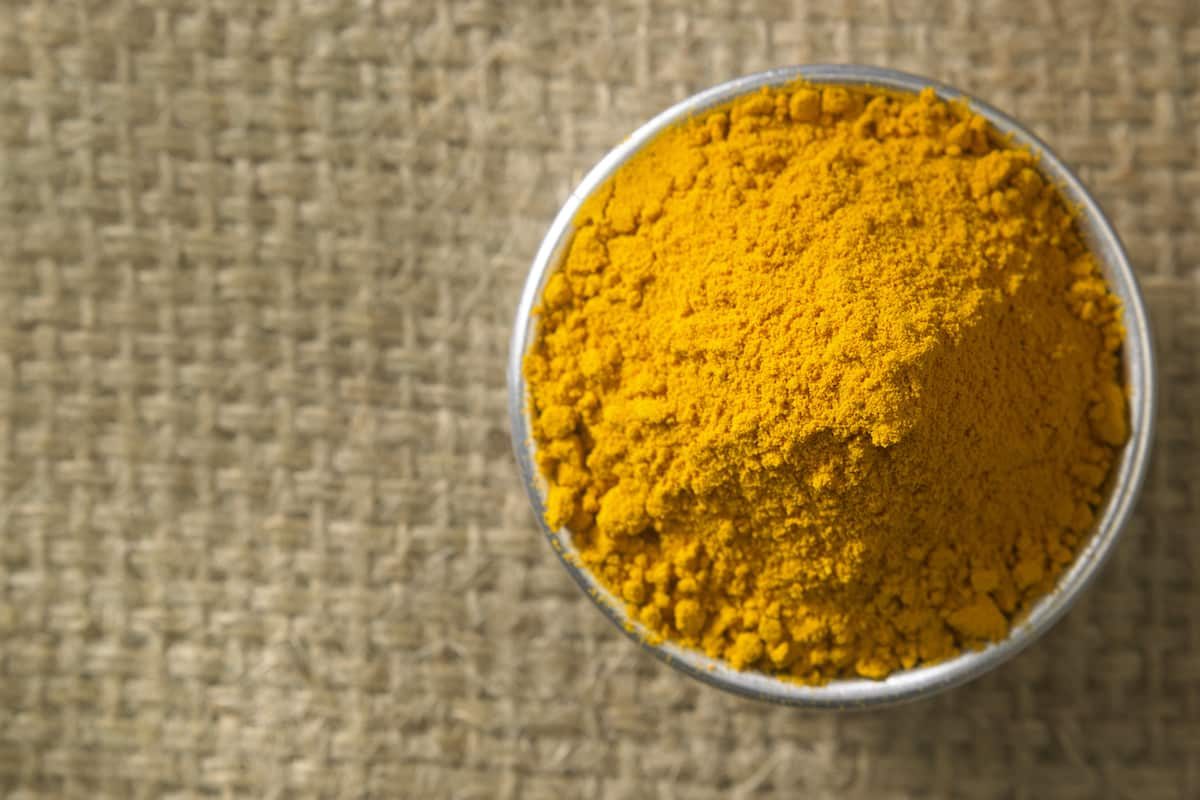
Jamaican curry powder is a curry blend led by turmeric and seasoned with allspice. Hank Shaw sums up how it differs from Indian-style powders: it uses more allspice and more turmeric.1 It is the seasoning behind curried goat, a dish the African Caribbean Institute of Jamaica credits to the Indians who came to the island from 1845, along with the use of curry powder on meats.2 Because the blend is so close to ordinary curry powder, the best substitute is usually one you adjust rather than one you use as it comes.
Quick answer
| What the curry powder is doing | Best substitute | Starting amount, per 1 tbsp Jamaican curry powder | Treatment |
|---|---|---|---|
| Base of a Jamaican curry (goat, chicken, shrimp) | Regular curry powder plus ground allspice | 1 tbsp curry powder + 1/4 tsp allspice | Method |
| The same, if you have whole spices | Homemade Jamaican curry powder | A published recipe, used 1:1 | Attributed |
| A curry meant to be hot | Madras curry powder plus allspice | 1 tbsp + 1/4 tsp allspice, then taste for heat | Method |
| The same, for a lot of heat | Vindaloo curry powder plus allspice | 1/2 tbsp to start, then taste | Method |
How the ratios on this page are labeled
Every ratio carries one of four labels.
- Computed: based on a measurable physical relationship, with the source named.
- Attributed: a named source publishes this ratio. We quote it as theirs.
- Disputed: named sources give different answers to the same swap. We show each one and do not average them.
- Method: we found no published ratio. We give a direction and a cautious starting point, and say so.
We found no published ratio for replacing Jamaican curry powder with any other blend. The Method amounts below are worked out from the ingredient proportions of one published recipe, and we say where.
What makes Jamaican curry powder different
Two widely sold Jamaican brands list these ingredients on their labels, beside the USDA’s minimum list for curry powder in general:
| Blend | Ingredients, in label order | Source |
|---|---|---|
| Grace Jamaican Style Mild Curry Powder | Turmeric, salt, dehydrated garlic and onion, cumin, coriander, black pepper, fenugreek, allspice | 3 |
| Blue Mountain Country Jamaican Curry Powder | Turmeric, salt, coriander, fenugreek, cumin, allspice, cayenne pepper, garlic | 4 |
| USDA curry powder (general, minimum list) | Turmeric, coriander, fenugreek, cinnamon, cumin, black pepper, ginger, cardamom | 5 |
The core spices overlap: turmeric, coriander, cumin and fenugreek are on all three lists.345 Fenugreek is the source of the familiar “curry” smell; PROSEA describes its seed as strong, sweetish and somewhat bitter, with a characteristic curry aroma.6 Turmeric’s curcumin supplies the yellow color.7
The difference is allspice, which both Jamaican labels list and the USDA list does not.345 Allspice berry oil is 50 to 80 percent eugenol, and PROSEA describes the flavor as resembling a mix of cinnamon, cloves and nutmeg; it also reports that Jamaican pimento is considered the best quality.8 Allspice is not exclusive to Jamaican blends, though. Atlas Obscura quotes an 1870 curry powder recipe, from a Mrs. Hill, that includes it,9 and the magazine notes there has never been a set combination of spices in curry powder.9
Heat varies too. Grace’s mild powder lists no chile at all, while Blue Mountain lists cayenne.34
If it is the base of a Jamaican curry
This is the usual job: curried goat, chicken or shrimp, where the powder is cooked in oil and carries most of the spice flavor. Shaw cooks the powder in hot oil for a couple of minutes, stirring often, before the other ingredients go in.1 Cook a substitute the same way.
1. Regular curry powder plus allspice
A standard curry powder already has the turmeric, coriander, cumin and fenugreek. Adding allspice supplies the note that sets the Jamaican blend apart.
Ratio (Method): No published ratio. Use regular curry powder 1:1 and add about 1/4 teaspoon ground allspice per tablespoon. That figure comes from Mike Hultquist’s homemade Jamaican curry powder, which uses 1 tablespoon allspice in a batch of about 36 teaspoons,10 or roughly 1 part in 12. Different brands will differ, so taste and adjust.
Two further adjustments, both our judgment rather than sourced rules: if your curry powder is pale, a pinch of extra turmeric moves it closer, since turmeric leads both Jamaican labels;34 and if it contains cinnamon, ginger or cardamom, as the USDA list does,5 it will taste slightly sweeter and more perfumed than the Jamaican blends checked here.
2. Make your own
Formula (Attributed): Mike Hultquist’s recipe on Chili Pepper Madness uses 3 tablespoons ground turmeric, 2 tablespoons each coriander and yellow mustard seeds, 1 tablespoon allspice berries, 2 teaspoons cumin seeds, 2 teaspoons ground ginger, 1 teaspoon black peppercorns, 1 teaspoon fenugreek seeds, and an optional 1/4 teaspoon Scotch bonnet powder or cayenne for heat.10 He warns not to let the whole spices burn when toasting, since that turns them bitter.10 Use it 1:1.
Turmeric is the largest single ingredient in that recipe, about a quarter of the batch, which fits Shaw’s point about Jamaican powders using more turmeric.110
If the curry is meant to be hot
Jamaican curry powders range from mild to hot.341 If your recipe was written for a hot powder, or relies on it for heat, you can start from a hotter curry powder. The Capsicum chinense group, which includes Scotch bonnet, is important in Caribbean cooking for its extreme heat, Gernot Katzer notes.11
1. Madras curry powder
Madras curry powder was often promoted as spicier than the Bengal and Bombay styles, according to Julia Fine’s history for the merchant Diaspora Co.12 That is marketing history, not a measurement, and blends vary: World Spice Merchants rates its own Madras blend 2 on a scale of 5.13 Its ingredient list (coriander, brown mustard seed, turmeric, cumin, fenugreek seed, black peppercorn and red chile flake, among others) shares the curry core but has no allspice.13
Ratio (Method): No published ratio. Use 1:1, add about 1/4 teaspoon allspice per tablespoon as above, and taste before adding any fresh chile.
2. Vindaloo curry powder
Vindaloo blends vary even more. Savory Spice says vindaloo spices tend to be quite hot but calls its own blend closer to medium,14 while America’s Test Kitchen’s homemade version promises “fiery complex heat.”15 None of the three vindaloo blends compared on our vindaloo curry powder page lists allspice, and only one lists turmeric.
Ratio (Method): No published ratio. Start with half the amount, make up the rest with regular curry powder if you have it, add allspice, and taste.
What isn’t known
- No published source gives a ratio for using regular, Madras or vindaloo curry powder in place of Jamaican curry powder. The 1/4 teaspoon allspice figure is derived from one recipe’s proportions.
- Only two Jamaican brand labels were compared. Other brands, and the hot versions Shaw mentions,1 may differ.
- Some guides say Madras curry powder is darker or more orange than Jamaican powder, or that Scotch bonnet and scallions are essential to Jamaican curries. We found no source for either claim.
- No heat measurement of any Jamaican, Madras or vindaloo curry powder was found.
Related
- Jamaican curry powder and Jamaican vs. Indian curry powder
- Curry powder, Madras curry powder, Madras curry powder vs. curry powder, vindaloo curry powder and vindaloo vs. Madras curry powder
- Allspice, Jamaican spices and jerk seasoning
- Is curry powder spicy?
Footnotes
-
Hank Shaw, “Jamaican Curry Shrimp”, Hunter Angler Gardener Cook, 2022. honest-food.net · Publication ↩ ↩2 ↩3 ↩4 ↩5
-
Rochelle Clarke, “A Brief History of East Indian Heritage in Jamaica”, African Caribbean Institute of Jamaica. acij-ioj.org.jm · Reference work ↩
-
Grace Jamaican Style Mild Curry Powder, label ingredients via Kroger. kroger.com · Merchant ↩ ↩2 ↩3 ↩4 ↩5 ↩6
-
Blue Mountain Country Jamaican Curry Powder, label ingredients via H-E-B. heb.com · Merchant ↩ ↩2 ↩3 ↩4 ↩5 ↩6
-
Commercial Item Description A-A-20001C, Spices and Spice Blends, USDA Agricultural Marketing Service, 2023. ams.usda.gov · Regulator ↩ ↩2 ↩3 ↩4
-
C.S. Tawan and N. Wulijarni-Soetjipto, Trigonella foenum-graecum, Plant Resources of South-East Asia (PROSEA). uses.plantnet-project.org · Reference work ↩
-
“Turmeric: Usefulness and Safety”, National Center for Complementary and Integrative Health, 2025. nccih.nih.gov · Regulator ↩
-
D. Sulistiarini, Pimenta dioica, Plant Resources of South-East Asia (PROSEA). uses.plantnet-project.org · Reference work ↩
-
Rohini Chaki, “The Subversive, Surprising History of Curry Powder”, Atlas Obscura, 2019. atlasobscura.com · Publication ↩ ↩2
-
Mike Hultquist, “Jamaican Curry Powder Recipe”, Chili Pepper Madness. chilipeppermadness.com · Publication ↩ ↩2 ↩3 ↩4
-
Gernot Katzer, “Chiles (Capsicum)”, Gernot Katzer’s Spice Pages. gernot-katzers-spice-pages.com · Reference work ↩
-
Julia Fine, “From Delhi to Durban: The Many Homes of Madras Curry Powder”, Diaspora Co., 2022. diasporaco.com · Merchant ↩
-
“Madras South Indian Curry”, World Spice Merchants (product page). worldspice.com · Merchant ↩ ↩2
-
“Vindaloo”, Savory Spice (product page). savoryspiceshop.com · Merchant ↩
-
Leah Colins, “Vindaloo Curry Powder”, America’s Test Kitchen, 2020. americastestkitchen.com · Publication ↩