Blog · Profile
Is Curry Powder Spicy? Which Blends Are Hot, Which Are Mild, and How to Tell from the Label
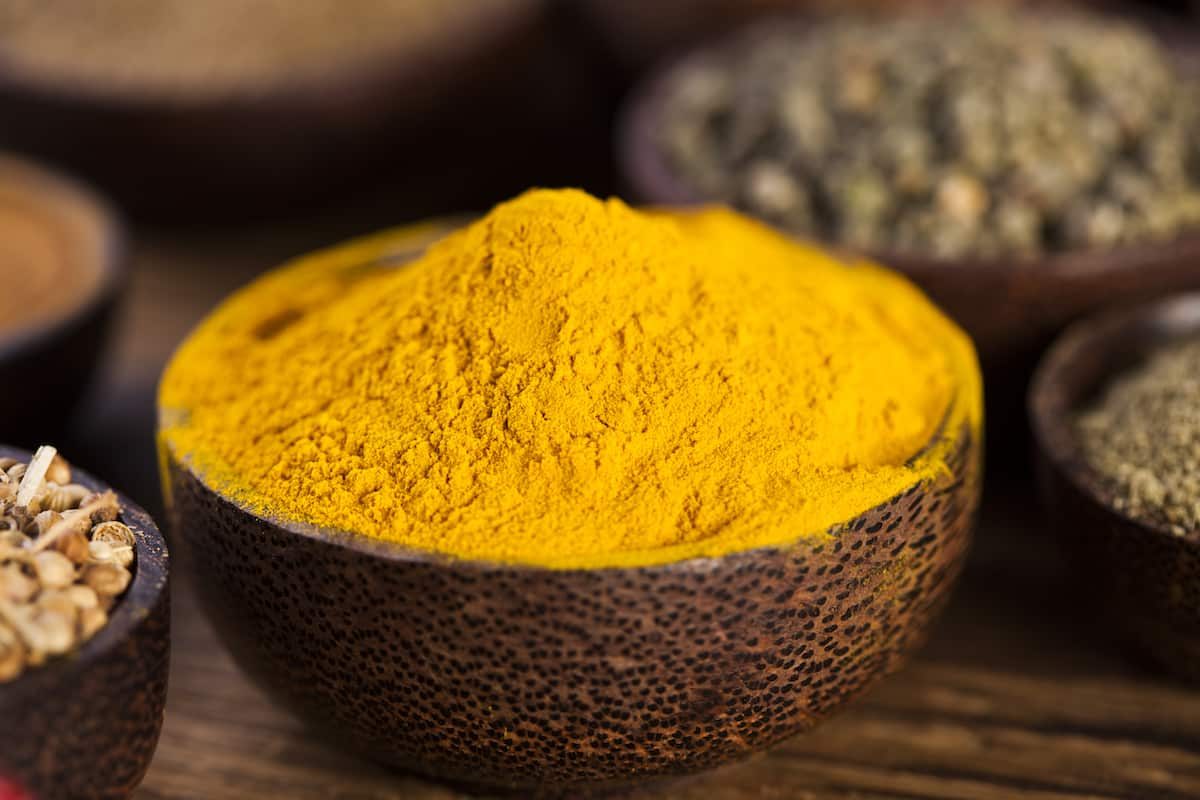
Curry powder is only as spicy as the chile in it, and plain curry powder doesn’t have to contain any. The USDA’s purchase specification says curry powder should include turmeric, coriander, fenugreek, cinnamon, cumin, black pepper, ginger and cardamom, and names no chile at all.1 So a basic jar is usually warm rather than hot, with a little bite from black pepper and ginger, while blends sold as Madras or vindaloo add red chile for heat. The label tells you which kind you have.
At a glance
| Blend | Chile on the label or in the recipe? | Heat, where a source rates it |
|---|---|---|
| Plain curry powder (USDA specification) | None in the minimum list1 | Warm; no heat rating |
| Madras | Red chile flake (World Spice); chili and/or cayenne in 19th-century recipes (Fine)23 | World Spice: 2 of 5. Long promoted as spicier than Bengal and Bombay blends23 |
| Vindaloo | Cayenne (Savory Spice)4 | Savory Spice: medium, “not as hot as typical vindaloo”4 |
| Jamaican | Depends on brand: Grace Mild lists none; Blue Mountain lists cayenne56 | Mild and very hot versions are both sold7 |
| Vadouvan | Red chile flake (World Spice)8 | World Spice: 1 of 58 |
| Japanese | Chili is among S&B curry powder’s main ingredients (Just One Cookbook)9 | No rating; described as mildly sweet with a warm, savory kick9 |
Merchants’ heat scales are each company’s own rating of its own blend. They are not measurements, and a 2 from one shop is not comparable with a 2 from another.
Measured values
1 figure, sourced| Measure | Value | Scope | Source |
|---|---|---|---|
| Piperine loss on boiling | 50 to 60 % lost | 1992 study; pepper boiled for 15 to 30 minutes in a curry powder blendRetention/decay figure from domestic cooking | agris.fao.org |
Each figure is quoted as its source states it, with the samples or standard it applies to. Where sources differ, both are shown; nothing is averaged. All measured values
Where the heat comes from
Chile. The heat in chile peppers comes from capsaicinoids.10 In curry powder that means ground red chile, cayenne or chile flakes. How hot a given jar is depends on how much chile went in and which chile; no published measurement of curry powder heat was found.
Black pepper and ginger. Both are on the USDA’s minimum list,1 and both are pungent in their own right. Piperine, the pungent compound in black pepper, acts on the same heat receptor as capsaicin but far less potently in laboratory tests.11 Kew names gingerols and shogaols among ginger’s pungent principles.12 See is ginger spicy?. Long cooking softens the pepper: a 1992 study found piperine losses of 50 to 60% when pepper was boiled for 15 to 30 minutes in a curry powder blend.13
What isn’t heat. The rest of a typical blend, turmeric, coriander, cumin, cinnamon, cardamom and fenugreek, adds warmth, earthiness and bitterness rather than burn; the USDA specification expects “a warm bitter taste.”1 See curry powder for the compounds behind each.
How to tell if a jar is hot
- Read the ingredient list. Look for chile, chili pepper, red pepper, cayenne or chile flakes. If none appears, the blend’s bite comes only from pepper and ginger. Grace’s mild Jamaican powder, for example, lists no chile; Blue Mountain’s lists cayenne.56
- Check the name. “Hot,” “Madras” and “vindaloo” signal added chile, though how much varies by maker.34
- Look for a heat rating. Some merchants print one for their own blends.28
There is no fixed recipe behind any of these names. Atlas Obscura’s history of the blend notes there has never been a set combination of spices,14 so two jars with the same name can differ.
The blends, one by one
Madras curry powder
Madras curry powder is the blend most often sold as the hot version. Historian Julia Fine, writing for the spice company Diaspora Co., says it was often promoted as “spicier” than the Bengal and Bombay alternatives, and that 19th-century curry powders were laden with turmeric, chili and/or cayenne.3 World Spice Merchants rates its own Madras blend 2 of 5 for heat.2 See Madras curry powder and vindaloo vs. Madras curry powder.
Vindaloo curry powder
Vindaloo blends are built to season the dish of the same name. Savory Spice says the dish comes from Goa and was influenced by Portuguese cuisine, and describes its own blend, which includes cayenne, as medium spicy and “not as hot as typical vindaloo.”4 Cooks often add more heat with fresh or dried chiles in the pot; that is common practice, not a sourced finding. See vindaloo curry powder.
Jamaican curry powder
Jamaican blends vary by brand. Grace’s mild powder lists turmeric, salt, garlic and onion, cumin, coriander, black pepper, fenugreek and allspice, with no chile; Blue Mountain’s lists cayenne.56 Hank Shaw, writing about Jamaican curry shrimp, prefers Blue Mountain’s milder version to its very hot one.7 See Jamaican curry powder.
Vadouvan
Vadouvan is tied to Pondicherry (now Puducherry), where the home-made versions rely heavily on shallots and garlic.1516 World Spice Merchants rates its blend 1 of 5 for heat, though it does include red chile flake.8 Its history is disputed: some accounts describe a French adaptation of a local preparation, while the writer Deepa at Pâticheri argues that it is simply Tamil.1516 See vadouvan.
Japanese curry powder
Just One Cookbook says the main ingredients of S&B curry powder, the best-known Japanese brand, include turmeric, coriander, cumin, fenugreek, pepper, chili and orange peel, and describes it as fragrant, golden and mildly sweet with a warm, savory kick.9 It also notes that the powder, unlike commercial curry roux, contains no wheat flour.9 We found no heat rating. See Japanese curry powder.
Malaysian curry powder
We found no source rating the heat of Malaysian curry powders. See Malaysian curry powder.
Why “curry” doesn’t mean “hot”
Britannica derives the word curry from the Tamil kari, “sauce,” and says curry powder was adapted by British settlers in India, while in traditional Indian cookery the spice mixtures are called masala and are prepared at home.17 Nothing in that history, or in the USDA specification, makes chile heat part of what curry powder is.1
If it turns out too hot
Dilute: add more of the dish’s other ingredients, or serve it with plain rice, bread or yogurt. That is simple dilution and common practice. For more, see too much curry powder.
Related
- Curry powder: ingredients, history and safety
- Cooking with curry powder
- Curry paste vs. curry powder
- Garam masala vs. curry powder
- Madras curry powder vs. curry powder
- Jamaican vs. Indian curry powder
- The best spices for curry
- Turmeric substitutes
- Cayenne pepper
Footnotes
-
Commercial Item Description A-A-20001C: Spices and Spice Blends, USDA Agricultural Marketing Service, 2023. ams.usda.gov · Regulator ↩ ↩2 ↩3 ↩4 ↩5
-
Madras South Indian Curry, World Spice Merchants (product page). worldspice.com · Merchant ↩ ↩2 ↩3 ↩4
-
Julia Fine, “From Delhi to Durban: The Many Homes of Madras Curry Powder”, Diaspora Co., 2022. diasporaco.com · Merchant ↩ ↩2 ↩3 ↩4
-
Vindaloo, Savory Spice (product page). savoryspiceshop.com · Merchant ↩ ↩2 ↩3 ↩4
-
Grace Jamaican Style Mild Curry Powder, label ingredients via Kroger. kroger.com · Merchant ↩ ↩2 ↩3
-
Blue Mountain Country Jamaican Curry Powder, label ingredients via H-E-B. heb.com · Merchant ↩ ↩2 ↩3
-
Hank Shaw, “Jamaican Curry Shrimp”, Hunter Angler Gardener Cook, 2022. honest-food.net · Publication ↩ ↩2
-
Vadouvan Curry, World Spice Merchants (product page). worldspice.com · Merchant ↩ ↩2 ↩3 ↩4
-
Namiko Hirasawa Chen, “Japanese Curry Powder”, Just One Cookbook, 2023. justonecookbook.com · Publication ↩ ↩2 ↩3 ↩4
-
Bosland and Walker, “Measuring Chile Pepper Heat”, New Mexico State University, 2010. pubs.nmsu.edu · Reference work ↩
-
McNamara, Randall and Gunthorpe, “Effects of piperine, the pungent component of black pepper, at the human vanilloid receptor (TRPV1)”, British Journal of Pharmacology, 2005. pmc.ncbi.nlm.nih.gov · Peer-reviewed ↩
-
Zingiber officinale Roscoe, Plants of the World Online, Royal Botanic Gardens, Kew. powo.science.kew.org · Reference work ↩
-
Srinivasan, Sambaiah and Chandrasekhara, “Loss of active principles of common spices during domestic cooking”, Food Chemistry, 1992. agris.fao.org · Peer-reviewed ↩
-
Rohini Chaki, “The Subversive, Surprising History of Curry Powder”, Atlas Obscura, 2019. atlasobscura.com · Publication ↩
-
“Vadouvan: Curry with a French accent”, Napa Valley Register. napavalleyregister.com · Publication ↩ ↩2
-
Deepa, “How ‘vadouvan’ became French by using and effacing its Tamil Roots”, Pâticheri, 2025. paticheri.com · Publication ↩ ↩2
-
“Curry”, Encyclopaedia Britannica. britannica.com · Reference work ↩