Spices · Profile
Korintje Cinnamon: Indonesian Cassia, Its Flavor, Uses and Coumarin
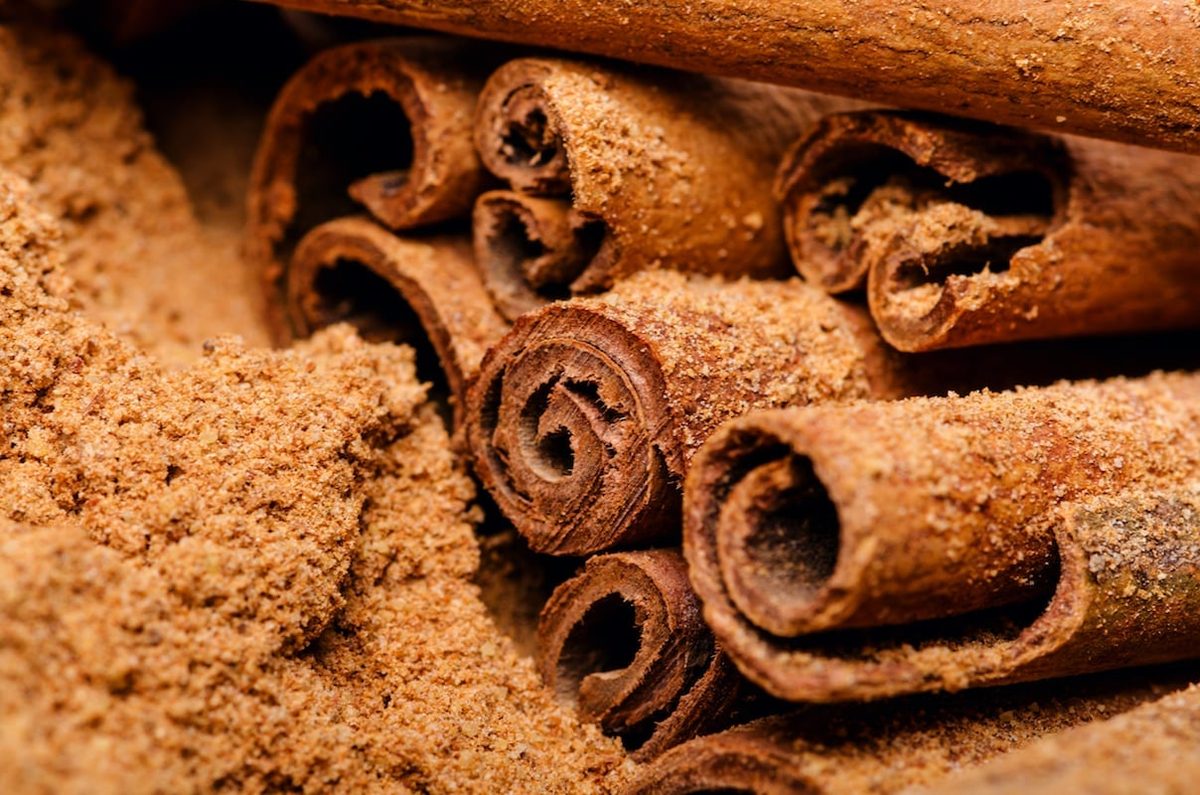
Korintje cinnamon is the bark of Cinnamomum burmanni, the species the spice trade calls Indonesian cassia or Padang cassia.12 It is one of the three barks sold as cassia, alongside Chinese and Vietnamese (Saigon) cassia, and all three are distinct from Ceylon cinnamon, C. verum.2 Frontier Co-op, which sells it under the Korintje name, calls it the cinnamon most commonly found in American kitchens.3 Like other cassia, it carries enough coumarin that Germany’s Federal Institute for Risk Assessment (BfR) advises eating it in moderation.45
At a glance
| Botanical name | Cinnamomum burmanni (Nees & T.Nees) Blume; often spelled burmannii16 |
| Plant family | Lauraceae1 |
| Native range | Southern China to western and central Malesia1 |
| Main production area | Padang, West Sumatra, Indonesia2 |
| Other names | Indonesian cassia, Padang cassia, cassia vera (PROSEA); Batavia cassia, Indonesian cinnamon (Frontier Co-op)23 |
| Part used | Bark, sold as quills, pieces and ground2 |
| Bark essential oil | 1 to 4%, mainly cinnamaldehyde, with no eugenol2 |
| Coumarin | Substantial, as in other cassia species5 |
Measured values
3 figures, sourced| Measure | Value | Scope | Source |
|---|---|---|---|
| Bark essential oil | 1 to 4 % | Cinnamomum burmanni bark, PROSEAMainly cinnamaldehyde; the oil lacks eugenol | prosea.prota4u.org |
| Coumarin (cassia cinnamon in general) | 3,000 mg/kg (average, about) | cassia cinnamon in general, BfR; not specific to KorintjeNo Korintje-specific coumarin figure was found | bfr.bund.de |
| Lead in specific ground cinnamon products | 2.03 to 7.68 ppm | specific ground cinnamon products named in FDA public health alerts, 2024; species not statedProduct-specific findings, not a category value | fda.gov |
Each figure is quoted as its source states it, with the samples or standard it applies to. Where sources differ, both are shown; nothing is averaged. All measured values
What “Korintje” means
Korintje is a trade name, not a botanical one. PROSEA does not use it; it lists the English names Indonesian cassia, Padang cassia and cassia vera.2 Frontier Co-op sells the same species as “Korintje” and gives Batavia cassia, Padang cassia and Indonesian cinnamon as other names for it.3 The name is widely said to come from Kerinci, a district of Sumatra, but no source opened for this page confirms that, so it is reported here only as a common explanation.
Retail labels sometimes add a grade, such as Frontier’s “A Grade.”3 There is no public standard behind letter grades for Indonesian cassia that this review could find. PROSEA describes cassia grading in general as based on the type of bark (scraped or unscraped, quills, quillings, featherings or chips), its appearance and its volatile-oil content.2 A widely repeated claim that grade C Korintje tastes bitter could not be traced.
Flavor and the compounds behind it
Korintje smells sweet, warm and straightforwardly “cinnamon,” with less of the sharp heat of Saigon cinnamon. That description is editorial. Katzer describes Indonesian cinnamon as tasting darker than Ceylon cinnamon and lacking its exciting overtones, and says that in Europe Ceylon and Indonesian cinnamon are rated similarly and well above Chinese cassia.6
The chemistry explains much of the difference from Ceylon cinnamon:
| Indonesian cassia (C. burmanni) | Ceylon cinnamon (C. verum) | |
|---|---|---|
| Essential oil in bark | 1 to 4%2 | see Ceylon cinnamon |
| Main oil component | Cinnamaldehyde2 | Cinnamaldehyde, 50 to 75%7 |
| Eugenol | None (the oil “lacks” it)2 | 5 to 18%7 |
| Coumarin | Substantial5 | Traces only5 |
PROSEA adds that among the less volatile components of cassia barks, only coumarin contributes much to flavor and aroma.2
Where it grows and how it is harvested
Kew gives the species’ native range as southern China to western and central Malesia.1 PROSEA says it is cultivated in Indonesia (Java and Sumatra) and the Philippines, with Padang in West Sumatra an important production area, and Katzer says it was first cultivated in West Sumatra, where most Indonesian cinnamon is still grown.26
- Altitude. In Indonesia it occurs from sea level to 2,000 m; around Padang it grows best between 500 and 1,500 m.2
- Harvest. Harvest is still mainly by thinning whole trees. A stand may first be thinned in its third year for inferior bark, the first proper harvest follows two years later, and thinning continues annually for about 15 years. Bark is stripped from the lower trunk in strips of about 1 m by 5 to 10 cm.2
- Scale. FAO estimated Indonesia’s harvested area at 60,000 ha in 1998, with production of 40,000 tonnes.2 In 1991 to 1994 the United States imported about 13,000 tonnes of quills a year from Indonesia, worth about US$23 million.2 These are old figures; no recent official series was found for this page.
The claims that Korintje is harvested at a different time of year from other cassias, and that its cultivation was organized by the Dutch, could not be traced.
Outside Indonesia. In Hawai’i, the species (listed there as Padang cassia) is naturalized in Manoa Valley and Pauoa Flats, also occurs on Kaua’i and Lana’i, and has been reported spreading by birds in West Maui.8 The University of Hawai’i guide describes it as slowly spreading in mesic to wet forests and possibly difficult to control.8
How it is used
Frontier Co-op calls Korintje the traditional cinnamon for American baked goods and also suggests it for stews, soups and curries.3 NCCIH says cassia is the most common type of cinnamon sold in North America,9 and PROSEA records a clear US preference for cassia over Ceylon cinnamon.2 Katzer notes that in Indonesia itself cinnamon is used sparingly, in some sweets and in small amounts in meat stews such as rendang.6
In practice Korintje is the cinnamon for cinnamon rolls, apple pie, coffee cake and spiced drinks, and its milder profile makes it a forgiving default; that is kitchen judgment. For whole versus ground, see ground cinnamon vs. cinnamon sticks. If a dish has too much, see too much cinnamon.
Buying and quality
BfR says consumers can hardly tell Ceylon and cassia cinnamon apart once ground.10 Katzer adds that Indonesian cinnamon bark is often traded as “Ceylon cinnamon.”6 If coumarin matters to you, buy cinnamon labeled with its species or with “Ceylon cinnamon,” and treat unlabeled ground cinnamon as cassia; that is practical advice, not a regulatory rule.
Storage
Keep sticks and ground cinnamon airtight, away from light and heat. No shelf-life figure for cinnamon from a regulator or standards body was found for this page.
Safety
Coumarin
All three cassia species contain substantial coumarin, and a 2013 US study singled out C. loureiroi and C. burmannii in particular; Ceylon cinnamon contained only traces.5 BfR gives an average of about 3,000 mg of coumarin per kg for cassia cinnamon in general.10 No figure specific to Korintje was found for this page.
- Tolerable intake. EFSA’s tolerable daily intake is 0.1 mg of coumarin per kg of body weight.11
- What that means in cinnamon. BfR calculates that a 60 kg adult reaches it with about 2 g a day of cassia with average coumarin content.4 That is a long-term daily figure, and individual lots vary.
- Who is at risk. NCCIH says prolonged use of cassia could be an issue for sensitive people.9
- Rules. There is no EU limit for coumarin in cinnamon itself;10 EU law instead caps coumarin in certain foods, including traditional and seasonal bakery ware that refers to cinnamon in its labeling.12
A teaspoon-a-day rule is often quoted for cassia. No regulator states it that way; the BfR figure above is the sourced one. See too much cinnamon and Ceylon vs. cassia cinnamon.
Lead
FDA public health alerts in 2024 reported lead levels from 2.03 to 7.68 ppm in specific ground cinnamon products.13 The products and brands are listed on our cinnamon page.
Health claims
NCCIH says research does not clearly support using cinnamon for any health condition, and that it is unclear whether cinnamon supplements help with diabetes.9 Claims that Korintje lowers cholesterol, lowers blood sugar as well as diabetes drugs, or treats digestive complaints, and that its flavonoids, anthocyanins or borneol have medicinal effects, are not supported by any source reviewed here.
Substitutes and comparisons
- Cassia cinnamon and Saigon cinnamon, the other cassias
- Ceylon cinnamon and Ceylon vs. cassia cinnamon
- Saigon vs. Ceylon cinnamon
- Cinnamon substitutes
- Cinnamon, cassia buds, cloves vs. cinnamon
Footnotes
-
Cinnamomum burmanni (Nees & T.Nees) Blume, Plants of the World Online. powo.science.kew.org · Reference work ↩ ↩2 ↩3 ↩4 ↩5
-
Cinnamomum (cassia species), PROSEA Handbook No. 13: Spices, Plant Resources of South-East Asia (PROSEA). prosea.prota4u.org · Reference work ↩ ↩2 ↩3 ↩4 ↩5 ↩6 ↩7 ↩8 ↩9 ↩10 ↩11 ↩12 ↩13 ↩14 ↩15 ↩16 ↩17 ↩18
-
Frontier Co-op Korintje Cinnamon, Ground, Organic 1.90 oz (product page), Frontier Co-op. frontiercoop.com · Merchant ↩ ↩2 ↩3 ↩4 ↩5
-
Cassia cinnamon with high coumarin contents to be consumed in moderation, German Federal Institute for Risk Assessment (BfR). bfr.bund.de · Regulator ↩ ↩2
-
Wang et al., “Cassia cinnamon as a source of coumarin in cinnamon-flavored food and food supplements in the United States”, J. Agric. Food Chem., 2013, US EPA HERO database (abstract). hero.epa.gov · Peer-reviewed ↩ ↩2 ↩3 ↩4 ↩5
-
Indonesian Cinnamon (Cinnamomum burmannii), Gernot Katzer’s Spice Pages. gernot-katzers-spice-pages.com · Reference work ↩ ↩2 ↩3 ↩4 ↩5
-
Cinnamomum verum (PROSEA), Plant Resources of South-East Asia (PROSEA). prosea.prota4u.org · Reference work ↩ ↩2
-
Motooka et al., Weeds of Hawai’i’s Pastures and Natural Areas, 2003, College of Tropical Agriculture and Human Resources, University of Hawai’i at Manoa. www3.ctahr.hawaii.edu · Reference work ↩ ↩2
-
“Cinnamon: Usefulness and Safety”, 2024, National Center for Complementary and Integrative Health (NIH). nccih.nih.gov · Regulator ↩ ↩2 ↩3
-
FAQ on coumarin in cinnamon and other foods (27 September 2012, updated), German Federal Institute for Risk Assessment (BfR). bfr.bund.de · Regulator ↩ ↩2 ↩3
-
Coumarin in flavourings and other food ingredients with flavouring properties, EFSA Journal, 2008, European Food Safety Authority (EFSA). efsa.europa.eu · Regulator ↩
-
Regulation (EC) No 1334/2008, Annex III, EUR-Lex, European Union. eur-lex.europa.eu · Regulator ↩
-
More Ground Cinnamon Products Added to FDA Public Health Alert Due to Presence of Elevated Levels of Lead, U.S. Food and Drug Administration. fda.gov · Regulator ↩