Spices · Profile
Saigon Cinnamon: Vietnamese Cassia, Its Oil, Coumarin and Uses
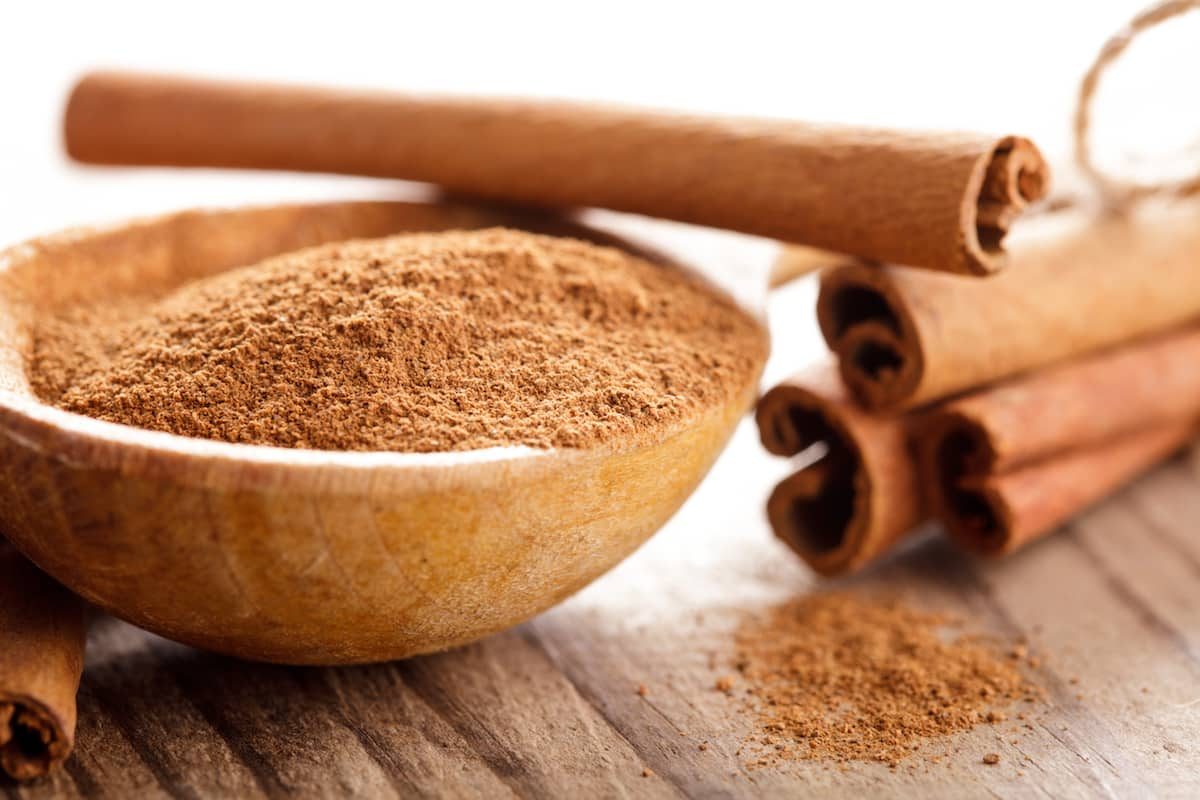
Saigon cinnamon is the trade name for Vietnamese cassia, the dried bark of Cinnamomum loureiroi, a tree native to Vietnam.12 It is one of three barks sold as cassia, and the one PROSEA singles out as the American favorite.2 This page covers the species, its essential oil, how the bark is harvested, what the production figures can and cannot tell you, how it is used, and the coumarin question that comes with any cassia.
At a glance
| Botanical name | Cinnamomum loureiroi Nees (PROSEA spells it loureirii)12 |
| Other names | Vietnamese cassia, Saigon cassia, Saigon cinnamon2 |
| Plant family | Lauraceae (laurel family)1 |
| Part used | Dried bark; bark and leaf oils are also produced2 |
| Native range | Vietnam (Kew); some botanists also include Cambodia and Laos12 |
| Main producer | Vietnam2 |
| Bark essential oil | 1–7%, mainly cinnamaldehyde with traces of eugenol2 |
| Coumarin | Substantial, in a US study of authenticated bark3 |
| Forms sold | Quills, slabs, pieces, ground |
Measured values
3 figures, sourced| Measure | Value | Scope | Source |
|---|---|---|---|
| Essential oil in bark | 1–7 % | Vietnamese cassia (C. loureiroi) bark, PROSEA; oil mainly cinnamaldehyde with traces of eugenol | prosea.prota4u.org |
| Coumarin | about 3,000 mg/kg, average | Cassia in general, German food monitoring (BfR); not C. loureiroi specificallyA 2013 US study of authenticated C. loureiroi bark found "substantial" coumarin but the abstract gives no figure. | bfr.bund.de |
| Coumarin, highest found | up to 10,000 mg/kg | Cassia in general, German food monitoring (BfR); not C. loureiroi specifically | bfr.bund.de |
Each figure is quoted as its source states it, with the samples or standard it applies to. Where sources differ, both are shown; nothing is averaged. All measured values
What Saigon cinnamon is
PROSEA describes three barks traded as cassia: Chinese cassia (C. aromaticum), Indonesian cassia (C. burmanni) and Vietnamese cassia (C. loureiroi).2 Saigon cinnamon is the last of these. Ceylon cinnamon, C. verum, is a different species from Sri Lanka; see Ceylon cinnamon and cassia cinnamon for the wider family.
Despite the name, the tree is not a southern lowland plant. PROSEA says it occurs naturally in the mountains of Annam, in Vietnam, and has also been taken into cultivation there.2 Its main Vietnamese production areas get 2,500–3,000 mm of rain a year on lateritic soils of old volcanic origin.2 Botanists disagree on how far the species reaches: PROSEA notes it is sometimes treated as restricted to Vietnam and sometimes as extending into Cambodia and Laos.2 Kew lists it as native to Vietnam.1
The species name is spelled two ways. Kew’s accepted name is Cinnamomum loureiroi;1 PROSEA uses Cinnamomum loureirii.2
Flavor and the compounds behind it
Saigon cinnamon tastes like a louder version of supermarket cinnamon: intensely sweet and hot, with a slightly bitter, almost peppery finish. That description is ours. The chemistry is consistent with it:
| Bark | Essential oil in the bark | Main constituents of the oil | Source |
|---|---|---|---|
| Vietnamese cassia (C. loureiroi) | 1–7% | Mainly cinnamaldehyde, only traces of eugenol | PROSEA2 |
| Chinese cassia (C. aromaticum) | 1–4% | 70–95% cinnamaldehyde, only traces of eugenol | PROSEA2 |
| Ceylon cinnamon (C. verum) | Not compared here | 50–75% cinnamaldehyde, 5–18% eugenol | PROSEA4 |
These are ranges across samples, not single measurements, and they overlap. The upper end of the Vietnamese range is higher than the Chinese one, which fits Saigon cinnamon’s reputation for strength, but PROSEA gives no cinnamaldehyde percentage for Vietnamese bark oil, so a claim that it has the most cinnamaldehyde of any cinnamon cannot be checked from this source. PROSEA also notes that among the less volatile constituents of cassia, only coumarin contributes substantially to taste and smell.2
How the bark is harvested
PROSEA describes Vietnamese cassia as usually harvested when the trees are 10–12 years old.2 The bark is cut from standing trees, sometimes from bamboo scaffolding: horizontal cuts 40 cm apart and vertical cuts 25–35 cm apart, which yield flat, unrolled slabs.2 The trees are then felled, the thinner bark from smaller branches is taken as quills, and the stumps are left to regrow.2 Cassia in general is graded by type, appearance and volatile-oil content.2
Production and trade
Official figures for Vietnamese cassia alone are thin, and the figures that exist do not separate species.
- PROSEA (FAO estimate for 1998). A harvested area of 6,100 ha producing 3,400 tonnes, for Vietnamese cassia.2
- PROSEA (exports, 1966–1976). Dry-bark exports from Vietnam ranged from 5 to 300 tonnes a year.2
- USAID (brief published 2024). Vietnam is the world’s third-largest cinnamon producer with 17% of global output, and the largest exporter, with export turnover of USD 292.2 million in 2022.5 Its table gives Vietnam 166,875 ha and 45,000 tonnes, with no year stated.5 The brief describes Vietnamese cinnamon as cassia and names Yen Bai, Lao Cai, Quang Nam, Bac Kan and Quang Ninh as growing areas.5
The USAID figures cover all cinnamon grown in Vietnam. They do not say how much of it is C. loureiroi rather than Chinese cassia, so they describe the country’s cinnamon trade, not Saigon cinnamon specifically. Widely repeated claims that Vietnamese production has grown 10% a year since 2008, and that exports stopped during the Vietnam War while Indonesia took over the market, could not be traced to a source.
How Saigon cinnamon is used
PROSEA says the inner bark of all three cassias is used the same way, to flavor foods at home and in industry, and that the United States has a clear preference for cassia over Ceylon cinnamon, “and for Vietnamese cassia in particular.”2 Vietnamese cassia bark, its bark oil and its leaf oil each carry a US GRAS listing (2289, 2290 and 2292).2
In the kitchen it does what any cassia does, only more so. These are cooking judgments, not measured facts: it suits cinnamon toast, cinnamon rolls, apple and pumpkin pies, and spice blends such as pumpkin pie spice, apple pie spice and garam masala, and many cooks reduce the amount slightly when swapping it for ordinary cassia. Whole quills can go into braises and stocks and be removed before serving. A widely repeated claim says Saigon cinnamon is the cinnamon used in Vietnamese pho; no source we opened says which cinnamon pho uses.
For whole versus ground, see ground cinnamon vs. cinnamon sticks.
Buying and quality
Labels are the only practical guide: shoppers can hardly tell Ceylon and cassia apart, according to Germany’s risk agency BfR.6 A jar marked “Saigon” or “Vietnamese” cinnamon names the species; one marked simply “cinnamon” in a US supermarket is most likely cassia of some kind.7 Good bark smells strongly sweet and spicy when broken (kitchen judgment).
Storage
No regulator or standards body publishes a shelf life for cassia, and the figures that circulate online have no traceable source. Common practice is to keep it sealed, cool and dark, and to judge it by smell: if a pinch of the ground spice smells faint, it has faded.
Safety
Coumarin
A 2013 US study of authenticated bark found only traces of coumarin in Ceylon cinnamon but substantial amounts in all three cassias, “especially C. loureiroi and C. burmannii.”3 The abstract does not give per-species figures, so we cannot say by how much Saigon exceeds the others. A widely repeated claim says Saigon cinnamon has the highest coumarin of any cinnamon; this study supports “among the highest,” not a ranking.
| Scope | Coumarin | Source |
|---|---|---|
| Cassia in general, German food monitoring | About 3,000 mg/kg on average; highest up to 10,000 mg/kg | BfR6 |
| Authenticated C. loureiroi bark, US study | “Substantial”, no figure in the abstract | Wang et al. 20133 |
The European Food Safety Authority’s tolerable daily intake for coumarin is 0.1 mg per kg of body weight.8 BfR estimates that a 60 kg adult reaches it with about 2 g a day of cassia of average coumarin content, and a 15 kg child with about 0.5 g.9 BfR says that in a small group of especially sensitive people, even relatively low doses can cause liver damage.6 NCCIH says ordinary amounts of cassia don’t usually supply enough coumarin to cause significant problems, but that prolonged use could matter for sensitive people.7
The EU sets no limit for coumarin in cinnamon itself,6 but it caps coumarin in foods that contain cinnamon, from 50 mg/kg in traditional or seasonal bakery ware labeled as containing cinnamon down to 5 mg/kg in desserts.10 The authors of the US study note that coumarin is “banned from food in the United States” as an additive, while coumarin from cassia is not regulated.3
Is coumarin a blood thinner? A widely repeated claim says so. France’s food safety agency, ANSES, says the anticoagulant action often credited to coumarins belongs to dimeric derivatives such as dicoumarol, and that simple coumarins do not have it.11
Lead alerts
Since 2024 the FDA has issued public health alerts on specific lots of ground cinnamon found to contain 2.03 to 7.68 parts per million of lead.12 The alerts concern particular products, not Saigon cinnamon as such; the product list is on our cinnamon page.
Health claims
NCCIH says research does not clearly support using cinnamon for any health condition, and that it is unclear whether cinnamon supplements help with diabetes or weight loss.7 We found no source showing that Saigon cinnamon in particular helps with blood sugar or infections, or that it is a meaningful source of minerals or fiber in the amounts used in cooking, so this page makes none of those claims.
Substitutes and comparisons
Any cassia, or Ceylon cinnamon for a milder result, can stand in; PROSEA notes that cinnamon and cassia barks are interchangeable in many applications.2 No source gives a tested ratio. See cinnamon substitutes, Saigon vs. Ceylon cinnamon, Ceylon vs. cassia cinnamon and Korintje cinnamon, the Indonesian cassia. If a dish has too much, see too much cinnamon. Related: cassia buds, cloves and ginger.
Footnotes
-
Cinnamomum loureiroi Nees, Plants of the World Online, Royal Botanic Gardens, Kew. powo.science.kew.org · Reference work ↩ ↩2 ↩3 ↩4 ↩5 ↩6
-
Cinnamomum (cassia species), PROSEA Handbook No. 13: Spices. prosea.prota4u.org · Reference work ↩ ↩2 ↩3 ↩4 ↩5 ↩6 ↩7 ↩8 ↩9 ↩10 ↩11 ↩12 ↩13 ↩14 ↩15 ↩16 ↩17 ↩18 ↩19 ↩20 ↩21 ↩22 ↩23 ↩24 ↩25
-
Wang et al., “Cassia cinnamon as a source of coumarin in cinnamon-flavored food and food supplements in the United States”, Journal of Agricultural and Food Chemistry, 2013. hero.epa.gov · Peer-reviewed ↩ ↩2 ↩3 ↩4
-
Cinnamomum verum, PROSEA Handbook No. 13: Spices. prosea.prota4u.org · Reference work ↩
-
Cinnamon value chain brief, Lao Cai, USAID Vietnam, 2024. land-links.org · Regulator ↩ ↩2 ↩3
-
FAQ on coumarin in cinnamon and other foods, German Federal Institute for Risk Assessment (BfR). bfr.bund.de · Regulator ↩ ↩2 ↩3 ↩4
-
Cinnamon: Usefulness and Safety, National Center for Complementary and Integrative Health. nccih.nih.gov · Regulator ↩ ↩2 ↩3
-
Coumarin in flavourings and other food ingredients with flavouring properties, EFSA, 2008. efsa.europa.eu · Regulator ↩
-
“Cassia cinnamon with high coumarin contents to be consumed in moderation”, BfR press release. bfr.bund.de · Regulator ↩
-
Regulation (EC) No 1334/2008, Annex III Part B, EUR-Lex. eur-lex.europa.eu · Regulator ↩
-
Opinion on the risk of hepatotoxicity associated with the coumarin content of certain plants, ANSES, 2018. anses.fr · Regulator ↩
-
More Ground Cinnamon Products Added to FDA Public Health Alert Due to Presence of Elevated Levels of Lead, U.S. FDA, 2024, updated. fda.gov · Regulator ↩