Spice Comparisons · Comparison
Lemon Balm vs. Lemon Verbena: Two Unrelated Plants With the Same Lemon Chemistry
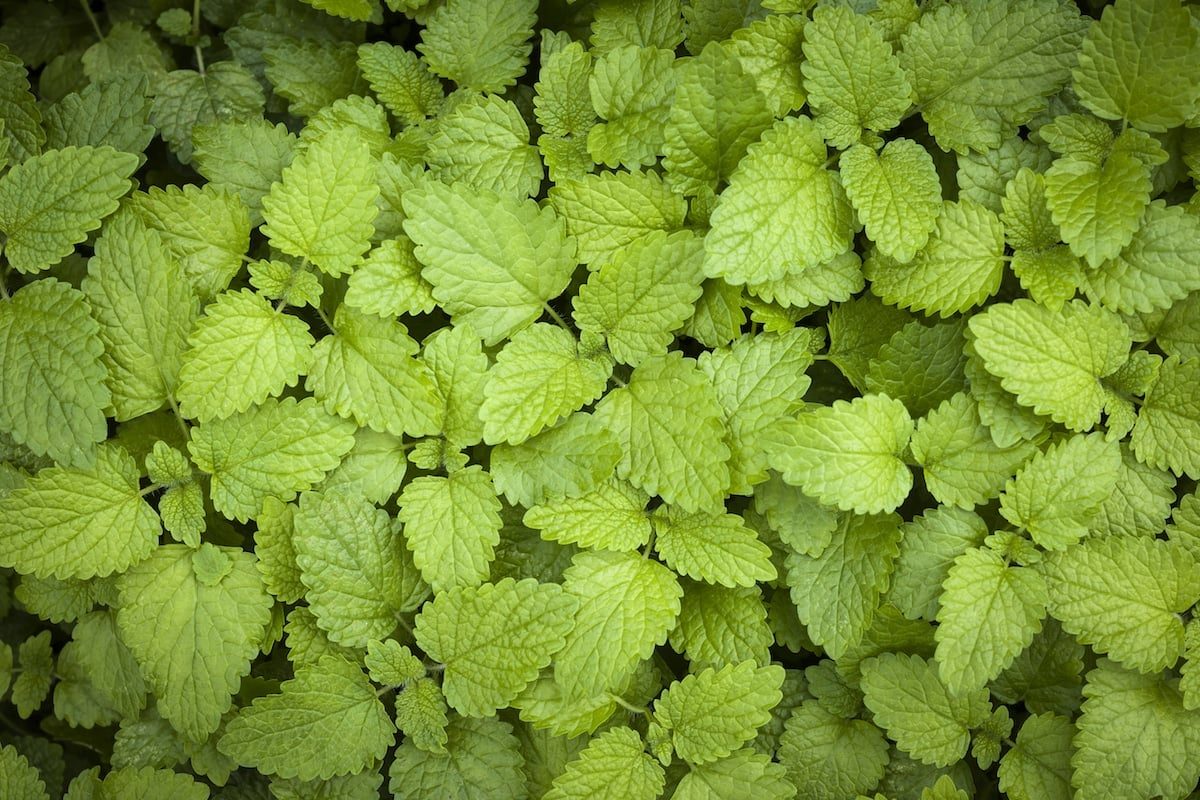
Lemon balm and lemon verbena smell alike but are not related. Lemon balm, Melissa officinalis, is a perennial herb in the mint family, native from the Mediterranean to Central Asia.12 Lemon verbena, Aloysia citrodora, is a shrub in the verbena family, native to southern Bolivia, Paraguay and northwestern Argentina.3 Their lemon scent comes from the same place, citral (a pair of compounds, geranial and neral), which leads the leaf oil of both.45 The practical difference is strength: Penn State Extension says lemon verbena has “the brightest and most intense lemon scent and flavor” of the lemony herbs.6 Leaf texture matters too, since verbena’s rough leaves are usually steeped or ground rather than eaten whole.6
Side by side
| Lemon balm | Lemon verbena | |
|---|---|---|
| Species | Melissa officinalis L.1 | Aloysia citrodora Paláu; older names include Aloysia triphylla and Lippia citrodora3 |
| Family | Lamiaceae, the mint family12 | Verbenaceae, the verbena family3 |
| The plant | Perennial herb up to 3 feet tall, hardy to Zone 516 | Shrub of 1 to 3 meters whose stems turn woody; hardy only to Zone 876 |
| Native range | Mediterranean to Central Asia1 | Southern Bolivia to northwestern Argentina, including Paraguay3 |
| Part used | Leaves, fresh or dried; essential oil24 | Leaves, fresh or dried; essential oil5 |
| Key aroma compounds | Citral (geranial and neral) and citronellal4 | Citral (geranial and neral); composition varies widely by origin57 |
| Oil in the dried leaf | 0.06% to 0.8% (EMA)4 | Pharmacopoeia minimum 3.0 ml per kg of whole leaf7 |
| Strength | Milder (Penn State ranks verbena first)6 | “Brightest and most intense” of the lemon herbs6 |
| Typical uses | Salads, soups, sauces, stuffings, liqueurs, wine, herbal teas, fruit drinks2 | Drinks, liqueurs, puddings and jams;5 tea, sorbet, ice cream, whipped cream6 |
| US food status | On FDA’s GRAS lists as a spice and as an essential oil89 | Listed among natural flavoring substances, with a use limitation (see Safety)10 |
| Flavor (editorial) | Soft lemon over a green, faintly minty background | Loud, sweet, perfumed lemon with a floral edge |
| Price | No dated, sourced comparison found | No dated, sourced comparison found |
The two oil figures are different kinds of number, a measured range for lemon balm and a quality minimum for lemon verbena, so they don’t show which leaf carries more oil.
Not related, despite the name
Kew places lemon balm in the Lamiaceae and lemon verbena in the Verbenaceae.13 They don’t look much alike either. Lemon balm is a herbaceous perennial that grows up to 3 feet and spreads readily; Penn State describes lemon verbena as a shrub whose stems become woody in their second season, with rough, lance-shaped leaves in whorls of three.6 Lemon balm survives winters to Zone 5, while lemon verbena is hardy only to Zone 8, so Penn State treats it as an annual in Pennsylvania.6
Lemon verbena’s history in Europe is comparatively recent. Sprea and colleagues say the Spanish and Portuguese introduced it to North Africa and southern Europe in the 17th century.5 For lemon balm, the European Medicines Agency notes a long tradition of medicinal use in Europe, well documented in handbooks.4
What makes them smell alike
Both oils are led by citral. The EMA describes lemon balm leaf oil as mainly citral, neral and citronellal,4 and in a 2023 study geranial and neral, the two forms of citral, were the major compounds of lemon verbena oil.5 Citral is also the main constituent of lemongrass oil.11
Figures from individual analyses vary a lot, so each belongs to its sample:
| Oil sample (scope) | Geranial | Neral | Source |
|---|---|---|---|
| Lemon balm, one Algerian sample (leaves collected near Algiers, May 2018) | 45.06% | 31.72% | Abdellatif et al.12 |
| Lemon verbena, Sprea et al.’s own samples, two distillation methods | 18.7–21.1% | 15.3–16.2% | Sprea et al.5 |
| Lemon verbena, Portugal (Santos-Gomes et al. 2005, as reviewed by Sprea et al.) | 26.8–38.3% | 20.8–29.6% | Sprea et al.5 |
| Lemon verbena, Morocco (as reviewed by Sprea et al.) | Not detected | 6.27–10.02% | Sprea et al.5 |
These come from different studies on different plants. The table does not show that lemon balm oil holds more citral than lemon verbena oil; it shows that both are citral-led oils and that lemon verbena varies so much by origin that some samples have little citral at all.5 The Algerian lemon balm oil also contained 6.42% citronellal,12 and the EMA puts β-caryophyllene and germacrene D at about 10% each of lemon balm oil.4
A widely repeated line says lemon balm’s lemon note resembles the citronella notes of lemongrass. Two things are mixed up there. Lemon balm oil shares citral with lemongrass,411 and it contains some citronellal.12 Citronella oil itself comes from related Cymbopogon species, not from lemongrass.13
The differences that change a dish
Strength. Penn State ranks lemon verbena as the most intense of the lemony herbs.6 No published measurement puts a number on the gap, so the starting amounts below are judgment.
Leaf texture. Lemon balm leaves are tender enough to tear into salads, one of the uses Britannica lists.2 Lemon verbena leaves are rougher. Penn State suggests grinding them fully with sugar in a food processor because of their texture, then using that sugar in fruit salad, shortbread or pound cake.6 Otherwise, verbena goes in as an infusion: tea, or leaves steeped for sorbet, ice cream or whipped cream.6
Infusing. Both steep well. Penn State’s lemon balm syrup adds six 4-inch sprigs to a boiling syrup of equal parts sugar and water, steeps it for 30 minutes and strains it.6 For lemon verbena, the same method is a reasonable starting point with fewer leaves, given its strength (our judgment).
Drying. Penn State says lemon verbena leaves dry easily and keep their scent and flavor for two to three years, and that dried verbena makes a good hot tea.6 We found no comparable figure for dried lemon balm.
Savory or sweet. By common practice, lemon balm’s gentler scent suits salads, sauces and stuffings, the savory uses Britannica lists,2 while lemon verbena’s sources lean to drinks and desserts: refreshing drinks, liqueurs, puddings and jams.5 Neither is limited to one side; that split is a tendency, not a rule.
Can one stand in for the other?
Yes, especially in tea. Both of our substitute pages treat the pair as each other’s first choice: see lemon balm substitutes and lemon verbena substitutes.
| Swap | Starting amount | Treatment |
|---|---|---|
| Either for the other in a mixed herbal tea blend | Same volume | Attributed (Herb Society of America) |
| Lemon verbena in place of lemon balm, as the only flavor | About half the volume, then taste | Method |
| Lemon balm in place of lemon verbena, as the only flavor | The same volume, adding more after tasting | Method |
| Lemon verbena in place of lemon balm in a salad | About half the volume, chopped very fine or ground with sugar | Method |
The one published ratio comes from the Herb Society of America’s Sunshine Tea blend, which calls for “2 tablespoons lemon verbena (or substitute lemon balm)” alongside chamomile, green tea and lavender.14 That is an equal-volume swap inside a blend where other flavors share the load. The other amounts are cautious starting points based on Penn State’s ranking of verbena as the more intense herb.6
Safety and medicinal use
Traditional use, not proven effect. The EMA’s herbal committee accepts both leaves as traditional herbal medicines for relief of mild symptoms of stress and to aid sleep, and for mild digestive complaints such as bloating and wind.1516 For both, that status rests on long-standing use. The EMA says the evidence is insufficient to establish lemon balm’s efficacy,4 and for lemon verbena it found only one published clinical study.7 So the claim that lemon balm calms and lemon verbena doesn’t is not supported: the regulator treats them the same way, and has proven neither.
Cautions. For lemon balm medicines, the EMA limits use to adults and children over 12, warns of possible drowsiness, and does not recommend use in pregnancy or breastfeeding.154 For lemon verbena, it does not recommend use in children or in pregnancy and breastfeeding, and says people allergic to plants of the verbena family should avoid it.16 These cautions apply to medicinal products, not to a sprig in a salad.
Food rules. FDA lists lemon balm among spices and essential oils generally recognized as safe.89 Lemon verbena is not on those lists; it appears among natural flavoring substances as “Lemon-verbena, Lippia citriodora,” with a ditto mark in the limitations column whose nearest stated limitation above it is “in alcoholic beverages only.”10 In the EU, herbal infusions of both are capped at 400 µg/kg of pyrrolizidine alkaloids, plant toxins that can contaminate harvests.17
A claim that lemon verbena supplies high levels of vitamins could not be traced to any source we opened.
What isn’t known
- No published measurement compares the lemon strength of the two leaves, or their citral content in the same study.
- No shelf-life figure for dried lemon balm was found.
- Apart from the Herb Society’s tea blend, no published substitution ratio exists for this pair.
- No dated, sourced price comparison.
Related
- Lemon balm and lemon verbena, the full profiles
- Lemon balm substitutes and lemon verbena substitutes
- Lemon balm vs. lemongrass, lemon balm vs. mint and lemon verbena vs. lemongrass
- Other lemon herbs: lemongrass, lemon thyme, lemon myrtle and lemon basil
Footnotes
-
Melissa officinalis L., Plants of the World Online, Royal Botanic Gardens, Kew. powo.science.kew.org · Reference work ↩ ↩2 ↩3 ↩4 ↩5 ↩6
-
Melissa Petruzzello, “Lemon balm”, Encyclopaedia Britannica. britannica.com · Reference work ↩ ↩2 ↩3 ↩4 ↩5 ↩6
-
Aloysia citrodora Paláu, Plants of the World Online, Royal Botanic Gardens, Kew. powo.science.kew.org · Reference work ↩ ↩2 ↩3 ↩4 ↩5
-
Assessment report on Melissa officinalis L., folium, European Medicines Agency. ema.europa.eu · Regulator ↩ ↩2 ↩3 ↩4 ↩5 ↩6 ↩7 ↩8 ↩9 ↩10
-
Sprea et al., “Volatile Compounds and Biological Activity of the Essential Oil of Aloysia citrodora Paláu”, Molecules, 2023. mdpi.com · Peer-reviewed ↩ ↩2 ↩3 ↩4 ↩5 ↩6 ↩7 ↩8 ↩9 ↩10 ↩11
-
Mandy L. Smith and Susan Marquesen, “Lemon-Scented Herbs in the Garden and the Kitchen”, Penn State Extension, 2025. extension.psu.edu · Reference work ↩ ↩2 ↩3 ↩4 ↩5 ↩6 ↩7 ↩8 ↩9 ↩10 ↩11 ↩12 ↩13 ↩14 ↩15
-
Assessment report on Aloysia citrodora Paláu, folium, European Medicines Agency. ema.europa.eu · Regulator ↩ ↩2 ↩3 ↩4
-
21 CFR 182.10, US Food and Drug Administration. ecfr.gov · Regulator ↩ ↩2
-
21 CFR 182.20, US Food and Drug Administration. ecfr.gov · Regulator ↩ ↩2
-
21 CFR 172.510, US Food and Drug Administration. ecfr.gov · Regulator ↩ ↩2
-
L.P.A. Oyen, Cymbopogon citratus, Plant Resources of South-East Asia (PROSEA). uses.plantnet-project.org · Reference work ↩ ↩2
-
Abdellatif et al., “Minerals, Essential Oils, and Biological Properties of Melissa officinalis L.”, Plants, 2021. pmc.ncbi.nlm.nih.gov · Peer-reviewed ↩ ↩2 ↩3
-
Tony Hill, “Lemongrass”, Encyclopaedia Britannica. britannica.com · Reference work ↩
-
Paola Legarre, “Lavender in the Kitchen”, The Herb Society of America, 2025. blog.herbsociety.org · Publication ↩
-
“Melissa leaf”, summary for the public, European Medicines Agency, 2014. ema.europa.eu · Regulator ↩ ↩2
-
European Union herbal monograph on Aloysia citrodora Paláu, folium, European Medicines Agency. ema.europa.eu · Regulator ↩ ↩2
-
Commission Regulation (EU) 2023/915, Annex I, section 2.4. eur-lex.europa.eu · Regulator ↩