Spice Comparisons · Comparison
Old Bay vs. Creole Seasoning: Celery, Salt and Heat Compared
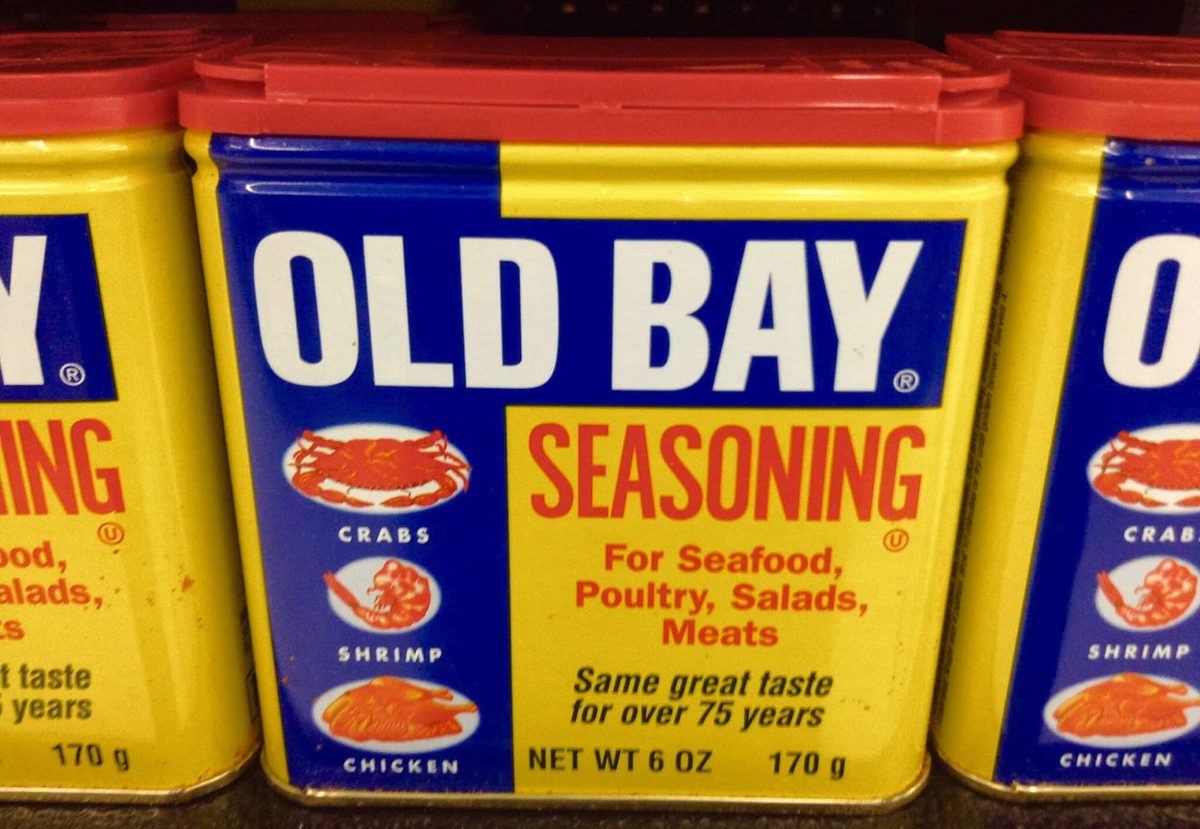
Old Bay is one product with one owner: McCormick’s seafood seasoning, built on celery salt, paprika and red and black pepper.1 Creole seasoning is a category with no fixed recipe; the best-known jars lead with salt and red pepper and name no celery at all.234 So the two differ in three ways a cook will notice: Old Bay tastes of celery seed, Creole jars carry more salt per spoonful, and Creole jars put red pepper higher on the label.1534
Side by side
| Old Bay | Creole seasoning | |
|---|---|---|
| What it is | A single branded seafood seasoning, sold by McCormick1 | A Louisiana seasoning category with no fixed recipe: ask Louisiana cooks and “you’d get 14 different” answers, per Cook’s Country2 |
| Origin | Created in Baltimore in 1939 by Gustav Brunn; McCormick bought the rights to the recipe in 19906 | Named for Louisiana Creoles, originally people born in the colony to French and Spanish settler families; Creole cooking is “city food” centered on New Orleans7 |
| Label, in order | Celery salt (salt, celery seed), spices (including red pepper and black pepper), paprika1 | Salt, red pepper, black pepper, chili powder, garlic (Tony Chachere’s);3 salt, spices (including chili pepper, red pepper and paprika), dextrose, garlic, sugar, onion (Zatarain’s)4 |
| How many spices | “18 herbs and spices” plus celery salt and paprika; the 18 are not named1 | Brands list ingredients in order but not proportions; Cook’s Country’s homemade blend uses seven ingredients2 |
| Celery | Yes, celery seed in the celery salt1 | Not named on either label above;34 Cook’s Country’s homemade blend uses celery salt2 |
| Sodium per 1/4 tsp | 125 mg; 85 mg in the 30% less sodium version58 | 340 mg (Tony Chachere’s); 300 mg (Zatarain’s)34 |
| Heat | 1,000 to 1,500 Scoville heat units on Dave DeWitt’s heat scale, a general rating, not a lab test9 | No published heat measurement found; heat comes from the capsaicinoids in the red pepper10 |
| Color | Red-orange from paprika, whose main red pigments are capsanthin and capsorubin111 | Same pigments where paprika is used;11 the USDA purchasing minimum for Creole includes paprika12 |
| Allergen note | Contains celery, a labeled allergen in the EU113 | Depends on the blend |
| Flavor (editorial) | Salty and savory, with celery seed’s green, slightly bitter note and a gentle pepper warmth | Salty, peppery and garlicky, with a warmer red-pepper finish |
| Price | No dated, sourced retail comparison found | No dated, sourced retail comparison found |
The labels are a snapshot of three well-known products, not a survey of the market. The flavor row is our description.
The differences that change a dish
Celery
Celery salt is Old Bay’s first ingredient, and celery seed is part of it.1 Neither Tony Chachere’s nor Zatarain’s names celery on its label.34 The USDA’s purchasing specification for Creole seasoning, written for government buyers rather than shoppers, doesn’t list it either: its minimum is salt, paprika, granulated garlic, cayenne, black pepper, mustard and fresh lemon peel.12 Cook’s Country’s homemade Louisiana seasoning is the exception among the sources here, with a tablespoon of celery salt among roughly 12 tablespoons of spice.2 In our judgment, that celery note is what makes Old Bay taste like Old Bay, and it is the one thing a Creole jar won’t supply.
Salt
Both are salt-first seasonings, but not equally salty. Per quarter teaspoon, Old Bay carries 125 mg of sodium, Zatarain’s Creole 300 mg and Tony Chachere’s 340 mg.543 Spoon for spoon, by our arithmetic, Tony Chachere’s has about 2.7 times the sodium of Old Bay. A recipe written around one will come out noticeably more or less salty with the other. For scale, the FDA’s Daily Value for sodium is less than 2,300 mg a day.14
Heat
Old Bay sits at the mild end: Dave DeWitt’s heat scale places it at 1,000 to 1,500 Scoville heat units, alongside ancho and pasilla chiles.9 That is a rating, not a measurement of a particular tin. No comparable figure exists for any Creole seasoning we found. Both Creole labels above put red pepper among the first two ingredients or ingredient groups, while Old Bay folds its red pepper into “spices” after the celery salt.134 By our reading of label order, the Creole jars are likely to be the hotter of the two, but no source measures it.
The rest of the spice list
McCormick describes Old Bay as celery salt, 18 herbs and spices, and paprika, and names only red and black pepper among the 18.1 Lists that put mace, cardamom, cloves, mustard or bay leaf in Old Bay circulate widely, but the label confirms none of them. The closest thing to a clue is family recollection: Brunn’s son told Baltimore Heritage that his father added small amounts of “the most unlikely things, including cinnamon and nutmeg and cloves.”6 That describes the original, not today’s tin.
On the Creole side, Cook’s Country found that commercial Louisiana blends generally combine paprika, garlic, salt and pepper with a bit of heat, and that some add dried herbs such as thyme or oregano.2 Garlic is the clearest flavor that Creole jars name and Old Bay doesn’t.134
Where each comes from
Old Bay began as a crab seasoning. Gustav Brunn, a spice merchant who had fled Nazi Germany, arrived in Baltimore in 1939 and opened the Baltimore Spice Company across from the city’s wholesale fish market.6 He named the blend after the Old Bay steamship line, and sales picked up once he handed out samples to the local crab steamers.6 The company sold the rights to the original recipe to McCormick in 1990.6
Creole seasoning has no single maker or date. The word names a people and a cuisine: the Louisiana tourism office’s guide says Creole originally referred to people born in the colony to French and Spanish settler families, and calls Creole cooking “city food,” centered on New Orleans.7 When bottled Creole seasoning first appeared is not documented in any source we reviewed.
Can one stand in for the other?
In a pinch, yes, but salt and celery decide how well. We found no published ratio for swapping one for the other, so every amount below is either arithmetic from the Nutrition Facts panels (Computed, for the products named) or a starting point (Method).
| Swap | Starting amount | Treatment |
|---|---|---|
| Old Bay for Tony Chachere’s Creole | 1:1, plus about 1/3 tsp table salt per teaspoon of Old Bay; add a pinch of garlic powder and cayenne if you want the Creole character | Computed (salt), Method (spice) |
| Old Bay for Zatarain’s Creole | 1:1, plus a little over 1/4 tsp table salt per teaspoon | Computed (salt), Method (spice) |
| Tony Chachere’s Creole for Old Bay | About 1/3 as much (0.37 times) for the same salt, then make up the volume with paprika and a pinch of celery seed | Computed (salt), Method (spice) |
| Zatarain’s Creole for Old Bay | About 2/5 as much (0.42 times) for the same salt, then paprika and a pinch of celery seed | Computed (salt), Method (spice) |
The salt figures work like this. A teaspoon of Old Bay carries about 500 mg of sodium, Tony Chachere’s about 1,360 mg and Zatarain’s about 1,200 mg, from the quarter-teaspoon figures on their labels.534 Morton lists its table salt at 590 mg of sodium per quarter teaspoon, about 2,360 mg per teaspoon.15 Making up the 860 mg gap to Tony Chachere’s takes about 0.36 teaspoon of salt; the 700 mg gap to Zatarain’s, about 0.30 teaspoon. If your recipe was written for a paprika-led homemade Creole blend like Cook’s Country’s,2 skip the extra salt and season to taste.
What no swap fixes: Creole seasoning in place of Old Bay loses the celery note unless you add celery seed, and Old Bay in place of Creole seasoning brings celery where a Creole dish may not want it. Both are editorial judgments; no source has tested these swaps. If you want a lower-sodium Old Bay, McCormick sells a 30% less sodium version, with 85 mg per quarter teaspoon, that it says has the same flavor.8
When to reach for each
- Old Bay for crab, shrimp and other seafood, which is what it was made for,6 and for the uses McCormick suggests: fries, roasted vegetables, pizza, popcorn and burgers.1
- Creole seasoning for the Louisiana dishes Cook’s Country pairs with its blend: chicken jambalaya, chicken sauce piquant and pork grillades.2 Jambalaya is not a New Orleans dish alone. Britannica describes a New Orleans version with tomatoes and a Cajun version of the southern bayou country without them.16 For the dish itself, the cuisine matters more than the jar; see jambalaya spices.
Whichever you use, season with the blend first and add plain salt only after tasting, since both list salt in their first ingredient.134
Celery allergy
Celery is one of the allergens that must be declared on food labels in the EU.13 It is not one of the major food allergens the FDA lists for US labels.17 Old Bay contains celery seed.1 The two Creole labels above don’t name celery,34 but Zatarain’s lists “spices” without naming every one, and US rules don’t require celery to be called out, so a label alone can’t rule it out. That last point is our reading of the FDA list, not a statement about any product.
What isn’t known
- McCormick does not publish the 18 herbs and spices in Old Bay, so a full ingredient comparison isn’t possible.1
- No published heat measurement exists for any Creole seasoning; Old Bay’s figure is a heat-scale rating, not a lab test.9
- No source gives a tested ratio for swapping Old Bay and Creole seasoning; the amounts above are salt arithmetic and starting points.
- Brands publish ingredient order, not proportions.
Related
- Old Bay seasoning and Creole seasoning
- Creole seasoning substitutes
- Cajun vs. Creole seasoning, Cajun seasoning and Cajun seasoning substitutes
- The ingredients: celery salt, celery seeds, paprika, cayenne pepper, black pepper, garlic powder
- Dishes: jambalaya spices and clam chowder spices
Footnotes
-
OLD BAY Classic Seafood Seasoning, product page, McCormick & Company. mccormick.com · Merchant ↩ ↩2 ↩3 ↩4 ↩5 ↩6 ↩7 ↩8 ↩9 ↩10 ↩11 ↩12 ↩13 ↩14 ↩15 ↩16
-
Cook’s Country, “Louisiana Cajun or Creole Seasoning”, America’s Test Kitchen, 2019. americastestkitchen.com · Publication ↩ ↩2 ↩3 ↩4 ↩5 ↩6 ↩7 ↩8
-
Tony Chachere’s Original Creole Seasoning, ingredients and nutrition label, via Giant Food Stores. giantfoodstores.com · Merchant ↩ ↩2 ↩3 ↩4 ↩5 ↩6 ↩7 ↩8 ↩9 ↩10 ↩11 ↩12
-
Zatarain’s New Orleans Style Creole Seasoning, ingredients and nutrition label, via H-E-B. heb.com · Merchant ↩ ↩2 ↩3 ↩4 ↩5 ↩6 ↩7 ↩8 ↩9 ↩10 ↩11 ↩12
-
Old Bay Seasoning, 16 oz, Nutrition Facts and ingredients, via ShopRite. shoprite.com · Merchant ↩ ↩2 ↩3 ↩4
-
Francesca Cohen, “Gustav Brunn’s Baltimore Spice Company”, Explore Baltimore Heritage, 2022. explore.baltimoreheritage.org · Publication ↩ ↩2 ↩3 ↩4 ↩5 ↩6
-
Jay D. Ducote, “Cajun vs. Creole Food: What is the Difference?”, Explore Louisiana (Louisiana Office of Tourism). explorelouisiana.com · Publication ↩ ↩2
-
Old Bay 30% Less Sodium Seasoning, Nutrition Facts and description, via ShopRite. shoprite.com · Merchant ↩ ↩2
-
Dave DeWitt, “Heat Scale Updated”, Fiery Foods & Barbecue Central, 2008. fieryfoodscentral.com · Publication ↩ ↩2 ↩3
-
Bosland and Walker, “Measuring Chile Pepper Heat”, New Mexico State University, 2010. pubs.nmsu.edu · Reference work ↩
-
“Paprika extract”, Chemical and Technical Assessment, 77th JECFA, FAO/WHO. fao.org · Regulator ↩ ↩2
-
Commercial Item Description A-A-20001C, Spices and Spice Blends, USDA Agricultural Marketing Service, 2023. ams.usda.gov · Regulator ↩ ↩2
-
Regulation (EU) No 1169/2011, Annex II, EUR-Lex. eur-lex.europa.eu · Regulator ↩ ↩2
-
“Sodium in Your Diet”, U.S. Food and Drug Administration. fda.gov · Regulator ↩
-
Morton Iodized Table Salt, product page, Morton Salt. mortonsalt.com · Merchant ↩
-
“Jambalaya”, Encyclopaedia Britannica. britannica.com · Reference work ↩
-
“Food Allergies”, U.S. Food and Drug Administration. fda.gov · Regulator ↩