Cooking · Cooking with
Cooking With Coriander Seed: Toasting, Grinding, Pairing and Pickling
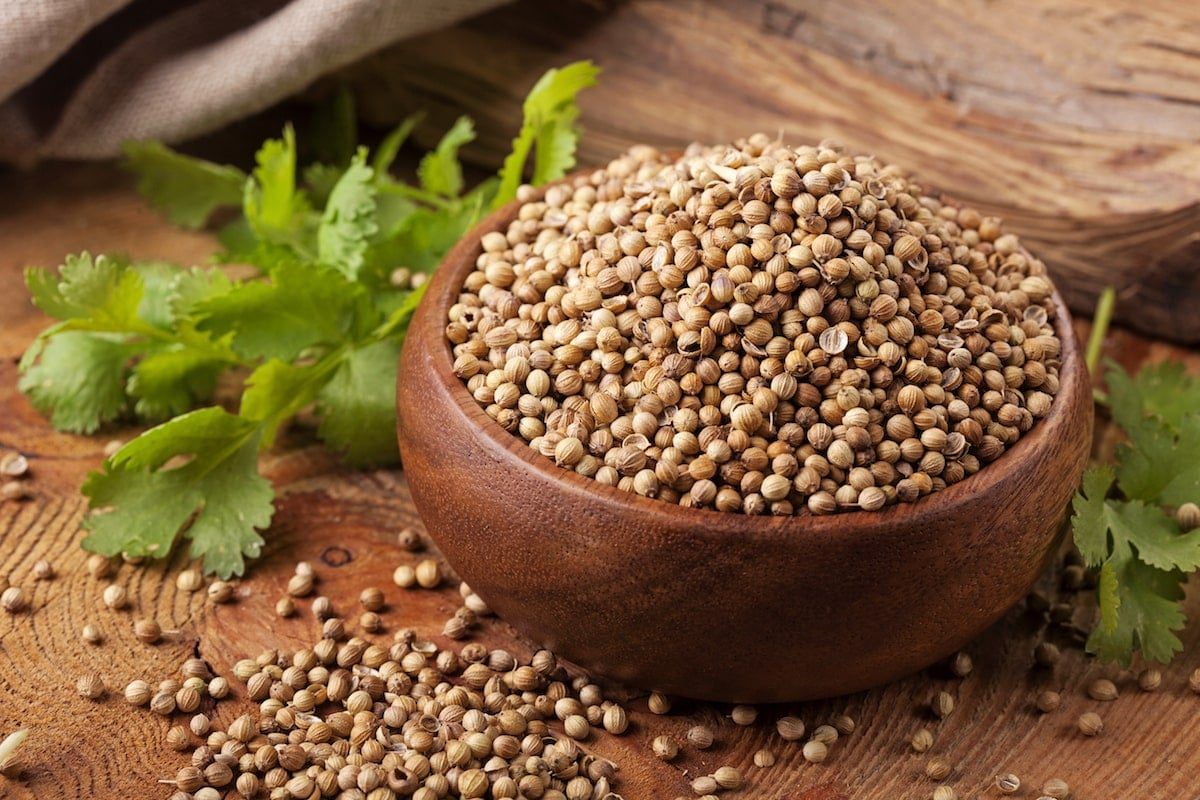
Coriander, in American usage, is the dried seed (botanically the fruit) of Coriandrum sativum, the plant whose leaves are sold as cilantro. Britannica notes that parts of the plant are used as both an herb and a spice.1 The seed is the spice. A 2023 review describes its flavor as mild, sweet, warm and aromatic,2 and that mildness shapes how it is used: generously, usually alongside other spices, and often toasted. For the plant and its chemistry, see the coriander profile. For the leaves, see cooking with cilantro.
Quick guide
| Do | Source |
|---|---|
| Buy whole seed and grind as needed | PROSEA: whole dried fruits keep their oil for years; crushed fruits lose it quickly3 |
| Toast or bloom it, as most recipes do, but watch the heat | Tarla Dalal dry-roasts 1 to 2 minutes on medium; ATK warns ground spices scorch fast45 |
| Use it in quantity | Up to 40% of curry powder (PROSEA); 3 parts to 1 of cumin (Tarla Dalal)34 |
| Keep it whole in pickles | NCHFP: ground spices can darken pickles6 |
Whole or ground
Whole seed keeps far better. PROSEA says dried coriander fruits stored dry keep their essential oil for several years without loss, but crushed fruits lose it quickly.3 Oregon State Extension makes the same point more generally: crushing or grinding herbs and seeds for storage increases the loss of aroma and flavor.7 So buy whole, grind small batches, and if you do buy ground, buy only what you will use soon; that last advice is common practice.
Converting (Attributed): McCormick gives 1 teaspoon of coriander seeds as equal to 1 1/4 teaspoons of ground coriander.8
Toasting and blooming
Most recipes heat coriander before using it, in one of two ways.
Dry toasting. Great British Chefs says the whole spices for garam masala are often toasted first to release their oils before grinding.9 Tarla Dalal’s coriander-cumin powder dry-roasts the coriander seeds on a medium flame for 1 to 2 minutes, then the cumin for about a minute, and warns that burnt seeds taste bitter.4 Toast until fragrant and a shade darker, shake the pan, and tip the seeds out to cool before grinding. A common claim says Indian cooks toast coriander until very dark; we found no source for that.
Toasting is not universal. Madhur Jaffrey’s garam masala for Saveur grinds its whole spices untoasted.10 Both approaches are published; it comes down to the flavor you want.
Blooming in fat. In Indian tempering, whole or ground spices are heated in hot oil or ghee, and the flavored fat goes into or over the dish.11 America’s Test Kitchen cautions that ground spices burn fairly quickly when bloomed, giving a scorched flavor,5 so ground coriander goes into the fat briefly or after the onions have softened, while whole seeds can sizzle a little longer. The timing advice is common practice.
How much to use
Coriander is a spice you can use in volume. PROSEA notes that curry powder can contain up to 40% coriander.3
Amounts (Attributed):
| Recipe or blend | Coriander share |
|---|---|
| Curry powder, per PROSEA3 | Up to 40% |
| Tarla Dalal’s dhana jeera (coriander-cumin powder)4 | Prefers 3 parts coriander to 1 of cumin; notes many households use 2:1 or 1:1 |
| The Spice House, corned beef12 | 5 parts pickling spice to 1 part whole coriander seed |
Method starting point: In a spice rub or a pot of curry for four with no recipe to follow, 1 to 2 teaspoons of ground coriander is a reasonable start; more is rarely a problem. That is a starting point, not a published figure. If you do overshoot, see too much coriander.
Pairings and dishes
Cumin. Coriander and cumin are the classic pair, and Tarla Dalal’s dhana jeera powder is simply the two toasted and ground together, used in most Indian vegetable dishes.4 The contrast is a matter of taste: cumin brings earthy warmth, coriander brings a lighter, citrusy sweetness. See coriander vs. cumin.
Blends. Beyond curry powder,3 coriander is a regular in garam masala recipes and in pickling spice; The Spice House even suggests adding extra whole coriander to its pickling blend for corned beef.12
Dishes. The 2023 review lists stews, soups and salads.2 Wisconsin Extension adds cookies, baked goods, soups and casseroles, whole or ground, and notes that Arabic cooking uses both the leaves and the seeds in pickles, curries and chutneys.13
Drinks. Belgian witbier is brewed with coriander; Clemson Extension credits the coriander with the beer’s orange and citrus aromas.14
Pickles: keep the seeds whole
Commercial pickling spice blends use whole coriander seed (see pickling spice), and there is a reason not to swap in ground. The National Center for Home Food Preservation lists ground spices as one cause of dark or discolored pickles, and advises whole spices tied loosely in a cheesecloth bag so they can be removed before canning. It also lists cooking spices too long in the vinegar, or using too many, as a cause of a strong, bitter taste.6 A common claim says whole seeds keep pickles crunchier; no source we found supports that.
Storage
Keep coriander airtight, in the dark and away from heat; UC Cooperative Extension advises storing spices in a dark place away from sunlight.15 How long it lasts is a matter on which named sources disagree, and none of their figures were measured on coriander. The comparison table is on how to store coriander.
Related pages
- Coriander substitutes
- Coriander vs. cilantro, coriander vs. cumin, coriander vs. parsley
- Dried coriander vs. fresh
Footnotes
-
“Coriander”, Encyclopaedia Britannica. britannica.com · Reference work ↩
-
Al-Khayri et al., “Essential Oil from Coriandrum sativum: A Review on Its Phytochemistry and Biological Activity”, Molecules, 2023. mdpi.com · Peer-reviewed ↩ ↩2
-
Coriandrum sativum, Plant Resources of South-East Asia (PROSEA). uses.plantnet-project.org · Reference work ↩ ↩2 ↩3 ↩4 ↩5 ↩6
-
Tarla Dalal, “How To Make Coriander Cumin Seeds Powder”, 2025. tarladalal.com · Publication ↩ ↩2 ↩3 ↩4 ↩5
-
“How to Bloom Spices”, America’s Test Kitchen, 2023. americastestkitchen.com · Publication ↩ ↩2
-
“Causes and Possible Solutions for Problems with Pickled Foods”, National Center for Home Food Preservation. nchfp.uga.edu · Reference work ↩ ↩2
-
Nellie Oehler, “Drying herbs” (SP 50-921), Oregon State University Extension Service. extension.oregonstate.edu · Reference work ↩
-
“How to Grind Your Own Spices, Plus Spice Conversions for Your Favorite Seasonings”, McCormick, 2025. mccormick.com · Merchant ↩
-
“How to make garam masala”, Great British Chefs, 2025. greatbritishchefs.com · Publication ↩
-
Madhur Jaffrey, “Garam Masala”, Saveur, 2014. saveur.com · Publication ↩
-
Monica Bhide, “The Crackling Spices of Indian Tempering”, NPR, 2011. npr.org · Publication ↩
-
Pickling Spices Blend, product page, The Spice House. thespicehouse.com · Merchant ↩ ↩2
-
Susan Mahr, “Cilantro”, Wisconsin Master Gardener Program, University of Wisconsin-Madison Extension, 2017. mastergardener.extension.wisc.edu · Reference work ↩
-
Alex Ryan Thompson, “Beer Style Highlight: Belgian Witbier”, Clemson Cooperative Extension, 2025. hgic.clemson.edu · Reference work ↩
-
Anna Martin, “Add a Little Spice to Your Life! Part II”, University of California Cooperative Extension, 2002. ucanr.edu · Reference work ↩