Blog · Profile
The Best Salt for Cooking: Which Salt to Use for Which Job
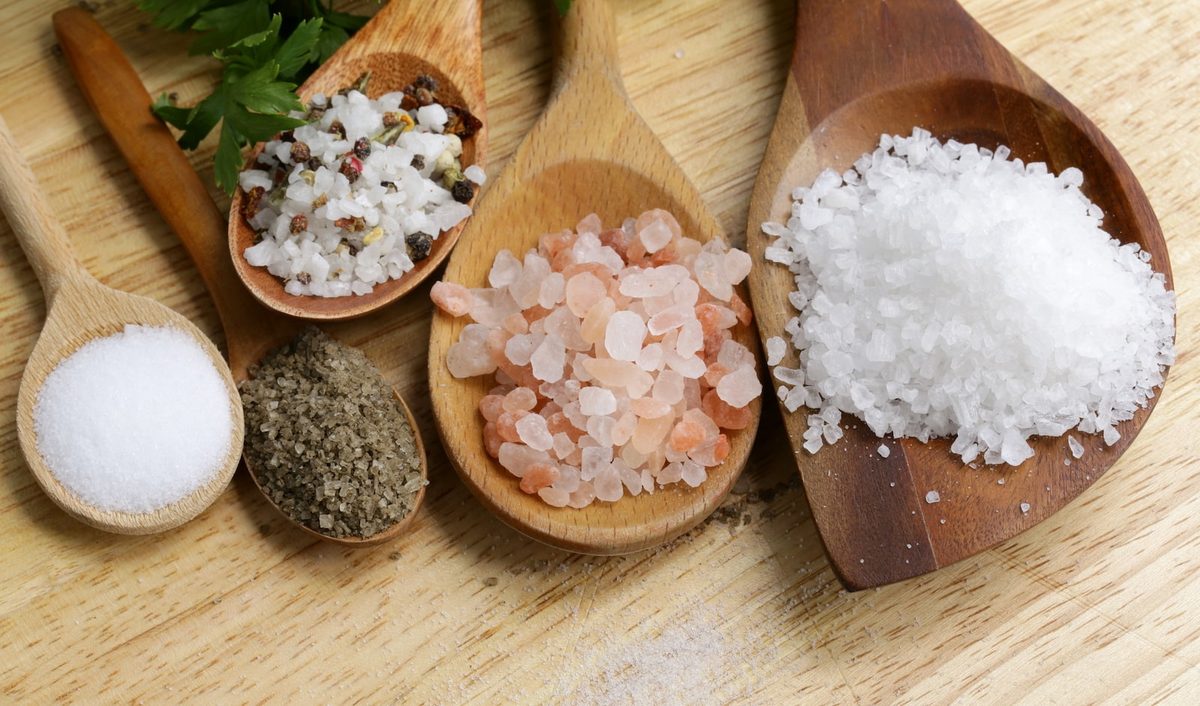
There is no single best salt for cooking, but there is a clear answer for each job. Every cooking salt is essentially sodium chloride, and once salt dissolves into a dish the type makes little difference to taste. What does differ is crystal size, which decides how much salt is in a spoonful, how easily you can pinch it, and how it looks and crunches on top of food. The practical answer for most kitchens: cook with one kosher or table salt you know well, and keep a flaky or coarse sea salt for finishing.
Quick answer by job
| Job | Best choice | Why |
|---|---|---|
| Everyday seasoning by hand | Kosher salt | Coarse grains are easy to pinch and spread evenly (cooking judgment); originally used for koshering meat12 |
| Baking and following recipes | Fine table salt, or weigh any salt | Fine, uniform grains measure consistently; a teaspoon is about 6 g whatever the brand3 |
| Pickling and canning | Canning or pickling salt | Additives in table salt can cloud brine; iodized salt can darken pickles4 |
| Finishing at the table | Flaky or coarse sea salt, fleur de sel | ATK recommends sea salts as finishing salts1 |
| Iodine intake | Iodized table salt | Specialty salts are not usually iodized5 |
Measured values
9 figures, sourced| Measure | Value | Scope | Source |
|---|---|---|---|
| Sodium chloride, minimum Limit | at least 97 % dry basis | Codex CXS 150-1985 food-grade salt (sea, rock and brine salt) | services.bis.gov.in |
| Sodium chloride | 83 to 99 % | Swiss FSVO survey of 25 salts, 2016 | warwick.ac.uk |
| Sodium | 38.9 to 40.7 % by weight | sea salt, 7 samples, Swiss FSVO 2016 | warwick.ac.uk |
| Sodium | 37.7 to 38.2 % by weight | Himalaya salt, 4 samples, Swiss FSVO 2016 | warwick.ac.uk |
| Sodium | 36.9 to 38.8 % by weight | fleur de sel, 4 samples, Swiss FSVO 2016 | warwick.ac.uk |
| Sodium Nutrient | about 40 % | table salt, kosher salt and most sea salts (American Heart Association) | heart.org |
| Moisture, maximum Limit | 12 % | Fleur de sel de Guérande PGI specification | info.agriculture.gouv.fr |
| Insoluble matter, maximum Limit | 1 % | Guérande gray salt, PGI specification | info.agriculture.gouv.fr |
| Insoluble matter, maximum Limit | under 0.20 % | Fleur de sel de Guérande, PGI specification | info.agriculture.gouv.fr |
Each figure is quoted as its source states it, with the samples or standard it applies to. Where sources differ, both are shown; nothing is averaged. All measured values
Why the type matters less than people think
Chemically, the salts on a supermarket shelf are the same thing. America’s Test Kitchen notes that salt in its most basic form is sodium chloride whatever the source,1 and the Codex Alimentarius standard for food-grade salt, which covers salt from the sea, rock deposits and brine, requires at least 97% sodium chloride on a dry basis.6
A Swiss government survey of 25 salts found that all of them were 83% to 99% sodium chloride, and concluded that specialty salts “do not possess any advantages over standard salts” and lack nutritional properties that would make them a recommended choice.7 Its sodium figures show how narrow the range is:
| Salt type (Swiss FSVO, 2016) | Samples | Sodium, % by weight |
|---|---|---|
| Sea salt | 7 | 38.9 to 40.7 |
| Himalaya salt | 4 | 37.7 to 38.2 |
| Fleur de sel | 4 | 36.9 to 38.8 |
The American Heart Association puts table salt at about 40% sodium and says table salt, kosher salt and most sea salts all contain about that much.8
Taste tests point the same way. ATK found that sea salts vary only slightly in flavor and taste no different from table salt once mixed into food, and found no detectable difference in taste between iodized and noniodized salt.1 A widely repeated claim that table salt tastes bitter because of its iodine is not supported by that test.
What does matter: crystal size and measuring
The same teaspoon holds very different amounts of salt depending on the crystals. ATK weighed a teaspoon of table salt at about 6 g regardless of brand, Morton kosher salt at 4.8 g and Diamond Crystal kosher salt at 2.8 g.3 That gap is why swapping salts by volume goes wrong, and the published conversions do not agree:
| Swap for 1 teaspoon of table salt | Morton kosher | Diamond Crystal kosher | Source |
|---|---|---|---|
| ATK’s rule of thumb | 1 1/2 teaspoons | 2 teaspoons | 1 |
| Morton’s conversion chart (Morton products only) | 1 1/4 teaspoons | not covered | 9 |
| Computed from ATK’s gram weights (6.0 ÷ 4.8; 6.0 ÷ 2.8) | 1 1/4 teaspoons | about 2 1/8 teaspoons | 3 |
Our recommendation from that: weigh salt when a recipe gives grams; when it names a brand, use that brand; when it just says “kosher salt”, start low and taste. Morton’s chart treats its own table salt, fine and coarse sea salt and canning salt as equal by the teaspoon,9 but that applies to Morton products only.
The main salts, one by one
Table salt
Fine, uniform crystals made by rapid vacuum evaporation, usually with an anticaking agent.1 Morton’s iodized salt, for example, lists salt, calcium silicate (an anticaking agent), dextrose and potassium iodide.10 Its small, even grains dissolve quickly and measure consistently, which makes it a good default for baking (cooking judgment). Iodized table salt is the main salt source of iodine, which the body needs to make the thyroid hormones thyroxine and triiodothyronine.5 See table salt and iodized vs. non-iodized salt.
Kosher salt
Named for koshering, the process of drawing blood from meat under Jewish dietary law, for which its coarse grains were originally used.12 Its larger crystals are easy to pinch and spread over meat and vegetables; that is cooking judgment. The two big US brands behave very differently (see the table above): Diamond Crystal’s light crystals are forgiving, Morton’s denser flakes put more salt in each spoonful.3 Kosher salt is not usually iodized.5 See kosher salt and cooking with kosher salt.
Sea salt
Salt from seawater, one of the sources the Codex standard names for food-grade salt,6 sold in grain sizes from fine to flakes and coarse crystals. Sea salt may contain trace minerals such as magnesium, potassium and calcium, but the AHA says total sodium intake is what matters for heart health.8 ATK found that sea salt tastes no different from table salt once mixed into food, and recommends it as a finishing salt.1 See sea salt, cooking with sea salt and Maldon sea salt.
Fleur de sel
The thin layer of crystals that forms in sheets on the surface of seawater salt pans and is skimmed off by hand.11 The best-documented source is Guérande, on France’s Atlantic coast, where “Fleur de sel de Guérande” is a protected geographical indication; its specification requires the salt to be hand-harvested, unwashed and free of additives, with moisture no higher than 12%.11 It is a finishing salt; using it in a pot of soup wastes the texture you paid for (our judgment). We found no sourced price data. See fleur de sel.
Sel gris (gray salt)
In Guérande, gray salt crystallizes on the clay bottom of the same pans that yield fleur de sel and is harvested by hand separately; its gray color comes from fine clay particles, not from extra minerals, and the specification allows up to 1% insoluble matter against under 0.20% for fleur de sel.11 “Celtic Sea Salt” is a brand, founded in 1976,12 not a general term for gray salt. Its coarse, damp crystals suit finishing meat and roasted vegetables (cooking judgment). See Celtic sea salt.
Himalayan pink salt
Rock salt mined in Pakistan, which produces Himalayan pink salt for commercial distribution; the state-owned Pakistan Mineral Development Corporation runs the Khewra mine.1314 Its pink color comes from traces of iron oxide.13 An Australian study of 31 pink salts found that the minerals in a normal 5 g serving made no clinically significant contribution to nutrient intake, and that getting a meaningful amount would mean eating over 30 g a day, with far too much sodium.13 Use it for color and crunch, not health. See Himalayan salt and cooking with Himalayan salt.
Canning and pickling salt
Salt sold specifically for canning and pickling. The National Center for Home Food Preservation recommends it: the anticaking agents in table salt can make brine cloudy, and iodized salt can darken pickles, although pickles can be made safely with either iodized or noniodized table salt.4 Flake salts vary in density and are not recommended for pickling.4 See pickling salt.
Health and sodium
Whichever salt you choose, the sodium is the same by weight, give or take a few percent.87 A larger-crystal salt has less sodium per teaspoon only because fewer crystals fit in the spoon.8 The FDA’s Daily Value for sodium is less than 2,300 mg a day,15 and the World Health Organization advises adults to take in less than 2,000 mg a day, naming raised blood pressure as the main health effect of high-sodium diets.16 If you rely on salt for iodine, keep iodized table salt in the kitchen, since sea salt, kosher salt, Himalayan salt and fleur de sel are not usually iodized.5
Related pages
Comparisons: kosher salt vs. table salt, kosher salt vs. sea salt, table salt vs. sea salt, Himalayan salt vs. table salt, fleur de sel vs. sea salt and pickling salt vs. kosher salt. Other salts: rock salt, smoked sea salt, black salt and truffle salt. If a dish is already too salty, see too much salt.
Footnotes
-
Salt Types and Measurements, America’s Test Kitchen. americastestkitchen.com · Publication ↩ ↩2 ↩3 ↩4 ↩5 ↩6 ↩7 ↩8
-
“What’s the difference between kosher salt and other salt?”, Tufts Health & Nutrition Letter. nutritionletter.tufts.edu · Publication ↩ ↩2
-
Kate Shannon Levine, “The Best Kosher Salt”, America’s Test Kitchen, 2019. americastestkitchen.com · Publication ↩ ↩2 ↩3 ↩4
-
Salts Used in Pickling, National Center for Home Food Preservation. nchfp.uga.edu · Reference work ↩ ↩2 ↩3
-
Iodine: Fact Sheet for Health Professionals, NIH Office of Dietary Supplements. ods.od.nih.gov · Regulator ↩ ↩2 ↩3 ↩4
-
Standard for Food Grade Salt (CXS 150-1985), Codex Alimentarius Commission. services.bis.gov.in · Standard ↩ ↩2
-
Esther Infanger and Max Haldimann, Report on the composition of prevalent salt varieties, Swiss Federal Food Safety and Veterinary Office, 2016. warwick.ac.uk · Regulator ↩ ↩2
-
Sodium Sources: Where Does All That Sodium Come From?, American Heart Association. heart.org · Reference work ↩ ↩2 ↩3 ↩4
-
Salt Conversion Chart, Morton Salt. mortonsalt.com · Merchant ↩ ↩2
-
Morton Iodized Table Salt, Morton Salt. mortonsalt.com · Merchant ↩
-
Cahier des charges de l’IGP Sel de Guérande / Fleur de sel de Guérande, French Ministry of Agriculture, 2025. info.agriculture.gouv.fr · Regulator ↩ ↩2 ↩3
-
About Celtic Sea Salt, Celtic Sea Salt. celticseasalt.com · Merchant ↩
-
Fayet-Moore F, et al., “An Analysis of the Mineral Composition of Pink Salt Available in Australia”, Foods, 2020. mdpi.com · Peer-reviewed ↩ ↩2 ↩3
-
Pakistan Mineral Development Corporation. pmdc.gov.pk · Merchant ↩
-
Sodium in Your Diet, U.S. Food and Drug Administration. fda.gov · Regulator ↩
-
Sodium reduction, World Health Organization, 2026. who.int · Regulator ↩