Spice Substitutes · Substitutes
Chaat Masala Substitutes: Rebuild the Sour, Salty, Sulfurous Blend
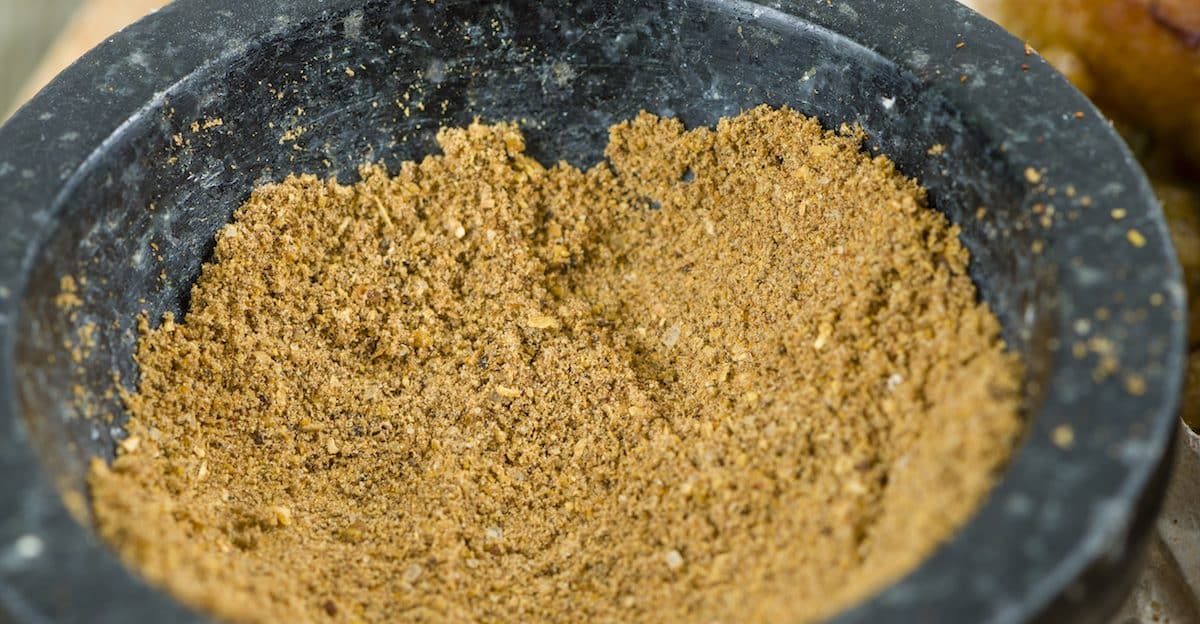
Chaat masala is a finishing seasoning for chaat, the family of Indian snacks that includes sev puri and papri chaat, and for cut fruit and vegetables.1 It does three jobs at once. Amchur (dried mango powder) gives it its tang,1 black salt gives the classic chatpata aroma,1 and roasted cumin and black pepper add warmth and bite.12 The black salt’s eggy smell comes from hydrogen sulfide: Germany’s Federal Institute for Risk Assessment (BfR) measured about 200 mg/kg in one sample.3 A good substitute has to cover the sour and the salty, at least. Most other spice blends cover neither.
Quick answer
| What you have | Best substitute | Starting amount | Treatment |
|---|---|---|---|
| Amchur, black salt, cumin, pepper | Make your own chaat masala | Published recipes below | Attributed |
| Amchur, pepper and salt | 3:1:1 amchur, pepper, salt | Same amount as the chaat masala | Attributed (mix), Method (amount) |
| No amchur | Lemon juice over cumin, pepper and black salt | Squeeze of lemon to taste | Method |
| Anardana instead of amchur | Anardana powder with salt and pepper | Same amount as the chaat masala, then taste | Method |
| Only other blends on the shelf | Garam masala or curry powder, plus a sour ingredient and salt | Not recommended alone | Method |
How the ratios on this page are labeled
Every ratio carries one of four labels.
- Computed: based on a measurable physical relationship, with the source named.
- Attributed: a named source publishes this ratio. We quote it as theirs.
- Disputed: named sources give different answers to the same swap. We show each one and do not average them.
- Method: we found no published ratio. We give a direction and a cautious starting point, and say so.
The recipes and the 3:1:1 mix below are published by named cooks. None of them says how much of its mix replaces a given amount of store-bought chaat masala, so that step is Method throughout.
If you have the ingredients: make your own
This is the real substitute, because chaat masala is only a handful of pantry items. There is no fixed formula. Three published recipes agree on amchur, black salt, cumin and pepper, and differ on the rest:
| Recipe | Amchur | Black salt | Cumin | Black pepper | Other | Source |
|---|---|---|---|---|---|---|
| Anupa Kurian, Gulf News | 1 tbsp | 1 tbsp | 1 tbsp, roasted, ground | 1/4 tbsp | 1/4 tsp Kashmiri chili (optional), 1/4 tsp pink salt | 2 |
| Rachna Parmar, Rachna Cooks | 2 tbsp | 1 tsp (or Himalayan pink salt) | 1.5 tbsp seeds | 1 tbsp peppercorns | 3 tbsp coriander seeds, 1/2 tsp hing, 1/2 tsp chili (optional), 1 tsp salt | 4 |
| Tarla Dalal | Yes | Yes | Seeds, dry-roasted about 1 minute | Yes, unroasted | Asafoetida, salt | 1 |
These are different cooks’ blends, not measurements of one product, so we show them side by side rather than combine them. Kurian’s is heavy on black salt, a full tablespoon to a tablespoon of amchur.2 Parmar’s is milder in salt and adds a good deal of coriander.4 Pick the one closest to the brand you usually buy.
Ratio (Attributed recipes, Method amount): Use your homemade blend in the same amount as the store-bought chaat masala the recipe calls for, then taste. If you roast the cumin, do it only until fragrant; Tarla Dalal warns against burning it.1
If you have amchur, pepper and salt
The 3:1:1 mix
Food writer Rachna Parmar’s quickest substitute is amchur with pepper and black salt: “3 parts amchur powder and 1 part each pepper powder and salt.”5 It covers the two jobs that matter most, sour and salty.
Why it works: amchur is the source of chaat masala’s tang,1 and Katzer attributes amchur’s sourness to citric acid and related compounds.6 Black salt supplies the sulfurous note. The BfR describes that sulfurous taste as the one cooks are after.3 Ordinary salt will season the dish but will not give that smell. What the mix lacks is roasted cumin; if you have some, a little ground roasted cumin brings it closer to the published recipes above.2
Ratio (Attributed mix, Method amount): Parmar’s proportions are hers.5 Use the same amount of the mix as the chaat masala in your recipe, and taste before adding more salt.
If you have no amchur
Lemon juice over cumin, pepper and black salt
Parmar suggests mixing cumin powder, pepper and black salt, then adding a sprinkling of lemon juice.5 Lemon brings sourness and liquid, so this suits fruit chaat, salads and dishes that are already moist, not dry snacks that should stay crisp.
Ratio (Method): No published amounts were found. Season with the dry mix first, then add lemon a few drops at a time and taste.
Anardana powder with salt and pepper
Parmar also suggests dried pomegranate powder (anardana) mixed with black salt or regular salt.5 It brings a darker, fruitier sourness than amchur, in our judgment. For more on it, see anardana.
Ratio (Method): No published ratio was found. Start with the same amount as the chaat masala, and add more salt or pepper to taste.
If you only have other spice blends
Garam masala
Garam masala is often suggested as a stand-in, but it does a different job. The “garam” refers to spices thought to have body-warming properties in Ayurvedic medicine, not to chile heat, according to Saveur,7 and a basic Bengali garam masala is just cardamom, cinnamon and cloves.8 It has none of chaat masala’s sourness or salt, and its sweet, warm spices are not in the chaat masala recipes above.124
Ratio (Method): We found no published ratio. If you must use it, use much less than the recipe’s chaat masala, and add amchur or lemon and black salt to supply the sour and salty notes. Taste as you go. See chaat masala vs. garam masala.
Curry powder
The USDA’s purchasing specification for curry powder lists turmeric, coriander, fenugreek, cinnamon, cumin, black pepper, ginger and cardamom.9 It shares cumin and pepper with chaat masala, but turmeric will turn the food yellow, and like garam masala it has no sour or salty element.
Ratio (Method): No published ratio was found. As with garam masala, use a small amount and add the sour and salty parts separately.
What isn’t known
- No source we found states how much of any homemade mix replaces a given amount of store-bought chaat masala. The published recipes differ widely in how much black salt they use.
- No analysis of a finished chaat masala blend was found, so we can’t compare a homemade mix with a commercial one by composition.
- Without black salt, nothing on this page reproduces the sulfur note. No substitute for black salt itself was evaluated here; see black salt.
Related
- Chaat masala and chaat masala vs. garam masala
- Mango powder (amchur) and mango powder substitutes
- Black salt and black salt substitutes
- Cumin, black pepper and asafoetida
- Anardana and anardana substitutes
- Garam masala and curry powder
Footnotes
-
Tarla Dalal, “Chaat Masala (Chaat Masala Recipe for Chaats)”, TarlaDalal.com. cdn.tarladalal.com · Publication ↩ ↩2 ↩3 ↩4 ↩5 ↩6 ↩7 ↩8
-
Anupa Kurian, “Homemade Indian chaat masala”, Gulf News, 2022. gulfnews.com · Publication ↩ ↩2 ↩3 ↩4 ↩5
-
BfR, “Vorkommen von Schwefelwasserstoff in ‘Schwarzsalz’”, opinion of 25 August 2003. bfr.bund.de · Regulator ↩ ↩2
-
Rachna Parmar, “Chaat Masala Powder Recipe and Substitute” (recipe card), Rachna Cooks. rachnacooks.com · Publication ↩ ↩2 ↩3
-
Rachna Parmar, “Chaat Masala Substitute”, Rachna Cooks, 2023. rachnacooks.com · Publication ↩ ↩2 ↩3 ↩4
-
Gernot Katzer, “Mango”, Gernot Katzer’s Spice Pages. gernot-katzers-spice-pages.com · Reference work ↩
-
“Garam Masala”, Saveur, 2014. saveur.com · Publication ↩
-
“Bengali Garam Masala”, Bong Eats, 2016. bongeats.com · Publication ↩
-
Commercial Item Description A-A-20001C, Spices and Spice Blends, USDA Agricultural Marketing Service, 2023. ams.usda.gov · Regulator ↩