Seasonings · Profile
Fajita Seasoning: What Is in It, Where Fajitas Came From, and How to Use It
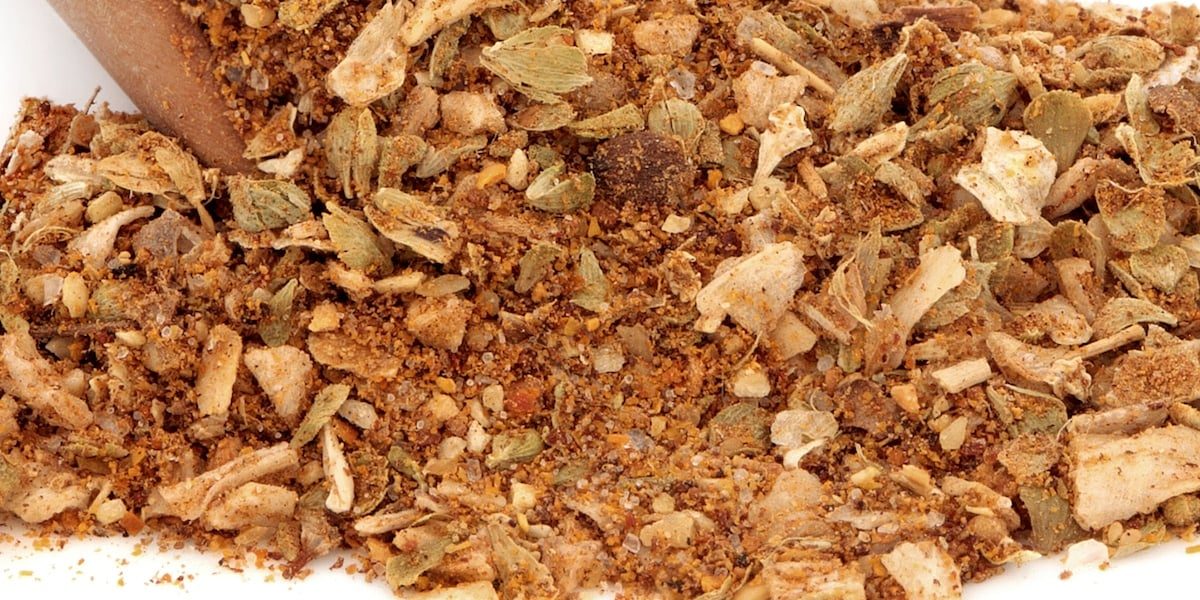
Fajita seasoning is a dry blend for grilled or seared strips of meat, usually beef or chicken, served with peppers and onions in flour tortillas. Its core is chile, cumin, garlic and onion, plus something sour, such as lime or citric acid, which sets it apart from taco seasoning.12 The dish it seasons began as grilled skirt steak on Texas ranches.3 There is no single recipe; this page sets out what named sources put in it, where fajitas came from, and how to use the blend.
At a glance
| What it is | A dry seasoning blend for fajitas12 |
| Core ingredients | Chile pepper, cumin, garlic, onion, salt, and lime or citric acid12 |
| What makes it different | A sour element (lime flavor, lime juice concentrate or citric acid)12 |
| USDA description | A reddish orange, free-flowing granular blend1 |
| The dish | Grilled skirt steak (arrachera in Mexico), from South and West Texas ranch country34 |
| Typical use | Seasoning strips of beef or chicken with onion and bell pepper2 |
Measured values
1 figure, sourced| Measure | Value | Scope | Source |
|---|---|---|---|
| Shelf life, airtight Conventional range | up to 3 months | PepperScale's homemade fajita seasoning, storage guidance as published by PepperScaleStorage guidance for one homemade recipe, not a tested figure | pepperscale.com |
Each figure is quoted as its source states it, with the samples or standard it applies to. Where sources differ, both are shown; nothing is averaged. All measured values
Where fajitas came from
Virginia B. Wood’s history of the dish in The Austin Chronicle draws on the first serious study of fajita history, done in 1984 by Homero Recio.3 Its main points:
- Ranch origins. Recio found anecdotal evidence of fajitas going back to the 1930s in the ranch lands of South and West Texas.3 Byproducts were given to Mexican vaqueros (cowboys) as part of their pay, and Wood describes skirt steak’s rise from throwaway cut to menu star.3
- The cut. Wood glosses fajitas, also called arracheras, as grilled skirt steak.3 The Real Academia Española defines arrachera, in Mexican usage, as a beef cut taken from the diaphragm muscle.4
- First commercial sales, 1969. Sonny Falcon ran the first commercial fajita taco concession stand, in Kyle, Texas, in September 1969.3 The same year, Otilia Garza’s Round-Up Restaurant in Pharr, in the Rio Grande Valley, put fajitas on the menu, served on a sizzling platter with warm flour tortillas.3
- Houston and Austin. In Houston in 1973, Ninfa Laurenzo’s restaurant sold fajitas as “tacos al carbon” and “tacos a la Ninfa.”3 Wood’s account continues in Austin with George Weidmann, opening chef of the Hyatt Regency there in 1982.3
- National spread. By the 1990s fajitas were a fast-food item at Jack in the Box and Taco Bell.3
Claims that skirt steak once counted as a “category” of cuts including hooves and tripe could not be traced.
What goes into fajita seasoning
Here is what three named sources list, side by side, with McCormick’s taco seasoning for comparison:
| Ingredient | USDA spec, minimum list (A-A-20001C)1 | McCormick Fajita Seasoning Mix2 | PepperScale homemade recipe5 | McCormick Original Taco Seasoning Mix6 |
|---|---|---|---|---|
| Chile | Red pepper | Chili pepper, paprika | Chili powder, smoked paprika, cayenne | Chili pepper, paprika |
| Cumin | Yes | Yes | Yes | not named on the label |
| Oregano | Yes | not named | No (beyond what the chili powder carries) | Yes |
| Black pepper | Yes | not named | No | not named |
| Garlic | Yes | Yes | Yes | Yes |
| Onion | Yes | Yes | Yes | Yes |
| Salt | Yes | Yes | Yes | Yes |
| Sour element | Natural lime flavor | Citric acid and lime juice concentrate | Tomato powder, optional, for tang | none |
| Other | none listed | Sugar, corn starch | none | Corn starch |
How to read this:
- The USDA list is a minimum. The specification says fajita seasoning should include, but is not limited to, these ingredients.1
- The sour element is what changes. The USDA list and the McCormick packet include lime or citric acid;12 the taco label checked has none.6 PepperScale’s recipe gets its tang a different way: it adds optional tomato powder, which it says brings color and a tang reminiscent of the lime in fajita marinades.5
- “Spices” on a label may hide more. McCormick lists “spices (including chili pepper, cumin, paprika)”,2 so other spices may be present unnamed; a missing name does not prove an ingredient is absent.
Flavor
A good fajita blend tastes of chile and cumin first, then garlic and onion, with a sour, lime-like edge that reads well on charred meat. That description is editorial. A widely repeated claim says fajita seasoning is meant to recreate the flavor of a traditional lime marinade; no source opened for this page says so, though the USDA list and the McCormick packet above do include lime,12 and PepperScale says the tomato powder in its blend gives a tang reminiscent of the lime used in fajita marinades.5 Likewise, the claim that vaqueros used citrus to tenderize skirt steak could not be traced.
How it is used
Fajitas. McCormick’s directions call for one packet, 2 tablespoons oil, 1 pound of chicken breast or beef sirloin cut into ½-inch strips, an onion and a bell pepper cut into strips, ¼ cup water and 8 small flour tortillas: brown the meat, cook the vegetables, then return the meat and stir in the water and seasoning for about 3 minutes.2 Skirt steak, the original cut,3 works the same way.
Other uses. As kitchen practice rather than sourced findings:
- A dry rub for grilled chicken thighs, skirt or flank steak, and shrimp.
- Sheet-pan peppers and onions, or roasted potatoes.
- Black beans, rice and burrito bowls.
- In place of taco seasoning, accepting a tangier, less oregano-forward result; see fajita vs. taco seasoning.
Making your own
PepperScale’s recipe (Attributed): 3 tablespoons chili powder, 1 tablespoon each of salt, ground cumin and smoked paprika, 2 teaspoons each of garlic powder and onion powder, 1 teaspoon cayenne, and 1 teaspoon tomato powder (optional).5 It gets its heat from the cayenne and smoked paprika, and it is salted, so taste before salting the dish.
No federal or academic recipe with quantities was found, so the following is a Method starting point, our suggestion rather than a sourced ratio: build from the USDA list1 with chili powder or paprika as the base, about half as much cumin, smaller amounts of garlic powder, onion powder, oregano and black pepper, and salt to taste. For the sour note, add dried lime zest or a little citric acid, or finish the cooked meat with fresh lime juice. Taste and adjust. For which spices do which job, see good spices for fajitas.
Buying and quality
- Read the label. Packet mixes contain salt and often sugar and corn starch.2 A salt-free blend lets you season to taste.
- Check for the sour note. A blend with no lime or citric acid is closer to taco seasoning.
- Freshness. The blend should smell clearly of chile and cumin. A dull, dusty smell means it has faded. Kitchen judgment.
Storage
Keep it airtight, dark and cool. No shelf-life figure from a regulator or standards body was found for fajita seasoning. For its homemade blend, PepperScale says to store it airtight for up to 3 months.5
Nutrition and health
The amounts used are small, so the blend supplies little of any vitamin or mineral. Packet mixes contain salt.2 Claims that the capsaicin in fajita seasoning treats or prevents prostate or breast cancer, or that cumin stimulates digestive enzymes, were not supported by any source reviewed for this page. No claim is made here that fajita seasoning treats or prevents any disease.
Safety
- Salt. Salt is listed in the USDA specification and on the McCormick label;12 taste before adding more salt to the dish.
- Mycotoxins (EU). EU law sets maximum levels of ochratoxin A and aflatoxins for dried Capsicum spices such as chilli powder, cayenne and paprika,7 the chile in the blend.
Substitutes and comparisons
- Fajita seasoning substitutes
- Fajita vs. taco seasoning and taco seasoning
- Good spices for fajitas
- The single spices: chili powder, cumin, paprika, garlic powder, onion powder, Mexican oregano
- Related blends: adobo seasoning
Footnotes
-
Commercial Item Description A-A-20001C, Spices and Spice Blends, USDA Agricultural Marketing Service, 2023. ams.usda.gov · Regulator ↩ ↩2 ↩3 ↩4 ↩5 ↩6 ↩7 ↩8 ↩9 ↩10 ↩11
-
McCormick Fajita Seasoning Mix, McCormick. mccormick.com · Merchant ↩ ↩2 ↩3 ↩4 ↩5 ↩6 ↩7 ↩8 ↩9 ↩10 ↩11 ↩12 ↩13
-
Virginia B. Wood, Fajita History, The Austin Chronicle, 2005. austinchronicle.com · Publication ↩ ↩2 ↩3 ↩4 ↩5 ↩6 ↩7 ↩8 ↩9 ↩10 ↩11 ↩12
-
arrachera, Diccionario de la lengua española, Real Academia Española. dle.rae.es · Reference work ↩ ↩2
-
Matt Bray, Homemade Fajita Seasoning, PepperScale, 2023. pepperscale.com · Publication · PepperScale is also owned by Matt Bray, the editor of this site. ↩ ↩2 ↩3 ↩4 ↩5
-
McCormick Original Taco Seasoning Mix, ingredient label via Giant Food Stores. giantfoodstores.com · Merchant ↩ ↩2
-
Commission Regulation (EU) 2023/915, EUR-Lex. eur-lex.europa.eu · Regulator ↩